The Lotus in Hindu Symbolism
The lotus (padma or kamal) is arguably the single most recurring symbol across Hindu worship, appearing in the hands, seats and very descriptions of numerous deities. Few flowers carry as much layered meaning, and its presence is never accidental in Hindu iconography.
What makes the lotus so universally chosen is its own nature: it grows rooted in muddy, murky water yet rises above the surface to bloom clean and untouched. This single quality has been read by generations of devotees as one of the clearest natural metaphors for spiritual life itself.
The Lotus with Lakshmi and Saraswati
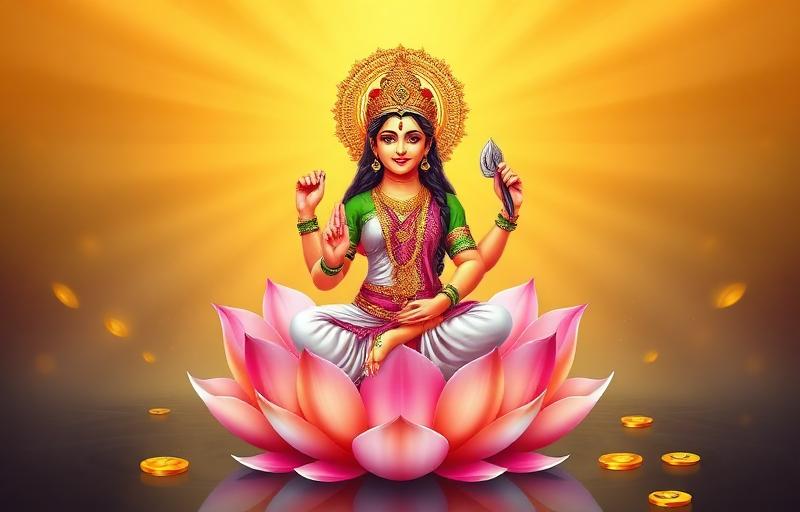
Lakshmi, the goddess of prosperity and abundance, is almost always depicted seated or standing upon a full-bloomed lotus, often holding one or two more in her hands. Here the lotus represents prosperity that remains pure, wealth that does not corrupt the one who holds it with the right spirit.
Saraswati, goddess of knowledge and the arts, is also seated on a white lotus, symbolizing the purity of true wisdom, knowledge that rises above confusion and ignorance the way the flower rises above muddy water. Between these two goddesses, the lotus comes to represent both outer prosperity and inner clarity as two sides of the same spiritual wholeness.
The Lotus with Vishnu and Brahma
Vishnu is frequently shown holding a lotus in one of his four hands, alongside the conch, mace and discus, representing the unfolding of the universe in purity and order. In many depictions, a lotus grows directly from Vishnu's navel, and seated upon it is Brahma, the creator, an image that places the entire act of creation upon this single sacred flower.
This particular image, of Brahma emerging from a lotus rooted in Vishnu, is often understood as showing that creation itself unfolds from a base of purity and preserving order, connecting the roles of these two deities through the same symbol that also carries Lakshmi and Saraswati.
The Lotus in Worship and Everyday Puja

- Fresh lotus flowers are considered one of the most auspicious offerings for Lakshmi Puja, especially during Diwali
- Devotees of Vishnu and his avatars, including Krishna, often use lotus imagery in prayer and decoration
- The thousand-petaled lotus, sahasrara, is referenced in yogic and meditative tradition as a symbol of the highest awakening
- Temple architecture frequently uses lotus motifs in ceilings, pillars and floor designs as a mark of sanctity
- Sitting cross-legged in what is popularly called the lotus position is itself named for the flower's balanced, grounded yet open form
Why the Lotus's Rise from Mud Matters
As per tradition, the lotus's journey from muddy roots to a spotless bloom is read as a message for every devotee: one's circumstances, however difficult or impure they may seem, do not have to define one's spiritual state. It is possible to rise, remain untouched by negativity, and still bloom fully.
This is why the lotus is placed under the feet of some of the most revered deities in Hindu tradition, not despite its muddy origin but because of what that origin, overcome, represents. Devotees believe that keeping this image in mind offers quiet encouragement during personally difficult times.
A Simple Takeaway for Daily Life
Wherever the lotus appears across Hindu tradition, from Lakshmi's seat to Brahma's origin, it carries a single consistent message: purity is possible regardless of one's surroundings, and true grace rises rather than hides from difficulty.
Offering a lotus, or simply recalling its image during a hard day, is an act of faith and love, not a transaction. It is a small, steady reminder that beauty and purpose can bloom from even the muddiest circumstances.
Quick Answers
Why is the lotus associated with so many Hindu deities?+
The lotus grows from muddy water yet blooms clean and untouched, a quality Hindu tradition reads as a symbol of purity, prosperity and spiritual awakening, which is why it appears with Lakshmi, Saraswati, Vishnu and Brahma alike.
What does the lotus growing from Vishnu's navel represent?+
This image, with Brahma seated on the lotus, is traditionally understood to represent creation unfolding from a base of purity and preserved order, connecting the acts of creation and preservation through a single sacred symbol.
Is the lotus used only in worship of specific deities?+
No, the lotus appears broadly across Hindu worship and daily life, from Lakshmi Puja offerings to temple architecture to the meditative lotus sitting position, making it one of the most universal symbols in the tradition.
About the author
Anjali Mehta · Editor, M.A. Religious Studies
Anjali is the managing editor for Vandnaa and oversees the festival and vrat coverage. She holds an M.A. in Religious Studies and reviews every published article for accuracy, accessibility, and tradition-fidelity.
Meet the Vandnaa editorial team →