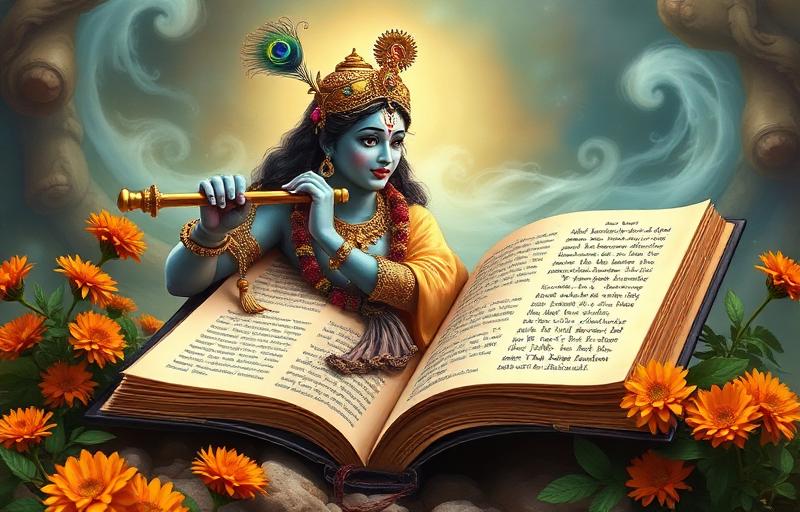
Two Epics, Two Different Worlds
If Sanatan Dharma is a tree, the Vedas and Upanishads are its roots, and the Ramayana and Mahabharata are its two main branches - both immensely strong, but growing in different directions.
Both are called Itihasa ('history' - actual events, not myth, per Hindu tradition). Both shape every Hindu's understanding of dharma, family, duty, and life. Both are recited in homes for thousands of years. But they are RADICALLY different in tone, length, philosophy, and what they teach.
At a glance:
| Aspect | Ramayana | Mahabharata | |---|---|---| | Author | Sage Valmiki | Sage Vyasa | | Length | 24,000 verses | 100,000+ verses (longest epic in world history) | | Era (Yuga) | Treta Yuga (silver age) | Dwapar Yuga (bronze age) | | Hero | Lord Ram (perfect avatar) | Multiple complex heroes | | Tone | Idealistic, devotional | Realistic, philosophical | | Time period | ~5000 BCE | ~3100 BCE | | Central theme | Dharma when followed perfectly | Dharma when broken and recovered | | Sanskrit grammar level | Simple, elegant | Complex, varied | | Modern relevance | Personal ethics, marriage, leadership | Politics, war, complex moral choices |
The Ramayana is what Hindus aspire to be. The Mahabharata is what Hindus actually are. Both are essential. Reading one without the other gives an incomplete picture of human life and dharma.
The most important difference (often missed): The Ramayana presents dharma in its IDEAL form - Ram never lies, never deviates, never has internal conflict (almost). The Mahabharata presents dharma in its IMPLEMENTATION - heroes lie, deviate, and struggle constantly. The Mahabharata even contains the Bhagavad Gita - Krishna's teaching to Arjuna on Kurukshetra battlefield, which IS Hinduism's most concentrated philosophical text.
This blog covers: detailed comparison across 7 dimensions, life lessons each epic teaches, when to read which, and the order in which Hindus traditionally consume both. By the end, you will know which epic to start with, what to expect, and how each will shape your worldview.
📜 The Vandnaa App's Itihasa module includes audio summaries of both epics, key chapter highlights, character profiles, and a guided 'Which epic for my life-question' tool.
The Ramayana - Story, Heroes, & Core Message
Story (one paragraph): Prince Ram of Ayodhya is exiled to the forest for 14 years to honor his father's promise to step-mother Kaikeyi. His wife Sita and brother Lakshman accompany him. In the forest, demon king Ravana abducts Sita to his island kingdom Lanka. Ram, with help from monkey-god Hanuman and an army of monkeys (Vanaras), builds a bridge to Lanka, fights and kills Ravana, recovers Sita, and returns to Ayodhya as king. He establishes 'Ram Rajya' - the most just kingdom in human history.
Main Characters:
- Ram - the perfect prince, husband, brother, king. Vishnu's 7th avatar.
- Sita - the perfect wife, daughter of Earth, embodiment of feminine grace under suffering
- Lakshman - the perfect brother, voluntarily exiles himself to serve Ram
- Hanuman - the perfect devotee, capable of any feat through pure bhakti
- Bharata - the perfect younger brother, refuses the throne, awaits Ram's return
- Ravana - brilliant scholar and king, but his lust for Sita destroys him
- Vibhishana - Ravana's brother who chooses dharma over family loyalty
Core Message - 'Maryada Purushottam' (The Ideal Man): Ram is called Maryada Purushottam - 'the man who never crossed the line of dharma'. The Ramayana is the literary blueprint of perfect human conduct in every role:
- As son - obeys father even when father is wrong (Dasharatha's promise to Kaikeyi)
- As brother - never doubts Lakshman's loyalty
- As husband - single-minded devotion to Sita
- As king - places duty to subjects above personal feelings (the controversial banishment of Sita is meant to show the painful weight of public-life dharma)
- As enemy - even gives Ravana a chance to surrender; mourns his death as a respected adversary
The Ramayana asks: 'When dharma is clear, follow it perfectly.' It does not ask you to figure out what dharma IS - it shows what dharma LOOKS LIKE in flesh.
Greatest moments:
- Ram breaking Lord Shiva's bow at Sita's swayamvara - the cosmic 'yes' moment of their union
- Hanuman flying across the ocean to find Sita - the embodiment of devotion's power
- Lakshman drawing the 'Lakshman Rekha' to protect Sita - the cosmic boundary between safety and danger
- Ram's eternal patience even with Ravana - the highest form of dharmic warfare
- Bharata refusing the throne, placing Ram's sandals on it instead - the supreme act of brotherly love
Modern relevance - when to study Ramayana:
- When struggling with marriage / relationship conflicts
- When facing family obligations vs personal desires
- When stepping into leadership roles
- When raising children (Ram's character is the ideal blueprint to teach kids)
- When you need to learn HOW to follow dharma (the practical 'how')
- When facing temptations and need spiritual armor
Best translations to read:
- Valmiki Ramayana (the original) - translation by Bibek Debroy (2017, 6 volumes) is most accessible in English
- Tulsidas's Ramcharitmanas - most widely read in North India, simpler Awadhi Hindi
- Kamban Ramayana - the Tamil version, beautifully poetic
- Children's version: Amar Chitra Katha series
The Mahabharata - Story, Heroes, & Core Message
Story (one paragraph): Two sets of cousins - the Pandavas (5 brothers, sons of Pandu) and Kauravas (100 brothers, sons of Dhritarashtra) - are heirs to the kingdom of Hastinapur. The eldest Kaurava, Duryodhana, refuses to share the kingdom with the Pandavas and tricks them into losing everything (including their wife Draupadi) in a rigged dice game, then sends them into 13 years of exile. After exile, Duryodhana refuses to return their kingdom. The result: the Kurukshetra War - 18 days of catastrophic battle that kills nearly every great warrior in India. The Pandavas win technically, but the cost is the destruction of an entire generation. Lord Krishna is the charioteer to Arjuna (a Pandava) and delivers the Bhagavad Gita on the battlefield's first day.
Main Characters (this is just a sample - there are 200+ named characters):
- Yudhishthir - the eldest Pandava, 'son of dharma'. Truthful but flawed (loses kingdom in dice).
- Bhima - the strongest Pandava, mace-warrior, fierce protector of Draupadi
- Arjuna - the greatest archer, Krishna's friend, the Gita's recipient
- Nakula and Sahadeva - the youngest Pandavas, twins, masters of horse-handling and astrology
- Draupadi - wife of all 5 Pandavas, fiercely intelligent, the most insulted woman in scripture
- Krishna - Vishnu's 8th avatar, divine strategist, complex and pragmatic teacher
- Duryodhana - eldest Kaurava, jealous, but loyal friend (his friendship with Karna shows his complex humanity)
- Karna - half-brother to Pandavas (unknown), greatest warrior, tragic hero, fights for Kauravas out of loyalty
- Bhishma Pitamaha - grand-uncle to all, vowed celibacy, fights for Kauravas due to oath, dies on Yudhishthir's lap
- Drona - teacher of both sides, kills with sorrow, dies through deception
- Shakuni - uncle of Kauravas, master of dice and deception, the war's true architect
- Abhimanyu - Arjuna's young son, killed unfairly in Chakravyuha, the war's most heartbreaking death
Core Message - 'Dharma is Subtle' (Sookshma Dharma): The Mahabharata's core teaching is that dharma is NOT always clear. Sometimes lies preserve dharma (Krishna's strategic deceptions). Sometimes following dharma leads to disaster (Yudhishthir's truthfulness in dice). Sometimes those who break dharma have legitimate grievances (Duryodhana's jealousy). And sometimes the only way to dharma is through war.
The Mahabharata asks: 'When dharma is unclear, what do you do?' It does not give you a clean answer - it shows the cost of every choice.
Greatest moments:
- The Bhagavad Gita - Krishna's 18-chapter teaching to Arjuna on the battlefield. The single most influential philosophical text in history.
- Draupadi's vastraharan (cloth-pulling) and her vow that her hair would remain unbound until washed in Duryodhana's blood
- The dice game scene - where Yudhishthir's stubbornness and Shakuni's manipulation destroy a kingdom
- Karna learning his true identity from Krishna - and choosing loyalty to Duryodhana anyway
- Bhishma on the bed of arrows - dying slowly while teaching Yudhishthir the entire science of governance (Shanti Parva and Anushasana Parva)
- The single line that contains the whole epic: 'Yatra Krishna, tatra dharma; yatra dharma, tatra jaya.' (Wherever Krishna is, there is dharma; wherever dharma is, there is victory.)
Modern relevance - when to study Mahabharata:
- When facing complex ethical dilemmas (no clean right answer)
- When understanding politics, leadership, war strategy
- When struggling to forgive (Mahabharata is full of grudges across generations)
- When dealing with family conflicts (cousins fighting cousins, parents vs children)
- When wanting deep philosophy (the Gita)
- When you need to understand HOW dharma actually plays out in messy real life
Best translations to read:
- Bibek Debroy's 10-volume English translation (Penguin, complete unabridged version)
- C. Rajagopalachari's 'Mahabharata' - single volume, accessible, classic Indian translation
- B.R. Chopra's TV series (1988) - captures key episodes faithfully, available online
- Children's version: Amar Chitra Katha
- For the Gita alone: Eknath Easwaran, Swami Prabhupada, or Swami Mukundananda translations
Which to Read First & Top 7 Life Lessons from Both
Which to Read First - Based on Your Life Stage:
Read RAMAYANA first if:
- You are 8-25 years old (foundation for life values)
- You are starting a family / getting married (relationship blueprint)
- You are in early career and need 'good values' clarity
- You feel uncertain about WHAT is right vs wrong
- You want comfort, inspiration, devotional warmth
- You want a story you can tell to children verbatim
Read MAHABHARATA first if:
- You are 25+ and have already navigated some moral complexity
- You are in business, politics, leadership, military
- You face complex ethical dilemmas regularly
- You have stable foundational values but need depth
- You are studying philosophy, strategy, or governance
- You want to engage with the most sophisticated philosophical text in any tradition
The traditional Hindu order: Read Ramayana FIRST as a child or young adult - it builds the moral compass. Then read Mahabharata in your 30s onwards - it tests and refines the compass against real-world complexity. Most great Sanskrit teachers say: 'Without Ramayana foundation, the Mahabharata's moral relativism becomes confusing. Without Mahabharata's depth, the Ramayana's idealism becomes naive.'
---
Top 7 Life Lessons (combining both epics):
1. Promises matter more than feelings.
- Ramayana: Dasharath's promise to Kaikeyi destroys his family - but the promise itself was sacred. Ram leaves without question.
- Mahabharata: Bhishma's vow of celibacy makes him unable to fulfill his cosmic role properly - the vow itself was excessive.
- Lesson: Make promises carefully; once made, honor them - but think before vowing forever.
2. The longest road back is through admitting wrong.
- Ramayana: Vibhishana abandons his brother Ravana when he sees Ravana refusing to return Sita. He survives to inherit Lanka. His brother dies.
- Mahabharata: Karna refuses to abandon Duryodhana even after Krishna reveals his true identity. He dies in battle. His brothers cry.
- Lesson: Loyalty to a wrong cause kills. Loyalty to dharma redeems.
3. Real war is internal.
- Mahabharata: The Bhagavad Gita IS this lesson. Arjuna's enemies are not just Kauravas - they are his own attachment, fear, doubt, ego. Krishna teaches him to win the inner battle first.
- Ramayana: Ram's exile is not a punishment - it is his time to defeat his own attachment to throne, comfort, and ego before he can return as a true king.
- Lesson: Every external battle is preceded by an internal one. Win the inner battle first.
4. Anger destroys the angry, not just the target.
- Mahabharata: Duryodhana's lifelong anger at Pandavas eventually consumes him entirely. He dies broken.
- Ramayana: Ravana's lust (a form of misdirected anger) destroys not just himself but his entire clan.
- Lesson: Anger 'feels' like power but is the cosmic equivalent of self-poisoning. Discipline of mind is the only escape.
5. Pride doesn't go before a fall - it IS the fall.
- Mahabharata: Karna's pride in his armor (kavach) and earrings makes him reject Indra's request properly - and he dies because he gave them up. Bhishma's pride in his vow makes him fight for the wrong side.
- Ramayana: Ravana's pride that he could possess Sita despite all signs blinds him to the consequences.
- Lesson: Pride is not a feeling that comes before a fall. Pride IS the fall - it just takes time to manifest physically.
6. Family is dharma's most complex test.
- Ramayana: Ram's choice between father's word and his own throne. Bharata's choice between mother's wish and brother's right.
- Mahabharata: Pandavas vs Kauravas - cousin against cousin. Bhishma fighting his own grandsons. Drona killing his own students.
- Lesson: The hardest dharma decisions are within family. Sometimes the right thing is to oppose family. Sometimes the right thing is to suffer family. The Mahabharata says: when in doubt, choose dharma over family. The Ramayana says: when possible, choose family AND dharma.
7. The cost of war (or any major decision) is always paid by future generations.
- Mahabharata: After Kurukshetra, almost every great warrior is dead. The Pandavas inherit a hollow kingdom - they win but lose everything.
- Ramayana: Ram's banishment of Sita (after his return as king) creates the conflict that eventually leads to his sons fighting him without knowing he is their father.
- Lesson: When making major decisions, think 2-3 generations ahead. The pain you cause today will return as the pain your children inherit.
Final reflection: Both epics agree on the deepest lesson - dharma is not always clear, but pursuing it is the only way to a meaningful life. The Ramayana tells you what dharma looks like when followed perfectly; the Mahabharata tells you what dharma looks like when struggled with imperfectly. Both are true. Both are necessary.
Key Characters of the Mahabharata and Ramayana and Their Timeless Lessons
Both epics are populated by characters of extraordinary complexity - not cardboard heroes and villains but human beings (and divine beings) navigating impossible situations with partial knowledge, competing loyalties, and flawed natures. Understanding these characters is understanding ourselves.
Characters of the Ramayana and their lessons:
Rama - The Ideal King and Ideal Son. Rama is often called "Maryada Purushottam" - the supreme person within limits. His defining characteristic is his adherence to dharma even at the cost of personal happiness: he accepts exile without bitterness, treats enemies with mercy (repeatedly offering Ravana the chance to return Sita), and never allows personal desire to override duty. The lesson: integrity maintained in adversity is the true measure of character.
Sita - The Ideal Wife and Fiercely Independent Woman. Sita is often misread as passive. In fact, she voluntarily accompanies Rama into the forest (over his protests), refuses Ravana's every offer including kingdom and luxury, maintains her dignity through 14 months of captivity, passes the Agni Pariksha (trial by fire), and ultimately chooses to return to the earth mother rather than accept a life of public accusation. Her lesson: dignity is not given by others; it is maintained by one's own inner integrity.
Hanuman - The Perfect Devotee. Hanuman's lesson is that seva (service) without ego is the highest spiritual practice. He is more powerful than almost any being in the Ramayana, yet he never acts for his own glory - every action is for Rama. His lesson: true strength is expressed through service, not domination.
Ravana - The Cautionary Tale. Ravana is brilliant, learned (a devotee of Shiva, an expert in Vedanta), powerful, and aesthetically refined. His fatal flaw is uncontrolled desire and the pride that made him incapable of admitting error. He could have released Sita and avoided the war - his ministers and his own brother Vibhishana begged him to. He chose pride over wisdom. The lesson: knowledge and power without restraint create their own destruction.
Characters of the Mahabharata and their lessons:
Arjuna - The Reluctant Hero. Arjuna's crisis at the beginning of the Gita is not cowardice - it is a sophisticated moral crisis. He cannot find a dharmic framework for killing his teachers and cousins. The entire Gita is Krishna's answer to his question. Arjuna's lesson: even the most capable person faces moments of complete moral vertigo - the answer is not to avoid the question but to seek deeper wisdom.
Yudhishthira - Dharma Under Impossible Conditions. Yudhishthira's gambling addiction is the great tragedy - a man of extraordinary dharmic awareness who nonetheless loses everything (including his wife and brothers) through a compulsive vice. The lesson: dharma is not the absence of weakness; it is the struggle to live with integrity despite weakness.
Draupadi - The Fiercest Voice. Draupadi's question after the attempted humiliation in court - "Who is the king's real master?" - is one of the most philosophically charged moments in Sanskrit literature. She forces every man in that assembly to confront the moral bankruptcy of their silence. Her lesson: dharma requires speaking, not merely knowing.
Krishna - The Divine Strategist. Unlike Rama's straightforward dharmic path, Krishna's methods are sometimes indirect, sometimes mysterious, sometimes morally ambiguous (was it right to engineer Karna's death the way it happened?). His lesson: divinity acts in the world as the world requires, not as we wish. The Gita's answer: surrender the fruit of action and act for righteousness - the rest is Krishna's responsibility.
The Vandnaa app includes character deep-dives in both Hindi and English, allowing devotees to study these figures in the context of their own life challenges.
How to Read Mahabharata and Ramayana: Versions, Translations, and Study Paths
Both epics exist in multiple versions, languages, and depths of complexity - choosing the right entry point makes the difference between a lifelong engagement and an abandoned attempt. Here is a practical guide to beginning your journey with these inexhaustible texts.
The Ramayana: Which version to read first?
The Ramayana exists in hundreds of versions across South and Southeast Asia. The primary Sanskrit version is Valmiki's Ramayana (24,000 verses, 7 kandas/chapters). The most widely read Hindi version is Tulsidas's Ramcharitmanas (16th century) - a devotional retelling that brought the Ramayana to the masses in spoken language, and which is itself considered sacred scripture.
For beginners:
- Children: Amar Chitra Katha graphic novel version - faithful, beautifully illustrated, covers all major episodes.
- Adults new to Hindu epics: C. Rajagopalachari's condensed prose retelling (Ramayana, published by Bharatiya Vidya Bhavan) - complete but readable in a few weeks. His style is literary without being academic.
- Those wanting the devotional experience: Listen to or read the Ramcharitmanas - the Balakand (childhood of Rama) is the ideal starting point. The Sundara Kanda (Hanuman's Lanka journey) is often read as a standalone, particularly for protection.
- Those wanting the original: Valmiki's Ramayana translated by Bibek Debroy (Penguin India) is scholarly yet readable. The Kishkindha Kanda (monkey kingdom) and Yuddha Kanda (war) are the most dramatically engaging.
The Mahabharata: Entering the ocean
At 1.8 million words, the Mahabharata is the longest epic in any language - eight times longer than the Iliad and Odyssey combined. There is no single "correct" version. Choose based on your purpose.
For beginners:
- C. Rajagopalachari's condensed Mahabharata - same author as above, covers the essential narrative in 400 pages. Ideal first read.
- Ramesh Menon's retelling (2 volumes, HarperCollins) - poetic, atmospheric, complete but accessible.
- Bibek Debroy's 10-volume translation - the most complete scholarly translation available in English. Start with volume 1 (Adi Parva) and volume 2 (Sabha Parva through the gambling scene - where the story's moral crisis begins).
Specific sections to read first: 1. Adi Parva, Book 1 - the creation narrative and Arjuna's birth; establishes the cosmic stakes. 2. Sabha Parva, Book 2 - the dice game and Draupadi's humiliation; the central moral crisis. 3. Udyoga Parva, Book 5 - Krishna's peace mission; some of the most penetrating political philosophy in world literature. 4. Bhishma Parva, Book 6 - contains the Bhagavad Gita; the central spiritual teaching. 5. Shanti Parva, Book 12 - Bhishma's deathbed teachings; a summary of dharmic philosophy.
Audio and digital approaches: For many people, listening is more natural than reading. The Mahabharata and Ramayana exist as high-quality audiobooks, podcast series, and YouTube series. The Vandnaa app provides guided listening paths through both epics - curated episode sequences, character introduction guides, and daily reflection questions that make the epics an ongoing spiritual practice rather than a one-time read.
Study circles: Both texts are best understood in community. Consider starting or joining a Mahabharata or Ramayana study group - meeting weekly to discuss a section. The depth of the texts means that different readers notice entirely different things, and discussion reveals dimensions that solo reading misses.
Core Philosophical Teachings of the Mahabharata and Ramayana That Apply Today
Beyond their narrative power, both epics are vehicles for some of the most profound philosophical and ethical teachings in human civilization. These teachings are not historical curiosities - they address questions that are as urgent today as they were three thousand years ago.
From the Ramayana: The dharma of duty and desire
The Ramayana's central philosophical tension is between two legitimate claims: Rama's duty as a son (pita-bhakti, obedience to his father Dasharatha's word) versus his duty as a husband and king. He cannot fulfill both perfectly - and the epic does not pretend otherwise. This is its mature philosophical insight: dharmic life requires choosing between good and good, not merely between good and evil.
The teaching for modern life: We face these conflicts constantly - loyalty to career versus loyalty to family; personal truth versus social harmony; self-care versus other-care. The Ramayana doesn't provide simple answers. It shows how a person of integrity navigates the impossible, and how even the best choices have costs.
From the Bhagavad Gita (within Mahabharata): The path of non-attached action
The Gita's central teaching - "Let right deeds be thy motive, not the fruit which comes from them" (Chapter 2, verse 47) - is the most psychologically sophisticated ethical teaching in any tradition. It diagnoses a fundamental human problem: we act for outcomes, and when outcomes disappoint (as they inevitably do), we suffer and abandon the action. The Gita proposes an alternative: act from your deepest understanding of what is right, without holding the result. The action itself becomes the offering.
For modern application: In competitive professions, this teaching is revolutionary. It says: do your best work for the quality of the work itself, not for the recognition. The recognition may or may not come - but the habit of excellent action, sustained independent of outcomes, builds a different kind of person.
From the Mahabharata's Shanti Parva: The complexity of dharma
Bhishma's teachings in the Shanti Parva, spoken from his deathbed, contain some of the most nuanced ethical philosophy in the epic. His famous statement: "The subtlety of dharma is great; not even the wise can always perceive it" - acknowledges that moral life does not submit to simple rules. Different contexts produce different dharmic requirements. The same action can be righteous in one circumstance and wrong in another.
The teaching for modern life: Resist the temptation to simplify ethics into rules. Dharmic living requires the cultivation of judgment - which takes a lifetime to develop. Seek wisdom from those who have faced difficult choices (elders, teachers, the epics themselves), and develop the habit of deliberation before acting in morally complex situations.
The concept of "karma" properly understood: Both epics constantly illustrate karma - but not the simplified "what goes around comes around" version. In the epics, karma is the principle that every action has consequences, and that the quality of your actions shapes the quality of your being over time. Good actions build sattvic (clear, harmonious) character; selfish or cruel actions build tamasic (dark, rigid) character. The consequences are primarily internal - who you become - rather than external rewards and punishments. Ravana's karma was his inability to listen, his inability to admit error. These internal qualities created his external destruction.
The teaching of Vishada (grief) as doorway: Arjuna's breakdown at the beginning of the Gita is called "Arjuna Vishada" - Arjuna's grief. Krishna does not dismiss this grief; he uses it as the doorway into the deepest teaching. The Gita begins with collapse, not with strength. This is the epic's deepest teaching: grief, confusion, and the failure of ordinary frameworks are not obstacles to spiritual life - they are its necessary beginning.
The Vandnaa app provides daily reflections from both epics aligned to contemporary life - bridging the 3000-year gap between the texts and the situations we face today.
Common Questions From Devotees
Did Mahabharata and Ramayana actually happen?+
Hindu tradition treats both as Itihasa - historical events. Modern scholarship is divided: some treat them as literature with possible historical kernels (a small kingdom war that became the Mahabharata; a real Ram who became mythologized). Astronomical references in both texts (planetary positions described) point to specific dates - the Kurukshetra war is dated to ~3137 BCE based on described eclipse patterns; Ram's birth is dated to ~5114 BCE. Archaeological discoveries at Hastinapur, Dwarka, and Ayodhya have confirmed civilization-level habitation matching the texts' descriptions. The bridge to Lanka (Adam's Bridge / Ram Setu between India and Sri Lanka) is a real geological structure, dated by satellite imagery to ~1.7 million years ago - its 'building' is mythological but its existence is real. Final view: even if 80% is mythologized, the cores of both stories likely have historical roots. They are sacred regardless of historicity - their teaching value is independent of whether they 'literally happened'.
Is the Bhagavad Gita the most important part of the Mahabharata?+
Yes - and No. Yes philosophically - the Gita is the philosophical heart of all of Hindu thought, condensed into 18 chapters. Adi Shankaracharya called it 'the essence of all Vedas'. It can be read standalone for full philosophical benefit. No narratively - the Mahabharata's lessons emerge from the FULL story, not just the Gita. Without seeing Yudhishthir's struggles, Draupadi's humiliation, Karna's tragedy, Bhishma's choices - the Gita's philosophy feels abstract. The full Mahabharata gives you the LIVING examples of what the Gita teaches. Recommendation: Read the Gita first for philosophy. Then read the full Mahabharata to see philosophy in action. Then re-read the Gita - it will read completely differently. The Gita is the most concentrated form of dharma teaching; the Mahabharata is the most concentrated form of dharma demonstration.
Why does Ram banish Sita in the Ramayana? Isn't that wrong?+
This is the most controversial moment in the Ramayana, and Hindus debate it for 3000+ years. Three views: (1) Traditional view - Ram's role as KING required him to put public perception of his queen above his personal love. A king cannot have a queen whom citizens doubt. The decision shows the painful weight of public-life dharma vs personal happiness. Ram suffers more than Sita does. (2) Critical view - Ram is wrong here. He sacrificed Sita to public opinion when he should have stood by her. This reading sees the moment as Ram's one tragic flaw - making him human. (3) Esoteric view - Sita herself, knowing this was needed for the cosmic plan, wanted to leave. Her time on earth was complete. The 'banishment' was actually her departure dressed as banishment. Devotees can choose any of these readings. The Ramayana is mature enough to NOT give a clean answer - it leaves the moral weight on the reader. Modern Hindu women particularly engage with this episode as a meditation on women's experience in patriarchal systems. Whatever your view, it should NOT be 'Ram is perfect and this proves him perfect' - that misses the point. The pain of this episode is part of why the Ramayana matters.
Are Krishna and Ram the same - or different?+
Same essence (both are Vishnu's avatars), different manifestations. Ram is Vishnu's 7th avatar - the embodiment of strict dharma, ideal kingship, perfect adherence to rules. Krishna is Vishnu's 8th avatar - the embodiment of strategic dharma, mischievous childhood, complex political wisdom, deepest philosophical teaching (the Gita). They lived in different yugas (Treta vs Dwapar), wore different colors (Ram is associated with green/blue, Krishna with dark blue/black), played different roles (Ram is king, Krishna is statesman). Ram's followers tend toward strict moral codes; Krishna's followers tend toward devotional bhakti and philosophical inquiry. BUT - at the highest level, they are identical: the same Vishnu wearing different masks for different cosmic purposes. The famous Vaishnav greeting 'Sita-Ram, Radhe-Krishna' acknowledges this - both are sacred name-pairs of the same divinity. Many devotees worship both equally. Rare to find a serious Hindu devotee who 'rejects' either.
Which translation should I get for my children?+
For children 5-12 years: Amar Chitra Katha comic book series (Mahabharata 36 volumes, Ramayana 12 volumes). Engaging, illustrated, faithful to source. Costs ₹150-300 per book. Most Indian children grew up on these. For children 12-16: C. Rajagopalachari's Mahabharata (single volume, abridged but faithful) and Devdutt Pattanaik's Ramayana (modern, illustrated, accessible). For ages 16+: full B.R. Chopra TV series (1988 - available on YouTube), then transition to actual translations. AVOID: heavily commercialized 'modern retellings' that change the moral core (some recent novels make villains heroes for shock value - not appropriate for moral education). Most important: read THE STORIES TOGETHER as a family. Children learn dharma not from words but from seeing parents discuss the dilemmas. The Vandnaa App's Itihasa module has audio narrations specifically formatted for family listening (15-30 min episodes).
About the author
Anjali Mehta · Editor, M.A. Religious Studies
Anjali is the managing editor for Vandnaa and oversees the festival and vrat coverage. She holds an M.A. in Religious Studies and reviews every published article for accuracy, accessibility, and tradition-fidelity.
Meet the Vandnaa editorial team →Explore on Vandnaa
Related Articles
108 Names of Lord Krishna: Complete List with Meaning, Benefits & How to Chant Daily
12 min read
Ram Navami 2027: Date, Puja Vidhi, Lord Ram's Birth Story & 7 Powerful Ram Mantras
11 min read
How to Stay Calm in Difficult Times – Bhagavad Gita Wisdom (भगवद्गीता)
9 min read
Vishnu Sahasranama: The 1000 Names of Vishnu - Meaning, Benefits & Daily Recitation Vidhi
12 min read