Origin: Why Indra Wrote This Hymn
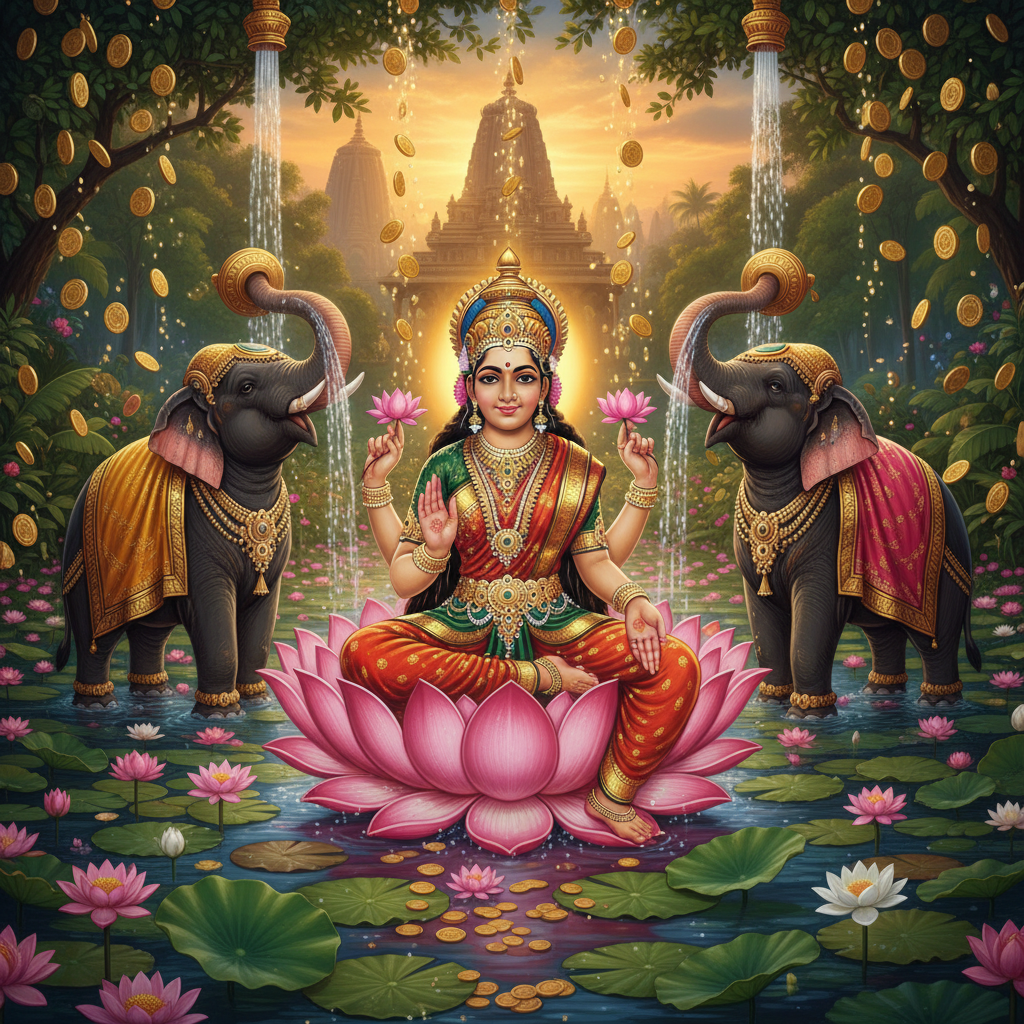
The story behind Mahalakshmi Ashtakam is one of restoration. After the great churning of the cosmic ocean (Samudra Manthan), Lakshmi emerged from the waters seated on a lotus. The devas and asuras had churned for the immortality nectar but what came first was Lakshmi herself - a sign that wealth precedes immortality. She immediately chose Vishnu as her consort. But Indra, who had earlier insulted sage Durvasa and consequently lost Lakshmi from the heavens (causing the gods to lose all their splendour and necessitating the whole Manthan), now stood as the most grateful soul in the universe to receive her favour back.
The Padma Purana records Indra composing this 8-verse stotra spontaneously, calling Lakshmi by eight different titles - Mahalakshmi, Mahamaya, Sarvashakti, Jagatpitre, etc. Each verse acknowledges one of her cosmic functions. The hymn ends with the famous phala-shruti (fruit verse) promising specific results to the reciter: 'one who recites this eight times daily for six months gains untold wealth, one who recites it at dawn defeats enemies, one who recites it three times daily attains all desires.'
It has become particularly popular because it does NOT require Sanskrit perfection, complex puja or expensive offerings - only sincere repetition. The original text is just ~150 words. Memorising it takes a week; chanting it daily takes 4 minutes. This combination of brevity and potency is why it appears in nearly every Lakshmi puja booklet across India.
The 8 Verses - Sanskrit & Meaning
1. Namastestu Mahamaye Shree Peethe Surapujite Shankha Chakra Gada Haste Mahalakshmi Namostute Salutations to you, O Great Illusion, established on Shree-peetha, worshipped by gods. O Mahalakshmi who holds conch, discus and mace, salutations.
2. Namaste Garudaroodhe Kolasura Bhayankari Sarva Papa Hare Devi Mahalakshmi Namostute Salutations to you, mounted on Garuda, destroyer of demon Kola, remover of all sins, O Devi Mahalakshmi.
3. Sarvajne Sarva Varade Sarva Dushta Bhayankari Sarva Dukha Hare Devi Mahalakshmi Namostute O all-knowing one, granter of all boons, terror of all evil, remover of all sorrow - salutations, Mahalakshmi.
4. Siddhi Buddhi Prade Devi Bhukti Mukti Pradayini Mantra Murte Sada Devi Mahalakshmi Namostute Giver of perfection and intellect, of worldly enjoyment and final liberation, ever the embodiment of mantra - salutations, Mahalakshmi.
5. Aadyanta Rahite Devi Aadi Shakti Maheswari Yogaje Yoga Sambhute Mahalakshmi Namostute Beginning-less and endless Devi, the primordial Shakti, supreme Ishwari, born of yoga and arising through yoga - salutations, Mahalakshmi.
6. Sthula Sukshma Maha Raudre Maha Shakti Mahodare Maha Papa Hare Devi Mahalakshmi Namostute Gross and subtle, fiercely terrible (to enemies), great Shakti, great in mercy, destroyer of great sins - salutations, Mahalakshmi.
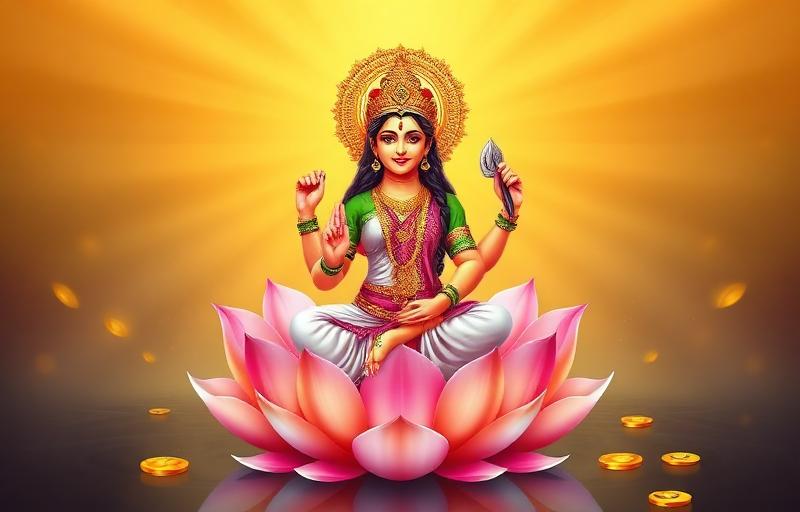
7. Padmasana Sthithe Devi Parabrahma Swarupini Parameshi Jagan Matar Mahalakshmi Namostute Seated on the lotus, Devi who is the form of supreme Brahman, supreme Ishwari, mother of the worlds - salutations, Mahalakshmi.
8. Shwetambara Dhare Devi Nanalankara Bhushite Jagat Sthithe Jagan Matar Mahalakshmi Namostute Adorned in white garments and various ornaments, the support of the universe, mother of the universe - salutations, Mahalakshmi.
Phala Shruti (closing verse): Mahalakshmyashtakam stotram yah pathed bhakti-maan narah / Sarva siddhi mavapnoti rajyam prapnoti sarvada - 'One who reads this Mahalakshmi Ashtakam with devotion attains all perfections and gains sovereignty.'
Recitation Vidhi: When, How Many, What to Offer
Best time: Brahma muhurta (4:30-6:00 AM) or pradosha-kal (sunset). Friday is the most powerful day; second-best is Tuesday. Avoid solar/lunar eclipse days and during menstruation (rest from puja, not from heart-prayer).
Direction: Face east at sunrise OR north for wealth-specific goals. Sit on a clean white or yellow asana (cloth seat). Spine upright; never recite lying down or while doing other work.
Setup:
- Bathe, wear clean (preferably yellow, white, pink or red) clothes.
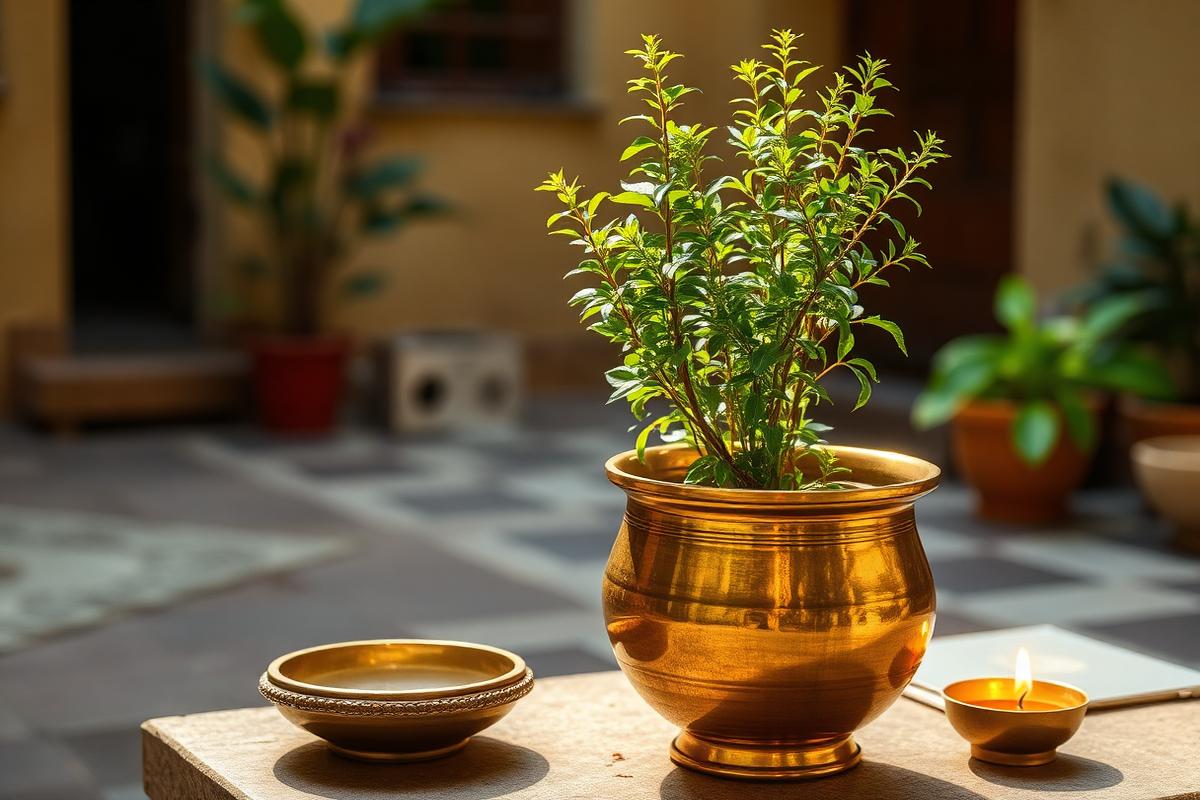
- Place a Mahalakshmi photo or yantra in front. If neither available, place a clean steel/silver plate with a lit ghee diya and a small kalash.
- Offer: red flowers (especially lotus or rose), kumkum, akshat (rice), one piece of fresh fruit, a small sweet (mishri or kheer), and 5-11 betel nuts or 5 coins.
Counts by goal (this is the proven structure from temple priests):
- Daily protection / general blessing: 1 time daily - 4 minutes a day, no big effort, 40-day result horizon.
- Specific small wish (loan repaid, exam pass, small bonus): 3 times daily for 21 days.
- Marriage, child or job: 8 times daily for 40 days.
- Major business breakthrough, real estate, settled wealth: 11 times daily for 90 days. This is the most demanding sadhana; results are typically transformational.
- Removing chronic poverty or generational financial stagnation: 21 times daily on every Friday + 8 times on other days, for 11 weeks.
Conclusion ritual (after the day's recitations):
- Sit silently for 2 minutes - silence is when Lakshmi 'speaks' the answer.
- Distribute the sweet (prasad) to family members and ideally to a young girl below 10.
- Place 1 coin in a special box reserved for Lakshmi-savings. Spend nothing from this box; let it grow for 6 months, then donate to a temple or to a needy widow on a Friday.
11 Documented Benefits & Real-Life Reports
Devotees who have completed the prescribed 40-day or 90-day sadhana consistently report a similar pattern of results. These are not promises - they are commonly observed effects, taken from temple seva diaries, family vrat records and modern spiritual practitioners' interviews.
1. Removal of pending payments / debt. The most common 'first sign' - money that was stuck (someone owed you, an insurance claim, a tax refund) suddenly releases between day 11 and day 27. Many people make the Ashtakam famous specifically for this.
2. Unexpected promotion or salary hike at the workplace, typically within the 40-day cycle if you are doing 8 paths daily.
3. End of constant petty losses - torn currency, missed billing cycles, broken plates, lost items. The 'leakage layer' of life seals up.
4. Family disputes over property cooling - Lakshmi pulls divisive relatives toward conciliation because her energy cannot stay where there is family-wealth conflict.
5. Improved relationship with elders, especially mother-in-law - verse 7 (Jaganmaatar) builds maternal-feminine respect in the home.
6. New opportunities through a 'forgotten' contact - an old client, college friend or distant relative reaches out within 30 days with an opportunity.
7. Loan or mortgage approval that was previously stuck.
8. Marriage proposal for unmarried daughters / sons - especially when done by the mother of the household.
9. Better sleep and reduced money-anxiety - Lakshmi's verse 4 (Mantra Murte) is famous for stilling the worry-loop.
10. Increased generosity in self - you suddenly want to give, not hoard. This is the truest sign Mahalakshmi has accepted the prayer.
11. Health improvements that indirectly save money - chronic small issues (acidity, low energy, headaches) reduce, doctor visits drop. Lakshmi is also Arogya-Lakshmi.
The single rule: do not chase the result; chase the discipline. People who read this hymn watching the clock for results get nothing. People who read it because they love the verses get everything.
What People Ask Most
Can I recite Mahalakshmi Ashtakam in Hindi if I cannot pronounce Sanskrit?+
Yes - Lakshmi listens to the heart, not the accent. However, since this stotra is extremely short and uses repeated phrases (Mahalakshmi Namostute appears 8 times), even a beginner can master Sanskrit pronunciation in 7-10 days of careful listening to an audio version. Hybrid approach is ideal: chant the Sanskrit aloud and then mentally repeat each verse's Hindi meaning. This way you preserve the sound-vibration potency of Sanskrit while ensuring your mind connects with the meaning.
What if I miss a day during the 40-day cycle?+
Do double on the very next day to compensate (e.g., if you missed 8 paths, do 16 the next day). One day's miss is excused by Lakshmi if you make it up immediately. Two consecutive days' miss requires restarting the 40-day count from day 1. The discipline matters more than the path-count because Lakshmi tests the steady mind, not the eager one. Travel and bad health are excused if you simply mentally recite the verses you remember - even one verse with full faith counts.
Can men also recite Mahalakshmi Ashtakam?+
Absolutely yes - in fact the original composer was Indra (a male deity). This is not a 'women's stotra'. Businessmen, traders, professionals, students and householders of any gender benefit equally. The verses address universal concerns: removal of poverty, completion of work, freedom from enemies, spiritual liberation. The only gender-specific tradition is that on Fridays, women lead the family puja by speaking Sankalpa, but the recitation itself is open to all.
After completing the 40-day sadhana, should I stop or continue?+
Continue with a reduced daily count - typically 1 or 3 paths daily as 'maintenance dose'. Stopping entirely after a successful sadhana is like turning off a tap after water has been flowing freely. Most long-term practitioners say that Lakshmi treats you as 'a family member' if you keep at least 1 daily recitation forever. New crises can then be addressed with temporary intensification (back to 8 or 11 daily for 40 days) and Lakshmi responds faster the next time because the channel is already open.
About the author
Acharya Vinaya Kapoor · M.A. Sanskrit, Mantra & Stotra Studies
Acharya Vinaya holds an M.A. in Sanskrit from Banaras Hindu University and writes the mantra and stotra commentary on Vandnaa. Her focus is on accurate pronunciation, traditional context, and helping modern readers connect with classical texts.
Meet the Vandnaa editorial team →