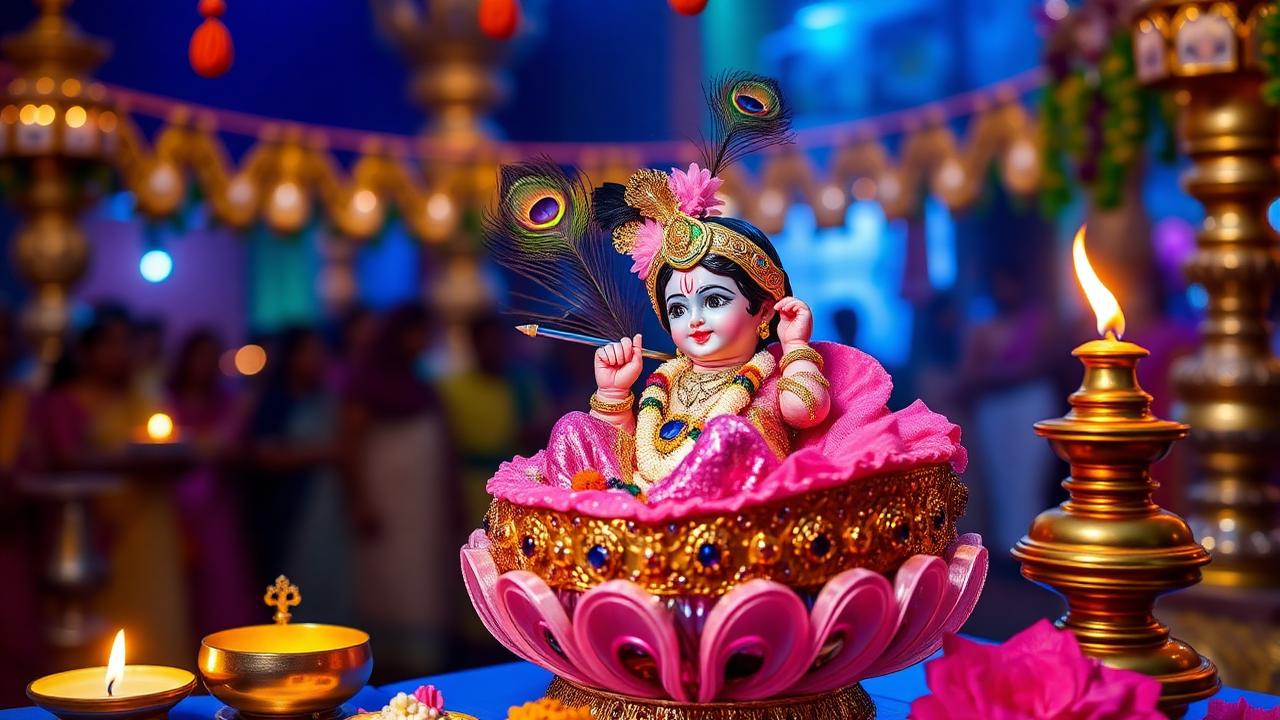
The Beloved Child of Gokul
After his birth in Mathura, baby Krishna was carried across the Yamuna to Gokul, where he was raised by his foster parents, Nanda and Yashoda, among the cowherds (gopas) and milkmaids (gopis) of Vraj. There, as a small, dark, curly-haired child, he filled every home with laughter and play.
Of all his childhood names, the most loved is Makhan Chor - the butter thief. The Bhagavata Purana and countless bhajans sing of how little Krishna, mad for fresh white butter (makhan), would slip into the gopis' homes and steal it from the hanging pots. These bal leelas (childhood plays) are not mere stories of mischief; they are tender windows into the divine come down as a child.
Stealing the Makhan
The gopis of Gokul churned fresh butter each morning and hung it high in earthen pots (handis) from the ceiling, out of reach. But little Krishna and his friends were not so easily stopped.
He would gather his cowherd companions, climb on one another's shoulders to form a human pyramid, and reach the hanging handi - a play remembered to this day in the festival of Dahi Handi on Janmashtami. He shared the butter with his friends and even the monkeys, his face smeared white, butter on his hands. When the gopis came to complain to Yashoda, Krishna would stand with the most innocent eyes and deny everything - even with butter still on his lips. The gopis, secretly delighted, could never stay angry with him for long.
Yashoda and the Universe in His Mouth
One of the most famous bal leelas tells how, one day, Krishna's friends complained to Yashoda that he had eaten mud. The worried mother asked him to open his mouth. When little Krishna obeyed, Yashoda saw the entire universe inside his mouth - the sky, the stars, the earth, all the worlds, and even herself holding her child.
For a moment she glimpsed that her naughty son was the Lord of all creation. But out of his love, Krishna drew a veil over her vision, and she once again saw only her dear little boy - so that the sweetness of motherly love could continue. This leela teaches that the infinite divine willingly becomes small and dependent, just to taste and give the joy of pure, simple love.
The Meaning Behind the Mischief

Krishna's butter-stealing is far more than charming naughtiness. Saints have seen in it a deep teaching:
- Butter is the pure, churned heart. Just as butter is the essence drawn from milk by patient churning, the loving heart is the essence drawn from a devotee's life. Krishna 'steals' the hearts that have been softened and purified by love.
- He steals to free us from possessiveness. By taking what we cling to, the Lord teaches us to hold nothing too tightly, and to offer everything to him with joy.
- Divine love breaks rules of distance. Krishna does not wait to be invited; he enters the home of the heart on his own, the way grace comes uninvited to those who love.
- God delights in closeness, not grandeur. The Lord of the universe chooses to be a child caught with butter on his face, showing that he treasures simple, intimate love above all worship of fear.
This is why the Makhan Chor is adored: he is God who came not to be feared, but to be loved like a child of the family.
Reader Questions Answered
Why is Krishna called Makhan Chor?+
As a child in Gokul, Krishna loved fresh butter (makhan) and would playfully steal it from the gopis' hanging pots with his friends. This sweet mischief earned him the loving name Makhan Chor, the butter thief.
What is the Dahi Handi connection to Krishna?+
The Dahi Handi festival, celebrated on Janmashtami, recreates how little Krishna and his friends formed human pyramids to reach the butter and curd pots hung high out of reach. Teams climb to break a hanging handi in his memory.
What did Yashoda see in Krishna's mouth?+
When Yashoda asked Krishna to open his mouth to check if he had eaten mud, she saw the entire universe inside it - the sky, stars, worlds and herself. It revealed that her naughty child was the Lord of all creation.
What is the spiritual meaning of Krishna stealing butter?+
Butter, churned patiently from milk, symbolises the heart purified by love. Krishna 'steals' such loving hearts, teaching us to release possessiveness and offer everything to him. It shows the divine prizes intimate love over grand, fearful worship.
About the author
Anjali Mehta · Editor, M.A. Religious Studies
Anjali is the managing editor for Vandnaa and oversees the festival and vrat coverage. She holds an M.A. in Religious Studies and reviews every published article for accuracy, accessibility, and tradition-fidelity.
Meet the Vandnaa editorial team →