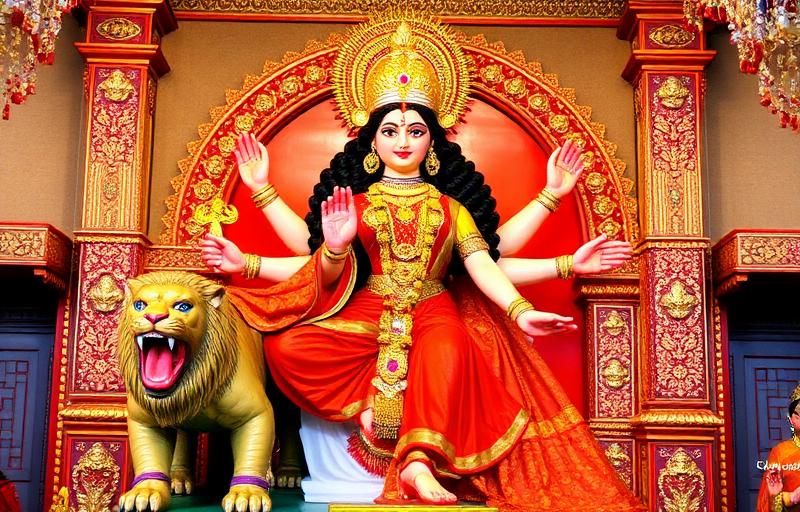
What Malinithan Is
Malinithan sits at the foot of the Siang hills near Likabali, in Lower Siang district of Arunachal Pradesh, close to the Assam border.
What stands there today is a site of temple ruins, excavated and protected, with a collection of carved stone that includes images and architectural fragments from an earlier temple complex. Among the sculptures found at the site are figures identified as Shiva and Parvati, Ganesha, Kartikeya, Surya and Nandi, along with carved panels and pillar sections.
The site is significant for two reasons that do not usually go together:
- Archaeologically, it is one of the most important early temple sites in Arunachal Pradesh, evidence of temple building in this region in an earlier period
- Devotionally, it is a living Devi shrine, where the goddess is worshipped as Malini and where devotees continue to come, particularly during Navratri
Most visitors reach it as part of a journey through the Assam and Arunachal border districts, and the setting, with the hills rising behind and the plains opening in front, is a large part of the impression it leaves.
The name itself is the doorway into the katha that the place is known for.
The Katha of the Garland
The katha attached to Malinithan connects it to the Krishna narrative, and specifically to Rukmini's marriage.
In the Puranic account, Rukmini, daughter of King Bhishmaka, did not wish to marry the husband chosen for her and sent word to Krishna. He came for her, and the two left together, pursued by her family, before their marriage was completed.
Local tradition places their route through this region, and holds that Krishna and Rukmini stopped and rested here on the journey.
At that halt, the tradition continues, Shiva and Parvati received them. Parvati gathered flowers and made a garland with her own hands, and offered it in welcome. Krishna, seeing this, addressed her as Malini, the one who makes garlands, and the place has carried the name since.
What makes this katha locally significant is what it connects:
- It ties this site to Bhishmaknagar, the archaeological site in the same broad region, which local tradition identifies with Bhishmaka's kingdom
- It makes Arunachal part of the Krishna narrative rather than peripheral to it
- It gives the shrine a Devi identity derived from an act of hospitality rather than from battle, which is unusual among Devi kathas
As with all such traditions, the historical questions are separate from the devotional ones. What is not in question is that the katha has been told here for a very long time and that it is the reason the site has the name and the worship it does.
The Carvings and What They Show
The sculptural remains are the reason Malinithan matters to anyone studying the history of temple building in the northeast.
What has been recovered and is displayed at the site includes:
- Images identified as Shiva and Parvati, in some cases seated together
- Ganesha and Kartikeya, completing the family group
- Surya, with the characteristic attributes of the sun deity
- A carved Nandi, among the better preserved pieces
- Panels showing animals, including elephants and lions, and decorative motifs
- Pillar bases, door frames and architectural fragments indicating a substantial structure
The style has been compared by scholars to temple traditions of eastern India, and the site is usually dated to a period between roughly the tenth and fourteenth centuries, with debate about the specifics.
What the remains establish is straightforward and worth stating plainly. A stone temple of some scale, with a full complement of Puranic deities carved in a recognised style, stood at the foot of these hills in an earlier period. That is significant for a state whose religious history outside its indigenous and Buddhist traditions is often assumed to be recent.
The site is protected, and visitors should treat the sculptures accordingly. Do not climb on the fragments, do not touch the carvings, and do not remove anything from the site.
Worship at the Site Today
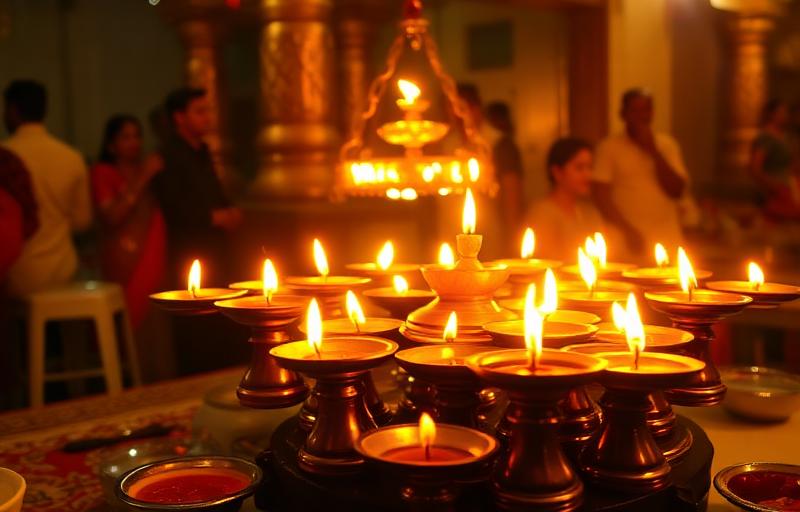
Malinithan is not only an archaeological site. Worship continues there.
- The Devi is worshipped as Malini, and devotees offer flowers, sindoor, incense and lamps
- Navratri is the main occasion, when the site sees its largest gatherings
- Devotees from the Assam border districts and from within Arunachal come through the year
- Local families make offerings and vows here in the way they would at any Devi shrine
The flower offering has a particular fitness here that devotees mention. Since the katha is about a garland made by hand and offered in welcome, flowers offered at Malinithan carry the meaning of the place itself rather than being a generic offering.
Nearby, Akashi Ganga, a stream site in the same area, is also associated with Devi worship and is visited by devotees coming to Malinithan.
One point for visitors from outside the region. Arunachal Pradesh has its own indigenous religious traditions, followed by many of the state's communities, which are distinct faiths with their own institutions rather than local variants of anything else. Malinithan is a Hindu site within a state whose religious landscape is plural, and visitors should be careful not to describe the whole region through this one site.
Bhishmaknagar and the Rukmini Connection
The Malinithan katha does not stand alone. It is part of a cluster of traditions in this region that connect to the Rukmini narrative.
Bhishmaknagar, in Lower Dibang Valley district, is an archaeological site with the remains of a substantial fortified settlement, including walls, gates and structures built in brick. Local tradition identifies it with the capital of King Bhishmaka, Rukmini's father, from which she left with Krishna.
Archaeologically, the site is associated with the Chutia period of the region's history, and scholars date the visible remains to a considerably later period than the epic. As with many such sites in India, the archaeological identification and the traditional one are different claims, and both are held locally without much difficulty.
What the cluster establishes is a devotional geography:
- Bhishmaknagar, where the journey began
- Malinithan, where the couple rested and Parvati offered the garland
- The route through the hills and along the Brahmaputra plains between them
This is how sacred geographies work everywhere in India. A narrative is mapped onto a landscape, and the landscape then carries the narrative for people who live in it. Arunachal's version places the state on the Krishna route, and for Hindu communities in the region that connection matters.
Visiting Malinithan
Malinithan is among the more accessible sites in Arunachal, since it sits close to the Assam border.
- Location - near Likabali, Lower Siang district, Arunachal Pradesh, at the foot of the Siang hills
- Access - from Assam, the usual approach is through the North Lakhimpur and Dhemaji side, with the site a short distance into Arunachal
- Permits - Indian citizens from outside the state require an Inner Line Permit, and foreign nationals require a Protected Area Permit. Arrange these in advance.
- Best time - October to April. The monsoon brings heavy rain and difficult road conditions across this belt.
- Facilities - limited at the site. Likabali and the Assam side towns have basic accommodation and food.
- Timings - the site is open during daylight hours, and it is best visited in the morning
Etiquette at a protected site with living worship:
- Do not climb on or touch the sculptures and architectural fragments
- Do not remove stones, fragments or flowers from the site
- Ask before photographing devotees during worship
- Follow whatever the site staff and local devotees indicate
For those making a longer trip, Akashi Ganga nearby, and the wider Assam and Arunachal border circuit, can be combined. Bhishmaknagar lies in a different district some distance away and needs its own planning rather than being added casually to the same route.
Frequently Asked Questions
What is Malinithan?+
Malinithan is a temple ruins site near Likabali in Lower Siang district of Arunachal Pradesh, with carved stone images including Shiva and Parvati, Ganesha, Kartikeya, Surya and Nandi. It is both a protected archaeological site and a living Devi shrine.
Why is it called Malinithan?+
Tradition says Krishna and Rukmini rested here on their journey, and Parvati welcomed them with a garland she made with her own hands. Krishna addressed her as Malini, the one who makes garlands, and the place has carried the name since.
How is Malinithan connected to Bhishmaknagar?+
Local tradition identifies Bhishmaknagar, an archaeological site in Lower Dibang Valley district, with the capital of King Bhishmaka, Rukmini's father. Malinithan is where the couple is said to have rested on the journey after leaving it.
Is worship still performed at Malinithan?+
Yes. The Devi is worshipped as Malini, with offerings of flowers, sindoor, incense and lamps. Navratri is the main occasion, and devotees from Arunachal and the Assam border districts come through the year.
Do visitors need a permit for Malinithan?+
Yes. Indian citizens from outside Arunachal Pradesh require an Inner Line Permit and foreign nationals require a Protected Area Permit. These should be arranged in advance of travel.
When is the best time to visit?+
October to April, with mornings the best part of the day. The monsoon brings heavy rain and difficult road conditions across this border belt, and facilities at the site itself are limited.
About the author
Pandit Ravindra Sharma · Vedic Rituals & Bhakti, 22+ years
Pandit Ravindra is the Vandnaa editorial team's resident specialist on aarti, chalisa, and daily devotion. He has performed home and temple pujas across Varanasi and Delhi for over two decades and contributes the bhakti-focused articles on this site.
Meet the Vandnaa editorial team →Explore on Vandnaa
Related Articles
Parashuram Kund: The Arunachal River Where an Axe Is Said to Have Fallen Away
8 min read
Doul Govinda: The Krishna Across the Brahmaputra and Assam's Holi
8 min read
Dwarka, Mathura and Vrindavan: Krishna's Three Homes and Their Meaning
8 min read
Kamakhya Devi Temple: Understanding Assam's Shakti Peetha
7 min read