The Horses
Manikkavachakar is the fourth of the four samayacharyas, author of the Thiruvasagam, book eight of the Tirumurai.
Who he was:
- Born at Thiruvathavur, near Madurai
- A brahmana of learning
- He entered the service of the Pandya king, given in the accounts as Arimarthana Pandiyan
- He rose to become chief minister, and held the titles of the office
- Ninth century by most placements
His name. Manikkavachakar means the one whose words are rubies, or gems. It was given to him for the Thiruvasagam.
His given name was Vathavurar, from his town.
The commission:
- The kingdom needed cavalry horses
- Arab horses came through the ports of the Coromandel and were expensive
- The king sent his chief minister with the treasury to buy them
- He set out for the coast
What happened at Thirupperunthurai:
- On the way he stopped at Thirupperunthurai, now Avudaiyarkoil in Pudukkottai district
- There he saw a teacher seated under a kurundhai tree, surrounded by disciples
- He got down, went to him, and did not get up again
- The teacher was Shiva
- He received initiation
What he did with the money:
- He gave up the mission
- He used the treasury to build and endow the temple at Thirupperunthurai
- He distributed the rest to the devotees who had gathered
- He remained there
And then the king sent for the horses.
- Word came from Madurai asking where the horses were
- Manikkavachakar sent word that they would arrive on a specified day
- The day approached and there were no horses
- He was recalled and imprisoned
What followed. The tradition's account.
- On the appointed day, horses arrived at Madurai, magnificent, with a groom leading them
- The king was satisfied and released him
- That night the horses reverted to jackals, which they had been, and ran through the city
- Manikkavachakar was arrested again
- He was made to stand on hot sand in the sun as punishment
And then the river came:
- The Vaigai flooded
- The king ordered every household to send one person to work on the embankment
- Each was assigned a section
The Old Woman and the Cane
The Vaigai episode is the best known story in Madurai's temple tradition, and it is a story about labour.
Vanthi:
- An old woman, alone, who sold pittu, a steamed rice flour sweet
- She had no household member to send to the embankment work
- She could not do it herself
- She prayed
What happened:
- A labourer appeared and offered to do her section in exchange for pittu
- She agreed, and gave him what she had
- He ate
- And then he did no work
- He carried baskets of earth, dropped them, wandered, sang, lay down, and got nothing done
- Her section of the embankment remained unfinished while every other section was completed
The king's inspection:
- The king came to inspect the work
- He found one gap
- He found the labourer responsible, idling
- He struck him with his cane
And every person in the world felt the blow.
The king, the workers, the queen, the animals, everything that lived. Because the labourer was Shiva.
And then he vanished, and the gap in the embankment closed by itself.
What the story is doing. Several things, and they are worth separating.
One. The Lord takes wage work. He appears as a day labourer, works for food, and is paid in a rice cake by an old woman who had nothing else.
Two. He does it badly. This is the detail people remember. He does not work well. He idles, sings and lies down, and the embankment does not get built.
The tradition finds this funny and does not apologise for it.
Three. The blow lands on everybody. The theological point: striking him is striking everything, because everything is in him.
Four. It is done for one poor woman. The whole apparatus, the appearance, the labour, the beating, the universal sensation, is arranged so that an old woman selling snacks does not get in trouble with the authorities.
Vanthi's place. She is honoured in Madurai tradition and the episode is depicted in the Meenakshi temple.
The Thiruvilaiyadal Puranam, the sixty four sacred games of Shiva at Madurai, includes this as one of them, and it is among the most frequently painted and sculpted.
The sixty four Thiruvilaiyadal. Worth knowing since they organise Madurai's whole tradition.
- Sixty four episodes in which Shiva acted at Madurai
- Including selling bangles, teaching grammar, becoming a firewood seller, turning jackals into horses, hunting, and this one
- Compiled in the Thiruvilaiyadal Puranam of Paranjothi Munivar
- Depicted throughout the Meenakshi temple
- The 1965 Tamil film Thiruvilaiyadal dramatised several and is how most Tamil speakers know them
The pattern in them. Shiva at Madurai does not appear in majesty. He appears as a worker: a labourer, a firewood seller, a bangle seller, a horse trader, a tutor.
And he is generally acting on behalf of somebody with no leverage: an old woman, a poor devotee, a girl whose family cannot pay.
That is the Madurai register, and it is very different from the register of, say, the Himalayan Shiva of the Puranas.
What Manikkavachakar did after:
- He was released
- He resigned from office and left Madurai
- He travelled to the Shaiva temples
- And he ended at Chidambaram
The Thiruvasagam
What it is: book eight of the Tirumurai, in 51 sections, around 656 verses.
The saying about it. The most quoted line in Tamil about any text:
Thiruvasagathukku urugaadhaar oru vaasagathukkum urugaar - those who do not melt at the Thiruvasagam will not melt at any word.
What makes it different from the Tevaram:
- The Tevaram is largely organised by temple, one decad per shrine, describing and praising
- The Thiruvasagam is organised by state of mind
- It is interior, sustained, and often has no external subject at all
- It is about what happens to a person, not about a place
Its principal sections:
- Sivapuranam, the opening, which sets out the Lord's nature and the poet's condition, and which is very widely recited
- Keerthi Thiruvahaval, on the deeds
- Thiruvempavai, twenty verses in the pavai nonbu frame, recited through Margazhi in Shiva temples exactly as Andal's Thiruppavai is in Vishnu temples
- Thiruvammanai, Thirupporchunnam, Thirukkothumbi and others, using folk song forms
- Achchopathigam, Adhisayappathu, Punarchipathu and the later sections, which are among the most intense
- Kuzhaitha Pathu, the ten on melting
The Thiruvempavai. Worth its own note.
- Twenty verses in the girls' vow frame, the same convention Andal used
- Recited daily through Margazhi in Shiva temples across Tamil Nadu
- Also recited in Thailand, at the Triyampavai Trippavai royal swing ceremony, which is a genuinely remarkable piece of transmission and reflects the old Tamil presence in southeast Asia
What the Thiruvasagam actually does. It records a sequence of states.
- Being seized, without having sought it
- Gratitude, at length
- Then the loss of the sense of presence
- Then complaint, panic and pleading
- Then return
- And the cycle again
The honesty about absence. This is why it is loved.
A very large part of the Thiruvasagam is about not having what he had. It describes the state of somebody who has experienced something, lost it, and cannot get it back by wanting.
The verses accuse himself, accuse Shiva, describe the body's inability to hold what happened, and repeatedly say that he cannot go on and does not know what to do.
Why that matters practically. Because that is the ordinary experience of a religious life, and most devotional literature does not describe it.
People have periods where the practice is alive, followed by long periods where it is not, and generally conclude that the fault is theirs and that they have failed.
The Thiruvasagam says: this is what it is like, it happened to me, here is exactly how it felt, and it went on for a long time.
G. U. Pope. Worth mentioning.
George Uglow Pope, a British missionary and Tamil scholar, translated the Thiruvasagam into English and published it in 1900, at the age of eighty. He also translated the Thirukkural and the Naladiyar.
He wrote of the Thiruvasagam in terms of very great admiration, and his epitaph describes him as a student of Tamil.
His translation is dated in its language and remains the standard English version many people first encounter. Newer translations exist and are better in places.
The Thirukkovaiyar. His other work, also in book eight.
- 400 verses in the kovai form, a classical Tamil genre organising the phases of a love affair in sequence
- Ostensibly secular love poetry, read by the tradition as the soul and Shiva
- Technically among the most accomplished works in Tamil, and studied as a model of the akam conventions
Reading the Thiruvasagam. A practical note.
Start with the Sivapuranam. It is the opening section, it is widely recited, recordings are easy to find, and it contains the whole work in outline.
Its opening line, Namachivaya vaazhga, may the five syllables live, is one of the most widely known lines in Tamil.
Chidambaram
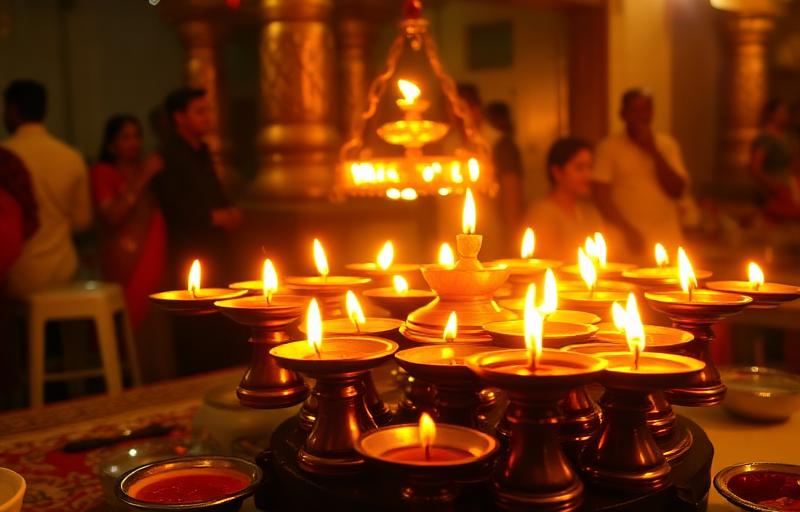
Manikkavachakar's life ends at Chidambaram, and the place deserves a full account since it is the centre of Tamil Shaivism.
What Chidambaram is:
- The Nataraja temple, in Cuddalore district, Tamil Nadu
- Called simply Koil, the temple, in Tamil Shaiva usage, as Srirangam is simply the temple in Vaishnava usage
- One of the Pancha Bhoota Sthalams, representing akasha, space or ether
- The place of Shiva's dance, the Ananda Tandava
The Chidambara Rahasyam. The secret of Chidambaram.
Beside the Nataraja image is a space, screened by a curtain, which is empty.
The curtain is drawn aside at certain times and there is nothing behind it, or golden bilva leaves hanging in air.
That emptiness is the Chidambara Rahasyam, and it is the temple's central statement: that the reality is akasha, space, and that the ultimate object of worship is not an object.
How to describe it fairly. The tradition treats it as the highest teaching, delivered without words, in the form of a curtain that opens onto nothing.
A visitor is shown it. Whether it strikes you as profound or as an empty alcove is between you and the alcove, and the tradition is comfortable with that.
The dance:
- Nataraja, the lord of the dance, in the Ananda Tandava posture
- The five acts: creation in the drum, protection in the raised hand, destruction in the fire, concealment in the foot on the demon, and grace in the raised foot
- The Chidambaram bronze is the iconographic standard for Nataraja everywhere
- The Nataraja image is among the most reproduced Indian religious images in the world
Manikkavachakar at Chidambaram:
- He came there and remained
- The Thiruvasagam's later sections are composed there
- The tradition holds that Shiva himself came as a brahmana and wrote down the Thiruvasagam and the Thirukkovaiyar at his dictation
- And signed it, and left the manuscript on the temple step
- The priests found it in the morning, signed by the Lord, and asked Manikkavachakar what it meant
- He took them into the sanctum, pointed at Nataraja, said that he was the meaning, and merged into the image
The Buddhist debate. The other Chidambaram episode.
- Buddhist monks from Sri Lanka came, with their king, to debate
- Manikkavachakar debated them
- The king's daughter was mute
- As part of the contest, Manikkavachakar caused her to speak, and she put the questions the Buddhists could not answer
- The Buddhists were defeated and, in some accounts, converted
How to handle this. As with the Jain material earlier in this batch.
The debate accounts are polemical literature from a period of genuine competition. Buddhism was present in the Tamil country, produced significant Tamil literature including the Manimekalai, and declined over these centuries.
A reader should know that these accounts are written by the winning side, that the losing traditions have their own literature much of which is lost, and that the Manimekalai and the Kundalakesi are Tamil Buddhist works worth knowing about.
Nagapattinam had a substantial Buddhist establishment, the Chudamani Vihara, endowed by a Srivijaya king with Chola support, and Buddhist bronzes from the region are in museums.
That is part of the same landscape.
Visiting Chidambaram:
- In Cuddalore district, around 60 kilometres from Puducherry
- The temple is administered by the Dikshitar community, a hereditary priesthood, which is unusual and has been the subject of long litigation over administration
- Open morning and evening with a midday closure
- The Nataraja sanctum, the Chidambara Rahasyam, the Govindaraja Vishnu shrine within the complex, the thousand pillared hall and the Sivakamasundari shrine
- The Natyanjali dance festival at Maha Shivaratri, when dancers from across India perform before Nataraja, is worth timing for
- Arudra Darshan, in Margazhi, is the principal festival
A note on the Govindaraja shrine. There is a Vishnu temple, a Divya Desam, inside the Chidambaram complex, and its history includes serious disputes.
That is worth knowing rather than being surprised by, and what a visitor sees is two traditions on one site, which is more common in India than the usual accounts suggest.
On Losing It
The Thiruvasagam's real subject is what to do when the practice stops working, and since that is the commonest religious problem, it deserves a section.
What the text describes:
- Having been seized, unsought, at Thirupperunthurai
- A period of intensity
- Then the sense of presence going
- Long stretches of nothing
- Trying to get it back and failing
- Anger, at himself and at Shiva
- Bargaining
- Exhaustion
- And intermittent return
The verses about the body. He returns repeatedly to the physical.
He describes the body as unable to contain what happened, as melting, as bones softening, as being unable to stand. And then, later, as heavy, dull and unresponsive.
The verses of accusation. He tells Shiva:
You took me. I did not ask. You showed me and then went. What was the point of taking me if you were going to leave. You have done this to me and now you do nothing.
Why this is useful. Because it names a state most people in any devotional life go through and generally think is unique to them.
The pattern, in the tradition's own terms:
- A period of grace, unearned and frequently sudden
- Followed by its withdrawal
- Which is experienced as loss and as personal failure
- And which the texts treat as a normal stage rather than a fault
What the tradition says to do about it:
- Continue the practice without the feeling. The lamp, the name, the recitation, at the same time each day
- Do not chase the earlier experience. Trying to reproduce it is the thing that most reliably prevents anything
- Read the people who wrote about it. That is what the Thiruvasagam is for
- Keep company with people who are also doing this
- Give it time, in years rather than weeks
And what it does not say:
- That the dryness means you did something wrong
- That more intense effort will produce a return
- That somebody can restore it for you for a fee
On that last point. There is a substantial trade in religious experience.
Anybody who tells you they can arrange an experience, restore your connection, remove a block or diagnose why grace has left you, in exchange for money, is selling something. The tradition's own texts describe this state as coming and going for reasons the person cannot control, which is precisely why it cannot be sold.
When it is not dryness. This matters and should be said.
A persistent inability to feel anything, loss of interest in things that mattered, sleep and appetite changes, and a sense of futility are also the description of depression, which is common, treatable and not a spiritual condition.
If what you are experiencing includes those, it is worth speaking to a doctor as well as reading the Thiruvasagam. The two are not in competition.
Tele MANAS is 14416 in India, free, in many languages.
What Manikkavachakar himself did. He kept writing.
The later sections of the Thiruvasagam are composed in the state they describe. He did not stop composing during the dry period; the dry period is what he composed about.
And the tradition made it book eight, and it is recited daily, and there is a saying that if it does not move you nothing will.
Places and Practice
Places
Avudaiyarkoil, Thirupperunthurai:
- In Pudukkottai district, where he met the teacher under the kurundhai tree and spent the treasury
- The Athmanathaswamy temple
- Remarkable for its stone work: the stone chains, the stone rafters carved to look like wood, and the extraordinarily fine carving throughout
- There is no linga in the sanctum in the usual form; the worship is of the avudaiyar, the pedestal, which is unusual and is connected to the temple's own understanding
- No abhisheka with liquids in the usual manner
- Quiet, and among the finest stone carving in Tamil Nadu
Madurai:
- The Meenakshi Amman temple
- The Vaigai and the embankment story
- The Thiruvilaiyadal depictions throughout the temple
Thiruvathavur:
- His birthplace, near Madurai
Chidambaram:
- Where he ended, where the manuscript was left on the step, and where he merged into the image
- The Nataraja temple and the Chidambara Rahasyam
Practice
The Sivapuranam:
- The opening section of the Thiruvasagam
- Very widely recited, and the standard entry point
- Begins Namachivaya vaazhga
- Recordings are easy to find and it is often the first Tamil devotional text a child learns
The Thiruvempavai:
- Twenty verses, recited daily in Shiva temples through Margazhi
- The Shaiva counterpart to Andal's Thiruppavai
- Both are frequently recited in the same household
Namah Shivaya:
- The five syllables, which the Sivapuranam opens by blessing
Reading:
- The Thiruvasagam in Tamil with translation, in print and online
- G. U. Pope's 1900 English translation, dated but historically important
- Newer translations exist
- Recordings by Oduvars and by Carnatic musicians
When to go:
- Margazhi, December to January, for the Thiruvempavai and Arudra Darshan at Chidambaram
- Maha Shivaratri at Chidambaram for the Natyanjali festival
- October to March for weather
A practice from him. The specific one.
Keep going when it is not working.
That is the whole of the Thiruvasagam's practical content. He had one overwhelming experience, lost the sense of it, spent years in a state he describes as unbearable, and continued the practice and the writing throughout.
The verses about absence are as much a part of book eight as the verses about presence, and the tradition recites both.
A closing thought. A chief minister was sent with a kingdom's money to buy war horses.
He met a man sitting under a tree, spent the entire treasury on a temple, was imprisoned, was made to stand on hot sand, and was released only because jackals were temporarily made to look like horses, which stopped working by nightfall.
He resigned, walked away, and spent the rest of his life writing about how difficult it is to hold on to something once you have had it.
And the resulting book is the one about which Tamil says that if this does not melt you, nothing will.
What People Ask Most
Who was Manikkavachakar?+
The fourth of the four samayacharyas and author of the Thiruvasagam, book eight of the Tirumurai. Born Vathavurar at Thiruvathavur near Madurai, he became chief minister to the Pandya king. Sent with the treasury to buy cavalry horses, he met a teacher under a kurundhai tree at Thirupperunthurai, received initiation, and spent the entire treasury on building and endowing the temple there.
What is the story of Vanthi and the labourer?+
When the Vaigai flooded, the Pandya king ordered every household to send one person to work on the embankment. Vanthi, an old woman alone who sold pittu, had nobody, and a labourer offered to do her section for pittu. He ate, then did no work, idling and singing while every other section was finished. The king struck him with his cane, and every living thing felt the blow, because the labourer was Shiva. The whole apparatus was arranged so that an old woman selling snacks would not get in trouble.
What is the Thiruvasagam?+
Book eight of the Tirumurai, in 51 sections and around 656 verses. Unlike the Tevaram, which is largely organised by temple, it is organised by state of mind, is interior and sustained, and often has no external subject at all. Its subject is what happens to a person: being seized unsought, a period of intensity, then the loss of the sense of presence, long stretches of nothing, and intermittent return. The Tamil saying is that those who do not melt at the Thiruvasagam will not melt at any word.
What is the Chidambara Rahasyam?+
Beside the Nataraja image at Chidambaram is a space screened by a curtain which is empty. The curtain is drawn aside at certain times and there is nothing behind it, or golden bilva leaves hanging in air. That emptiness is the temple's central statement: that the reality is akasha, space, and that the ultimate object of worship is not an object. Chidambaram is one of the Pancha Bhoota Sthalams, representing space.
What does the Thiruvasagam say about losing devotion?+
That it happens, and that it is a normal stage rather than a fault. A large part of the text is about not having what he once had: trying to get it back and failing, anger at himself and at Shiva, bargaining, exhaustion, and intermittent return. The tradition's advice is to continue the practice without the feeling, not to chase the earlier experience since that most reliably prevents anything, keep company with others doing the same, and give it years rather than weeks.
What is Avudaiyarkoil worth seeing for?+
It is where Manikkavachakar met the teacher and spent the treasury, and it is remarkable for its stone work: stone chains, stone rafters carved to look like wood, and extraordinarily fine carving throughout, among the finest in Tamil Nadu. There is no linga in the sanctum in the usual form; the worship is of the avudaiyar or pedestal, which is unusual, and there is no abhisheka with liquids in the usual manner. It is quiet and in Pudukkottai district.
About the author
Pandit Ravindra Sharma · Vedic Rituals & Bhakti, 22+ years
Pandit Ravindra is the Vandnaa editorial team's resident specialist on aarti, chalisa, and daily devotion. He has performed home and temple pujas across Varanasi and Delhi for over two decades and contributes the bhakti-focused articles on this site.
Meet the Vandnaa editorial team →