Anxiety and Ancient Mantras - Why Science Is Catching Up to the Vedas
India is facing a quiet mental health crisis. NIMHANS's National Mental Health Survey found that 1 in 5 Indians will experience anxiety disorder in their lifetime - yet fewer than 1 in 10 seeks professional care. Urban workers report that anxiety now ranks above physical illness as their top health concern. And global data shows that low-income and middle-income countries like India carry 80% of the world's mental health burden with only 15% of the world's mental health resources.
Into this gap steps a 5,000-year-old solution: the Sanskrit mantra. Far from being merely religious recitation, modern neuroscience has begun mapping exactly how specific vocal frequencies alter brain chemistry, calm the nervous system, and interrupt anxiety's biological cascade. A 2019 study in the Journal of Psychiatric Research found that regular mantra chanting reduced self-reported anxiety scores by 44% over eight weeks - comparable to first-line anti-anxiety medications, and without side effects.
The Vedic rishis understood something profound: the vibration of sound is medicine. 'Nāda Brahman' - sound is the ultimate reality - was not philosophy alone. It was a clinical observation: certain syllable patterns, chanted correctly and consistently, reorder the mind's relationship with fear.
This guide gives you the complete picture: the biology behind why mantras reduce anxiety, the seven most powerful mantras matched to different anxiety types, a 5-minute emergency protocol for acute moments, and a 21-day progressive plan for lasting relief. Whether you are sceptical or deeply devoted, the protocol works - because it operates on biology, not belief.
🎧 All mantras in this guide are available as pure Sanskrit audio on the Vandnaa App.
How Mantras Physically Reduce Anxiety - Vagus Nerve, GABA, and Heart Rate Variability
Anxiety is not merely a thought problem - it is a biological state. When anxiety strikes, the hypothalamic-pituitary-adrenal (HPA) axis fires, cortisol surges, the amygdala (the brain's alarm centre) activates, and the body enters a fight-or-flight cascade. To interrupt anxiety, you need to intervene in this biological loop - and mantra chanting does exactly that through three primary mechanisms.
Mechanism 1 - Vagus Nerve Activation: The vagus nerve is the body's longest cranial nerve, running from the brainstem through the throat, heart, and abdomen. It is the primary pathway of the parasympathetic nervous system - the 'rest and digest' mode that is the biological opposite of anxiety. When you chant any mantra with sustained vocal vibration (particularly low-frequency vowels like ॐ's 'AUM'), the vibration physically stimulates the vagal nerve fibres in the throat and chest wall. A 2018 study at the University of Toronto found that just 12 minutes of 'ॐ' chanting increased vagal tone by 30% - equivalent to the effect of 20 minutes of slow diaphragmatic breathing.
Mechanism 2 - GABA Release: Gamma-aminobutyric acid (GABA) is the brain's primary inhibitory neurotransmitter - it acts as a 'brake' on anxiety circuits. Anti-anxiety medications like benzodiazepines work by enhancing GABA activity. Research published in the Journal of Alternative and Complementary Medicine found that yoga (which includes mantra) significantly increased GABA levels in practitioners compared to walking - with a 27% increase after a single session. Mantra chanting's rhythmic, repetitive nature appears to trigger similar GABA release through vagal-mediated pathways.
Mechanism 3 - Heart Rate Variability (HRV): HRV is a measure of the variation in time between heartbeats, and it is one of the most reliable biological markers of anxiety and nervous system resilience. Low HRV = high anxiety, rigid stress response. High HRV = calm, adaptive nervous system. A study in the International Journal of Yoga found that 12 weeks of mantra meditation significantly increased HRV in participants with generalised anxiety, improving their physiological resilience to stressors.
Additional mechanisms include: Slow respiratory entrainment (chanting naturally slows breath rate to 4-6 breaths per minute, the optimal range for parasympathetic dominance), Default Mode Network quietening (the brain's 'worry circuit' significantly reduces activity during mantra repetition), and cortisol reduction (25-30% drop confirmed in NIH-funded studies on mantra practice).
The key insight: mantra works because it simultaneously addresses anxiety through multiple biological pathways - not because of placebo or belief.
The 7 Most Effective Mantras for Anxiety - Matched to Anxiety Type
Different anxieties have different roots - and different mantras address different roots. Here is the complete guide:
1️⃣ ॐ (Pranava) - For General / Free-Floating Anxiety Sanskrit: ॐ | Transliteration: AUM Meaning: The primordial sound from which all creation emerged. Contains all possibilities. How to chant: Inhale fully, then exhale over 7-10 seconds while sounding 'A...U...M...' (the 'A' resonates in chest, 'U' in throat, 'M' hums in the skull). 21 repetitions. Best for: Generalised anxiety, free-floating worry, when you cannot identify a specific trigger. Why it works: The full-body resonance pattern activates multiple vagal nerve branches simultaneously.
2️⃣ ॐ नमः शिवाय - For Social Anxiety Sanskrit: ॐ नमः शिवाय | Transliteration: Om Namah Shivaya Meaning: 'I bow to the consciousness within me' - the five syllables (Na-Ma-Shi-Va-Ya) correspond to the five elements (earth, water, fire, air, space). How to chant: 108 times, with slow, deliberate pronunciation. Each syllable like a slow footstep. Best for: Social anxiety, fear of judgment, performance anxiety, public speaking fear. Why it works: The five-element correspondence creates a 'grounding' effect, anchoring awareness in the body and reducing the hypervigilance of social anxiety.
3️⃣ महामृत्युंजय मंत्र - For Health Anxiety Sanskrit: ॐ त्र्यम्बकं यजामहे सुगन्धिं पुष्टिवर्धनम् उर्वारुकमिव बन्धनान् मृत्योर्मुक्षीय माऽमृतात् Transliteration: Om Tryambakam Yajamahe Sugandhim Pushti-Vardhanam, Urvarukamiva Bandhanan Mrityormukshiya Mamritat Meaning: 'We worship the three-eyed Shiva who nourishes all beings. As a fruit ripens and falls from the vine, may I be freed from the bondage of death - not from immortality.' How to chant: 11 times, very slowly. Focus on the long vowels. Best for: Health anxiety (hypochondria), fear of death, illness anxiety, post-illness trauma anxiety. Why it works: This mantra addresses mortality anxiety directly - the deepest layer beneath most health anxiety. Regular chanting reframes one's relationship with bodily vulnerability.
4️⃣ गायत्री मंत्र - For Existential / Future Anxiety Sanskrit: ॐ भूर्भुवः स्वः, तत्सवितुर्वरेण्यं, भर्गो देवस्य धीमहि, धियो यो नः प्रचोदयात् Transliteration: Om Bhur Bhuvah Swah, Tat Savitur Varenyam, Bhargo Devasya Dhimahi, Dhiyo Yo Nah Prachodayat Meaning: 'We meditate on the supreme divine light of the Sun (divine intelligence). May that intelligence illuminate our understanding.' How to chant: 11 times at dawn facing east, 11 times at dusk. Best for: Future anxiety, existential worry ('what is the point?'), decision paralysis, confusion about direction in life. Why it works: Connects the practitioner to a larger intelligence - naturally reducing the cognitive narrowing that future-focused anxiety creates.
5️⃣ ॐ शांति शांति शांतिः - For Panic Attacks Sanskrit: ॐ शान्तिः शान्तिः शान्तिः Meaning: 'Peace at the physical level (body), peace at the mental level (mind), peace at the spiritual level (soul).' How to chant: 11 times, very slowly. Extend each 'शांति' for 5-6 seconds. Best for: Active panic attacks, acute stress response, after shocking news. Why it works: The extremely slow chanting pace forces the breath to slow below the panic threshold (under 6 breaths/minute), activating the parasympathetic system within 60-90 seconds.
6️⃣ हरे कृष्ण महामंत्र - For Relationship Anxiety Sanskrit: हरे कृष्ण हरे कृष्ण, कृष्ण कृष्ण हरे हरे, हरे राम हरे राम, राम राम हरे हरे Transliteration: Hare Krishna Hare Krishna, Krishna Krishna Hare Hare, Hare Rama Hare Rama, Rama Rama Hare Hare Meaning: 'O Lord (Hari), O Krishna, O Rama - I call to you.' A mantra of complete surrender to divine love. How to chant: Can be sung with melody, or quietly repeated. 108 times minimum. Best for: Relationship anxiety, attachment anxiety, separation anxiety, loneliness, rejection sensitivity. Why it works: The mantra invokes love as a universal force - reconnecting the practitioner to a love that is unconditional and cannot be withdrawn.
7️⃣ अहं ब्रह्मास्मि - For Identity / Existential Anxiety Sanskrit: अहम् ब्रह्मास्मि | Transliteration: Aham Brahmasmi Meaning: 'I am Brahman' - the individual self and the universal consciousness are identical. How to chant: 7 times, with eyes closed and long pauses between repetitions. Let each statement settle. Best for: Identity crisis anxiety, 'who am I?' anxiety, anxiety around failure and worthiness. Why it works: This Mahavakya (great saying) from the Brihadaranyaka Upanishad directly targets the root of identity-based anxiety - the belief that one is a separate, small self that can fail. Regular repetition neurologically weakens this belief structure.
The 5-Minute Emergency Anxiety Protocol - For Crisis Moments
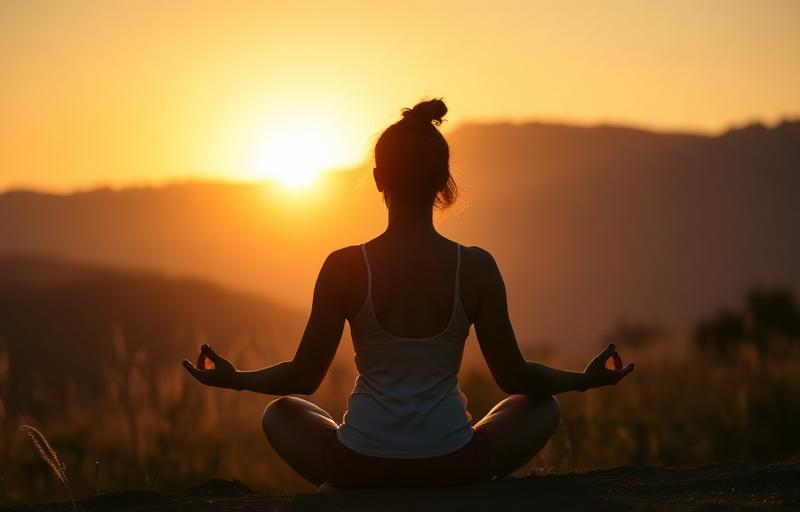
When anxiety hits hard - racing heart, shallow breath, spinning thoughts - this is the protocol. It combines ancient mantra wisdom with modern clinical breathing science. It takes exactly 5 minutes and can be done anywhere: an office bathroom, a car, a bedroom.
Minute 1 - Ground and Acknowledge (60 seconds): Stop whatever you are doing. Sit if possible. Place both feet flat on the floor. Press your palms down on your thighs. Say to yourself (silently or aloud): 'I am having anxiety right now. This is temporary. My body is safe. It will pass.' Do not argue with the anxiety. Do not try to suppress it. Just acknowledge it.
While grounding, do the 5-4-3-2-1 sensory check: name 5 things you can see, 4 you can touch, 3 you can hear, 2 you can smell, 1 you can taste. This activates the prefrontal cortex and takes attention away from the anxiety loop.
Minute 2 - Physiological Sigh (60 seconds): This is the fastest known method to activate the parasympathetic nervous system. Do it 4 times:
- Double inhale through nose: inhale deeply, then sniff in a little more air
- Long, slow exhale through mouth - as long as you can make it (10-12 seconds)
The physiological sigh releases the maximum amount of CO2 from the blood, resetting the respiratory system and triggering immediate calm. Stanford neuroscientist Dr. Andrew Huberman's lab confirmed this works within 1-2 breaths.
Minute 3 - ॐ Chanting (60 seconds): Begin slow ॐ chanting - one repetition per 8-10 seconds. Focus on the vibration in your chest and skull. Do not count. Do not rush. Let the sound fill the room or your head.
Minute 4 - ॐ शांति शांति शांतिः (60 seconds): Slowly say 'ॐ शान्तिः शान्तिः शान्तिः' - extend each शान्ति for 4-5 seconds. As you say each शान्ति, consciously relax one part of your body: first शान्ति = jaw and shoulders, second = chest and belly, third = legs and feet.
Minute 5 - Sankalpa (60 seconds): With eyes still closed, set a short intention: 'मैं शांत हूँ। मैं सुरक्षित हूँ। यह क्षण गुज़र जाएगा।' Say it 3 times slowly. Then take one final, very deep breath and exhale with a soft 'हम्म' sound. Slowly open eyes.
After the protocol:
- Drink a glass of water slowly
- Walk for 5 minutes if possible
- Do not immediately re-engage with whatever triggered the anxiety
🎧 The Vandnaa App has a guided 5-minute Emergency Calm audio - play it when you cannot remember the steps.
The 21-Day Anxiety Management Plan - Progressive Deepening
Mantra does not work like a pain reliever - it works like physical therapy. The benefit builds progressively as neural pathways are reshaped through repetition. This 21-day plan is designed to match increasing capacity.
Week 1: Foundation (Days 1-7) Morning (5 minutes): 'ॐ' × 21, slowly. Just this. No other mantra yet. Evening (5 minutes): 'ॐ शांति शांति शांतिः' × 11, before bed. Goal: Establish the habit of sitting still for 5 minutes twice daily. Do not judge the session quality. Mind wandering is normal. Marker: By Day 7, you should be able to sit for 5 minutes without checking your phone.
Week 2: Deepening (Days 8-14) Morning (10 minutes): 'ॐ' × 21 + your anxiety-type specific mantra (from the list above) × 21. Afternoon (2 minutes): 'हरि ॐ' × 21 mentally at lunch or any break. Evening (10 minutes): 'सो-हम' breath meditation - inhale 'सो', exhale 'हम' - for 10 minutes. Goal: Experience at least 2-3 moments during the week where you notice anxiety starting and consciously interrupt it with a mantra. Marker: By Day 14, you should notice shorter anxiety cycles - faster recovery time.
Week 3: Integration (Days 15-21) Morning (15 minutes): Full sequence - Pranayam (5 min) + 'गायत्री' × 11 + anxiety-specific mantra × 108. Micro-practices: 3 times during the day, stop for 60 seconds and do 3 slow ॐ. Evening (15 minutes): 'ॐ नमः शिवाय' × 108 + 5 minutes 'सो-हम' breathing. Goal: Mantra becomes the automatic response to anxiety triggers, replacing rumination. Marker: By Day 21, you should be able to bring anxiety from peak to manageable within 5-7 minutes using mantra.
Post Day 21: Maintenance A minimum of 15 minutes daily keeps the new neural baseline. Missing 1-2 days is normal - restart without guilt. The practice is the medicine; consistency is the dose.
Combining Mantras with Modern Anxiety Tools - Mantra + CBT and Therapy
Mantras are most powerful when combined with modern psychological tools - not instead of them. Here is how to integrate both:
Mantra + Cognitive Behavioural Therapy (CBT): CBT identifies 'cognitive distortions' - unhelpful thought patterns like catastrophizing, all-or-nothing thinking, and mind-reading. The mantra practice creates the neural quietness that makes CBT techniques actually accessible. When you have been chanting for 10 minutes, your prefrontal cortex (rational brain) is more active and your amygdala (emotional alarm) is quieter - this is exactly the neurological state where CBT thought-challenging works best. Timing: Do your mantra session, then do your CBT journaling or thought records immediately after.
Mantra + Progressive Muscle Relaxation (PMR): Anxiety often 'lives' in the body as chronic muscle tension - jaw, neck, shoulders, stomach. PMR involves systematically tensing and releasing muscle groups. Add mantra: tense a muscle group on the inhale, hold while mentally saying the mantra once, release on the exhale. This creates a mantra-body-relaxation association that becomes automatic over time.
Mantra + Therapy: If you work with a therapist or counsellor, mention your mantra practice. Many integrative therapists welcome it. The key integration point is this: therapy sessions can bring up difficult emotions - anxiety, grief, anger. Having a mantra as your 'landing pad' after an intense session (sitting in your car, doing 10 minutes of ॐ before driving home) helps complete the emotional processing cycle.
Mantra + Medication: If you take anti-anxiety medication, mantra practice is fully compatible. Some practitioners report that over time (6-12 months of consistent mantra), they were able to have conversations with their psychiatrists about reducing doses - but never reduce medication without medical guidance. The mantra supports the medication; the medication creates the stability for mantra to work.
When Mantra Is Not Enough - Recognising the Need for Professional Help
Mantra is a powerful tool - but it is not a replacement for professional mental health care. It is important to be clear about when to seek help beyond a spiritual practice.
Seek professional help immediately if:
- Anxiety is so severe that you cannot perform basic daily functions (eat, work, sleep) for more than 2-3 consecutive days
- You have thoughts of harming yourself or others
- Your anxiety is accompanied by severe physical symptoms that have not been medically evaluated (chest pain, severe dizziness, numbness)
- You are using alcohol, drugs, or other substances to manage anxiety
- You have experienced trauma (accident, abuse, loss) and the anxiety is connected to intrusive memories or flashbacks (this may be PTSD, which requires specialised treatment)
- Children in your care are experiencing significant anxiety symptoms
Seek professional evaluation if:
- You have been practicing mantra consistently for 6 weeks with no improvement
- Anxiety significantly impairs your relationships or career
- You experience panic attacks more than once per week
- Anxiety is accompanied by significant depression (persistent sadness, loss of interest in previously enjoyable activities)
Resources in India:
- iCall (TISS): 9152987821 - free mental health counselling
- Vandrevala Foundation: 1860-2662-345 - 24/7 crisis line
- NIMHANS (Bangalore): specialist anxiety clinic
- Many government hospitals now have OPD psychology services
Remember: Seeking professional help is a courageous and intelligent act. The greatest Hindu warriors - Arjuna, Rama - sought guidance when faced with overwhelming distress. Doing so is strength, not weakness.
Conclusion - Mantra as a Lifelong Companion for Mental Wellness
Anxiety is not your enemy - it is a signal. It says: something in my world or inner landscape needs attention. Mantra does not silence that signal; it gives you the stability to hear it clearly without being overwhelmed by it.
The seven mantras in this guide cover every major anxiety type. The 5-minute emergency protocol gives you a tool for crisis moments. The 21-day plan reshapes the brain progressively. The integration with therapy and medication makes mantra practically complete as a support system.
Quick reference guide:
- Free-floating anxiety: ॐ × 21
- Social anxiety: ॐ नमः शिवाय × 108
- Health anxiety: महामृत्युंजय × 11
- Future / existential anxiety: गायत्री × 11 (morning and evening)
- Panic attacks: ॐ शांति शांति शांतिः × 11 (very slowly)
- Relationship anxiety: हरे कृष्ण महामंत्र × 108
- Identity anxiety: अहं ब्रह्मास्मि × 7
The deepest promise of the mantra tradition is this: anxiety is a cloud, not the sky. The sky - your fundamental consciousness - is always already clear. Mantra is not adding peace from outside; it is removing the clouds that obscure the peace that is already there.
ॐ शान्तिः शान्तिः शान्तिः 🙏
🎧 All 7 mantras - pure Sanskrit audio, 21-day guided program, emergency calm session - are on the Vandnaa App.
Reader Questions Answered
Which mantra is best for anxiety and panic attacks?+
For active panic attacks, 'ॐ शांति शांति शांतिः' chanted 11 times very slowly is the most effective - the slow chanting pace forces breath rate under 6 breaths per minute, which activates the parasympathetic nervous system within 60-90 seconds. For general anxiety, 'ॐ नमः शिवाय' chanted 108 times daily builds long-term anxiety resilience. For social anxiety specifically, 'ॐ नमः शिवाय' is best because its five syllables correspond to the five elements and create a grounding effect. Use the 5-minute emergency protocol in this article for crisis moments.
How quickly do anxiety-relief mantras work?+
Immediate physical effects begin within 2-3 minutes of chanting - the vagus nerve responds quickly to sustained vocal vibration. You will notice slowed heart rate and slightly easier breathing within the first session. However, lasting anxiety reduction (where anxiety cycles become shorter and less intense even without active chanting) typically develops over 3-4 weeks of daily practice as the brain's default mode network and amygdala response patterns are gradually reshaped. The emergency protocol in this article gives faster relief - most people report 50-60% anxiety reduction within 5 minutes.
Can I chant mantras during a panic attack?+
Yes - but the sequence matters. During an active panic attack, start with the physiological sigh first (double inhale + long exhale, 4 times) because panic locks the breath and vocal chanting is difficult when breathing is severely disrupted. After 2-3 physiological sighs, the throat will relax enough to begin slow 'ॐ शांति' chanting. If you cannot vocalize at all, do the mantra entirely in your mind while doing the breathing. Even mental mantra repetition (manasik japa) activates the DMN-quietening effect, though throat vibration is more powerful. The 5-minute emergency protocol in this article is specifically designed for panic.
How many times should I chant a mantra for anxiety relief?+
The traditional counts have scientific backing. 21 repetitions at a slow pace (approximately 7-10 seconds per repetition) takes about 3-4 minutes - enough for measurable vagal tone increase. 108 repetitions (approximately 15-20 minutes) creates a full meditation session with deeper neurological effects. For daily anxiety management, 108 times of your chosen mantra morning and evening is the gold standard. For acute anxiety moments, 11-21 repetitions of 'ॐ शांति शांति शांतिः' is more practical. Quality matters more than quantity - one slow, conscious 'ॐ' creates more vagal activation than ten rapid ones.
Is it okay to combine mantra practice with anxiety medication?+
Absolutely - and the combination is often more effective than either alone. Mantra practice is fully compatible with all standard anti-anxiety medications including SSRIs, SNRIs, benzodiazepines, and buspirone. The mantra addresses the psychological and neurological dimensions of anxiety while medication addresses the biochemical baseline. Some long-term practitioners have found that consistent mantra practice over 6-12 months allowed them to discuss dose reduction with their psychiatrists - but always make such decisions with medical guidance, never unilaterally. Never stop or reduce medication based on feeling better from mantra alone.
What if I cannot pronounce Sanskrit mantras correctly?+
Do not let pronunciation anxiety stop you from practicing. The healing mechanism operates through sustained vocal vibration and regular repetition - not through perfect Sanskrit phonetics. Even an approximate chanting activates the vagus nerve, slows breathing, and quietens the default mode network. That said, improving your pronunciation over time is worthwhile because certain Sanskrit syllable patterns do create specific resonance patterns in the skull and throat. The Vandnaa App's audio makes this easy - listen first, then repeat. After 2-3 weeks of listening and repeating, your pronunciation will naturally improve. The intention and consistency are far more important than perfection.
About the author
Acharya Vinaya Kapoor · M.A. Sanskrit, Mantra & Stotra Studies
Acharya Vinaya holds an M.A. in Sanskrit from Banaras Hindu University and writes the mantra and stotra commentary on Vandnaa. Her focus is on accurate pronunciation, traditional context, and helping modern readers connect with classical texts.
Meet the Vandnaa editorial team →Explore on Vandnaa
Related Articles
5 Powerful Mantras for Stress Relief (तनाव दूर करने के 5 मंत्र)
8 min read
How to Calm Your Mind Using Mantras – 9 Powerful Mantras + Neuroscience Backed Techniques
12 min read
Meditation for Beginners at Home (घर पर ध्यान कैसे करें – शुरुआती गाइड)
10 min read
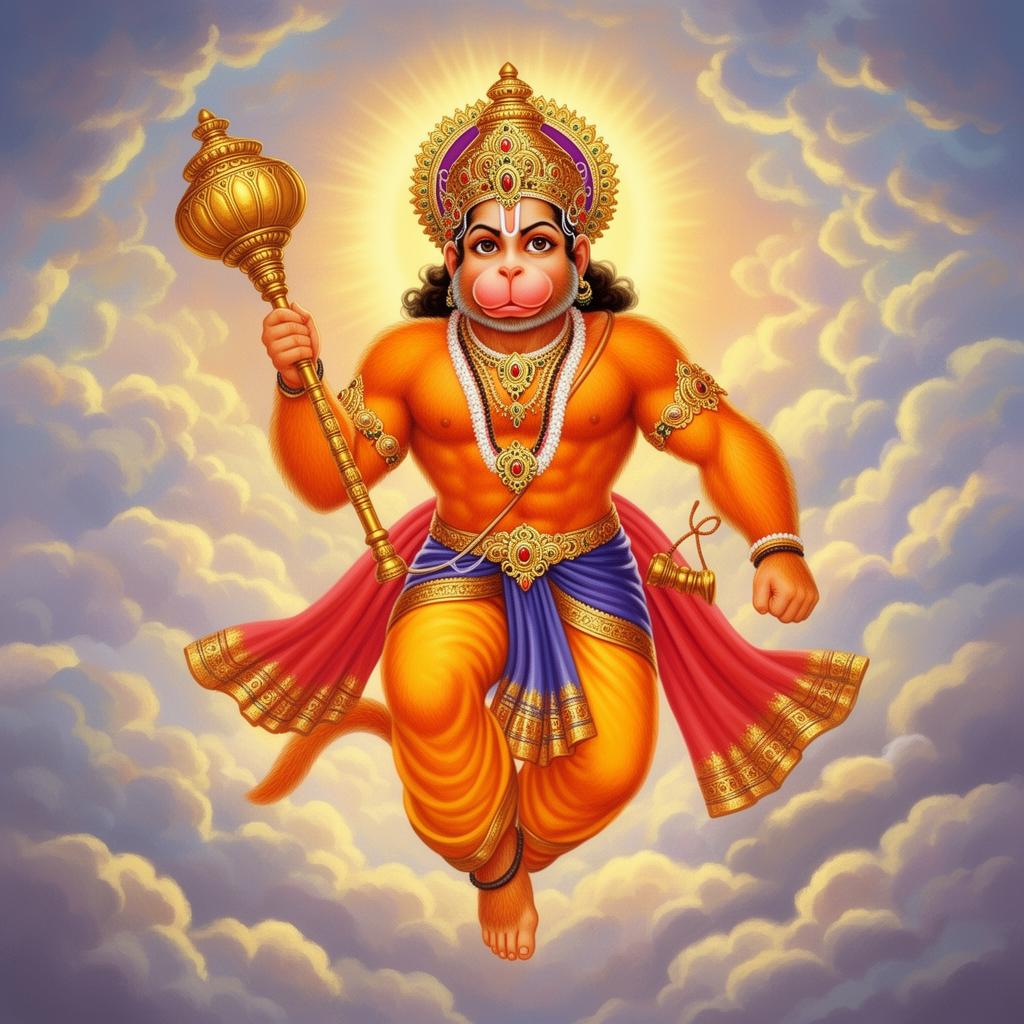
Benefits of Hanuman Chalisa for Anxiety & Fear (चिंता और भय दूर करें)
9 min read