What is Mundan (Chudakarana)? The 8th Hindu Sanskar
Mundan (also called Chudakarana or Mundana) is the 8th of the 16 Hindu Sanskars (life-cycle rituals) and marks the baby's first ceremonial head-shaving. The Sanskrit word 'Chuda' means 'tuft of hair' and 'Karana' means 'making/doing' - together, the ritual of forming the sacred topknot (shikha) after removing the rest of the hair. The Brihat Samhita, Grihya Sutras, and Manusmriti all prescribe this sanskar. Why remove hair: 1. Karmic significance - Hindu philosophy holds that the hair a baby is born with carries karma from past lives. Removing it allows the child to start fresh in this birth. 2. Health and growth - Ayurveda observes that the first hair (often patchy, weak) when removed allows thicker, healthier hair to grow. 3. Brain development - Per ancient texts, the head's nerve endings benefit from being exposed; modern research partly supports stimulation theories. 4. Spiritual significance - Shaving the head is the universal symbol of humility and surrender to the divine across many cultures (Hindu, Buddhist, Christian monks). 5. Cooling the body - In Indian climate, removing the first thick coat of baby hair helps regulate body temperature. Note: In Sanskrit tradition, a small tuft (called 'Shikha' or 'Chudi') is left at the top of the head - this is the 'antenna' that receives cosmic energy and is the seat of consciousness per Yogic anatomy. Modern parents often skip this and do complete shaving - both are acceptable, but traditional choice is to keep a small front tuft. The Mundan officially completes one of the 16 sanskars, contributing to the child's spiritual development per Vedic tradition.
Best Age & Auspicious Timing
Best ages (in order of tradition): 1. 1 year (1st birthday) - most common in modern families. Easy to manage; baby can sit. 2. 3 years - second most popular. Hair has grown out well; clear ritual memory for the child later. 3. 5 years - traditional in some South Indian and Vaishnava families. 4. 7 years - rare, but acceptable. 5. 9 years - last permissible age per Manusmriti; after this, the sanskar is considered late. Best months: Vaishakh (April-May), Jyeshtha (May-June), Margashirsha (Nov-Dec), Magh (Jan-Feb). Avoid: Chaitra (March-April, year-transition), Shravan (July-Aug, monsoon), Bhadra (Aug-Sep). Best days of week: Wednesday, Thursday, Friday are most auspicious. Avoid Saturday (Shani day) and Sunday for fresh start. Best tithis: Shukla paksha (waxing moon) is mandatory. Avoid Krishna paksha. Within Shukla paksha: Dwitiya (2nd), Tritiya (3rd), Panchami (5th), Saptami (7th), Trayodashi (13th) are best. Avoid Amavasya, Chaturthi (4th), Navami (9th), Pournami (full moon). Best nakshatras: Ashwini, Hasta, Mrigashira, Pushya, Punarvasu, Chitra, Anuradha, Shravana. AVOID: Magha, Mool, Jyeshtha, Krittika (these have ill effects per Brihat Samhita). What if you can't get all combinations right: Modern reality - perfect alignment is rare. Priority order: (1) auspicious nakshatra > (2) auspicious tithi > (3) auspicious day > (4) auspicious month. If you can match 2 of these 4, the muhurat is acceptable. Consult your family priest or Drik Panchang website for muhurat finding. Combined with temple yatra: Many families combine Mundan with their family deity's temple visit - Tirupati Balaji (most famous), Vaishno Devi, Tirumala, Mookambika, Shirdi. Mundan AT the temple is considered highest blessing - the hair is offered directly to the deity.
Step-by-Step Mundan Vidhi
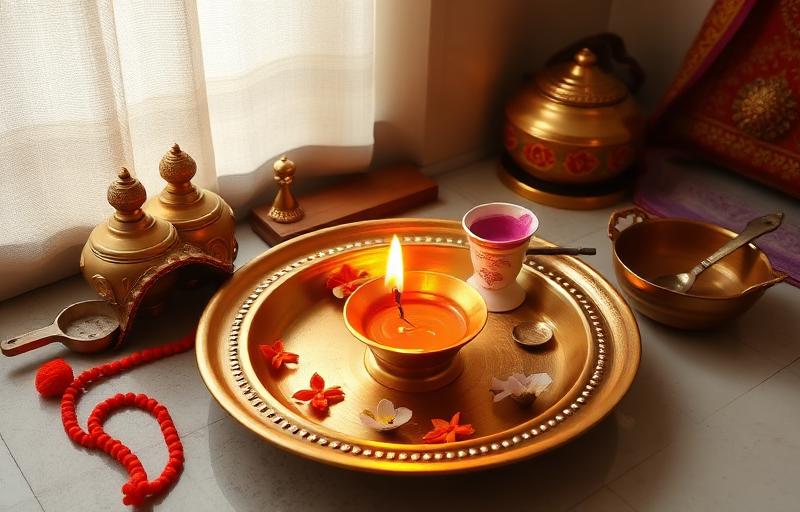
Materials needed: 1. Brass plate / banana leaf. 2. Sacred water (Ganga jal or pure water). 3. Turmeric paste + sandalwood paste. 4. Akshat (rice + turmeric). 5. Red kalava (sacred thread) - to tie around baby's wrist after. 6. Sweets (especially laddu, kheer). 7. Coconut. 8. Fresh flowers. 9. Cotton/silk cloth for baby's head after. 10. Coins or small gold piece. 11. New clothes for baby (yellow or red preferred). 12. Razor or safety scissors (use a barber traditionally). 13. Honey + ghee mixture (small amount). 14. Camphor + ghee diya. Pre-ceremony preparation (1 hour before muhurat): 1. Baby's morning bath with sandalwood/turmeric water. 2. New clothes. 3. Calm/play with baby to keep them relaxed. 4. Set up the ceremony area facing east. The ceremony: 5. Priest performs Ganesh puja first (always start with Ganesha). 6. Sankalpa by parents: 'We, [father's name and gotra], [mother's name], perform Chudakarana sanskar for our child [child's name] on this [tithi/nakshatra] for their long life, intellect, and dharmic growth'. 7. Father sits with baby on lap, mother sits beside. Baby's head wetted with sacred water + ghee-honey mixture (for blessing). 8. Priest chants Vedic mantras while the first lock of hair is cut by father. Main mantra: 'Om Ushne Vatena Paya, Sam Apah Oshadhibhihi, Sam Bhukta Vakshne Vatah'. 9. Then barber takes over and shaves the rest carefully. Some traditions leave a small front tuft (shikha). 10. After complete shaving, sandalwood paste is applied to baby's scalp (cooling). 11. Baby is bathed again with turmeric water. 12. New clothes worn. 13. Aarti with camphor. 14. Sweets distributed to family. 15. The cut hair is collected on the banana leaf - to be disposed of properly (see next section).
Hair Disposal Rules + Important Dos & Don'ts
Hair disposal - 4 sacred options: 1. Flowing water immersion (Ganga, Yamuna, any clean river) - most preferred. Wrap hair in small red cloth, immerse in flowing water with prayer. 2. Bury at peepal tree base - second preferred. The roots absorb the karmic energy. 3. Offer at family deity temple - Tirupati and other major temples have a designated 'mundan station' where the hair is professionally collected and ritually disposed. 4. Bury in your garden under a tulsi plant - modern apartment option; works if soil access exists. NEVER: 1. Throw cut hair in regular trash - disrespectful and considered karmically negative. 2. Burn the cut hair - extremely inauspicious (associated with funeral rites). 3. Let any animal eat the hair - must be safely disposed. 4. Save the hair as keepsake - taking the karmic 'baggage' back into your home defeats the ritual's purpose. DOs of the ceremony: 1. Keep baby fed before ceremony (hungry baby cries). 2. Have a backup baby (older sibling/cousin) present to comfort if needed. 3. Use baby-safe sharp razor (NOT old/rusty). 4. Cut hair carefully - don't nick the scalp. 5. Apply cooling paste immediately after (sandalwood, neem, or turmeric). 6. Donate to a Brahmin or poor person after the ceremony. 7. Tie a red protective thread (kalava) on baby's wrist post-shaving. DON'Ts: 1. Don't do it on inauspicious days even if family schedule demands. Reschedule. 2. Don't do at unsafe places (high traffic, dirty environment). 3. Don't allow people with ill health or pregnant women into the shaving area (per traditional shuddhi rules). 4. Don't post photos publicly on social media - shaved baby with cut hair is energetically vulnerable; restrict to close family. 5. Don't apply heavy oils on the freshly shaved head for first 3 days - only sandalwood/turmeric.
Regional Variations & Common Questions
North India: Typically done at 1 or 3 years. Family deity temple visit is common. Tirupati for Vaishnavas, Vaishno Devi for Shaktas. Hair offered to flowing water (Ganga) after. South India (Tamil Nadu, Karnataka, Andhra): Often done at temple itself. Tirupati Balaji has a daily mundan service for thousands of devotees - hair is donated to temple, sold for wigs, profits funding the temple. Tirumala alone collects ~500 tons of hair annually. Maharashtra: Done at family deity (kuldevata) temple. Some communities at Shirdi or Pandharpur. Bengal: Done at home with a family priest. Often combined with Annaprashan (first rice-feeding) if at right age. Gujarat: Often combined with Janmadin (birthday celebration) ceremony. Donations to Brahmins emphasized. Punjab/Sikh tradition: Some Sikh families do not perform mundan due to the Sikh tradition of not cutting hair (kesh). Hindu Punjabi families do follow it. Common questions: 1. Should both boys and girls do mundan? YES - Chudakarana is for both genders per Manusmriti. Modern practice often only does boys, but original tradition is unisex. 2. What about babies with very little hair? Still perform the ritual symbolically - even cutting a few strands suffices. The intent matters. 3. Can grandparents do mundan if parents are away? Yes, but parents should be present if possible. If genuinely unable, an elder family member can substitute as karta (performer). 4. What if baby is sick on the muhurat day? Reschedule. Health > muhurat. The sanskar can be done any time before age 9. 5. Do we have to invite all relatives? Traditionally yes, but minimum 7 close family members. Modern families do small intimate ceremonies. The deeper purpose: Mundan is not just hair removal - it's the parents' formal declaration to the divine: 'This child is yours. We are merely caretakers. Protect their dharma'. The hair is a symbolic 'returning of past karma' so the child starts fresh. View it as the most beautiful spiritual gift you give your child.
Quick Answers
Is mundan necessary or just a tradition I can skip?+
Modern parents debate this. Traditional view: it's one of the 16 essential sanskars and skipping leaves a karmic gap. Modern flexible view: do it symbolically (cut a small lock during baby's first temple visit) even if you can't do the elaborate ceremony. Health perspective: removing the first thick coat of baby hair genuinely helps regulate body temperature and many parents notice better hair growth after. Spiritual: even if you're skeptical of karma claims, doing it provides a beautiful family ritual + photos + memory for the child. Recommendation: do it in some form - full ceremony at home, simple temple visit, or symbolic at-home cut. Don't skip entirely.
Can I do mundan at home without a priest?+
Yes, modified version. The full Vedic ceremony requires a priest for the mantras, but a simplified home version works: 1. Choose an auspicious tithi/day yourself using a Panchang app. 2. Do basic Ganesh puja (Om Gam Ganapataye Namah, 11 times). 3. Take sankalpa stating intention. 4. Father cuts the first lock with the basic mantra 'Om Vata Bhuvanaya Namah'. 5. Use a barber or hair-skilled family member for the rest. 6. Family does aarti after. The spirit of the sanskar is what matters. Priest is preferred but not mandatory for modern householders.
What's the science behind mundan - is it really beneficial?+
Modern research shows some merit. 1. Stimulating hair follicles in infancy may promote thicker hair growth (debated; some studies confirm, others say it's just genetics). 2. Cooling effect during hot months is real - measurable temperature drop on shaved head improves sleep quality. 3. Babies with eczema or skin issues benefit from removing first coat of hair (which can trap moisture and bacteria). 4. Sensory stimulation of scalp during shaving may aid neural development per some pediatric observations. 5. The ceremonial bath afterward with sandalwood/turmeric has anti-microbial benefits. So even from a purely scientific lens, mundan has practical health value beyond spiritual significance.
Tirupati mundan - what's the special significance?+
Tirupati Balaji (Venkateswara) temple in Andhra Pradesh is THE most famous mundan destination. The legend: Lord Venkateswara took a loan from Kuber for his marriage to Padmavati. He continues to repay this debt through devotees' hair offerings. Each devotee who donates hair is symbolically contributing to clearing the Lord's debt. The temple sells the donated hair (~500 tons annually) for wigs and uses the profits for temple welfare. Aside from the lore, the energetic atmosphere of Tirumala hill enhances the sanskar's effect. Many families book Tirupati mundan months in advance and combine it with their child's 1st birthday. Cost: Rs.500-2000 for the ritual at the temple's official mundan section.
About the author
Acharya Vinaya Kapoor · M.A. Sanskrit, Mantra & Stotra Studies
Acharya Vinaya holds an M.A. in Sanskrit from Banaras Hindu University and writes the mantra and stotra commentary on Vandnaa. Her focus is on accurate pronunciation, traditional context, and helping modern readers connect with classical texts.
Meet the Vandnaa editorial team →Explore on Vandnaa
Related Articles
16 Sanskars: Hindu Rituals from Birth to Death Explained
11 min read
Hindu Baby Boy Names with Spiritual Meaning - Top 108 Names with Deity Connection
11 min read
Hindu Baby Girl Names with Spiritual Meaning - Top 108 Names with Goddess Connection
11 min read
Tulsi Plant Care - Watering Rules, Pruning, 11 Dos & Don'ts (Complete Guide)
10 min read
Peepal Tree Worship - Days, Rules, Mantras & 7 Spiritual Benefits
9 min read
Why We Ring Bell in Temple - 7 Spiritual & Scientific Reasons (Complete Guide)
8 min read