What Murti Puja Actually Is (and Isn't)
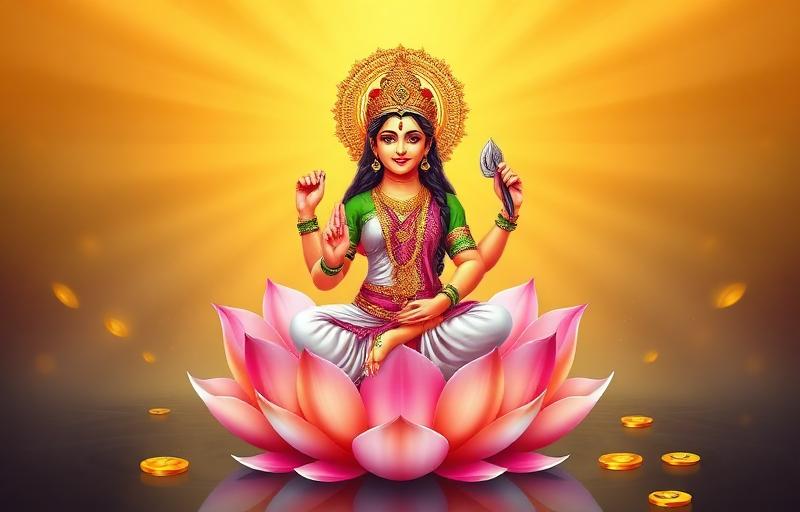
Murti Puja is the worship of God through a consecrated image (murti). The most common misunderstanding - both from non-Hindus and uneducated Hindus - is thinking the idol IS God or that Hindus believe God lives inside stone. Neither is true. The Sanskrit term 'Murti' literally means 'a form' or 'embodiment' - not 'God'. The murti is to God what a phone is to a person: a way to connect, not the person themselves. The 4 levels of Hindu worship: 1. Nirakara (formless) - pure abstract awareness; the highest, but extremely difficult for average mind. 2. Saakara (with form, formless within) - using a form to access the formless. Murti puja sits here. 3. Naam-roop (name and form) - chanting names with mental imagery. 4. Karm (action) - selfless service as worship. Why use a murti? The Bhagavad Gita (Chapter 12, Verse 5) explicitly states: 'Reaching the unmanifest is harder for embodied beings.' Because we are bodied/sensory creatures, accessing pure abstraction is difficult. The murti gives the mind a tangible anchor - eye sees the form, hands offer flowers, ears hear chants, nose smells incense, body bows. ALL FIVE senses are engaged simultaneously in worship. No abstract God-concept can engage all five senses. This is psychologically and scientifically more efficient than abstract worship. The murti is not random - every detail (posture, weapons, animal mount, color, hand gestures called 'mudras') carries specific symbolic meaning. Reading the murti is like reading a text - it's encoded theology. A murti of Vishnu with conch, discus, mace, lotus tells the entire Vishnu cosmology in one image. The murti becomes 'alive' via Pran Pratishtha - a ceremony where mantras 'install' the deity's energy into the murti. After pran pratishtha, a temple murti is treated AS the deity - bathed, fed, dressed, put to sleep. Without pran pratishtha, the same murti is just sculpture.
Pran Pratishtha - The Science of 'Installing' a Deity
Pran Pratishtha (literally 'establishing life-force') is the elaborate Vedic ceremony that transforms a sculpted murti into a worshipable deity. Without it, the murti is just stone/metal. With it, the murti becomes a living focal point of cosmic energy. The ceremony involves (over 3-7 days for major temples): 1. Adhivasa - soaking the murti in sacred substances (milk, ghee, panchamrit, sacred herbs) for purification. 2. Vastra Samarpana - clothing the murti as the deity would dress. 3. Bhuta-shuddhi - purifying the panch tatva (5 elements) within the murti. 4. Beeja-Nyasa - placing seed-syllable mantras at specific points on the murti corresponding to chakras and energy centers. 5. Pran-pratishtha mantra - the supreme mantra: 'Asyaim Murtau, Pranah, Iha Pranah' (let life-force be here in this murti). Repeated 1008 times by priests. 6. Chakshu-unmilana - 'opening the eyes' of the deity - the priest applies sandalwood paste/kohl to the murti's eyes, ceremonially 'making it see'. 7. First Aarti - the murti is now 'alive' and receives its first offering of light. What scientifically happens: 1. Sound frequency imprinting - Sanskrit mantras at specific frequencies cause measurable molecular alignment in stone/metal (verified at IIT Madras). 2. Sacred geometry activation - the murti's proportions follow shilpa shastra (sacred geometry); these proportions create specific energy resonances. 3. Continuous worship reinforces - daily mantras and offerings keep the energy 'charged'. A temple worshipped daily for 100 years is energetically far more powerful than a brand new temple. This is why ancient temples (like Tirupati, Vaishno Devi, 12 Jyotirlingas) have measurably more 'shakti' than newer ones. The murti is NOT God limited to the stone - but it's a focal lens. Like sunlight through a magnifying glass burns paper, the diffuse cosmic divine energy is concentrated by the murti into a localized form you can interact with directly. After death of the murti (severe damage, intentional decommissioning), Visarjan (immersion in sacred water) is performed to release the divine energy back to its source. The murti is then 'just stone' again.
5 Common Objections to Murti Puja - Answered
Objection 1: 'God is everywhere, why need an idol?' - Yes, God is everywhere. But your MIND isn't capable of perceiving everywhere-presence simultaneously. The murti is for YOUR mind, not for God. The murti localizes the diffuse omnipresence so you can focus. Saying 'God is everywhere so I don't need a murti' is like saying 'sound is everywhere so I don't need a radio'. You need a tuning device to focus on the specific frequency. Objection 2: 'Idol worship is primitive - Abrahamic religions evolved past it.' - Counter: every religion has visual focal points. Christianity has the Cross, statues of Mary and Jesus, stained glass. Islam has the Kaaba (a black stone literally kissed by pilgrims). Buddhism has Buddha statues. Calling Hindu murti puja 'primitive' while accepting other religions' identical sensory worship is hypocritical. The difference is Hindus are HONEST about using forms; others use forms while claiming not to. Objection 3: 'Hindus worship many gods - that's polytheism, less spiritually advanced than monotheism.' - Counter: Hinduism is NOT polytheism. The Rig Veda explicitly states: 'Ekam Sat Vipra Bahudha Vadanti' (Truth is One, sages call it by many names). Hindu philosophy is monotheistic in essence - one Brahman, expressed through countless aspects/forms (devis and devtas), all converging back to the One. Polytheism (Greek/Roman gods fighting each other) is conceptually different. Hinduism is more accurately called 'monistic' or 'henotheism'. Objection 4: 'Idols can be broken, robbed, destroyed - how can that be God?' - Counter: The idol can be destroyed; the divine essence (which was just 'visiting' through pran pratishtha) returns to source. Like a phone breaking doesn't kill the person on the other end. Hindus regularly perform Visarjan - intentionally immersing idols at year-end (Ganpati Visarjan, Durga Visarjan) - celebrating the impermanence. We're not confusing the medium with the message. Objection 5: 'Why does each deity have weapons/animals/multiple arms? Isn't that childish?' - Counter: Every detail encodes deep theology. Multiple arms = simultaneously doing multiple cosmic functions. Weapons = the deity's specific cosmic powers (e.g., Vishnu's chakra = cosmic time-cycle, mace = ego-destruction). Animal mount (vahana) = the deity's primary controlled energy (Saraswati on swan = riding discrimination; Ganesha on mouse = riding even smallest creatures' faith). Hindu iconography is the world's most sophisticated symbolic theology - far more complex than 'crucifix' or 'crescent moon'.
7 Reasons Murti Puja Still Matters in 2026
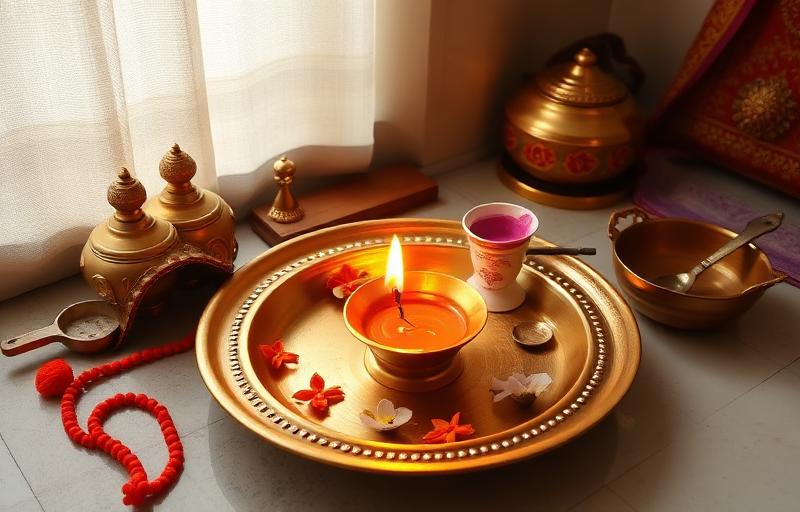
1. Cognitive accessibility - 95% of people can't sustain abstract God-meditation. Murti gives easy entry. The remaining 5% who can do nirakara worship don't need to disparage the 95%. 2. Emotional anchor in modern stress - In high-stress urban life, having a physical altar at home with murtis is psychologically grounding. Studies show families with home altars have lower anxiety levels. 3. Identity transmission to children - children CAN'T grasp abstract God. A child sees Krishna's murti and immediately connects through Krishna's stories, leelas, songs. By age 12, the abstract concept becomes accessible BECAUSE the form-based foundation was laid earlier. 4. Multi-sensory immersion - modern life is distracted; multi-sensory worship (sight + smell + sound + touch + taste of prasad) commands full attention. 30 minutes of murti puja = better focus than 30 minutes of mental prayer for most people. 5. Family bonding ritual - daily home puja with the family at the altar creates intergenerational connection that abstract worship doesn't provide. Grandmothers, parents, children, all engaged with the same murti. 6. Aesthetic + cultural continuity - Hindu murti art is one of the world's greatest artistic traditions (Khajuraho, Tanjore, Ellora caves). Continuing the practice supports artists, sculptors, and cultural heritage. 7. Backed by neuroscience - fMRI studies on Hindu devotees show murti puja activates the same neural pathways as deep meditation, plus additional emotional-regulation regions that abstract prayer doesn't activate. The deeper truth: Murti puja is not 'primitive' - it's the most sophisticated, multi-sensory, cognitively-accessible, emotionally-engaging, scientifically-supported form of worship humanity has ever developed. The 5000 years of Hindu civilization isn't 'stuck'; it's UNINTERRUPTEDLY refined a worship system that works.
Quick Answers
Do Hindus believe God is INSIDE the idol?+
No - and this is the most common misconception. God isn't 'inside' a stone idol; rather, God's energy can be INVITED into the murti through pran pratishtha, and then accessed from there. Like Wi-Fi signal isn't 'inside' the router but accessed through it. Hindus aren't worshipping the stone; they're worshipping the divine accessed through the stone. The murti is a portal/lens, not a container.
What if my idol cracks or breaks at home?+
Don't panic - it's not necessarily inauspicious. Steps: 1. Apologize mentally to the deity. 2. Perform a brief 'visarjan' - wrap the broken murti in red cloth, immerse in a flowing water body (river/lake) with prayer. 3. Get a new murti and do basic pran pratishtha (or take it to a temple for proper ceremony). NEVER throw a broken murti in regular trash - extremely inauspicious. Some traditions say a breaking idol has 'absorbed' a major karmic blow that was destined for the family - it took the hit instead. Accept it with gratitude.
Can I worship a printed photo instead of an idol?+
Yes - photos are perfectly acceptable, especially for apartment dwellers and travelers. The pran pratishtha can be done for a photo too (the priest visualizes the deity entering the framed picture). Many modern devotees use photos exclusively for daily puja with great spiritual benefit. The 3D murti is preferred for major puja (gives multi-sensory engagement), but a sincere photo puja > careless idol puja. Bhava (devotion) > form.
How do I do pran pratishtha for a new idol at home?+
Simplified home version: 1. Bath the idol with milk + Ganga jal + tulsi water. 2. Dry and place on a clean asana facing east. 3. Light ghee diya and incense. 4. Chant 'Asyaim Murtau Pranah Iha Pranah, Sarvendriyani Vagmanaschakshu Shrotram Pranopanau Iha Mam Yaja Vishtanam Iha Sukham Chiram Tishthantu Swaha' 11 times. 5. Offer flowers, fruits, sweets. 6. Apply tilak on the idol's forehead. 7. Do aarti with camphor. 8. From day 2 onwards, treat the murti as the living deity - daily naivedya (food offering), aarti, prayers. For elaborate ceremony, invite a priest (Rs.1500-5000 cost).
About the author
Pandit Mahesh Trivedi · Festival Traditions & Panchang
Pandit Mahesh leads the festival-date and Panchang content on Vandnaa. He cross-references multiple regional panchangs (Drik, Vaishnava, Bengali, Marathi) for every festival date published on the site.
Meet the Vandnaa editorial team →Explore on Vandnaa
Related Articles
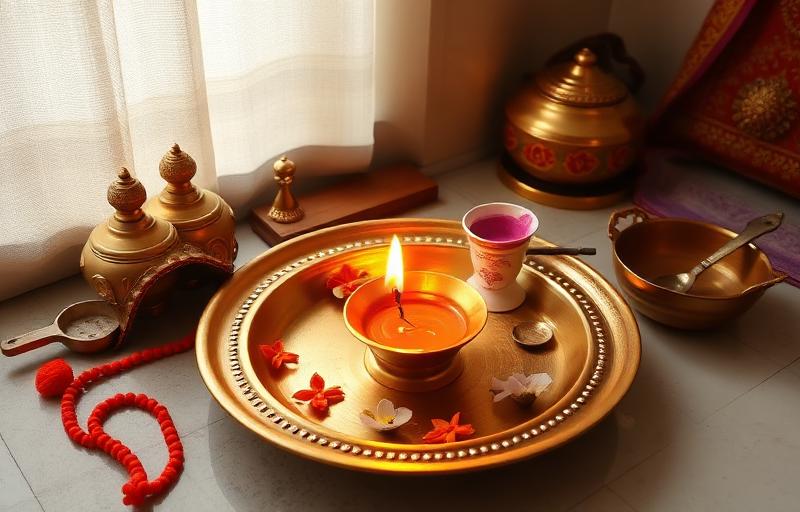
Home Temple Setup: Vastu, Direction, Items & Complete Guide
9 min read
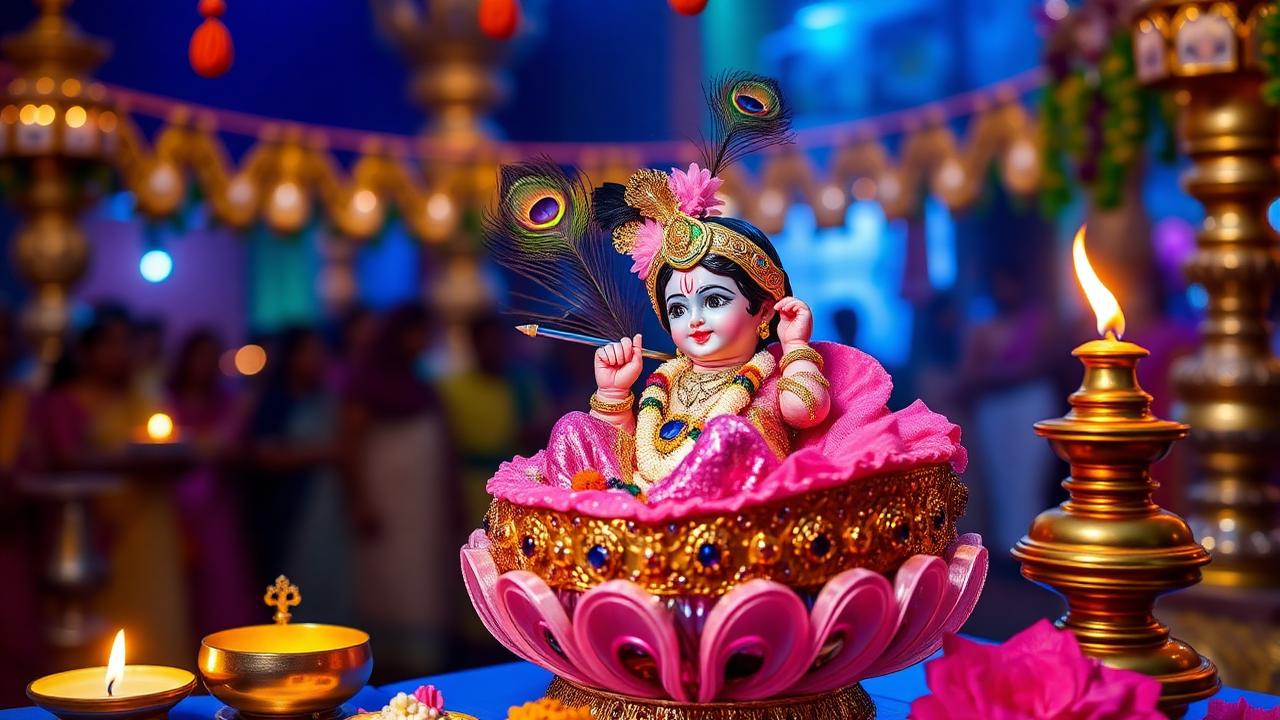
Krishna Ashtottara Shatanamavali - Complete 108 Names of Krishna with Meaning & Benefits
12 min read
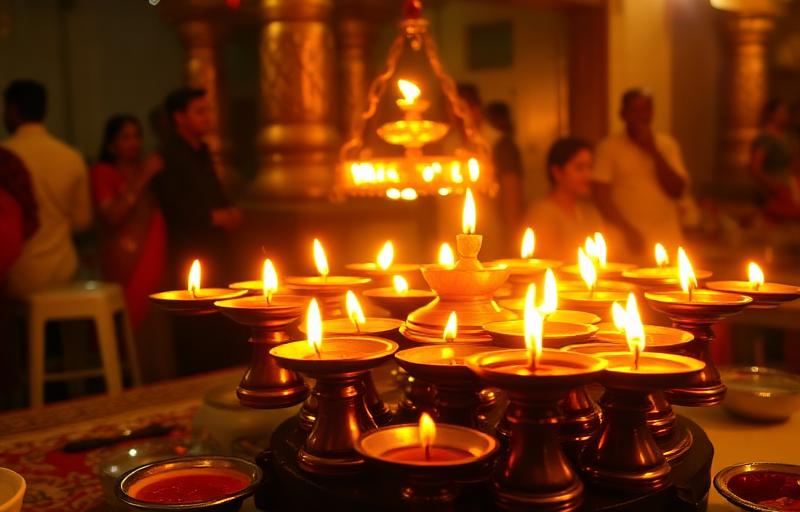
How to Do Aarti at Home: Step-by-Step Vidhi for Daily Worship
8 min read
16 Sanskars: Hindu Rituals from Birth to Death Explained
11 min read

Kuldevta / Kuldevi - How to Find Your Family Deity, Why It Matters & Worship Vidhi
10 min read
Why We Ring Bell in Temple - 7 Spiritual & Scientific Reasons (Complete Guide)
8 min read