Nal and Neel: Blessed Sons of Vishwakarma
Nal and Neel were vanara brothers remembered in the Ramayana as sons of Vishwakarma, the divine architect of the celestial world. Tradition holds that as children they had disturbed a sage's meditation by throwing his belongings into a river, and in return received a blessing rather than a curse, that anything they threw into water would float instead of sinking.
This unusual gift, seemingly unremarkable for years, became essential when Rama's army reached the shore of the ocean and needed a way to cross into Lanka to rescue Sita.
The Katha: Building Ram Setu
When Rama's vanara army reached the ocean's edge, it was Nal who came forward, remembering his blessing, and offered to lead the construction of a bridge to Lanka. Under his direction, and with Neel's help, the vanara army brought forth trees and boulders, writing Rama's name upon many of them before setting them upon the water, where they floated and held together.
Tradition holds that this remarkable bridge, later known as Ram Setu or Nala Setu, was completed in a matter of days through the tireless devotion of the entire vanara army working as one under Nal and Neel's guidance.
Why Nal-Neel's Katha Matters to Devotees
The katha of Nal and Neel is cherished as a reminder that every gift, however small it may first seem, can serve a great purpose when offered in devotion.
- Devotees see the construction of Ram Setu as a lesson in collective effort under righteous leadership
- The chanting of Rama's name upon the stones is remembered as an example of how naam (the divine name) itself carries power
- Even the smallest helpers, including the well-loved katha of a squirrel who carried pebbles, are honoured in this memory
- Pilgrims regard the building of the setu as proof that faith can accomplish what seems impossible
Darshan Guide: Rameswaram and the Setu
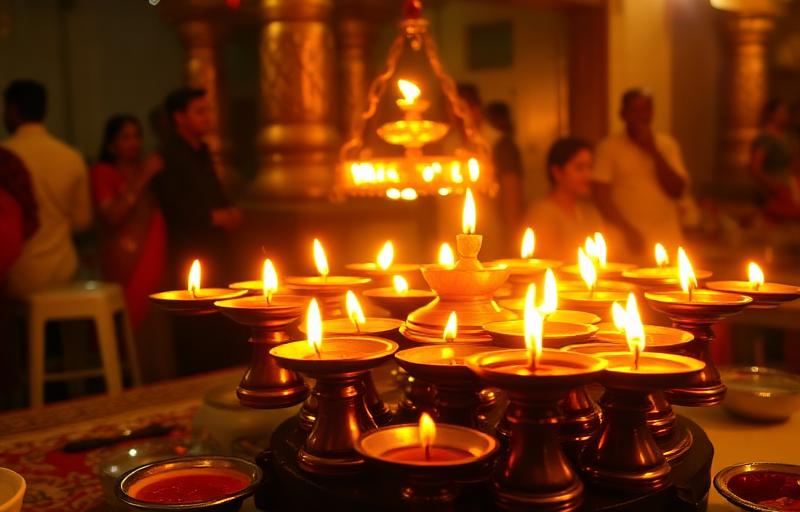
The traditional starting point of Ram Setu is associated with the Rameswaram-Dhanushkodi coastline in Tamil Nadu, where the Ramanathaswamy Temple, established by Rama's own worship of Shiva before the crossing, remains the principal shrine. The temple follows a customary daily schedule with morning and evening aarti, in keeping with typical temple practice.
Dhanushkodi, at the tip of the coastline, is the point pilgrims associate most closely with the beginning of the setu, and it draws large numbers of devotees, especially around Ram Navami.
How to Reach Rameswaram
Rameswaram in Tamil Nadu has its own railway station connected to major cities, while Madurai offers the nearest major airport, about a few hours away by road. From Rameswaram town, local transport connects pilgrims onward to Dhanushkodi.
A Prayer to Offer and the Takeaway
Devotees at Rameswaram often chant Om Shri Ramaya Namah while remembering Nal, Neel and the entire vanara army whose devotion made Ram Setu possible.
The katha of Nal and Neel reminds devotees that no gift or effort is too small when placed in service of dharma. Worship at such sites is an act of faith and love, not a transaction.
Quick Answers
Who were Nal and Neel in the Ramayana?+
Nal and Neel were vanara brothers, sons of the divine architect Vishwakarma, blessed so that anything they placed in water would float, a gift that made them the chief builders of Ram Setu.
How long did it take to build Ram Setu according to tradition?+
Tradition holds that the vanara army, working tirelessly under Nal and Neel's guidance, completed Ram Setu in a matter of days.
Where is Ram Setu traditionally believed to begin?+
Ram Setu is traditionally associated with the Rameswaram-Dhanushkodi coastline in Tamil Nadu, near the Ramanathaswamy Temple.
About the author
Pandit Ravindra Sharma · Vedic Rituals & Bhakti, 22+ years
Pandit Ravindra is the Vandnaa editorial team's resident specialist on aarti, chalisa, and daily devotion. He has performed home and temple pujas across Varanasi and Delhi for over two decades and contributes the bhakti-focused articles on this site.
Meet the Vandnaa editorial team →