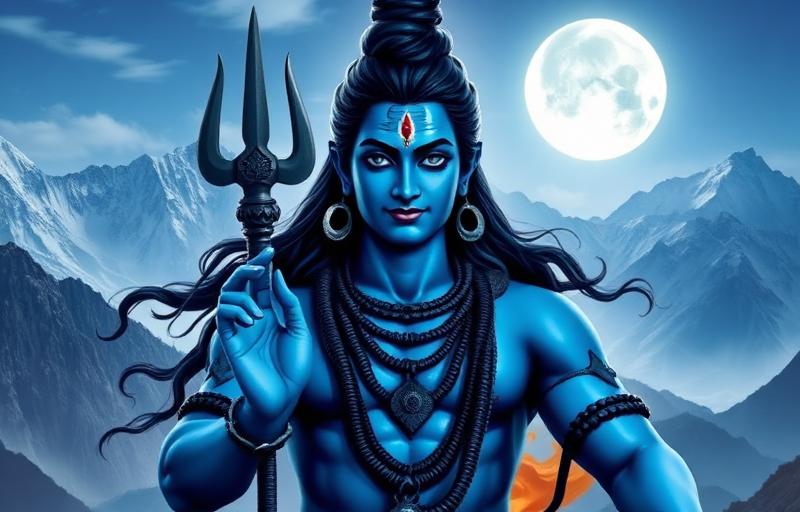
Om Namah Shivaya – The Panchakshari Mantra
Om Namah Shivaya (ॐ नमः शिवाय) हिंदू धर्म का सबसे powerful और widely chanted mantra है। इसे Panchakshari Mantra (पांच अक्षर का मंत्र) कहते हैं – Na, Ma, Shi, Va, Ya – जो प्रकृति के 5 तत्वों (पृथ्वी, जल, अग्नि, वायु, आकाश) को represent करते हैं।
यह mantra Lord Shiva को समर्पित है और इसका simple meaning है – 'मैं शिव को नमस्कार करता हूं।'
🎧 सभी आरती, मंत्र और भजन एक ही जगह सुनें – Vandnaa App डाउनलोड करें।
Meaning in Simple Hindi (ॐ नमः शिवाय का अर्थ)
- ॐ (Om) – ब्रह्मांड की मूल ध्वनि
- नमः (Namah) – नमस्कार, प्रणाम
- शिवाय (Shivaya) – शिव को, कल्याणकारी को
5 अक्षरों का meaning:
- न (Na) – पृथ्वी तत्व
- म (Ma) – जल तत्व
- शि (Shi) – अग्नि तत्व
- वा (Va) – वायु तत्व
- य (Ya) – आकाश तत्व
Simple meaning: मैं उस कल्याणकारी शिव को प्रणाम करता हूं जो सृष्टि के 5 तत्वों में व्याप्त हैं।
7 Powerful Benefits (ॐ नमः शिवाय के 7 फायदे)
1. मानसिक शांति – Calms the mind, reduces anxiety 2. Spiritual growth – आध्यात्मिक विकास तेज होता है 3. Past karma शुद्ध होते हैं – Burns negative karma 4. Concentration बढ़ता है – Improves focus 5. Anger control – गुस्सा कम होता है 6. Self-awareness बढ़ती है – Know yourself better 7. Moksha (मोक्ष) का मार्ग – Path to liberation
🎧 Listen all aartis, mantras & bhajans in one place. Download Vandnaa App.
How to Chant Om Namah Shivaya
1. पूर्व या उत्तर दिशा में मुख करके बैठें 2. आंखें बंद करें, 3 गहरी सांसें लें 3. Rudraksha mala से 108 बार जपें 4. हर syllable को clearly बोलें 5. ब्रह्म मुहूर्त (4-6 AM) सबसे अच्छा समय 6. सोमवार और प्रदोष काल में विशेष फल
Vandnaa App का Jap Counter use करें daily tracking के लिए!
The Five Syllables: Esoteric Significance of Na-Ma-Shi-Va-Ya
Each of the five syllables of the Panchakshari mantra carries layered meaning - physical, elemental, chakric, and divine:
Na (न) - Earth / Prithvi / Muladhara: The syllable 'Na' represents earth - solidity, stability, the foundation. At the chakra level, it activates the Muladhara (root chakra), which governs survival, safety, and groundedness. Chanting 'Na' clears obstacles from the physical plane.
Ma (म) - Water / Jala / Svadhishthana: 'Ma' represents water - flow, feeling, creativity. It activates the Svadhishthana chakra (sacral), governing emotions, relationships, and creative force. Chanting 'Ma' dissolves emotional blockages.
Shi (शि) - Fire / Agni / Manipura: 'Shi' is fire - transformation, power, will. It activates the Manipura chakra (solar plexus), governing confidence, personal power, and digestion. Chanting 'Shi' burns away lethargy and self-doubt.
Va (वा) - Air / Vayu / Anahata: 'Va' is air - love, connection, breath. It activates Anahata (heart chakra), governing love, compassion, and relationships. Chanting 'Va' opens the heart and heals grief.
Ya (य) - Ether / Akasha / Vishuddha: 'Ya' is ether/space - expansion, expression, consciousness. It activates Vishuddha (throat chakra), governing speech, truth, and creative expression. Chanting 'Ya' clears the throat chakra and improves the ability to speak truth.
This is why the complete Panchakshari mantra - Om Namah Shivaya - is a full-body activation, not just a prayer. Each repetition purifies all five elements and all five lower chakras simultaneously. This is the genius of this mantra: its brevity is deceptive; its scope is total.
What Great Saints Said About Om Namah Shivaya
The testimony of realised masters gives us confidence in what the scriptures describe:
Ramana Maharshi: The great sage of Arunachala said that the repetition of God's name with the feeling that 'God is present in me and I am present in God' is the highest form of sadhana. He specifically recommended the Panchakshari as a path of liberation, not just devotion. 'Na-Ma-Shi-Va-Ya,' he said, is the very sound of self-inquiry - each syllable asks 'What is this?' at a deeper level of the body and mind.
Adi Shankaracharya: The 8th-century philosopher-saint who composed 'Shiva Panchakshara Stotram' - a full Sanskrit hymn that meditates on each of the five syllables. The stotram begins: 'Nagendra-haraya Trilochanaya...' - a meditation on Shiva's attributes corresponding to each syllable.
Thirumoolar (Tamil Siddhar): The great South Indian mystic wrote in his Tirumantiram: 'Namah Shivaya is within you - it is the sound of your own breath. The incoming breath says 'Na-Ma-Shi,' the outgoing breath says 'Va-Ya.' You are already chanting this mantra 21,600 times a day whether you know it or not. The practice is simply to make it conscious.'
Swami Sivananda: 'Om Namah Shivaya is the greatest mantra. Any mantra can bring you to God, but Namah Shivaya is one of the shortest roads. It destroys sins, confers siddhis, brings moksha.' He recommended daily chanting as the single most powerful habit change available to any seeker.
The convergence of so many independent realised masters on this one mantra is the strongest evidence of its power.
40-Day Om Namah Shivaya Sadhana Plan
A structured 40-day sadhana maximises the transformative power of Om Namah Shivaya. Here is the complete plan:
Days 1–7 (Purification):
- Morning: 108 repetitions on Rudraksha mala
- Evening: 11 repetitions before dusk
- Diet: Reduce onion, garlic, heavy meat; increase sattvik food
- Observe: Write one line each morning about how you feel - this creates a record of the subtle changes
Days 8–21 (Deepening):
- Morning: 108 reps + 5 minutes of silence afterward (crucial - let the mantra settle)
- Midday (optional): 11 mental repetitions during any quiet moment
- Evening: 11 reps before sleep
- Monday fast recommended (Shiva's day) - fruits and milk only
- Add: Read 1 verse of Shiva Panchakshara Stotram before morning jap
Days 22–40 (Manifestation):
- Morning: 108+ reps (increase to 2 malas / 216 if time allows)
- Establish a 5-minute seated silence after jap - this is the most important addition
- Continue Monday fast
- On the 40th day: visit a Shiva temple, offer Abhisheka (water over Shivalinga), complete 108 reps at the temple
What to expect:
- Days 1–7: Mild restlessness (purification underway)
- Days 8–14: Calmer sleep, clearer mornings
- Days 15–25: Spontaneous solutions to persistent problems
- Days 26–40: A quiet, steady confidence that was not there before
Post-40-day maintenance: Reduce to daily 1 mala (108) for life. The 40-day sadhana establishes the groove; daily practice maintains it.
🎧 The Vandnaa App's jap counter tracks your cumulative count across all 40 days - start your sadhana today.
Om Namah Shivaya: The Mantra That Needs Nothing But You
One of the most freeing truths about Om Namah Shivaya is how little it requires:
- No temple
- No priest
- No specific caste, gender, or age
- No ritual materials
- No initiation
- No fixed posture
- No particular language (chanting in any accent is equally valid)
You can chant it silently while commuting. You can whisper it while cooking. You can say it aloud in the shower. You can hold it in your breath during a difficult meeting. You can chant it for yourself or for a loved one who is suffering.
This universality is exactly what the Shivaite sages intended. Shiva is not a god who lives in a particular place or visits only during certain hours. Shiva is consciousness itself - present in every moment, accessible through every breath.
When you chant Om Namah Shivaya, you are not calling Shiva from far away. You are recognising the Shiva that was always already within you. This is the meaning of 'Namah' - it is not just 'I bow to you.' It is 'I recognise you. I surrender the illusion that I am separate from you.'
Start today. Just five minutes. The transformation is quiet at first, and then one morning you will wake up and realise something has shifted - the fear is less, the mind is cleaner, the world seems a little more manageable. That is the Panchakshari working.
🎧 All aartis, mantras, bhajans - one place. Download the Vandnaa App.
What People Ask Most
ॐ नमः शिवाय कितनी बार जपना चाहिए?+
108 बार (एक माला) ideal है। शुरुआत में 11 या 21 बार से शुरू करें। Vandnaa App का Jap Counter use करें।
Can women chant Om Namah Shivaya?+
बिल्कुल! ॐ नमः शिवाय universal mantra है। कोई भी, कभी भी जप सकता है।
ॐ नमः शिवाय जपने का सबसे अच्छा समय?+
ब्रह्म मुहूर्त (4-6 AM) सबसे शुभ। प्रदोष काल (शाम) और सोमवार को भी विशेष महत्व है।
Can I chant Om Namah Shivaya silently?+
हाँ! मानसिक जप सबसे उच्च माना जाता है। बोलकर, फुसफुसाकर, या मन में – तीनों तरीके सही हैं।
ॐ नमः शिवाय और महा मृत्युंजय मंत्र में क्या अंतर है?+
दोनों शिव मंत्र हैं। ॐ नमः शिवाय general spiritual growth के लिए है, जबकि महा मृत्युंजय healing और protection के लिए special है।
About the author
Acharya Vinaya Kapoor · M.A. Sanskrit, Mantra & Stotra Studies
Acharya Vinaya holds an M.A. in Sanskrit from Banaras Hindu University and writes the mantra and stotra commentary on Vandnaa. Her focus is on accurate pronunciation, traditional context, and helping modern readers connect with classical texts.
Meet the Vandnaa editorial team →