A Young Man Named Rama, Before the Axe
Before he became known as Parashurama, the sixth avatar of Vishnu was simply Rama Jamadagnya, son of the sage Jamadagni and Renuka, covered elsewhere in this series regarding the circumstances of his mother's beheading and revival, a young ascetic already devoted to Shiva but without the specific weapon that would come to define his name and his role as the destroyer of an entire corrupted Kshatriya order.
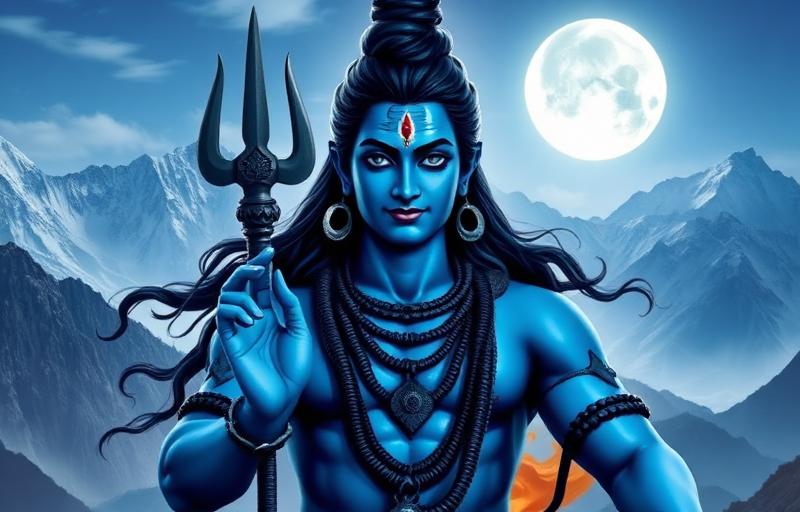
Seeking a weapon powerful enough to fulfil what he understood to be his destined purpose, Rama undertook severe tapasya directed at Shiva on Mount Mahendra, maintaining extreme austerity over an extended period without seeking any lesser boon in the meantime.
A Thousand Years of Testing Before the Gift
Various Puranic accounts give the length of this penance as extending across roughly a thousand years, or in some tellings a comparably vast, symbolically significant period, during which Shiva observed Rama's sincerity without responding, a pattern of divine testing through silence this series has traced elsewhere regarding Ravana's own nine-headed penance for a comparable boon.
When Shiva finally appeared, satisfied that the devotion behind the request was genuine and sustained rather than opportunistic, he granted Rama not just an ordinary weapon but his own personal axe, the Parashu, a weapon of immense destructive power directly associated with Shiva's own martial capacity, along with instruction in its use and various divine techniques of warfare that Rama would need for the campaigns ahead.
Becoming Parashurama
It is from this gift that Rama Jamadagnya becomes known as Parashurama, Rama with the axe, a name that would define him through the rest of his life, including his own eventual twenty-one campaigns against the Kshatriya order, his conflict with Kartavirya Arjuna covered elsewhere in this series, and, much later, his confrontation with Rama of Ayodhya on the road from Mithila, an episode also covered elsewhere in this series, where this same axe and the weapon's own power play a central role in the moment Parashurama recognises the other avatar's true nature.
The axe remains one of Parashurama's central iconographic attributes across Hindu art, and his status as one of the Chiranjivis, the immortal figures still understood to exist in the world, means this particular weapon, unlike many other divine armaments retired or returned after their narrative purpose was served, is understood in tradition to remain with him still, carried by a warrior-sage whose own long life has, according to most tellings, not yet ended.
Reader Questions Answered
Is the axe Parashurama received the same weapon used in the Daksha yajna disruption?+
The Parashu is generally understood as Shiva's own personal weapon predating this specific gift, meaning it existed and was associated with him before being given to Parashurama, rather than being newly created for this occasion.
Did Parashurama receive any other weapons besides the axe from Shiva?+
Most tellings describe him also receiving instruction in various divine astras and combat techniques alongside the axe itself, giving him a broader martial education rather than a single weapon in isolation.
Why does Parashurama's tapasya location matter, and where is Mahendra mountain?+
Mahendra is traditionally associated with the Eastern Ghats region of India, and it remains significant in later tradition as the place Parashurama is said to have retired to after his own confrontation with Rama of Ayodhya, closing his active narrative role at the same location where his defining weapon was first granted.
About the author
Anjali Mehta · Editor, M.A. Religious Studies
Anjali is the managing editor for Vandnaa and oversees the festival and vrat coverage. She holds an M.A. in Religious Studies and reviews every published article for accuracy, accessibility, and tradition-fidelity.
Meet the Vandnaa editorial team →