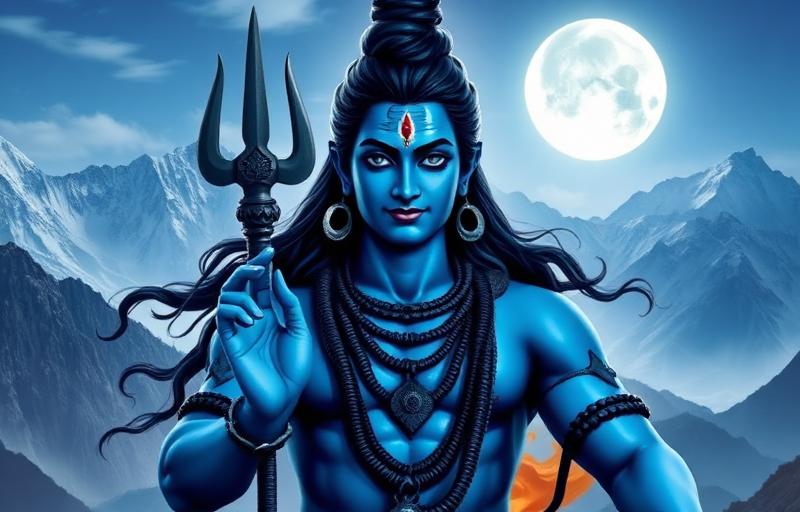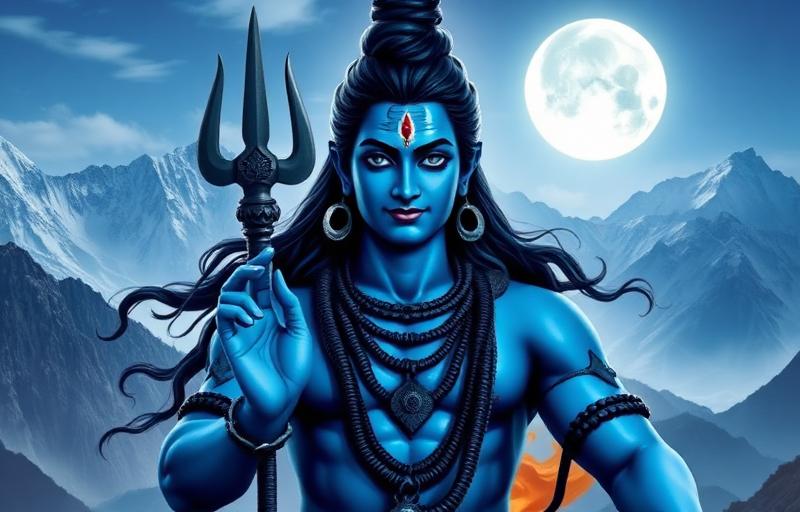
The Deity: Shiva as Pashupatinath
Pashupatinath means the lord of pashus, of all living beings. It is one of Shiva's oldest and most widely used names, carrying the sense of a guardian who holds every creature in his care, and it gives its name to the ancient Pashupata tradition of Shaiva worship.
The name is most often associated with the great temple at Kathmandu. Far less known outside Madhya Pradesh is the Pashupatinath temple at Mandsaur, on the bank of the Shivna river in the Malwa region, where Shiva is worshipped in an extraordinary form.
The murti here is an Ashtamukhi Shivling, a single tall block of stone carved with eight faces of Shiva, arranged in two tiers of four. Each face looks in a different direction, so wherever a devotee stands, Shiva is facing them.
Mandsaur itself is an old town, known in inscriptions as Dashapura, and the region has carried Shaiva worship for a very long time. The present temple is modern, but the murti it houses is understood to be far older than the building around it.
How the Murti Was Found
The story of the murti's recovery is recent enough that it is still recounted in the town by families whose elders witnessed it.
In the early 1940s, work along the bed of the Shivna river brought to light an enormous carved stone, buried and forgotten. When it was raised, it proved to be a single monolithic Shivling with eight sculpted faces of Shiva, several feet tall and weighing several tonnes.
- The eight faces are arranged in two rows of four, each with distinct expressions, hair styles and ornaments
- The murti is carved from one block, not assembled, which is what makes it exceptional among Shaiva images
- The lower four faces are traditionally described as representing the earlier or fiercer aspects, and the upper four the serene ones, though local explanations vary
- A temple was built around it on the river bank, and regular worship has continued since
The find changed Mandsaur's devotional standing. A town known mainly for its ancient inscriptions and its Malwa farmland became a Shaiva destination, and the temple is now the centre of the town's religious life.
What the Eight Faces Mean
Multiple faced Shivlings are known in Shaiva tradition, but they are usually chaturmukha, with four faces. Eight is rare, and the explanations offered draw on established Shaiva thought.
- The five faces of Sadashiva - Shaiva agamas describe Shiva with five aspects: Sadyojata, Vamadeva, Aghora, Tatpurusha and Ishana, governing creation, preservation, dissolution, concealment and grace. Multi faced lingas are usually read through this scheme.
- The Ashtamurti concept - a widely known Shaiva idea holds that Shiva is present as eight forms: the five elements of earth, water, fire, air and space, along with the sun, the moon and the yajamana, the one who performs worship. An eight faced linga is often explained through this.
- The directional reading - each face watching a direction, so that no devotee stands outside his gaze
At Mandsaur, priests and devotees most often connect the eight faces with the Ashtamurti idea, and with the four ages, describing the lower faces as belonging to the earlier yugas and the upper to the later ones.
Whatever explanation a devotee prefers, the practical experience is the same and is the reason people remember the temple. You do not circumambulate an unshaped stone here. You walk around a Shiva who is looking back at you from every side.
The Temple and the River
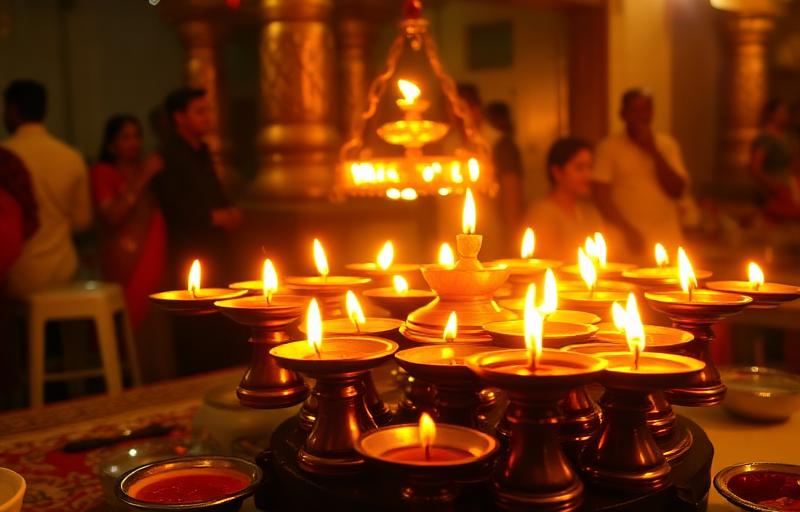
The temple stands directly on the bank of the Shivna, and the river is part of the experience rather than a backdrop.
- The ghats below the temple are used for snan before darshan, and for deep daan in the evening
- During heavy monsoons the Shivna rises, and there are seasons when the water reaches the temple itself. Devotees describe this as the river performing its own abhishek of the deity.
- Aarti is performed morning and evening, with the evening aarti drawing the largest local gathering
- Mondays, Pradosh and Mahashivratri are the busiest days, and a large mela is held at Mahashivratri
- Sawan brings kanwariyas and Monday queues, as at Shiva temples across Madhya Pradesh
Offerings follow standard Shaiva practice: water and milk abhishek, bel patra, dhatura, white flowers, bhang in some traditions, and a lamp. Rudrabhishek and Mahamrityunjaya jaap are performed here on request, and many families come specifically for that.
The temple is modest in scale compared to Ujjain or Omkareshwar, and that is part of its appeal. Even on busy days, darshan is close and unhurried.
Where It Fits in Madhya Pradesh's Shiva Circuit
Madhya Pradesh holds two of the twelve Jyotirlingas and a dense network of older Shaiva sites, and Mandsaur sits naturally within a Malwa route.
- Mahakaleshwar, Ujjain - the Jyotirlinga where the Bhasma Aarti is performed at dawn, about three hours from Mandsaur
- Omkareshwar - the island Jyotirlinga on the Narmada, with the Mamleshwar temple across the water
- Bhojpur, near Bhopal - the unfinished eleventh century temple with one of the largest single stone Shivlings in India
- Neelkantheshwar and the Ujjain circuit shrines - Kal Bhairav, Harsiddhi and Gadkalika, usually covered with Mahakaleshwar
- Pashupatinath, Mandsaur - the eight faced linga, generally combined with Ujjain or with a Chittorgarh and Udaipur route since the Rajasthan border is close
For devotees planning a Malwa yatra, a practical order is Ujjain first for the Bhasma Aarti, then Mandsaur, then onward. The distances are manageable by road, and each site shows a different way in which Shiva has been worshipped in this region, from a Jyotirlinga to a carved eight faced murti to a temple that was never finished.
Planning Darshan
Mandsaur is on the Delhi to Mumbai rail route and is well connected by road from Ujjain, Ratlam, Neemuch and Chittorgarh.
- Best time - October to March for comfortable weather. Mahashivratri and Sawan are the most devotional times but also the most crowded.
- Timings - the temple opens early and closes late, with a midday break. Evening aarti is the best time for a first visit.
- What to carry - bel patra, white flowers, a small pot of water or milk for abhishek, and a cloth bag for prasad
- Etiquette - remove footwear and leather items, avoid photography in the sanctum, and follow the queue arrangement on festival days
- Nearby - the Shivna ghats, the Mandsaur fort area and the ancient inscription sites of Dashapura, and Gandhi Sagar dam a short drive away
One suggestion for devotees who reach early: stand for a few minutes at each side of the murti rather than only in front. The temple is built around the fact that Shiva has eight faces here, and most visitors see only two of them before moving on.
Common Questions From Devotees
What is special about the Pashupatinath temple in Mandsaur?+
It enshrines an Ashtamukhi Shivling, a single block of stone carved with eight faces of Shiva in two tiers of four. Eight faced lingas are extremely rare, since most multi faced lingas have four faces.
How was the Mandsaur Shivling discovered?+
It came to light in the early 1940s during work along the bed of the Shivna river, where the huge carved monolith had lain buried. A temple was later built around it on the river bank and worship has continued since.
What do the eight faces represent?+
Devotees most often connect them with the Ashtamurti idea, in which Shiva is present as the five elements along with the sun, moon and the worshipper, and with the four yugas. Each face also looks in a different direction.
Is Mandsaur Pashupatinath related to the Kathmandu temple?+
They share the name Pashupatinath, meaning lord of all living beings, but they are separate temples. The Kathmandu murti is four faced, while the Mandsaur murti has eight faces carved on a single block.
When is the best time to visit?+
October to March for comfortable weather, with Mahashivratri and the Mondays of Sawan being the most devotional but also the most crowded. Evening aarti is a good time for a first visit.
What is offered at the temple?+
Standard Shaiva offerings - abhishek with water and milk, bel patra, dhatura, white flowers and a lamp. Rudrabhishek and Mahamrityunjaya jaap are performed here on request for families who come for that purpose.
About the author
Pandit Ravindra Sharma · Vedic Rituals & Bhakti, 22+ years
Pandit Ravindra is the Vandnaa editorial team's resident specialist on aarti, chalisa, and daily devotion. He has performed home and temple pujas across Varanasi and Delhi for over two decades and contributes the bhakti-focused articles on this site.
Meet the Vandnaa editorial team →