16 Days When Your Ancestors Walk the Earth
There is one period in the Hindu calendar when the souls of departed ancestors are believed to physically descend from Pitru Lok and walk among their living descendants - invisible, but watching. Watching whether you remember them. Watching whether you offered water. Watching whether you fed a brahmin in their name.
That period is Pitru Paksha - the dark fortnight (Krishna Paksha) of Ashvin month. Pitru Paksha 2026 begins on Monday, 7 September 2026 (Bhadrapad Purnima Shraddh) and ends on Monday, 21 September 2026 (Sarva Pitru Amavasya / Mahalaya Amavasya). Sixteen consecutive days of remembrance.
The Garuda Purana - the most authoritative scripture on death and afterlife - declares: 'Pitru-paksha mein jo shraddh nahi karta, uske 7 generations bhookhe rehte hain Pitru Lok mein. Jo karta hai, uske 7 generations tarte hain.' (Skip Pitru Paksha and 7 generations of ancestors stay hungry. Honour it and 7 generations attain liberation.)
This is why Pitru Paksha is considered the single most important obligation a Hindu has to their family - beyond marriage, beyond children, beyond personal moksha. When you do shraddh, you are not just praying. You are literally feeding your great-great-grandfathers across the cosmic veil.
This blog covers - exact dates for each tithi in 2026, complete shraddh vidhi, the Vishnu and Pitru tarpan mantras, food rules, the role of crow/cow/dog in shraddh feeding, what to do if you live abroad, and the 11 strict rules of these 16 days.
🙏 The Vandnaa App's Pitru Paksha module includes a daily tithi alert (so you do shraddh on the exact tithi your ancestor passed away), Sanskrit tarpan mantra audio, and a step-by-step guided ritual.
Pitru Paksha 2026 - Day-by-Day Tithi Calendar
Each ancestor's shraddh must be done on the same tithi (lunar date) on which they died - not the same calendar date. Below is the 2026 calendar.
| Date 2026 | Tithi | Shraddh For | |---|---|---| | Mon 7 Sep | Bhadrapad Purnima | Those who died on any Purnima | | Tue 8 Sep | Pratipada (1st) | Those who died on Pratipada tithi | | Wed 9 Sep | Dwitiya (2nd) | Dwitiya tithi | | Thu 10 Sep | Tritiya (3rd) | Tritiya tithi | | Fri 11 Sep | Chaturthi (4th) | Chaturthi (also Maha Bharani) | | Sat 12 Sep | Panchami (5th) | Panchami; Bharani Shraddh for those who died young | | Sun 13 Sep | Shashthi (6th) | Shashthi | | Mon 14 Sep | Saptami (7th) | Saptami (Hartalika Teej coincides) | | Tue 15 Sep | Ashtami (8th) | Ashtami | | Wed 16 Sep | Navami (9th) | Navami; Matri Navami - special for departed mothers | | Thu 17 Sep | Dashami (10th) | Dashami | | Fri 18 Sep | Ekadashi (11th) | Ekadashi (sannyasi-only normally) | | Sat 19 Sep | Dwadashi (12th) | Dwadashi; sanyasi shraddh | | Sun 20 Sep | Trayodashi (13th) | Trayodashi; Magha Shraddh - those who died via fire/water/accident | | Sun 20 Sep (eve) | Chaturdashi (14th) | Ghata Chaturdashi - those who died by murder/suicide/accident | | Mon 21 Sep | Amavasya | Sarva Pitru Amavasya - universal day for ALL ancestors whose tithi is unknown or missed |
Most important day if you can do only ONE: Sarva Pitru Amavasya (Mon 21 Sep 2026). It is the catch-all - covers every ancestor whose death tithi you do not know, every miscarriage, every relative who died abroad, every person whose specific tithi shraddh you missed.
Best tarpan times each day: Brahma Muhurat (4:00 AM – 5:30 AM) for sankalp; Madhyahna Kaal (11:30 AM – 1:30 PM) for the main shraddh. Pitru tarpan must complete before 1:30 PM each day - afternoon tarpan does not reach.
Step-by-Step Shraddh Vidhi at Home (No Priest Needed)
You do NOT need a brahmin priest to do shraddh. The Garuda Purana clearly says - 'putra ka tarpan, sabse uttam tarpan' (a son's tarpan is the highest tarpan). Daughters can also do tarpan if there is no son.
Items needed (Samagri):
- Black sesame seeds (kala til) - most important
- Raw rice (akshat)
- Fresh water in a copper or steel kalash
- Kusha grass blades (or substitute: any green grass blade)
- Janau (sacred thread) - wear over right shoulder during tarpan
- White flowers, tulsi leaves
- Photo of departed ancestor (if available)
- Cooked rice, dal, kheer (separate small bhog)
- Small banana leaf or steel plate
- Ghee diya
Step 1 - Snan & Sankalp (Brahma Muhurat, 4:30 AM): Bathe before sunrise. Do NOT cut hair, nails or shave during the entire 16 days. Wear white or off-white clothes. Sit facing south (Pitru direction is south). Wear janau over the right shoulder (this is unique to Pitru karma - every other puja uses left shoulder).
Sankalp: 'I, [name], on this [tithi], offer tarpan to my father [name], grandfather [name], great-grandfather [name] / mother [name], grandmother [name], great-grandmother [name]. May they receive this offering. Om Vishnave Namah.'
Step 2 - Vishnu Smarana (5 minutes): Before any pitru work, salute Lord Vishnu - He is the witness who carries your offering to Pitru Lok. Chant 'Om Namo Bhagavate Vasudevaya' 11 times.
Step 3 - Til-Jal Tarpan (5:30 AM – 1:30 PM): Take water in a copper kalash. Add a pinch of black sesame and a few kusha grass blades. Stand facing south. Pour the water on the ground (or into a steel plate to be poured outside later) WHILE chanting:
'Om Pitribhyah Swadha Namah. [Father's name] sharma vasu rupa tript-yatam Idam til-jalam tasme swadha namah.'
Repeat for each ancestor - father, grandfather, great-grandfather; mother, grandmother, great-grandmother. If you don't know specific names, address as: 'Pitre swadha namah' (to the father), 'Pitamahaya swadha namah' (to the grandfather), 'Prapitamahaya swadha namah' (to the great-grandfather).
Count: 3 jal-anjali per ancestor. Total = 18 anjali (6 ancestors × 3) at minimum.
Step 4 - Pind Daan (Optional but Powerful): Make small balls of cooked rice + black sesame + barley flour (sattu) - one per ancestor. Place on the kusha grass on a banana leaf. Sprinkle ghee, til-water, and pray. After ritual, do NOT throw - place under a peepal tree, or feed to a cow. (Traditional pind daan needs 16+ days of rice; the simplified pind here is acceptable shastra-recognized version for householders.)
Step 5 - Brahmin / Needy Person Bhojan (NOON): Cook a satvik meal - rice, dal, sabzi, kheer, puri. NO onion, garlic, masoor, lauki, or salt-heavy food. Invite a brahmin (preferably) or any needy person to eat first, before your family. Feed them respectfully on a banana leaf if possible. Give a small dakshina (₹51, ₹101, or ₹501) along with cloth, sweets, or fruits.
This is THE critical step. 'Pitru Paksha mein brahmin ko bhojan = saakshat pitru ko bhojan.' (Feeding a brahmin in Pitru Paksha = feeding your ancestor directly.)
Step 6 - Crow / Cow / Dog Feeding: This is unique to Pitru Paksha. Before family eats, offer 5 small portions of the same food on a banana leaf:
- 1st portion → cow (Surabhi-ansh - represents Goddess Lakshmi)
- 2nd portion → dog (Yama's vehicle - represents departed soul's journey)
- 3rd portion → crow (kak-balli - said to be the form Yama assumes to receive offerings during these 16 days)
- 4th portion → ant / insect
- 5th portion → fire / homa
If a crow comes within 5 minutes and pecks the offering, it is considered a sign that the ancestor has accepted - extremely auspicious. If no crow comes, offer to dog or cow instead.
Step 7 - Family Bhojan & Closing Aarti: After all the above, family can eat. Light a ghee diya in the south corner of the puja room before sleeping (south is Pitru direction). Whisper: 'May my ancestors rest in peace. Their hunger is satisfied today.'
5 Essential Tarpan Mantras (with Sanskrit, Roman & Meaning)
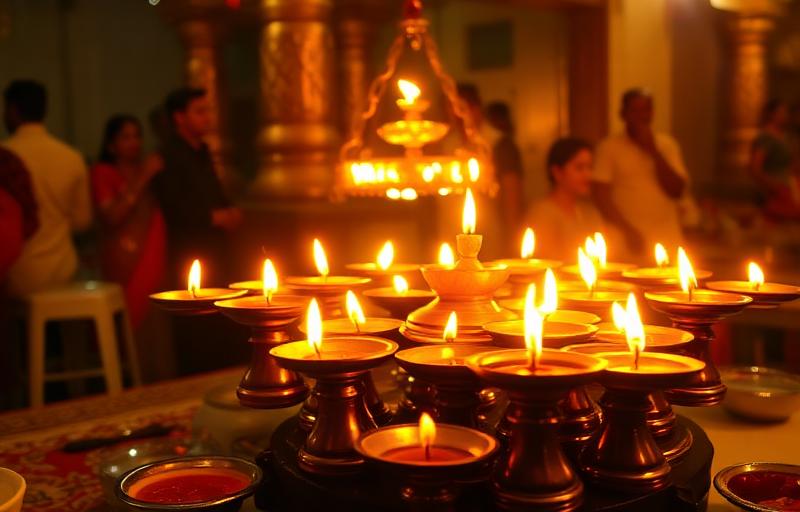
1. Pitri Mool Mantra (chant before any tarpan) ॐ पितृभ्यः स्वधा नमः Om Pitribhyah Swadha Namah → Salutations to all my ancestors. Receive this offering with grace.
2. Trayodashi Mantra (for father) ॐ अमुक-गोत्र अस्मत् पिता [पिता का नाम] वसु-रूप तृप्यताम्। इदम् तिल-जलम् ते स्वधा। Om Amuka-gotra Asmat Pita [name] Vasu-rupa Tripyataam, Idam Tila-Jalam Te Swadha. → My father of [gotra] family, in the form of Vasu, may you be satisfied. This sesame-water is your offering.
3. Pitamaha Mantra (for grandfather) ॐ अमुक-गोत्र अस्मत् पितामह [नाम] रुद्र-रूप तृप्यताम्। इदम् तिल-जलम् ते स्वधा। Om Amuka-gotra Asmat Pitamaha [name] Rudra-rupa Tripyataam, Idam Tila-Jalam Te Swadha. → My grandfather, in the form of Rudra, receive this offering.
4. Prapitamaha Mantra (for great-grandfather) ॐ अमुक-गोत्र अस्मत् प्रपितामह [नाम] आदित्य-रूप तृप्यताम्। इदम् तिल-जलम् ते स्वधा। Om Amuka-gotra Asmat Prapitamaha [name] Aditya-rupa Tripyataam, Idam Tila-Jalam Te Swadha. → My great-grandfather, in the form of Aditya, receive this.
The Vedas say - three generations of fathers are seated in three positions: father as Vasu, grandfather as Rudra, great-grandfather as Aditya. Tarpan reaches each one through their cosmic form.
5. Universal Pitri Mantra (when names are unknown) ॐ ये के च अस्मत् कुले मृताः अरूपाः आ-स्थवीयाः ज्ञाताः अज्ञाताः च भीताः। तेभ्यः स्वधा नमः इदम् तिल-जलम् तेभ्यः स्वधा नमः। Om Ye Ke Cha Asmat Kule Mritah, Arupah Aasthaviyah, Jnatah Ajnatah Cha Bhitah, Tebhyah Swadha Namah Idam Tila-Jalam Tebhyah Swadha Namah. → All those who have died in my family - known and unknown, with form and without form, near and distant - to all of them I offer this sesame-water with reverence.
This is the most important mantra to chant on Sarva Pitru Amavasya (Sep 21) - it covers everyone you may have forgotten.
🎧 All 5 mantras with Sanskrit-only chanting + Hindi/English meaning are available on the Vandnaa App's Pitru Paksha module. Play them softly during the entire 16 days of tarpan.
11 Strict Rules of Pitru Paksha (Do's and Don'ts)
❌ STRICTLY AVOID for all 16 days:
1. No new clothes, jewellery, or vehicle purchases. Pitru Paksha is a period of austerity, not celebration. Buying new things is considered an insult to the ancestor's energy.
2. No marriages, engagements, housewarmings. Same reason as Chaturmas - no auspicious 'starts'. (But Pitru Paksha falls IN Chaturmas anyway, so this is doubly enforced.)
3. No hair cutting, shaving, nail cutting. The body is in 'mourning mode' for the family lineage.
4. No non-vegetarian food, alcohol, smoking. No exceptions. Even seafood and eggs are prohibited.
5. No onion, garlic, masoor dal, lauki (bottle gourd), urad dal, chana dal cooked with masala. Stick to satvik food only.
6. Do not refuse food to ANY visitor - human, animal, or insect. Especially crows. Refusing food during Pitru Paksha is said to come back as the ancestor's hunger.
7. No ill-talk, lies, gossip, anger. Negative speech in these 16 days reaches the ancestors directly.
8. Do not start litigation, sign property documents, or take new loans. Settle pending issues, do not initiate new ones.
9. No physical intimacy. Both partners abstain.
10. Do not turn away beggars, monks, or homeless people from your door. They are believed to be tested ancestor-souls in human form during these 16 days.
11. Do not host or attend birthday parties, baby showers, anniversaries. Postpone celebrations until after Sarva Pitru Amavasya.
✅ DO MORE:
- Wake at Brahma Muhurat daily (4:00 AM – 5:30 AM)
- Read Garuda Purana 2nd canto / Bhagavad Gita 11th chapter (Vishwaroop Darshan)
- Visit ancestor's grave/cremation site if possible
- Donate cooked food to a brahmin or homeless every day (or 1st/8th/16th day minimum)
- Plant a peepal or banyan tree in the ancestor's name on Sarva Pitru Amavasya
- Write your ancestors' names on a paper and keep it on your puja altar for 16 days
- Talk to elders about the ancestor's life - preserve memory through stories
Special days within the 16:
- Matri Navami (Sep 16) - feed any old woman in the neighbourhood, donate sarees
- Magha Shraddh (Sep 20) - for those who died unnatural deaths; light an extra diya
- Sarva Pitru Amavasya (Sep 21) - THE MOST IMPORTANT day; do tarpan even if you skip all other days
How to Do Pitru Paksha Tarpan If You Live Abroad
Millions of NRIs and overseas Hindus believe they cannot do shraddh because they don't have access to the Ganga, kusha grass, or a brahmin. This is wrong. The Padma Purana clearly states - 'Bhaav pradhanam karma' (the intention is the principal, not the ingredient).
Minimum requirements that work in any country:
- Water (any clean water - tap water becomes Ganga jal when invoked with mantra)
- Black sesame seeds (available in every Indian grocery, also at Whole Foods, Asian markets)
- A piece of green grass from your lawn or potted plant (substitute for kusha)
- A photo of the ancestor if available, OR just close your eyes and visualize them
- A janau (sacred thread) - if you don't have one, take any white thread and wind 9 times to make a temporary one
Modified vidhi for abroad:
1. Sapta-Nadi mantra to invoke Ganga in your tap water: 'Om Gange Cha Yamune Chaiva Godavari Saraswati, Narmade Sindhu Kaveri Jale-asmin Sannidhim Kuru.' Pour this 'now-Ganga' water as your tarpan jal. The water becomes spiritually equivalent.
2. Direction: Face south (use a compass app - exact south not approximate). Pitru Lok is in the southern direction regardless of your physical location.
3. Tarpan time conversion: Madhyahna Kaal (most important time) is calculated from local sunrise + sunset. Sunrise + 4-6 hours is your local Madhyahna. Use the Vandnaa App's location-aware calendar - it auto-adjusts to your timezone.
4. Brahmin substitute: If no brahmin available, feed any homeless person, monk, sick person, or even just any older person who is poor. Buy food, hand-deliver respectfully, give a small donation. The act of feeding is what matters - caste of receiver is secondary.
5. Crow substitute: If your country has no crows, offer the bali to any bird (pigeons, sparrows, even ducks in a park). The intention is what reaches the ancestor.
6. Pind daan substitute: Make pinds with cooked rice + black sesame + barley flour. After ritual, do not throw in the trash - bury in your garden, or place under any tree in a park. Some Hindu communities abroad have organized 'Pind Daan in [city]' WhatsApp groups for collective rituals.
7. Online options: Several Indian temples (especially Gaya - the most sacred place for shraddh) offer online tarpan services where a brahmin in Gaya does shraddh in your name on your specified tithi. Cost: ₹1100-₹5100. Genuine providers: Vishnupad Mandir Gaya official site, Iskcon Gaya. Beware of scams - verify temple registration first.
8. Combination strategy (most recommended): Do home-tarpan yourself daily AND book one online Gaya tarpan for Sarva Pitru Amavasya. This combines personal devotion + the geographic shakti of Gaya.
Gaya is the only place on earth where pind daan grants the ancestor 'final liberation' - even Ram Himself did pind daan for King Dasharath in Gaya. If you can travel, plan a future Gaya yatra. If not, online Gaya tarpan + sincere home shraddh covers your obligation.
Feeding Brahmins and Crows During Pitru Paksha: Sacred Offerings to Ancestors

The act of feeding others during Pitru Paksha is one of the primary methods by which the merit of Shraddha reaches the ancestors. The tradition identifies specific recipients whose eating is considered equivalent to the ancestor receiving nourishment in the higher realms.
Why feeding Brahmins is prescribed: In Vedic theology, Brahmins are considered vehicles through whom everything offered simultaneously reaches Agni (fire), who transmits it to the appropriate realm. A Brahmin who accepts food with blessing becomes the vehicle through which the offering reaches the ancestors.
The ideal Shraddha meal: The Garuda Purana specifies foods that particularly please ancestors: khichdi (rice and lentil porridge - simple, nurturing), kheer (rice pudding), sesame (til) in any form, and seasonal vegetables. The meal must be entirely vegetarian - no meat, onion, or garlic. Foods cooked with love and care.
Foods specifically prohibited: Mushrooms, excess spice, and any leftover food are prohibited during Shraddha. Everything must be freshly prepared.
Feeding other beings:
- Crows (kaka): Crows are considered messengers of Yama and representatives of ancestors. Offering a portion of the Shraddha meal to crows before eating is mandatory. If the crow eats the offering, it is considered auspicious.
- Cows: The cow represents nurturing and the mother energy. Feeding a cow on Shraddha days benefits the ancestors.
- Dogs: In Vedic cosmology, dogs guard the path to the ancestral realm. Feeding dogs on these days is also prescribed.
- Fish in water bodies: Offering rice balls or food to fish in rivers connects with the water element in which ancestors temporarily dwell.
Pinda dana (rice ball offerings): The most formal Shraddha practice involves making pindas - balls of cooked rice mixed with sesame, barley flour, and honey - and offering them while reciting the names of ancestors. Three pindas are typically made for each generation.
Shraddha at Gaya: Performing Shraddha at Gaya (Bihar) is believed to liberate ancestors for seven generations. The Vishnupada Temple and the Phalgu River are the most powerful sites.
The Vandnaa app includes Pitru Paksha calendar with day-by-day Shraddha guidance, pinda dana mantras in audio, and recipes for the traditional Shraddha meals for each of the 16 days.
Quick Answers
What if I don't know the exact tithi on which my parent died?+
Three options. (1) Check the death certificate - the calendar date is mentioned; convert it to tithi using any panchang or the Vandnaa App. (2) Ask older relatives - at least one elder usually remembers. (3) If still unknown, do tarpan on Sarva Pitru Amavasya (Sep 21, 2026) - this day is specifically meant for ancestors whose tithi is unknown. The shraddh is fully valid. Do not skip the entire Pitru Paksha just because you don't know the tithi - that creates much greater pitru dosh.
Can a daughter do shraddh if there is no son in the family?+
Yes, absolutely. The Garuda Purana (and modern shastras like the Bhavishya Purana) specifically permit daughters to perform shraddh in the absence of a son - and even when a son exists but is unable. There is no scriptural prohibition. In fact, the Mahabharata mentions Draupadi performing tarpan for Pandu's lineage. The only difference is the gotra: daughters use either the husband's gotra (if married) or the father's gotra (if unmarried). Married daughters can do shraddh for both maternal and paternal sides. Daughter-led shraddh is rising in modern India and is religiously valid.
Why do crows specifically receive the bali in Pitru Paksha?+
Three reasons. First, in Garuda Purana, Lord Yama is said to take the form of a crow during Pitru Paksha to personally receive offerings on behalf of all ancestors. Second, crows are mentioned in the Mahabharata as the only birds who 'remember the dead' - they are known to mourn at funeral grounds. Third, crows have an unusual feature: they always share food with another crow before eating. This shared-food behaviour matches the principle of 'first feed others, then yourself' that defines Pitru Paksha. If a crow accepts your bali within 5 minutes, ancestors are said to have received the offering directly. If no crow comes, dogs and cows are valid alternatives.
Is it true that doing shraddh during eclipses or specific yogas is forbidden?+
Mostly the opposite - eclipses are considered EXCELLENT for shraddh. The Padma Purana says shraddh during a solar eclipse is 1000 times more powerful than normal. The exceptions are: (a) avoid Rahu Kaal each day (use a panchang), (b) avoid Bhadra (Vishti karana) - this is the inauspicious half-tithi, marked in any panchang, (c) avoid Yama-ghantam time (varies by day). The Vandnaa App auto-flags these forbidden windows on the daily Pitru Paksha screen so you don't accidentally do tarpan in a wrong window. Otherwise, the more astrologically charged the moment (full moon, new moon, eclipse), the more powerful the shraddh.
If I miss Pitru Paksha entirely this year, what can I do as compensation?+
Three compensatory options. (1) Mahalaya makeup ritual - within 30 days of Sarva Pitru Amavasya, do a single intensified shraddh - feed 7 brahmins, donate til + clothes + dakshina, and chant the Sarva Pitru mantra 108 times. (2) Gaya pind daan within the next 12 months - a single Gaya tarpan covers a missed Pitru Paksha completely. (3) Magh Amavasya (next major opportunity, 2027) - the new moon of Magh month is the second-most powerful day for ancestor offerings. Do special tarpan on this day. The most important thing is to NEVER let two consecutive Pitru Pakshas pass without observing - that creates a much heavier pitru dosh.
About the author
Acharya Vinaya Kapoor · M.A. Sanskrit, Mantra & Stotra Studies
Acharya Vinaya holds an M.A. in Sanskrit from Banaras Hindu University and writes the mantra and stotra commentary on Vandnaa. Her focus is on accurate pronunciation, traditional context, and helping modern readers connect with classical texts.
Meet the Vandnaa editorial team →Explore on Vandnaa
Related Articles
Shani Jayanti 2026: Date, Powerful Remedies, Mantras & 7 Things You Must Do to Pacify Shani Dev
10 min read
Kaal Sarp Dosh: Real Symptoms, 7 Powerful Remedies & The Only Puja That Works
8 min read

Ganga Dussehra 2026: Date, Snan Significance, Story of Bhagiratha & Ganga Mantras
10 min read
Daily Puja Routine at Home (घर पर रोज़ की पूजा विधि)
12 min read