Radha Ashtami 2026: Date and Timing
Radha Ashtami 2026 falls on Saturday, 19 September, observed on the Ashtami tithi of Bhadrapada Shukla Paksha, exactly fifteen days after Krishna Janmashtami, which falls on Friday, 4 September 2026. This gap is not a coincidence at all: Janmashtami marks Krishna's appearance on the Krishna Paksha Ashtami of Bhadrapada, while Radha Ashtami falls precisely half a lunar cycle later, on the corresponding Ashtami of the following Shukla Paksha, a rhythm that repeats reliably every single year on the Hindu calendar regardless of when Bhadrapada itself begins or ends in a given year.
Radha Ashtami is celebrated with particular devotion and scale in Braj region towns closely associated with Radha, especially Barsana, her traditional birthplace, where celebrations can extend across several days with elaborate processions, temple decoration and large public gatherings drawing devotees from across the country and even from abroad. Away from Braj, most households and neighborhood temples observe a single focused day of puja, typically involving a period of fasting that many devotees extend until midday, since Radha's appearance is traditionally believed to have occurred around noon rather than at the midnight hour associated with Krishna's own birth earlier in the month.
As with several Bhadrapada festivals this particular year, Radha Ashtami arrives soon after both Hartalika Teej and Ganesh Chaturthi, so households already managing an active, demanding festival calendar may want to keep this specific day's puja simple and genuinely focused rather than elaborate, without any real loss of devotional meaning or depth as a result of scaling it back a little this year specifically.
Why This Puja Starts With Radha, Not Krishna
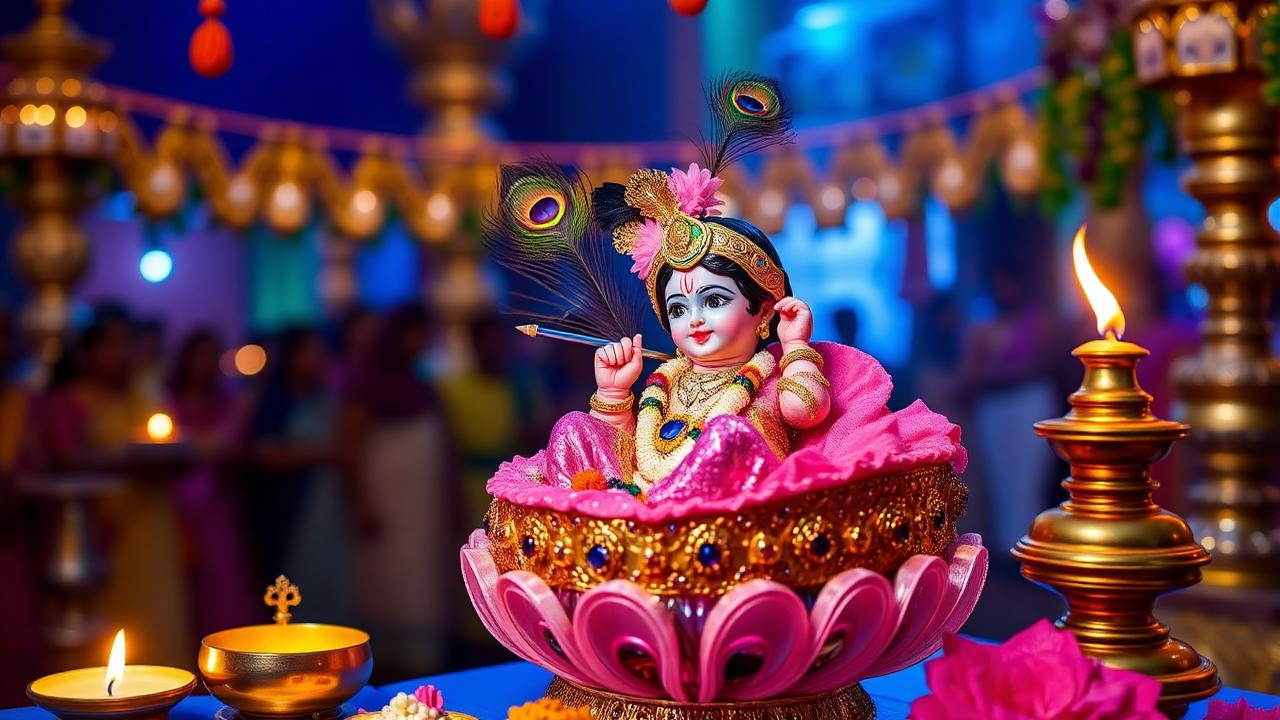
In most everyday Krishna worship, whether at home altars or in larger temples, Krishna tends to occupy the central place in both attention and ritual sequence, with Radha honored warmly beside him as his eternal, inseparable consort rather than as the primary focus herself. Radha Ashtami deliberately inverts this familiar order for exactly one day each year. On this specific occasion, tradition calls for Radha to be worshipped first and foremost, with the invocation, abhishek and primary offerings all directed to her before any real attention turns to Krishna, even though the two are rarely worshipped in complete isolation from each other given how inseparable their shared iconography has always been across Vaishnava art and literature.
This sequencing is rooted deeply in Radha's theological standing within Vaishnavism, particularly in the Gaudiya and Pushti Marg traditions, where she is regarded not as secondary to Krishna in any sense but as Hladini Shakti, the divine energy of pure bliss and love without which Krishna's own nature is considered genuinely incomplete as a concept. Some schools of thought go even further, holding that worshipping Radha first is precisely what makes worship of Krishna spiritually acceptable at all, since approaching Krishna through Radha's grace first is considered the most direct and complete path toward him, rather than attempting to approach him independently of her.
The common phrase Radhe Radhe, used as an everyday greeting throughout Braj and by countless Krishna devotees well beyond that region, itself quietly reflects this priority, invoking Radha's name specifically rather than Krishna's own, and Radha Ashtami is the one single day in the entire yearly calendar where this underlying priority is made most explicit through the deliberate structure of the puja itself.
Puja Vidhi: Step by Step
The day typically begins with a fast, observed by many devotees until madhyahna (midday), the specific hour when Radha's appearance is traditionally believed to have taken place in Barsana. Before the main puja, the Radha-Krishna idols or framed images at home are gently bathed in panchamrit, a mixture of milk, curd, honey, ghee and sugar, with the abhishek performed on Radha's image first as a matter of sequence, followed only afterward by Krishna's own abhishek.
After the abhishek is complete, both deities are carefully dressed, traditionally in bridal-style attire for Radha specifically, along with fresh flower garlands for both, and a tilak or bindi is applied to each image in turn. The primary mantra chanted through the puja is Om Shri Radhikayai Namah, along with the more widely known Radhe Krishna invocation repeated throughout. Offerings include fresh flowers, especially lotus where it can be sourced locally, tulsi leaves placed near Radha's image first, and a bhog of white or cream-colored sweets such as kheer, rabri or peda, since white and light-colored foods are traditionally associated most closely with offerings made specifically to Radha.
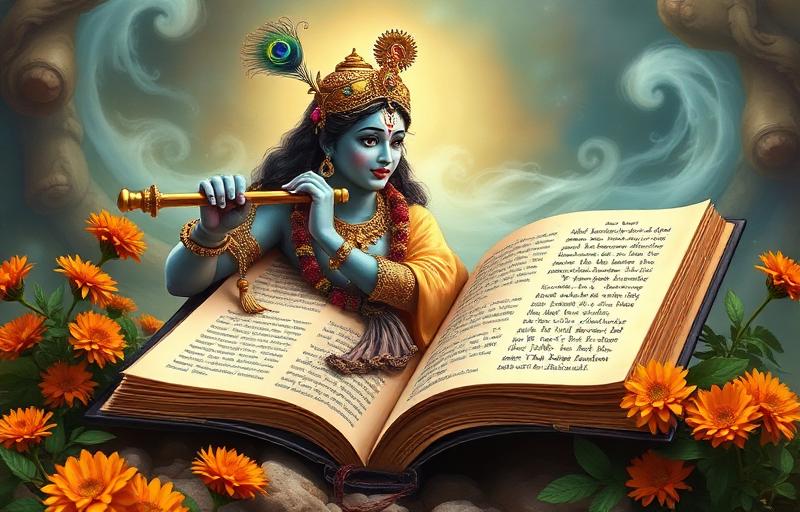
An aarti is performed at midday to mark the exact moment of her appearance, followed by a second, shorter aarti in the evening for households continuing the day's observance a little further. Many devotees also read or recite the Radha Chalisa or the specific Radha Ashtami vrat katha at some point during the day, treating the act of reading itself as a genuine part of the puja rather than a separate, optional activity tacked on afterward.
🪈 Vandnaa's Krishna aarti and Radha-Krishna bhajans can be played through the day, keeping the home gently immersed in devotion between the midday and evening rituals.
Offerings That Are Specific to Radha Ashtami
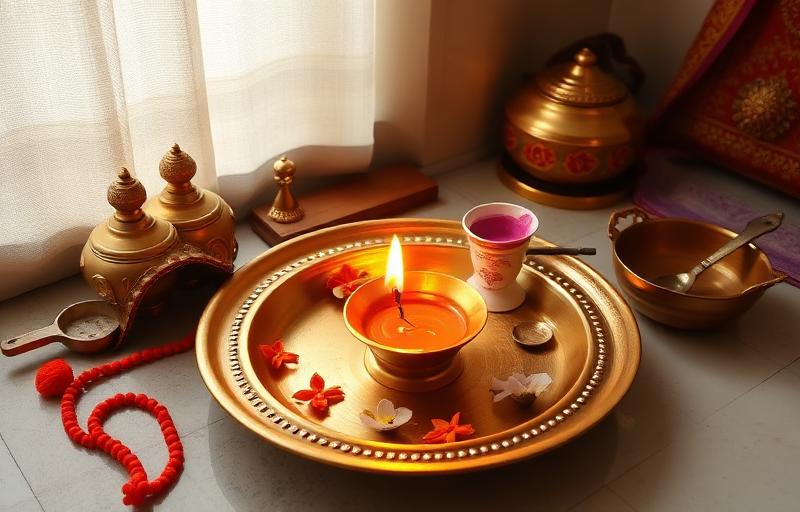
While many Krishna festivals share broadly common offerings, makhan-mishri and dhaniya panjiri especially at Janmashtami come to mind immediately, Radha Ashtami has its own genuinely distinct set of offerings rooted specifically in Radha's iconography, temperament and the legends surrounding her. White and cream-colored sweets dominate the bhog for this day, kheer, rabri, peda and batasha being the most common choices, reflecting Radha's close association with purity and a soft, moonlight-like grace, a notable contrast to Janmashtami's heavier emphasis on butter and milk-based treats tied more closely to young Krishna's own well-known preferences as a child.
Lotus flowers, where they can be sourced, are considered especially dear offerings for this particular day, tied closely to recurring imagery of Radha in Vrindavan's ponds and shaded groves throughout devotional poetry, though any fresh, fragrant flower remains an entirely acceptable substitute where lotus is unavailable. Tulsi is offered as it typically is across most Vaishnavite worship, but on this specific day it is deliberately placed near Radha's image first, reflecting the day's overall theme of sequencing and priority running through every part of the ritual.
Some family traditions also include offering a small mirror, comb, bangles or other items closely associated with a woman's own shringar as a symbolic gesture directed to Radha, echoing the personal, intimate nature of devotion to her specifically, distinct from the grander, more royal offerings sometimes made to Krishna in his other widely worshipped forms. None of these additional items are strictly mandatory; a sincere puja built around basic flowers, one simple sweet and the correct core mantras is entirely sufficient on its own, and anything more elaborate remains a heartfelt addition rather than a genuine requirement.
The Midday Fasting Window Explained
Unlike Janmashtami, where the fast traditionally breaks at midnight around Krishna's believed hour of birth, Radha Ashtami's fasting window is centered squarely on midday, since Radha's appearance is specifically associated with madhyahna rather than any nocturnal hour observed elsewhere on the Hindu calendar. Many devotees begin the fast at sunrise and break it only after the midday puja and aarti are fully complete, making this overall a noticeably shorter fasting duration compared to a full 24-hour nirjala vrat, though some more devoted observers do choose to extend the fast further into the evening for a genuinely more rigorous observance that year.
Most households treat this as a phalahar, or fruit-permitted, fast rather than a strict nirjala one, allowing fruits, milk and water freely through the morning hours, which makes the day considerably more manageable for elderly family members, children participating enthusiastically alongside adults, or anyone with health considerations that would make a full waterless fast genuinely inadvisable. This built-in flexibility is well within tradition and carries no stigma whatsoever; Radha Ashtami is not typically classified among the stricter, more physically demanding fasting festivals scattered across the Hindu calendar.
After the midday aarti concludes, the fast is broken with the day's bhog, usually starting with the kheer or peda first offered to Radha herself, followed shortly by a regular, ordinary meal for the rest of the family. Devotees who choose to extend the observance meaningfully into the evening simply delay this final meal until after the second aarti is completed, but this remains entirely a personal or family choice rather than any fixed, universal requirement written into the vrat itself.
How This Differs From Everyday Krishna Puja
In daily worship across most homes and neighborhood temples, Krishna is typically the primary focus of attention, whether depicted as Bal Gopal, Govinda, or Krishna standing alongside Radha in a shared frame or idol pairing, with the everyday devotional emphasis, aarti sequence, and central mantras all generally oriented around him as the main deity. Radha, while always present, honored and never absent from the imagery, is generally worshipped in direct relation to Krishna rather than as the fully independent center of the daily ritual in her own right.
Radha Ashtami is the one occasion in the entire yearly calendar built specifically and deliberately to reverse this familiar pattern. The abhishek order, the primary mantra chosen, the fasting logic tied directly to her specific appearance time, and even the careful choice of offerings, white sweets favored over butter, lotus favored over tulsi as the lead flower, are all structured intentionally around Radha herself rather than simply adapted from an existing Krishna-centered template used the rest of the year. It functions, in a real practical sense, as Krishna devotees' equivalent of one dedicated day set aside for the feminine, deeply relational aspect of the divine that Radha represents continuously throughout the year but is only rarely given sole ritual precedence in this specific way.
For a household accustomed to daily Krishna aarti and casual bhajans playing in the background, this genuine shift in emphasis is worth explaining clearly to children or to newer devotees participating in Radha Ashtami for the very first time, since understanding the reason behind it helps the day feel distinct and meaningful in its own right, rather than simply registering as another vaguely Krishna-adjacent festival appearing on the calendar without context.
What People Ask Most
What is the date of Radha Ashtami in 2026?+
Radha Ashtami 2026 falls on Saturday, 19 September, exactly fifteen days after Krishna Janmashtami on 4 September 2026.
Why is Radha worshipped before Krishna on Radha Ashtami?+
Radha is regarded as Hladini Shakti, Krishna's own energy of divine love, and tradition holds that approaching Krishna through Radha's grace first is the most complete form of devotion, especially on this day dedicated to her.
Is Radha Ashtami a nirjala (waterless) fast?+
No, most households observe it as a phalahar fast permitting fruits, milk and water until the midday puja, making it considerably less strict than a nirjala vrat.
What is the main mantra chanted on Radha Ashtami?+
Om Shri Radhikayai Namah is the primary mantra, along with the widely used Radhe Krishna invocation chanted throughout the puja.
Where is Radha Ashtami celebrated most elaborately?+
Barsana, traditionally regarded as Radha's birthplace in the Braj region, hosts the most elaborate celebrations, often extending across several days with processions and temple decoration.
About the author
Pandit Mahesh Trivedi · Festival Traditions & Panchang
Pandit Mahesh leads the festival-date and Panchang content on Vandnaa. He cross-references multiple regional panchangs (Drik, Vaishnava, Bengali, Marathi) for every festival date published on the site.
Meet the Vandnaa editorial team →