Radha Kund and Shyam Kund: Twin Ponds of Braj
Close to Govardhan Hill lie two small, adjoining ponds, Radha Kund and Shyam Kund, regarded by devotees, especially followers of the Gaudiya Vaishnava tradition, as among the holiest bathing sites in all of Braj. Though modest in size compared to the great rivers and tanks of India, these kunds hold a significance in the hearts of devotees that few other water bodies can match.
The two ponds sit side by side, separated by only a narrow strip of land, yet each carries its own distinct legend and its own name, Shyam Kund for Krishna and Radha Kund for Radha.
The Legend of Aristasura and the Two Kunds
Tradition tells that Krishna once slew the demon Aristasura, who had taken the form of a bull to threaten the cowherds of Braj. Radha and the gopis, in a moment of gentle teasing, suggested that having killed a creature, even a demon, Krishna ought to bathe in a sacred tirtha to cleanse himself, as was customary. In response, Krishna struck the ground with his heel, and a spring emerged, which became Shyam Kund.
Radha and her sakhis, not wanting to bathe in the same water used to wash away the act of killing, then created their own pond alongside it using their bangles and pots, which became Radha Kund. Devotees see in this story a playful glimpse of the deep intimacy between Radha and Krishna, expressed even in something as simple as sharing or not sharing water.
Why Radha Kund Holds Supreme Significance
For devotees of the Gaudiya Vaishnava tradition in particular, Radha Kund is considered one of the most sacred spots in all of Braj, even said to have been especially dear to Chaitanya Mahaprabhu and to Raghunath Das Goswami, one of the Six Goswamis, who spent much of his life in devotion beside its waters.
- Devotees believe that bathing in Radha Kund brings one closer to Radha's own grace and mood of devotion
- Radhashtami and the month of Kartik are considered especially auspicious times to bathe here
- Many devout Vaishnavas consider a bath in Radha Kund among the most cherished moments of a Braj pilgrimage
- The site is visited alongside the Govardhan Parikrama by most devoted pilgrims
Darshan Guide: Visiting and Bathing Customs
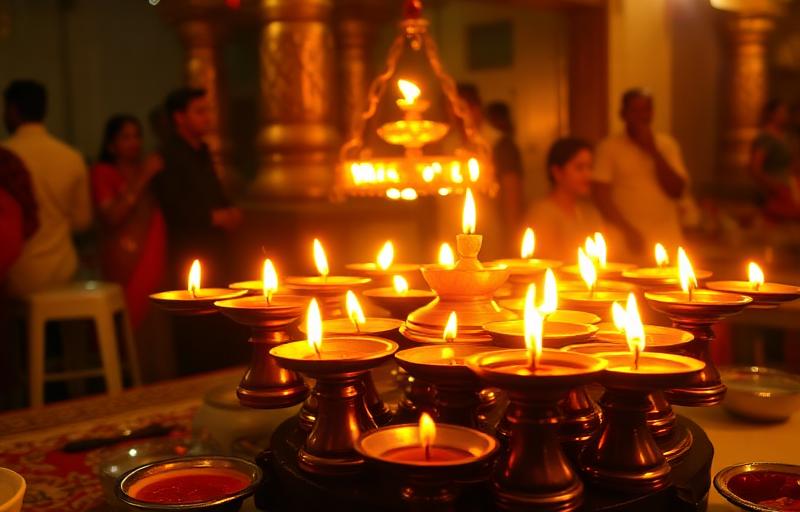
The kunds are open to devotees throughout the day, with steps, or ghats, built around both ponds for bathing and prayer. Many pilgrims visit early morning, when the site is quieter and considered especially auspicious for a devotional dip.
Radhashtami, marking Radha's appearance day, sees the largest gathering of devotees here, along with heavy footfall during Kartik month and the annual Govardhan Puja season, when pilgrims combine a visit here with the Govardhan Parikrama.
How to Reach Radha Kund and Shyam Kund
Radha Kund and Shyam Kund are located near Govardhan, a short distance from both Mathura and Vrindavan, well connected by road and commonly visited as part of the Govardhan Parikrama circuit. Mathura Junction is the nearest major railway station, connected to Delhi and Agra, while Agra serves as the nearest airport for those travelling from further afield.
A Simple Prayer and the Takeaway
Devotees at Radha Kund often chant Om Shri Radha Kundaya Namah ('salutations to sacred Radha Kund') before entering the water, treating the bath itself as a prayer.
The story of Radha Kund and Shyam Kund reminds devotees that even the smallest gesture, a spring struck from the earth, a pond dug with bangles, can carry the weight of great devotion when love is behind it. Worship here, as everywhere, is an act of faith and love, not a transaction.
Frequently Asked Questions
How were Radha Kund and Shyam Kund formed, according to tradition?+
Tradition holds that Krishna struck the earth with his heel to create Shyam Kund after slaying the demon Aristasura, and Radha and her sakhis then created Radha Kund alongside it using their bangles.
Why is Radha Kund especially significant to Gaudiya Vaishnavas?+
Radha Kund is said to have been deeply cherished by Chaitanya Mahaprabhu and by Raghunath Das Goswami, who spent much of his devotional life beside its waters, making it central to Gaudiya Vaishnava practice.
When is the best time to visit Radha Kund and Shyam Kund?+
Radhashtami and the month of Kartik are considered especially auspicious, though the site is open to devotees throughout the year, often combined with the Govardhan Parikrama.
About the author
Pandit Ravindra Sharma · Vedic Rituals & Bhakti, 22+ years
Pandit Ravindra is the Vandnaa editorial team's resident specialist on aarti, chalisa, and daily devotion. He has performed home and temple pujas across Varanasi and Delhi for over two decades and contributes the bhakti-focused articles on this site.
Meet the Vandnaa editorial team →