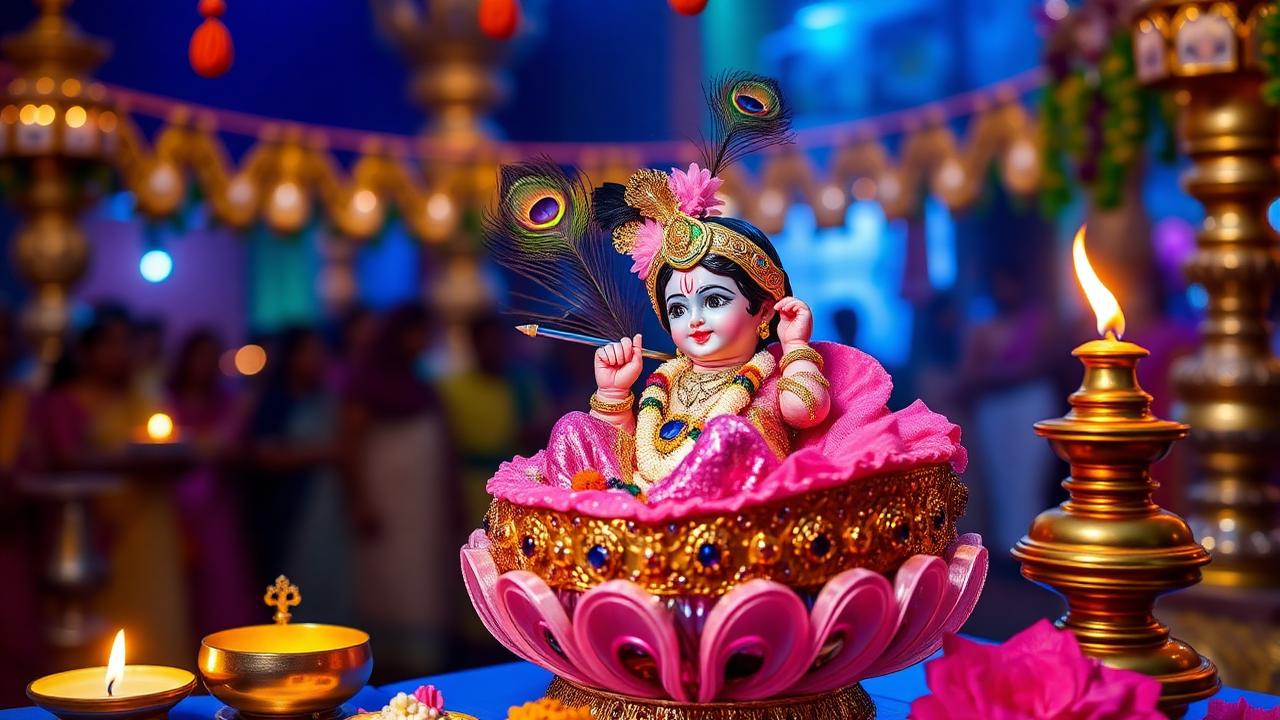
Who Is Radha Rani?
Radha is the beloved of Lord Krishna and the very heart of bhakti. In the devotional tradition she is not merely Krishna's companion but his hladini shakti - the power of divine bliss and love through which Krishna himself is realised. This is why devotees say Radhe Krishna and Radhe Radhe, placing her name even before his.
Radha represents the soul's pure, selfless longing for God. Chanting her mantra is an invitation of that same love into our own heart, softening the mind and turning it gently toward Krishna.
The Mantra & Its Meaning
The mantra: ॐ ह्रीं राधायै नमः Om Hreem Radhayai Namah
Word meaning:
- Om (ॐ) - the primordial sound, the seed of all mantras
- Hreem (ह्रीं) - a powerful beej (seed) syllable of the Goddess, carrying her shakti and grace
- Radhayai (राधायै) - to Radha (the dative form, 'to/for Radha')
- Namah (नमः) - I bow, I offer myself
Together the mantra means: 'Om, I bow to Radha.' It is a complete surrender of the heart to Radha Rani and, through her, to Krishna.
A simpler, equally loved form is just Radhe Radhe or Om Radhayai Namah, chanted softly like a sweet remembrance.
Benefits of Chanting the Radha Mantra
- Awakens pure bhakti: It fills the heart with selfless love and devotion to Krishna.
- Softens the mind: Repeating Radha's name calms anger, ego and restlessness, leaving sweetness behind.
- Harmony in love and marriage: Radha-Krishna are the ideal of divine love, so devotees chant for understanding and tenderness in relationships.
- Inner peace: The beej Hreem and the soft repetition steady the breath and the mind.
- Krishna's grace: It is said that Krishna is most easily pleased through Radha, so her name opens the door to his blessings.
These are devotional beliefs meant to nurture faith and inner growth, not material guarantees.
Jaap Vidhi & Best Time to Chant

1. Bathe and sit in a clean place before an image of Radha-Krishna, facing east or north. 2. Light a ghee or sesame-oil lamp and offer fresh flowers, tulsi and incense. 3. Use a tulsi mala of 108 beads and chant Om Hreem Radhayai Namah one full round (mala), or 11 / 21 rounds as your devotion allows. 4. Keep the voice soft and the heart sweet - feel Radha's love rather than rushing the count. 5. Best times: Early morning (brahma muhurat) and evening are ideal. Radhashtami (Radha's appearance day), Janmashtami, Ekadashi and Fridays are especially auspicious. 6. End with Radhe Radhe and a moment of silent remembrance.
Quick Answers
What is the meaning of Om Hreem Radhayai Namah?+
It means 'Om, I bow to Radha.' Om is the primordial sound, Hreem is the Goddess's seed syllable carrying her grace, Radhayai means 'to Radha', and Namah means 'I bow'. The mantra is a heartfelt surrender to Radha Rani.
Can I simply chant Radhe Radhe instead?+
Yes. 'Radhe Radhe' and 'Om Radhayai Namah' are simple, beloved forms suited for anyone. Saints say even repeating Radha's name with love is enough to draw Krishna's grace.
Which mala is best for the Radha mantra?+
A tulsi mala of 108 beads is most loved for Radha-Krishna mantras, as tulsi is dear to Vishnu and Krishna. Chant one full round daily and increase as your devotion grows.
When is the best day to chant the Radha mantra?+
Radhashtami (Radha's appearance day), Janmashtami, Ekadashi and Fridays are especially auspicious. Daily chanting in the early morning or evening, however, brings the steadiest blessing.
About the author
Acharya Vinaya Kapoor · M.A. Sanskrit, Mantra & Stotra Studies
Acharya Vinaya holds an M.A. in Sanskrit from Banaras Hindu University and writes the mantra and stotra commentary on Vandnaa. Her focus is on accurate pronunciation, traditional context, and helping modern readers connect with classical texts.
Meet the Vandnaa editorial team →