A Land of Many Mothers
Few regions of India hold as rich and varied a tradition of goddess worship as Rajasthan, where nearly every family, clan, village and community seems to have its own particular form of the Divine Mother to call its own. These goddesses range from grand temple deities with royal patronage to small, humble shrines tended quietly by a handful of devoted families.
Together, they form a devotional landscape that mirrors Rajasthan's own history, a land of many kingdoms, clans and communities, each finding its own thread of connection to Shakti.
The Kuldevi Tradition
Central to Rajasthan's devotional life is the concept of the kuldevi, a family or clan goddess whose worship is inherited rather than chosen, passed down as an unbroken thread across generations. Some of these associations are especially well documented, such as Nagnechiya Mata as the kuldevi of the Rathore clan, and Jamvai Mata as the kuldevi of the Kachhwahas, both relationships carried forward for centuries.
Beyond these well-known examples, countless other families across Rajasthan, both Rajput and non-Rajput, maintain their own kuldevi traditions, each held with the same depth of personal devotion, even where the goddess's name is known only within that family's own circle.
Village and Folk Goddesses
Beyond family kuldevis, Rajasthan's villages are home to countless folk goddesses whose worship extends across caste and community lines, protecting fields, wells, herds and travellers rather than a single lineage. These goddesses are often deeply tied to the local landscape, worshipped at a particular tree, rock formation or well believed to be her chosen seat.
Such goddesses may not carry the fame of larger temple deities, yet their shrines remain vital centres of daily faith, visited for everything from a child's first haircut to blessings before a journey.
Shared Devotion Across Communities
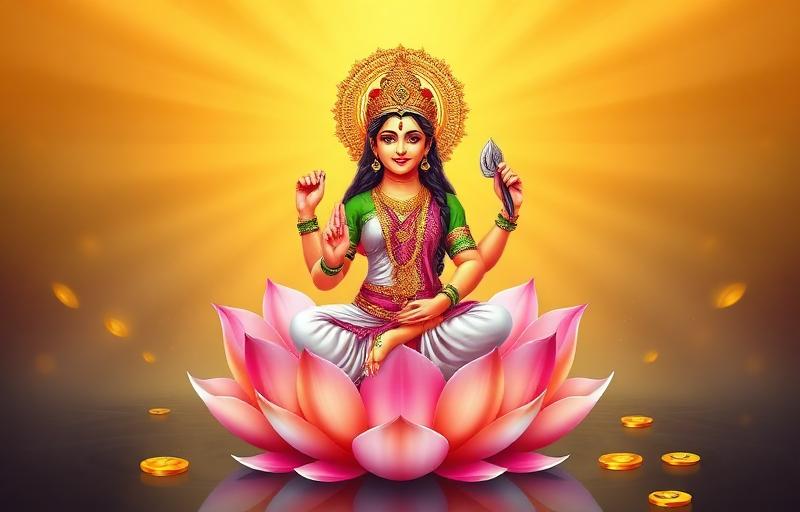
Rajasthan's goddess traditions are sustained not only by the families who worship a particular deity as their own but by communities such as the Charans, whose bardic and devotional traditions have shaped much of the region's shared reverence for the Divine Mother. Festivals like Navratri bring this shared devotion into full view, as devotees from every background visit shrines, sing devotional songs and take part in celebrations together.
This blending of clan-specific and community-wide devotion gives Rajasthan's goddess tradition its distinctive character, personal and inherited, yet also profoundly communal.
A Living Landscape of Faith
Many devotees across Rajasthan make it a point to visit multiple goddess shrines over the course of a year, combining a family's kuldevi temple with well-known pilgrimage sites and local village shrines into an ongoing personal pilgrimage circuit. This living, evolving landscape of faith continues to grow even today, as new shrines are established and older ones lovingly restored by devoted communities.
What unites this vast tapestry of goddesses, whether grand or humble, ancient or newly built, is the same underlying devotion, a trust that the Divine Mother, in whichever form devotees know her, watches over those who turn to her with a sincere heart.
A Devotee's Takeaway
Rajasthan's tradition of folk and clan goddesses offers a gentle lesson for every devotee, that the Divine Mother need not be distant or singular, she can be known intimately, as a presence tied to one's own family, village or community.
Whether at a grand kuldevi temple or a quiet roadside shrine, devotion offered across Rajasthan's many goddess traditions remains an act of faith and love, not a transaction.
What People Ask Most
What is a kuldevi?+
A kuldevi is a family or clan goddess whose worship is inherited across generations, considered a protector tied to a family's own history and identity.
Are all of Rajasthan's folk goddesses linked to Rajput clans?+
No, while many well-known kuldevis are associated with Rajput clans, countless village and folk goddesses across Rajasthan are worshipped by communities of every background, unconnected to any single clan.
What role do communities like the Charans play in Rajasthan's goddess worship?+
The Charan community holds a particularly deep devotional bond with the Goddess, and their bardic and poetic traditions have shaped much of the shared reverence found across Rajasthan's goddess worship.
About the author
Pandit Ravindra Sharma · Vedic Rituals & Bhakti, 22+ years
Pandit Ravindra is the Vandnaa editorial team's resident specialist on aarti, chalisa, and daily devotion. He has performed home and temple pujas across Varanasi and Delhi for over two decades and contributes the bhakti-focused articles on this site.
Meet the Vandnaa editorial team →