Savadhan
Samarth Ramdas, born Narayan Suryajipant Thosar, 1608 to 1681, is the founder of the Ramdasi tradition of Maharashtra, the author of the Dasbodh and the Manache Shlok, and the establisher of the eleven Maruti temples.
He is not a Varkari. This matters for reading him.
The Varkari tradition is centred on Vitthal at Pandharpur, on the annual walk, and on the abhanga. Ramdas is centred on Rama and Hanuman, on discipline and capability, and on prose instruction. The two traditions coexist in Maharashtra and are not the same thing.
His early life:
- Born at Jamb, in what is now Jalna district, on Rama Navami
- Father Suryajipant Thosar, a Surya devotee; mother Ranubai
- Elder brother Gangadhar, called Shreshtha, who was himself a spiritual figure
- His father died when he was young
- He was, by every account, a difficult child: withdrawn, given to sitting alone, and when asked what he was doing, said he was worrying about the world
The wedding
His mother, concerned about him, arranged his marriage. He was around twelve.
What happens at a Maharashtrian wedding: the couple stand with a cloth between them, the mangalashtake are recited, and at the moment the cloth is to be dropped the priest calls out savadhan.
Savadhan means: be alert. Be careful. Pay attention.
He took it as addressed to him.
He went out under the cloth and kept going, and did not return home for twenty four years.
How to read this. Honestly, and with the obvious thing said.
What the tradition takes from it: a moment of hearing a routine word as an instruction, and acting on it without negotiation.
What it also is: a boy of twelve abandoning a bride at the mandap, which was a serious matter for the girl and her family, and the story does not tell us what became of her.
That is worth noticing rather than glossing over. The tradition's founding moment involves somebody else bearing a cost, and the accounts are silent about her.
And the standing note: child marriage is now prohibited in India by the Prohibition of Child Marriage Act 2006, and Childline 1098 takes reports.
Where he went: to Takli, near Nashik, at the confluence of the Nandini and the Godavari.
What he did there, for twelve years:
- Rose before dawn
- Stood in the river reciting the Gayatri
- Recited Shri Ram Jai Ram Jai Jai Ram, the thirteen syllable mantra, said to have been completed thirteen crore times
- Studied the Ramayana and the philosophical texts
- Took bhiksha, alms, from five houses
- Slept little
Then twelve years of travel: on foot, across the country, to Kashi, to the Himalaya, to Srisailam, to Rameshwaram, to the Narmada, observing what he later wrote down.
He came out of this at around thirty six, and everything he built came afterwards.
The Dasbodh
What it is: his principal work, and one of the two or three most read books in Marathi.
Its structure, which is unusually systematic:
- Twenty dashakas, tens
- Each dashaka has ten samasas, sections
- So two hundred chapters
- Around 7,751 ovis
How it was made: he spoke it and his disciple Kalyan Swami wrote it down, at Shivthar Ghal, also called Sunder Math, a cave in a gorge in Raigad district, behind a waterfall.
What it covers. This is the thing that distinguishes it.
The Dasbodh is a manual, and it is at least as concerned with competence in the world as with liberation.
Sections deal with:
- Vedanta: maya, brahman, the self, discrimination, the four kinds of speech
- Devotion: the nine forms of bhakti, treated in order
- The guru and how to identify one
- Prapancha and paramartha: worldly life and the ultimate, and his insistence that you must be competent at the first
- How to speak in public
- How to write clearly and legibly
- How to organise people
- How to identify a fool, at length and with enjoyment
- How to run a matha
- The behaviour of a karyakarta, an active worker
- Cleanliness, punctuality, thoroughness
The samasa on the fool is famous. He lists, over dozens of lines, the marks of a murkha: somebody who talks without knowing, who cannot keep a confidence, who neglects their family and calls it detachment, who borrows and does not repay, who is late, who leaves work half done, who quarrels with everybody, who takes offence.
And the corresponding samasa on the capable person, the uttam purusha, lists the opposite.
Why the book is used. Because of that combination.
It is a devotional text written by a man who spent twelve years reciting a mantra in a river, and it contains instructions on handwriting.
His central formula: prapanchi asave sadhak, paramarthi asave sadhak. Be capable in worldly life, be capable in the ultimate. He is explicit that a person who cannot manage their own household and work has no business claiming detachment, and that neglect dressed as renunciation is neglect.
Reading it: it is long, but the structure makes it easy to use.
- Read one samasa at a time. They are short
- The Dashaka 2 samasas on the fool and the capable person are the standard starting point
- Dashaka 12, on vivek, discrimination, is the philosophical core
- Marathi editions with modern paraphrase are everywhere, and English and Hindi translations exist
- It is also widely available as audio
The Manache Shlok
This is the one every Marathi child knows.
What it is: 205 verses, in bhujangaprayat metre, each addressed directly to manaa, the mind, in the vocative.
Manaa sajjana, good mind. Manaa tuchi, you, mind. He talks to his own mind for two hundred and five verses and instructs it.
The opening invokes Ganesha and Sharada, and then the address to the mind begins and does not stop.
What it says. Short, blunt instructions, one theme per verse:
- Do not think ill of anybody
- Do not speak harshly, since a harsh word is remembered longer than a blow
- Do not envy
- Death is certain and is not distant, so do not behave as though there is unlimited time
- Keep the company of the good
- Take the name of Rama
- Do not covet another's wealth or another's spouse
- Anger destroys the person holding it
- Do not be proud of the body, which will end
- Do what you said you would do
One of the most famous: he tells the mind that a harsh word wounds more than a weapon, and that the wound made by speech does not heal.
Another: he tells the mind to consider how many have died and how confidently each of them expected not to.
Why it is so widely used
- It is short. 205 verses, and a full recitation takes about half an hour
- The metre is easy and children learn it by ear
- It is recited in Marathi schools, in households, in the month of Shravan, and daily by very many people
- It requires no initiation, no ritual and no equipment
- And the content is conduct, not doctrine, so nothing in it requires agreement about metaphysics
Practical note: reciting the Manache Shlok daily is one of the most common devotional practices in Maharashtra, and audio, printed texts with Marathi paraphrase, and Hindi and English translations are freely available.
His other works:
- Karunashtake, eleven pleading hymns, which are unusually emotional compared with the rest of his output
- Atmaram, a short vedantic work
- Anandvanbhuvani, a poem on a land made joyful, which has been read as political
- Manapanchak, Panchasamasi, Chaturthaman
- Sunderkand and other Ramayana material in Marathi
- A large body of abhangas and shlokas
- Letters
The Eleven Marutis, and the Shivaji Question

The eleven Marutis
Between around 1644 and 1654 he established eleven Hanuman temples in the Satara and Karad region of Maharashtra.
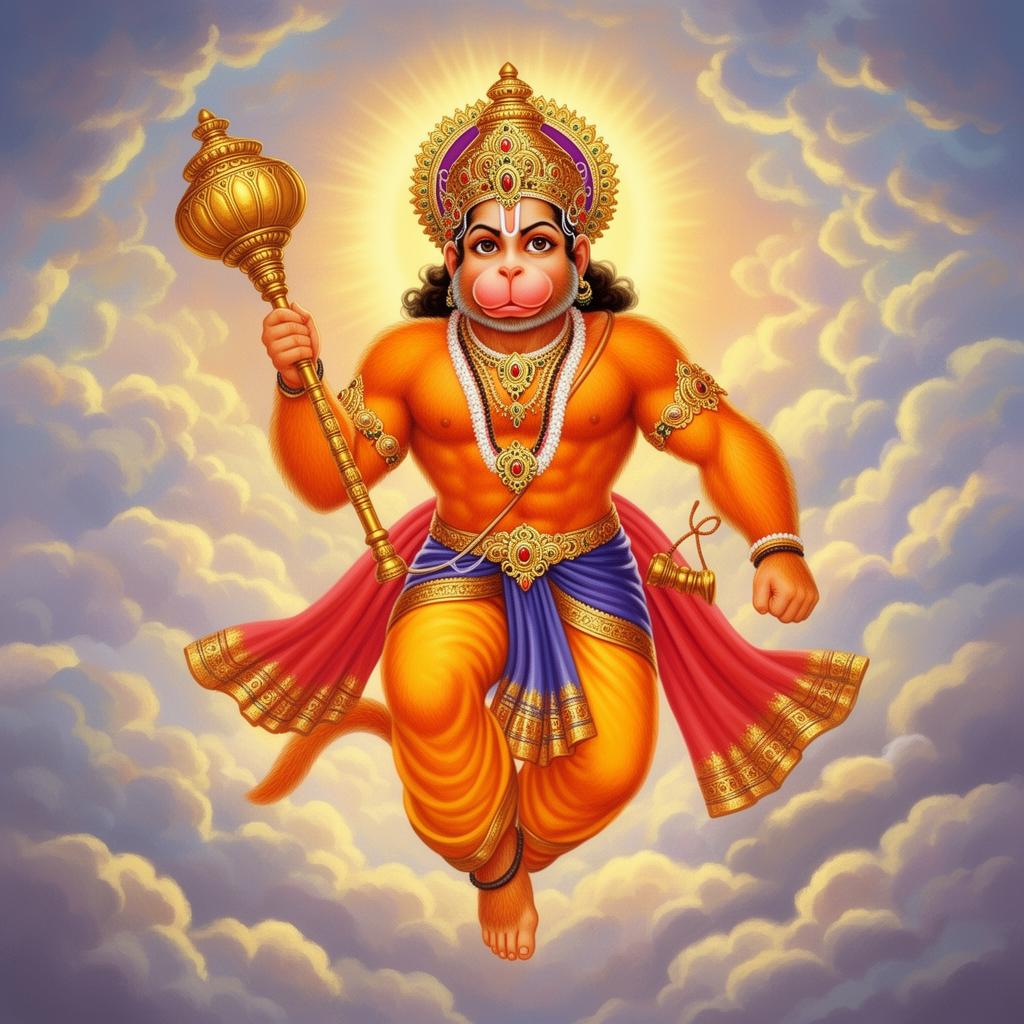
Why Hanuman. Because of what Hanuman is: strength in service, capability without self interest, devotion that is also physically able.
Ramdas's whole emphasis is on capability. A devotee who cannot do anything is of no use to him, and Hanuman is the figure who is both completely devoted and completely effective.
The eleven, the Akra Maruti, are at: Shahapur, Masur, Chaphal (two, the Das Maruti and the Veer Maruti), Shinganwadi, Umbraj, Majgaon, Manpadale, Pargaon, Shirala and Bahe Borgaon.
Chaphal is the principal centre, with the Rama temple he built there.
He also established mathas, teaching centres, across Maharashtra and beyond, and organised a network of disciples, of whom Kalyan Swami, Uddhav Swami, Venabai and Akkabai are the best known. Two of those four are women, which is worth noting for a seventeenth century monastic order.
The Shivaji question
What the tradition holds: that Chhatrapati Shivaji Maharaj was Ramdas's disciple, that Ramdas guided him, that Shivaji offered him his kingdom and was told to rule it as a trust, and that Sajjangad was given to him by Shivaji.
What historians say: this is disputed, and the dispute is real rather than manufactured.
The honest position, stated plainly:
- The two were contemporaries in the same region, and there is no doubt they knew of each other
- Sajjangad was made available to Ramdas during Shivaji's reign, and this is not in question
- The claim that Shivaji was his initiated disciple rests mainly on later sources, particularly bakhars and hagiographies written after both men were dead, and on documents whose authenticity is contested
- Shivaji's own contemporary records give far more prominence to other figures and to his mother Jijabai
- Many historians hold that the guru and disciple relationship was emphasised heavily in the nineteenth and twentieth centuries for reasons connected to the politics of that period
- Others hold that there was a real relationship of respect, whatever its formal status
What this app will say: the two were contemporaries, Sajjangad came to Ramdas in Shivaji's time, the tradition holds a guru relationship, and the historical evidence for formal discipleship is weak and contested. Anybody stating either extreme as settled fact is going beyond the evidence.
And a related note: Ramdas is sometimes recruited into contemporary political argument. His actual writing is a manual on conduct, speech, organisation and devotion. Readers are better served by the Dasbodh's samasa on how to identify a fool than by anybody's claims about what he would have thought about the present.
Sajjangad
- A hill fort near Satara, formerly Parali
- Ramdas spent his last years there
- He took samadhi there in 1681, on Magha Krishna Navami, which is observed as Dasnavami
- The samadhi mandir and the Rama temple are the principal shrines
- It is a short climb and is visited in very large numbers, particularly on Dasnavami
- Shivthar Ghal, where the Dasbodh was dictated, is a separate site in Raigad district, in a gorge behind a waterfall, and is worth the trip in the monsoon
Using Him
The practices associated with him are unusually concrete.
One. The Manache Shlok.
205 verses, half an hour, no initiation required. Recited daily by very large numbers of people in Maharashtra, especially in Shravan.
If you take one thing from this entry, take this. It is available in Marathi with paraphrase, in Hindi and English translation, and as audio, and there is a common practice of reciting a fixed number of verses each day and cycling through.
Two. Shri Ram Jai Ram Jai Jai Ram.
The thirteen syllable mantra he recited at Takli. It requires nothing, fits any rhythm, and is the standard Ramdasi practice.
Three. The Dasbodh, one samasa at a time.
Start with the samasas on the murkha and the uttam purusha in Dashaka 2. They are lists of behaviours and they are uncomfortable reading in the correct way.
Four. Hanuman on Saturdays, at any Maruti temple, and the eleven Marutis if you are in the Satara region.
Five. His actual instruction, which is the useful part.
Prapanchi asavea sadhak, paramarthi asave sadhak. Be capable in worldly life and capable in the ultimate. What that means in practice, from the Dasbodh itself:
- Finish what you start. Half done work is his most repeated complaint
- Be on time
- Write legibly and keep your papers in order. There is an entire samasa on handwriting
- Speak well: prepare, be brief, be audible, do not talk about what you do not know
- Do not neglect your family and call it detachment. He is explicit and repeated about this
- Keep your surroundings clean
- Do not borrow what you cannot repay
- Do not take offence easily
Six. And the caution.
Ramdas founded an order and wrote about how to organise one, so the standard warnings apply with him as with anybody:
A teacher or institution that requires money for blessings, isolates you from your family, demands secrecy, claims exclusive power over your outcomes, or behaves toward women or juniors in ways that would not survive plain description, is failing. Ramdas's own criteria in the Dasbodh are stricter than that, and he uses them to describe what a sadguru is and is not.
A daily practice from this entry:
- Shri Ram Jai Ram Jai Jai Ram
- Some portion of the Manache Shlok, daily, building up
- One samasa of the Dasbodh, weekly
- On Dasnavami, Magha Krishna Navami, his samadhi day
A closing thought
A boy of twelve heard a priest say the word that means pay attention, and walked out of his own wedding, and spent the next twelve years standing in a river saying the same thirteen syllables over and over.
When he finally came back into the world, what he wrote was a book with two hundred chapters, and one of them is about handwriting, and one of them is a list of the things a fool does, and the recurring instruction in all of them is: finish what you started, and do not call your neglect renunciation.
The Short Version
Who: Samarth Ramdas, born Narayan Thosar, 1608 to 1681, of Jamb in Jalna district, founder of the Ramdasi tradition. He is not a Varkari: his focus is Rama and Hanuman, discipline and capability, rather than Vitthal and the annual walk.
The wedding: at around twelve, hearing the priest call savadhan, be alert, he took it as addressed to him, left the mandap, and did not return home for twenty four years.
Takli: twelve years at the confluence of the Nandini and the Godavari, reciting Shri Ram Jai Ram Jai Jai Ram, said to have been completed thirteen crore times, followed by twelve years of travel on foot across the country.
The Dasbodh: twenty dashakas of ten samasas each, two hundred chapters, around 7,751 ovis, spoken by him and written down by Kalyan Swami at Shivthar Ghal. It covers vedanta and bhakti alongside public speaking, legible handwriting, organisation, and a famous list of the marks of a fool.
The Manache Shlok: 205 verses addressed to his own mind, short, easy, recited daily across Maharashtra and learned by children by ear.
His formula: be capable in worldly life and capable in the ultimate. Neglect dressed as renunciation is neglect.
The eleven Marutis: Hanuman temples established between around 1644 and 1654 in the Satara and Karad region, with Chaphal as the principal centre.
The Shivaji question: the two were contemporaries, Sajjangad came to Ramdas in Shivaji's time, the tradition holds a guru relationship, and the historical evidence for formal discipleship rests on later and contested sources. Anybody stating either extreme as settled fact is going beyond the evidence.
His end: at Sajjangad near Satara in 1681, on Magha Krishna Navami, observed as Dasnavami.
What to keep: finish what you start, and do not call your neglect renunciation.
Common Questions From Devotees
Who was Samarth Ramdas?+
Born Narayan Thosar at Jamb in Jalna district, 1608 to 1681, he founded the Ramdasi tradition of Maharashtra, wrote the Dasbodh and the Manache Shlok, and established the eleven Maruti temples in the Satara and Karad region. He is not a Varkari: his focus is Rama and Hanuman, discipline and capability, rather than Vitthal at Pandharpur and the annual wari. He spent his last years at Sajjangad near Satara, where he took samadhi in 1681.
Why did Ramdas run away from his wedding?+
At a Maharashtrian wedding the couple stand with a cloth between them, and at the moment it is to be dropped the priest calls out savadhan, meaning be alert or pay attention. Ramdas, around twelve years old, took the word as addressed to him, went out under the cloth, and did not return home for twenty four years. The story is the tradition's founding moment, though it is worth noticing that the bride bore a real cost and the accounts are silent about what became of her.
What is the Dasbodh?+
Ramdas's principal work: twenty dashakas of ten samasas each, so two hundred chapters, around 7,751 ovis, spoken by him and written down by his disciple Kalyan Swami at Shivthar Ghal in Raigad district. What distinguishes it is its range. Alongside vedanta and the nine forms of bhakti it covers public speaking, legible handwriting, organising people, running a matha, the conduct of an active worker, and a famous and enjoyable list of the marks of a fool.
What are the Manache Shlok?+
205 verses in bhujangaprayat metre, each addressed directly to his own mind, manaa. They give short blunt instructions one theme at a time: do not think ill of anybody, do not speak harshly since a harsh word wounds more than a weapon and does not heal, do not envy, death is certain and not distant, keep good company, take the name of Rama, do what you said you would do. A full recitation takes about half an hour, no initiation is needed, and Marathi children learn them by ear.
Was Shivaji really Ramdas's disciple?+
This is genuinely disputed. The two were contemporaries in the same region and certainly knew of each other, and Sajjangad was made available to Ramdas during Shivaji's reign, which is not in question. But the claim of formal initiated discipleship rests mainly on later bakhars and hagiographies written after both men were dead, and on documents whose authenticity is contested, while Shivaji's own contemporary records give more prominence to other figures and to his mother Jijabai. Many historians hold the relationship was emphasised heavily in the nineteenth and twentieth centuries for political reasons. Anybody stating either extreme as settled fact is going beyond the evidence.
What are the eleven Marutis?+
Eleven Hanuman temples Ramdas established between around 1644 and 1654 in the Satara and Karad region of Maharashtra, at Shahapur, Masur, Chaphal, which has two, Shinganwadi, Umbraj, Majgaon, Manpadale, Pargaon, Shirala and Bahe Borgaon. He chose Hanuman because his whole emphasis is on capability: a devotee who cannot do anything is of no use, and Hanuman is the figure who is both completely devoted and completely effective. Chaphal is the principal centre, with the Rama temple he built there.
About the author
Pandit Ravindra Sharma · Vedic Rituals & Bhakti, 22+ years
Pandit Ravindra is the Vandnaa editorial team's resident specialist on aarti, chalisa, and daily devotion. He has performed home and temple pujas across Varanasi and Delhi for over two decades and contributes the bhakti-focused articles on this site.
Meet the Vandnaa editorial team →