The Temple at Mandphiya
Sanwaliya Seth is worshipped at Mandphiya, about forty kilometres from Chittorgarh in Rajasthan, on the road toward Udaipur.
What is there:
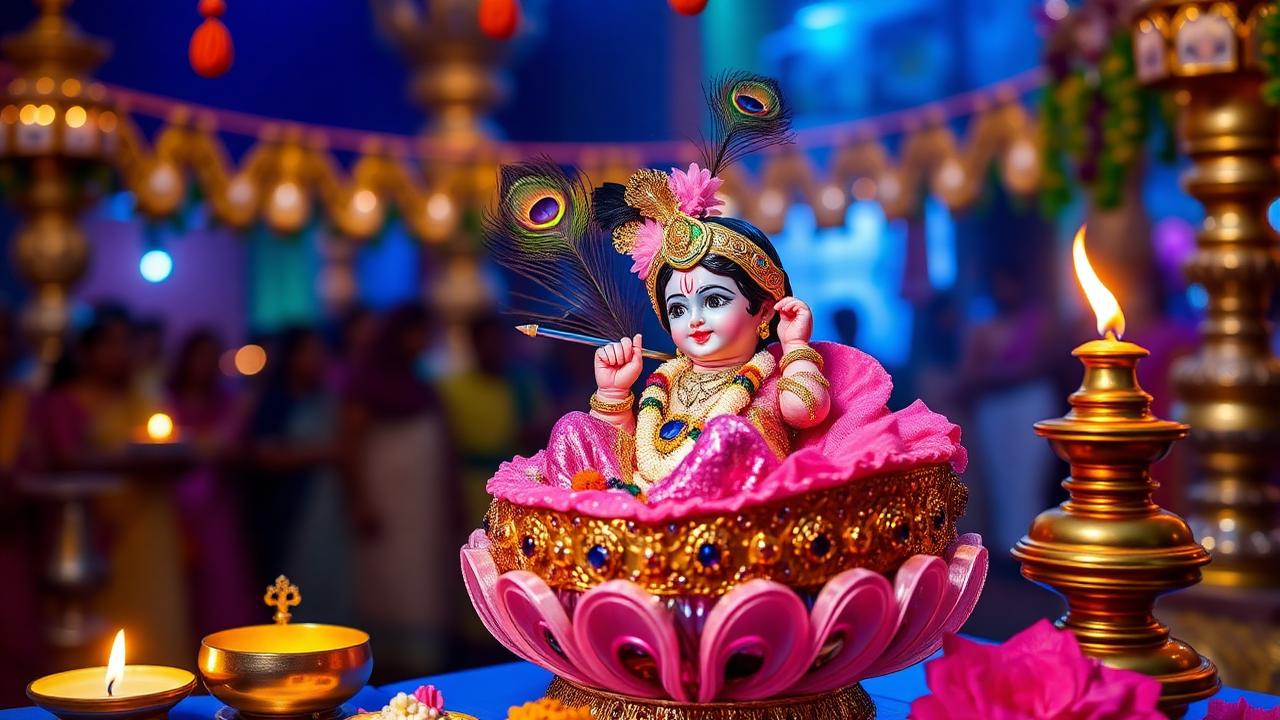
- A dark stone image of Krishna in the sanctum, from which the name Sanwaliya, the dark one, comes
- A large modern temple complex, expanded considerably as the following grew
- Two associated shrines nearby at Bhadsora and Begun, connected in the tradition to the same set of images
- Extensive facilities, since the temple receives very large numbers
The name Seth is the point. It is the ordinary Rajasthani and Hindi word for a merchant or businessman, and applying it to a deity establishes the relationship devotees have with him.
Sanwaliya Seth is approached as a business partner. Traders and businesspeople across Rajasthan, Madhya Pradesh and Gujarat set aside a share of their profits for him, treat him as a stakeholder in their enterprises, and bring the share to the temple.
This is not metaphorical language. It is an actual practice with an actual accounting, and it makes Sanwaliya Seth one of the wealthiest temples in Rajasthan.
The Katha of the Three Images
The origin tradition connects three nearby shrines, and it is told consistently in the region.
As it is told:
- During a period of religious disturbance, images of Krishna were buried for safekeeping by devotees
- Generations later, a cowherd in the area had a dream, or noticed a cow pouring milk at a particular spot
- Digging at the place revealed three images of Krishna
- One was installed at Bhadsora, one at Mandphiya, and one at Begun
- The Mandphiya shrine became the principal one and grew into the temple that exists now
The burial element in this account is worth noting. A very large number of temple traditions across north and western India include a period of concealment, in which images were buried, submerged or hidden and recovered later.
Whether any particular instance is historical is usually impossible to establish. What the pattern reflects is a real memory of disruption, and the recovery narratives are how communities described the resumption of worship after it.
What Sanwaliya Seth's tradition does with this is give three villages a share in the same story, which is why all three shrines continue to receive devotees rather than one absorbing the others.
The Partnership and the Bhet
The distinctive practice at Sanwaliya Seth is the business relationship, and it works in a specific way.
How devotees describe it:
- A trader declares a share for Sanwaliya Seth in a venture, often a fixed percentage of profit
- The share is set aside as the business runs
- The accumulated amount is brought to the temple as bhet, offering, and deposited
- Some devotees maintain the arrangement across their whole working life and across generations
- The relationship is framed as partnership, with obligations on both sides
What happens at the temple:
- Bhet counting is a substantial operation, with offerings counted over days
- The monthly amavasya period sees the largest gatherings, when devotees arrive to deposit their shares
- The temple trust manages the funds, which support the complex, facilities and charitable work
- Reports of the monthly collection are widely followed in the region
What should be said plainly is that business outcomes depend on business decisions, markets, and a great deal of chance. Devotion is not an investment strategy, and no shrine guarantees returns. Devotees themselves generally understand the relationship as one of gratitude and discipline rather than as a transaction, and framing it that way keeps it honest.
What is genuinely interesting is the social form. A deity who is a partner rather than a lord is a specific kind of religious imagination, and it belongs to a merchant culture with its own habits of thought.
The Amavasya Gathering

The temple's rhythm is monthly rather than annual, which is unusual.
- Amavasya, the new moon, is when the largest crowds arrive
- Devotees come to deposit bhet, take darshan and complete vows
- The days around amavasya see the town of Mandphiya fill entirely
- Traffic management and crowd arrangements run through the period
- Businesses from across the region close for the day to make the trip
Other significant occasions:
- Janmashtami, kept with a large celebration
- Jal Jhulani Ekadashi, when the deity's procession is held
- Kartik, the Vaishnava month
- Holi and Diwali, when the trading community's calendar and the temple's coincide
What the monthly pattern reflects is the nature of the following. This is not a pilgrimage undertaken once in a lifetime. It is a recurring obligation, kept on a business rhythm, by people who consider themselves to be in an ongoing arrangement.
The practical consequence is that Mandphiya, a small place, receives urban scale crowds every month. Facilities have been built accordingly, and the temple's infrastructure is considerably more developed than the village around it would suggest.
Deities of the Trading Communities
Sanwaliya Seth belongs to a distinct category: deities whose following is concentrated among trading communities.
Others in the category:
- Khatu Shyam ji in Sikar district, whose following runs heavily through Marwari trading networks
- Salasar Balaji, the Hanuman shrine in Churu district
- Mehandipur Balaji in Dausa district
- Shrinathji at Nathdwara, central to the Pushtimarg tradition and to the Vaishnava merchant communities
- Lakshmi and Kubera, worshipped at Diwali across every business in India
- Ganesha, invoked at the opening of account books
What characterises this layer of practice:
- The relationship is often framed in commercial terms, with shares, accounts and obligations
- Devotion is expressed through substantial giving, and temples of this type are typically well funded
- Following runs along community and trade networks, which is why these shrines have devotees far from Rajasthan
- The Diwali account book puja, when new ledgers are opened with Lakshmi and Ganesha worship, is the household version of the same instinct
What is worth appreciating is the honesty of it. A merchant community that lives by contracts, shares and obligations describes its relationship with the divine in exactly those terms, rather than borrowing the language of courts or ascetics.
Sanwaliya Seth is that instinct in its clearest form: not a lord, a partner.
Visiting Sanwaliya Seth
Practical notes.
Getting there
- Mandphiya is about 40 km from Chittorgarh on the Udaipur road, in Chittorgarh district
- Chittorgarh has a railway station with connections across Rajasthan and to Delhi and Mumbai
- Udaipur airport is about 90 km
- Buses and taxis run frequently, particularly around amavasya
When to go
- Amavasya, the temple's principal monthly occasion, with the largest crowds
- Janmashtami and Jal Jhulani Ekadashi
- Ordinary weekdays for a quiet darshan, which takes minutes rather than hours
- October to March for comfortable weather
At the temple
- Offerings are flowers, sweets and bhet, with counters for deposits
- Facilities including cloakrooms, water and queue management are well developed
- Dress modestly and remove footwear at the designated place
- Follow queue arrangements, which are strictly managed around amavasya
- Photography restrictions apply in the sanctum
Combining the visit
- Chittorgarh fort, one of the largest forts in India, with Vijay Stambh, Kirti Stambh and the Meera temple
- Bhadsora and Begun, the two related shrines
- Udaipur, with Eklingji, Nathdwara and the Jagdish temple
- Menal and Bijolia, temple sites in the district
A closing suggestion. Go on an ordinary day if you want to see the temple, and on an amavasya if you want to see what it is. The crowd on a new moon, arriving with envelopes and account books to settle a share, is not something you see anywhere else.
Frequently Asked Questions
Who is Sanwaliya Seth?+
A dark stone image of Krishna worshipped at Mandphiya near Chittorgarh in Rajasthan. Sanwaliya means the dark one and Seth is the ordinary word for a merchant, which reflects how devotees relate to him, as a business partner rather than only as a lord.
What is the partnership practice?+
A trader declares a share for Sanwaliya Seth in a venture, often a fixed percentage of profit, sets it aside as the business runs, and brings the accumulated amount to the temple as bhet. Many maintain the arrangement across their working life and across generations.
What is the katha of the three images?+
Images of Krishna were buried for safekeeping during a period of disturbance. Generations later a cowherd's dream, or a cow pouring milk at a spot, led to digging that revealed three images. They were installed at Bhadsora, Mandphiya and Begun, with Mandphiya becoming the principal shrine.
When is the temple busiest?+
Amavasya, the new moon, each month, when devotees arrive to deposit bhet and complete vows and the town fills entirely. Janmashtami and Jal Jhulani Ekadashi are the other major occasions.
Does giving to the temple guarantee business success?+
No. Business outcomes depend on business decisions, markets and a great deal of chance, and no shrine guarantees returns. Devotees themselves generally understand the relationship as one of gratitude and discipline rather than as a transaction.
How do you reach Mandphiya?+
It is about 40 km from Chittorgarh on the Udaipur road. Chittorgarh has a railway station with connections across Rajasthan and to Delhi and Mumbai, Udaipur airport is about 90 km away, and buses and taxis run frequently, particularly around amavasya.
About the author
Pandit Ravindra Sharma · Vedic Rituals & Bhakti, 22+ years
Pandit Ravindra is the Vandnaa editorial team's resident specialist on aarti, chalisa, and daily devotion. He has performed home and temple pujas across Varanasi and Delhi for over two decades and contributes the bhakti-focused articles on this site.
Meet the Vandnaa editorial team →