Saptakoteshwar: The Kadamba Dynasty's Deity
The Saptakoteshwar Temple stands in Narve village, Bicholim taluka, dedicated to Lord Shiva as Saptakoteshwar. This form of Shiva holds a distinguished place in Goa's history, having been the rajadevata, or royal deity, of the Kadamba dynasty that once ruled over the region.
The name Saptakoteshwar is traditionally understood to express the boundless, all-encompassing nature of Shiva, a lord whose power and presence are without measure. The temple today stands as both a place of worship and a living link to Goa's ancient royal history.
The Legend: A History of Destruction and Rebuilding
Tradition holds that the original Saptakoteshwar shrine stood on Divar island in the Mandovi river, where it received the patronage of the Kadamba kings as their family deity. Over the centuries, the temple is remembered to have suffered destruction more than once, first amid invasions from the Deccan and later during the religious upheavals of the Portuguese colonial era.
Each time, devotees carried the deity to safety and rebuilt the shrine, until it was finally re-established at Narve in Bicholim taluka, across the river from its original home, where it has stood in continued worship ever since. This repeated cycle of loss and restoration is remembered by devotees as a powerful testament to unbroken faith.
Why Saptakoteshwar Is Sacred to Devotees Today
Saptakoteshwar is revered not only as a form of Shiva but as a symbol of Goa's resilience through centuries of political and religious upheaval.
- Devotees pray here for strength, protection and steady leadership, drawing on the temple's royal heritage
- The shrine is seen as a living reminder that faith can survive even repeated destruction when a community remains devoted
- Maha Shivratri is observed here with special reverence, drawing devotees from across Bicholim taluka and beyond
- Historians and pilgrims alike value the temple as a link to Goa's Kadamba-era heritage
Darshan Guide: The Sanctum at Narve
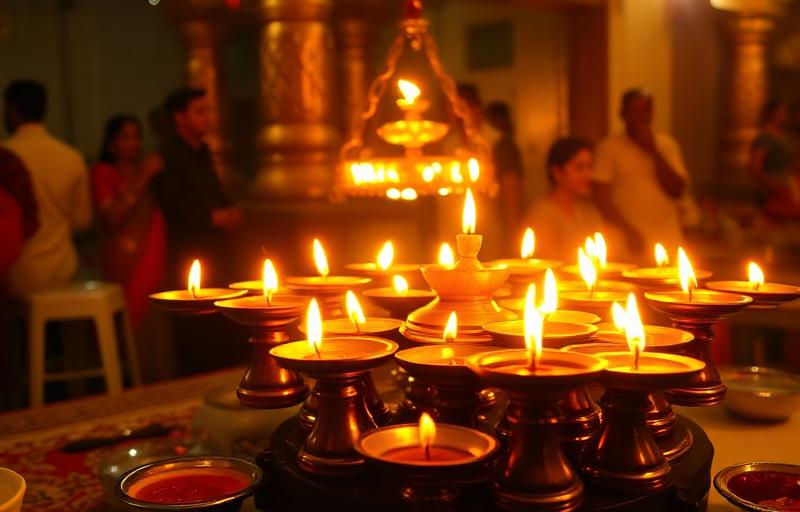
The temple is generally open from early morning until night, with a customary midday closing observed as is typical of Goan temples. The sanctum houses the Shivling worshipped as Saptakoteshwar, set within a temple complex that reflects the layered history of its rebuilding.
Maha Shivratri is the occasion when the temple sees its largest gathering of devotees, alongside the steady flow of Monday worshippers throughout the year.
How to Reach Saptakoteshwar Temple, Narve
Narve is located in Bicholim taluka, reachable by road from Panaji and other parts of North Goa. The nearest railway stations are Karmali and Thivim, and Goa's airport connects conveniently by road for pilgrims travelling from other states.
A Simple Prayer and the Takeaway
Devotees visiting Saptakoteshwar often chant Om Namah Shivaya, invoking the boundless grace suggested by his very name.
Saptakoteshwar's history reminds devotees that no destruction, however repeated, can extinguish faith that a community is determined to protect. Worship at such shrines is an act of faith and love, not a transaction.
Common Questions From Devotees
Why was Saptakoteshwar important to the Kadamba dynasty?+
Saptakoteshwar was the rajadevata, or royal family deity, of the Kadamba dynasty that once ruled over Goa, receiving their patronage at the original shrine on Divar island.
Why was the temple rebuilt more than once?+
The original shrine on Divar island suffered destruction over the centuries, first amid Deccan invasions and later during the Portuguese colonial era, leading devotees to rebuild it, eventually at Narve.
What does the name Saptakoteshwar mean?+
The name is traditionally understood to express Shiva's boundless, all-encompassing nature, though devotees hold different interpretations of its exact origin.
About the author
Pandit Ravindra Sharma · Vedic Rituals & Bhakti, 22+ years
Pandit Ravindra is the Vandnaa editorial team's resident specialist on aarti, chalisa, and daily devotion. He has performed home and temple pujas across Varanasi and Delhi for over two decades and contributes the bhakti-focused articles on this site.
Meet the Vandnaa editorial team →