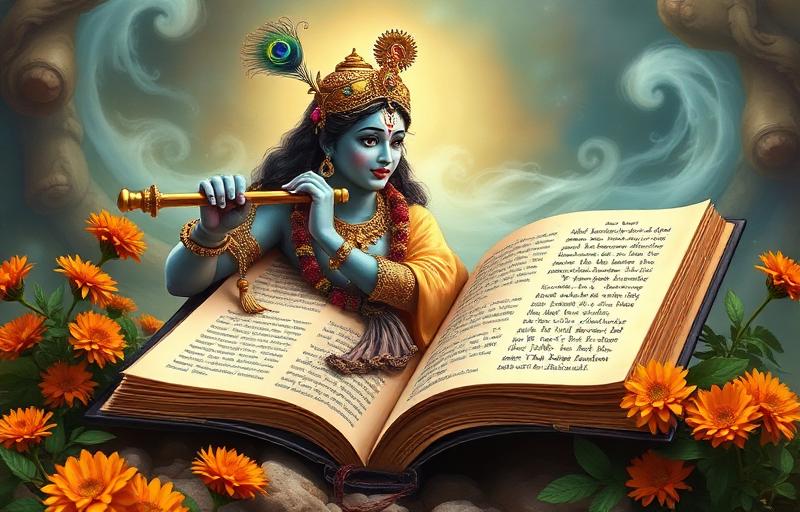
What Is the Saraswati Beej Mantra Aim
Aim (pronounced close to 'aim' in English, with a light nasal close) is honoured across Hindu tradition as the beej mantra of Goddess Saraswati, who presides over knowledge, speech, music and the arts. Devotees chant its complete form as Om Aim Saraswatyai Namah, meaning 'salutations to Saraswati, who is invoked through the sound Aim'.
Aim is often called the Vak Beej, the seed of speech, because tradition holds it to be the very root from which articulate sound and language arise, making it especially significant for anyone seeking clarity of expression.
Scriptural Origin and Tradition
Saraswati's worship traces back to the Rigveda, where she is praised as a river goddess and as Vak, the goddess of speech itself. In later tantric and Puranic tradition, this reverence for the divine word crystallised into the single beej Aim, placed at the head of many mantras associated with learning.
The sound appears prominently in the worship of Saraswati during Vasant Panchami and Navratri, and it is traditionally the first mantra whispered into a child's ear during Vidya Arambham or Akshar Abhyasam, the ceremony marking the start of formal learning.
The Meaning Held Within the Sound
Mantra tradition describes Aim as combining the sounds of creative intelligence and knowledge, understood to carry the essence of Saraswati's role as the source of buddhi, memory and articulate expression. The final bindu, as with other beej mantras, represents her subtle, all-pervading presence beyond form.
Because of this, Aim is regarded not simply as a request for information but as an invitation to the very faculty of understanding, the clarity that allows knowledge, once gained, to be expressed well.
How and When Devotees Chant Aim

Om Aim Saraswatyai Namah is traditionally chanted early in the morning, facing east, often before study, an exam, a performance or any creative work. Vasant Panchami, when Saraswati is worshipped across North India, is considered a particularly auspicious day to begin this practice.
- Students often chant it before opening their books each day
- A count of 108 with a crystal or tulsi mala is common among regular practitioners
- Musicians and writers frequently recite it before beginning practice or composition
- Many households place a small murti or picture of Saraswati near study areas as a focus for the chant
Benefits as Per Tradition
As per tradition, chanting Aim with devotion is believed to sharpen memory, ease nervousness before exams or public speaking, and lend clarity to both thought and expression. Devotees believe it supports patience during long years of study, helping learning feel less like a burden and more like a devotional pursuit.
It is also associated with creative flow, many artists, singers and writers turning to this beej before beginning work that requires sustained focus and imagination.
A Simple Daily Practice
Aim does not demand a long ritual to be meaningful. A few quiet repetitions before opening a book or beginning any work of the mind are, in tradition, considered a sincere way of seeking Saraswati's grace.
As with all mantra practice, chanting Aim is an act of faith and love, not a transaction, a small daily reminder that true learning is as much a matter of humility and devotion as of effort.
Reader Questions Answered
What does the Saraswati beej mantra Aim mean?+
Aim is considered the seed sound of Goddess Saraswati, often called the Vak Beej or seed of speech. It is chanted as Om Aim Saraswatyai Namah to invoke her blessings of knowledge, memory and clear expression.
Who should chant the Aim mantra?+
It is traditionally chanted by students, teachers, musicians, writers and anyone seeking clarity of mind and speech, particularly before study, exams or creative work.
Is Vasant Panchami important for this mantra?+
Vasant Panchami, dedicated to Saraswati's worship, is considered an especially auspicious day to begin regular chanting of Aim, though devotees may recite it on any day with sincerity.
About the author
Acharya Vinaya Kapoor · M.A. Sanskrit, Mantra & Stotra Studies
Acharya Vinaya holds an M.A. in Sanskrit from Banaras Hindu University and writes the mantra and stotra commentary on Vandnaa. Her focus is on accurate pronunciation, traditional context, and helping modern readers connect with classical texts.
Meet the Vandnaa editorial team →