First, Some Reassurance
A missed Sawan Somwar fast is one of the most common sources of quiet guilt among devotees, often disproportionate to what tradition itself actually asks for. A work deadline, an illness, a family emergency, travel, or simply forgetting until midday, any of these can mean a Monday passes without the fast or puja a devotee intended to keep, and the following days are frequently spent feeling that something important has been broken rather than simply missed.
It helps to start with what Hindu devotional tradition is actually built on: sincerity of intention (bhavana) and consistency of effort over a lifetime, not a flawless, uninterrupted record within a single month. Sawan Somwar vrat, like most Hindu vrats, is understood as a voluntary devotional practice (kamya vrat), undertaken by choice for spiritual growth or a specific wish, not a mandatory obligation whose lapse carries the weight of sin the way it might feel in the moment.
Priests across traditions consistently note that Bhagwan Shiva, described throughout Shaiva literature as Bholenath, the innocent, easily-pleased lord, is not depicted anywhere in scripture as keeping a ledger of missed Mondays. The devotional attitude behind the vrat, the reason a devotee began it in the first place, matters considerably more than a perfect completion record.
This is not permission to be careless about the vrat, sincerity does still call for genuine effort, but it is a corrective against the disproportionate guilt that often follows a missed Monday, guilt that, left unaddressed, sometimes causes devotees to abandon the practice entirely out of a sense that they have already "failed" the month, when a single missed day was never going to be viewed that severely by the tradition itself.
What Tradition and Scripture Actually Say About Missed Vrat Days
Classical vrat literature, including sections of the Skanda Purana and various Vrat Katha collections that describe the Sawan Somwar and Solah Somwar observances, focuses overwhelmingly on the benefits of undertaking and completing a vrat, and on stories of devotees rewarded for sincere effort, rather than laying out an elaborate penal code for missed days. This absence is itself informative: the tradition simply does not centre punishment for lapses the way popular guilt sometimes assumes it does.
Where classical texts do address interruptions, largely in the context of the stricter Solah Somwar Vrat rather than the general Sawan Somwar observance, the common guidance is one of two paths: either the count restarts from the beginning to preserve the vrat's specific numerical structure, or a smaller compensatory act, such as additional daan or extra japa, is suggested to address the gap, depending on the specific tradition and the priest's guidance.
For the general Sawan Somwar vrat specifically, which is not bound to a fixed numerical count the way the Solah Somwar Vrat is, missing one or more of the four Mondays does not require restarting anything, since each Monday's observance is independently complete. There is no equivalent "reset" mechanism because there is no running count to break in the first place; a devotee who kept two of the four 2026 Sawan Mondays has simply kept two Sawan Somwar vrats, each fully valid and meritorious on its own, rather than an incomplete fraction of some larger required whole.
This distinction, between vrats with a fixed sequential count and vrats that are complete in each instance, is the single most useful thing to understand when facing a missed Monday, since it clarifies exactly what, if anything, actually needs addressing.
Compensatory Practices You Can Do
For devotees who still feel drawn to address a missed Monday in some way, rather than simply letting it pass, several traditionally accepted options exist, none of them mandatory, but all commonly practiced:
- A brief acknowledgement puja on the next available day: Performing a short abhishek and Om Namah Shivaya japa on the Tuesday or Wednesday following a missed Monday, not to make up the vrat technically, but as a sincere gesture of returning to the practice without excessive delay.
- Extra japa on the next Monday: Some devotees add additional rounds of mantra recitation, an extra mala of Om Namah Shivaya or the Maha Mrityunjaya Mantra, on the following Sawan Somwar, as a voluntary gesture rather than a scripturally required makeup.
- A small daan (charity): Donating white items, milk, rice or a small monetary amount to a temple or those in need is a widely accepted way to address the discomfort of a missed observance, rooted in the broader Hindu principle that charitable action carries independent merit regardless of its connection to a specific missed ritual.
- Reciting the Shiv Chalisa or a Rudra Stotram: A simple, accessible act of devotion that can be done any day, useful for devotees who want to reconnect with the month's spirit without waiting for the next Monday specifically.
- Reaffirming the sankalp: Simply restating one's original intention for observing Sawan, in one's own words, before the next Monday's puja, treating the missed day as a pause rather than a failure requiring formal correction.
None of these are prescribed as strictly necessary. They exist because many devotees find some small responsive action more emotionally settling than simply moving on, and tradition accommodates that instinct without treating it as an obligation.
Using the Remaining Mondays Wisely
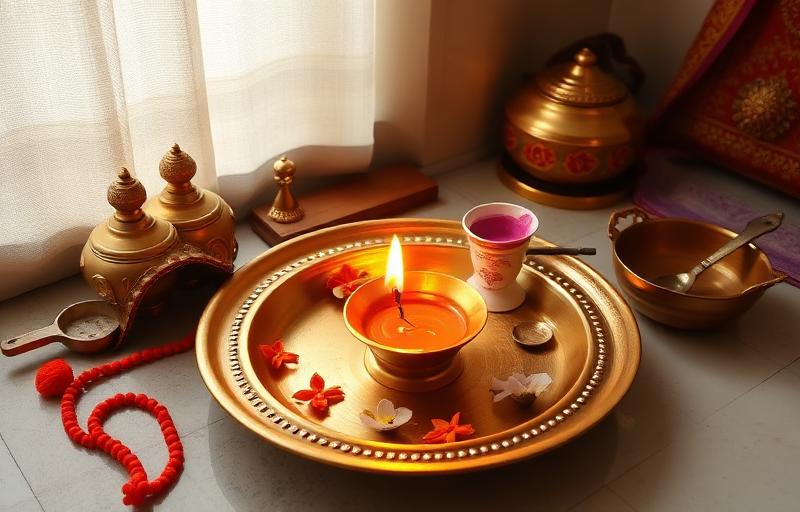
For a devotee who has missed one or more of the earlier Sawan Mondays in 2026, whatever Mondays remain, whether that is the third (17 August), the fourth (24 August), or both, are worth approaching with full attention rather than a sense of playing catch-up for the ones already missed.
A few ways to make the remaining Mondays count without the pressure of correcting the past:
- Focus fully on the day itself. A single Monday, observed with genuine attention, contributes its own complete merit; it does not need to somehow compensate for the earlier gaps to be worthwhile.
- Set a smaller, more achievable version of the vrat if the earlier ones were missed due to a demanding schedule. A phalahar fast rather than nirjala, or a shortened puja rather than an elaborate one, kept consistently, tends to serve a devotee better than an ambitious version abandoned again under the same time pressure that caused the earlier miss.
- Use the remaining Mondays to identify what caused the earlier lapse. If work scheduling was the obstacle, planning the puja for early morning before the workday begins on the next Monday addresses the actual cause rather than just hoping willpower will be stronger this time.
- Treat the fourth and final Somwar (24 August) as a genuine closing point, regardless of how the earlier Mondays went, since it stands as its own complete observance and a meaningful way to mark the month's end.
- Avoid comparing this year's count to a previous year's. A devotee who kept all four Mondays last year and only two this year has not failed by comparison; each year's circumstances differ, and each year's vrat is evaluated on its own sincerity, not against a personal best.
The remaining Mondays are opportunities in their own right, not obligations weighted down by what came before.
When It's Better to Let Go Than to Force It
There are situations where continuing to push toward completing every remaining Sawan Somwar, purely out of a sense of needing to correct earlier misses, does more harm than good, and recognising these situations is itself part of mature devotional practice.
- Health concerns. A devotee recovering from illness, managing a chronic condition, pregnant, or otherwise in a state where fasting carries genuine medical risk, should not fast simply to avoid missing another Monday. Hindu tradition explicitly exempts the sick, the pregnant, and the frail from strict vrat observance, and eating normally while still offering a simple prayer or lighting a diya keeps the devotional connection intact without physical harm.
- Acute family or work crises. A devotee dealing with a genuine emergency, a family member's hospitalisation, urgent travel, a work situation with no flexibility, is better served attending to that responsibility fully than fragmenting attention trying to also manage an elaborate fast and puja.
- When guilt itself becomes the primary emotion driving the practice. If a devotee finds themselves fasting purely out of anxiety about getting it right rather than out of genuine devotion, the vrat has, in a sense, already lost its intended purpose; a pause to reconnect with why the practice was started in the first place is often more valuable than forcing continuation.
- Very young children or elderly family members observing a fast primarily out of family pressure rather than personal choice; tradition does not require this, and their wellbeing should take priority.
In each of these cases, the appropriate response is not abandoning devotion altogether but redirecting it: a short prayer, a moment of gratitude, or simply resolving to return to the practice when circumstances allow, all keep the spiritual thread intact without the specific vrat's physical demands.
Reframing Devotion Beyond a Perfect Streak
The deepest shift available to a devotee troubled by a missed Sawan Somwar is not a specific ritual fix but a change in how the whole practice is understood. A vrat kept for a lifetime, imperfectly, with genuine effort renewed each year, tends to shape a person's relationship with the divine far more meaningfully than a single flawless month followed by years of not bothering at all, precisely because the imperfect version is sustainable and the pursuit of perfection often is not.
Many long-time devotees, when asked, describe their relationship with Sawan Somwar not as an unbroken record but as a decades-long, uneven practice: years with all four Mondays kept, years with two, years with none due to illness, travel or simply life intervening, and yet each Sawan brings them back to the same intention. This return itself, more than any specific year's count, is what tradition seems to actually reward, if reward is even the right frame for something that is ultimately about relationship rather than transaction.
It is also worth remembering that a missed fast does not undo an offered prayer, a lit diya, a moment of gratitude, or a decision to keep trying next Monday. Devotion accumulates across many small acts rather than resting on any single one, which means a missed Monday subtracts far less from the whole than it can feel like in the moment it happens.
For 2026 specifically, whatever Mondays have already passed, the fourth and final Somwar on 24 August remains available, a full, complete opportunity regardless of what came before it this Sawan.
🙏 The Vandnaa App's puja reminders are designed to help devotees return gently after a missed day, without tracking or displaying any kind of streak that could turn devotion into pressure.
Frequently Asked Questions
Does missing a Sawan Somwar cancel the merit of the ones I did keep?+
No. Each Sawan Somwar vrat is considered complete and meritorious on its own. A missed Monday does not retroactively cancel or reduce the merit of the Mondays that were sincerely observed.
Can I make up a missed Monday fast on a different day of the week?+
Not in the technical sense of the Somwar vrat itself, since that is specifically tied to Monday. However, a short puja or extra japa on another day as a gesture of returning to the practice is a widely accepted, if optional, alternative.
Is it a sin to miss a Sawan Somwar vrat?+
No. The vrat is a voluntary devotional practice, not a mandatory obligation. Scripture and priestly guidance consistently frame a missed Monday as simply that, missed, rather than as a transgression carrying the weight of sin.
Should I fast on the fourth Somwar even if I missed the first three?+
Yes, absolutely. The fourth Somwar, 24 August 2026, stands as its own complete and valid observance regardless of the earlier three, and is well worth observing with full attention.
What should I do if illness prevents me from fasting this Sawan?+
Hindu tradition explicitly exempts the sick from strict fasting. Eating normally while offering a simple prayer, lighting a diya, or reciting the Shiv Chalisa keeps the devotional connection intact without physical risk.
Does a missed vrat need to be reported to a priest or corrected formally?+
No formal reporting or correction is required for a general Sawan Somwar vrat. This requirement applies more specifically to structured vrats like the Solah Somwar Vrat, where a family priest's guidance on restarting a count may be useful.
About the author
Pandit Mahesh Trivedi · Festival Traditions & Panchang
Pandit Mahesh leads the festival-date and Panchang content on Vandnaa. He cross-references multiple regional panchangs (Drik, Vaishnava, Bengali, Marathi) for every festival date published on the site.
Meet the Vandnaa editorial team →