September 2026 at a Glance
For readers who think in terms of the ordinary Gregorian calendar month rather than the Hindu lunar month, September 2026 is worth marking out early on any planner: it holds five major festivals inside a roughly three-week span. In order, they are Krishna Janmashtami on Friday the 4th, Hartalika Teej primarily on Sunday the 13th (some cities observe it Monday the 14th instead), Ganesh Chaturthi sthapana on Monday the 14th, Radha Ashtami on Saturday the 19th, and Ganesh Visarjan on Anant Chaturdashi around Wednesday the 23rd, closing out the month's festival run.
What makes September 2026 specifically demanding is not the sheer number of festivals alone, plenty of months on the calendar have several scattered through them, but rather how tightly some of these particular observances cluster together. Hartalika Teej and Ganesh Chaturthi sit only a single day apart, which means the second and third weeks of the month deserve noticeably more planning attention than the quieter first and last weeks bookending them. Framed deliberately by the calendar month rather than by the Hindu month of Bhadrapada, this list is meant for genuinely practical, everyday use: deciding when to request leave from work, when it makes sense to travel, and when to finish festival shopping comfortably before markets get uncomfortably crowded.
The breakdown below moves week by week through the month, rather than strictly festival by festival, since several of these observances share a single calendar week and are considerably easier to plan for together as one connected unit than as isolated, unrelated events.
Week 1: Janmashtami Opens the Month on a Friday
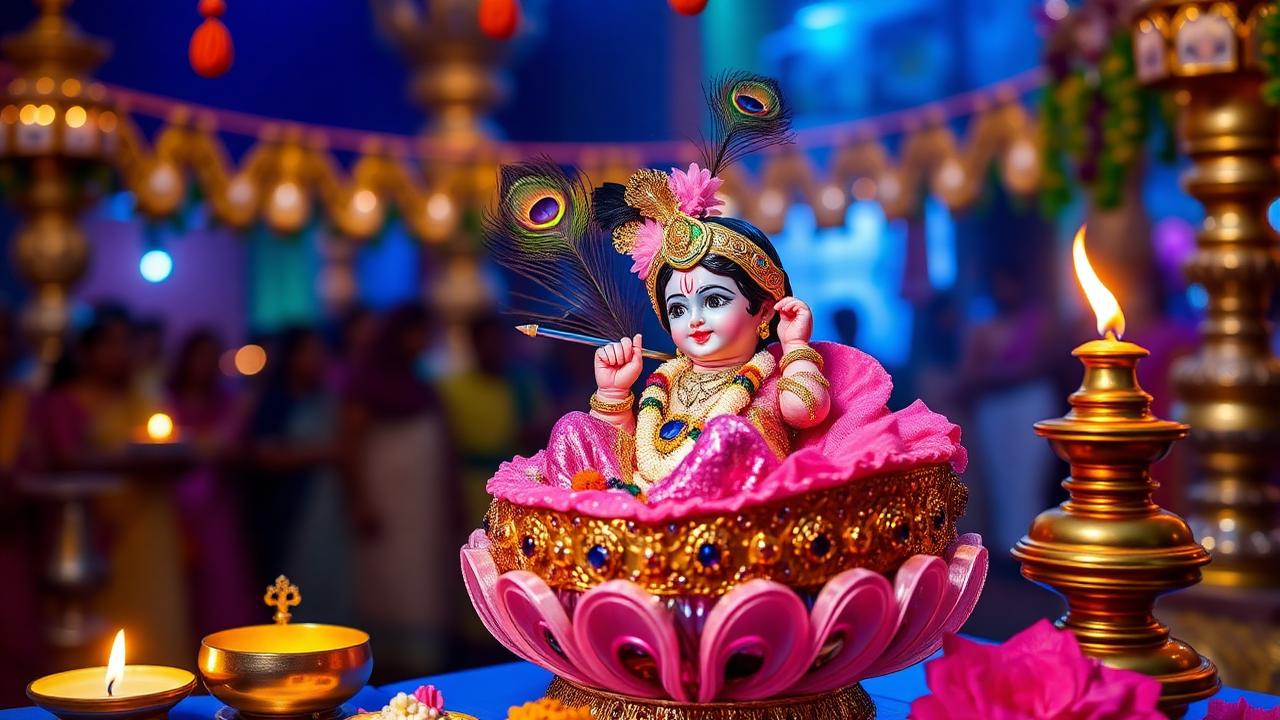
September opens strong with Krishna Janmashtami on Friday, 4 September, falling conveniently at the very start of a weekend for many working professionals across the country. The core observance, a day-long fast broken at midnight with an elaborate aarti and cradle ceremony, works well against a Friday date specifically, since the following Saturday allows genuine recovery time from a late night without needing to show up sharp at work early the next morning.
For anyone planning temple visits around this date, Mathura, Vrindavan and major Krishna temples nationwide see their heaviest crowds of the entire year on this exact date, so arriving early or planning realistically for significant queues is worth building into the day's schedule from the start. Households organizing their own midnight celebration at home should have the jhoola, Bal Gopal idol and decorations fully ready at least a day or two ahead of time, since the 3rd, a Thursday, is realistically the last comfortable prep day before the weekend crowds and errands begin in earnest.
This first week also functions as the natural starting gate for the rest of an unusually busy month; once Janmashtami passes, only nine days remain before Hartalika Teej arrives, so this is genuinely the point at which idol and priest bookings for the festivals still ahead should be finalized, if they haven't been already locked in through earlier August planning. Families who treat this first week purely as a standalone event, without glancing ahead at the calendar, often find themselves scrambling unnecessarily just a week or so later.
Week 2: Teej and Chaturthi Land Back-to-Back
The second week of September is genuinely where the month's real planning challenge sits, and it deserves more attention than any other single week in the entire calendar. Hartalika Teej falls primarily on Sunday, 13 September, giving many observers the practical advantage of a weekend for the demanding nirjala fast, though some cities push the observance to Monday, 14 September instead, which is worth double-checking carefully against a local panchang given how directly it affects the whole week's planning and shopping timeline for the household.
Ganesh Chaturthi sthapana follows on Monday, 14 September, regardless of exactly when Teej falls locally in a given city, meaning this Sunday-Monday stretch carries the single heaviest ritual load of the entire month by a considerable margin over any other stretch. Anyone requesting time off work should seriously consider covering both the 13th and 14th, or at an absolute minimum the 14th, since sthapana morning genuinely tends to require full, undivided attention from at least one household member throughout the morning. Shopping for both festivals should ideally be finished by the 10th or 11th at the latest, since the days immediately before the 13th consistently see the year's most crowded puja markets, longest queues and least patient vendors anywhere in the city.
For households managing both observances simultaneously, this particular week rewards preparation done in the first week of the month far more than any other week, since there is genuinely very little slack left once the 13th actually arrives and both festivals demand attention at once from the same tired household.
Week 3: Radha Ashtami Falls on a Convenient Saturday
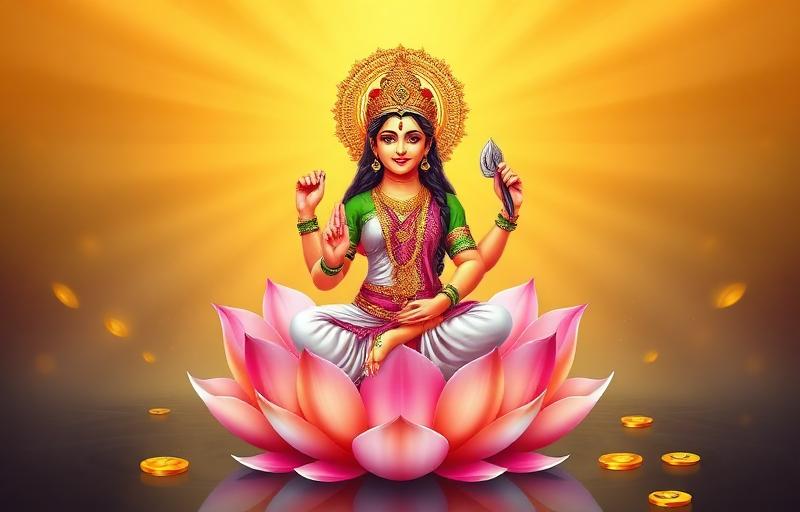
After the intensity of week two, the third week of September offers a comparatively lighter, single-festival stretch to recover through: Radha Ashtami on Saturday, 19 September. Falling on a weekend is a genuine convenience this particular year, making temple visits and family gatherings considerably easier to arrange for most households than they would be on a weekday, when work schedules would otherwise limit participation to a rushed morning or evening slot only, squeezed around office hours.
By this point in the month, households still in the middle of an active ten-day Ganeshotsav are simultaneously managing daily Ganpati aarti as part of their routine, so Radha Ashtami this year effectively layers on top of an already active puja schedule rather than arriving into a genuinely quiet week with nothing else competing for attention. Most families handle this layering sensibly by keeping Radha Ashtami's puja relatively brief, a focused morning or midday ritual centered at home, rather than treating it as a separate full-day event competing directly with the ongoing Ganeshotsav celebrations already underway across the neighborhood.
For readers specifically without an ongoing Ganpati sthapana at home this particular year, this third week is comparatively the calmest stretch of the entire month, and represents a genuinely good window for any festival-related travel, extended family visits, or simply a bit of rest that didn't comfortably fit into the noticeably busier second week just before it. Temples associated with Radha, including neighborhood Krishna temples that give her special attention on this specific day, are also generally easier to visit without the overwhelming crowds seen during Janmashtami earlier in the month.
Week 4: Ganesh Visarjan Closes Out the Month
The month's festival run closes with Ganesh Visarjan on Anant Chaturdashi, falling around 23 September, for households and pandals observing the full ten-day Ganeshotsav cycle right through to its traditional end. Since this marks the tenth day after the 14 September sthapana, it is a reasonably reliable estimate to plan around, though it is genuinely worth confirming the exact tithi against a local panchang rather than treating it as fixed in stone, since panchangs can occasionally place the transition a day to either side depending on regional calculation.
This is typically the single most traffic-heavy day of the entire month in cities with large community celebrations, as long processions move slowly through crowded streets toward rivers, lakes or designated immersion tanks set up specifically for the occasion. Anyone needing to travel across the city that particular day should build in significant extra time for the journey, particularly during the evening hours when the largest, most elaborate processions tend to take place across most cities. Families with shorter sthapana durations, one and a half, three, five or seven days, will have already completed their own visarjan earlier in the month and are not directly affected by this final citywide rush.
With visarjan complete, September's unusually demanding festival stretch finally comes to a close for the year, and the following weeks return to a comparatively quiet calendar until the next major observance later in the autumn season, giving households a genuine breather after roughly three intense weeks of continuous preparation and celebration.
Planning Tips: Leave, Travel and Shopping for the Month
Given how September 2026 is structured across its four weeks, a few practical decisions are genuinely worth making early rather than figuring things out week by week as the month unfolds. For leave planning, the second week (13-14 September) is the highest priority if only one block of time off is realistically possible, since it carries both Hartalika Teej and Ganesh Chaturthi sthapana within a single tight window. Janmashtami on the 4th and Radha Ashtami on the 19th both fall on days requiring considerably less continuous time, a single evening or morning generally suffices, making them noticeably easier to manage around a regular working schedule without extended leave.
For travel, avoid scheduling anything that requires being actively on the road during evening hours on the 14th or around the 23rd specifically, since both dates see significant festival-related traffic in most cities nationwide. For shopping, splitting purchases into two clear rounds, non-perishables in the last week of August, and fresh items like flowers and fruit only in the final one or two days before each specific festival, avoids the worst of the crowding that reliably builds every single year right before the 13th.
Finally, it is worth acknowledging plainly and without guilt that September 2026 is simply a demanding month for observant households, particularly anyone fasting for both Hartalika Teej and simultaneously managing a home Ganpati sthapana in the same stretch. Scaling back either observance, a shorter sthapana duration or a phalahar Teej fast where health genuinely requires it, is a thoroughly reasonable adjustment, not a lesser or diminished form of devotion by any measure.
🙏 Vandnaa's daily panchang and festival reminders cover this entire month date by date, so nothing on this list needs to be tracked manually on your own.
What People Ask Most
What are all the major Hindu festival dates in September 2026?+
Krishna Janmashtami on 4 September, Hartalika Teej primarily on 13 September, Ganesh Chaturthi sthapana on 14 September, Radha Ashtami on 19 September, and Ganesh Visarjan around 23 September.
Which week of September 2026 needs the most advance planning?+
The second week, 13-14 September, since it holds both Hartalika Teej and Ganesh Chaturthi sthapana within a single day of each other.
Which September 2026 festivals fall on a weekend?+
Hartalika Teej primarily falls on Sunday the 13th, and Radha Ashtami falls on Saturday the 19th, both landing conveniently on weekends this year.
Is the Ganesh Visarjan date the same for every household in September 2026?+
No. The 23 September date applies to full ten-day Ganeshotsav observances. Households with shorter sthapana durations immerse the idol on an earlier date within the month.
How does this September-based list differ from a Bhadrapada month list?+
The festivals are the same, but this list is organized by Gregorian calendar week for readers planning leave, travel and shopping around calendar dates rather than the Hindu lunar month structure.
About the author
Pandit Mahesh Trivedi · Festival Traditions & Panchang
Pandit Mahesh leads the festival-date and Panchang content on Vandnaa. He cross-references multiple regional panchangs (Drik, Vaishnava, Bengali, Marathi) for every festival date published on the site.
Meet the Vandnaa editorial team →Explore on Vandnaa
Related Articles
Bhadrapada Month 2026: Every Festival Falling in This Packed Month
7 min read
Hartalika Teej and Ganesh Chaturthi 2026: Observing Both in the Same Week
7 min read
Ganesh Chaturthi 2026: Date, Sthapana Muhurat, Puja Vidhi, Visarjan Guide & Modak Bhog
10 min read
Radha Ashtami 2026 - Vrat, Puja Vidhi & Significance
9 min read