What Is the Shantakaram Shloka?
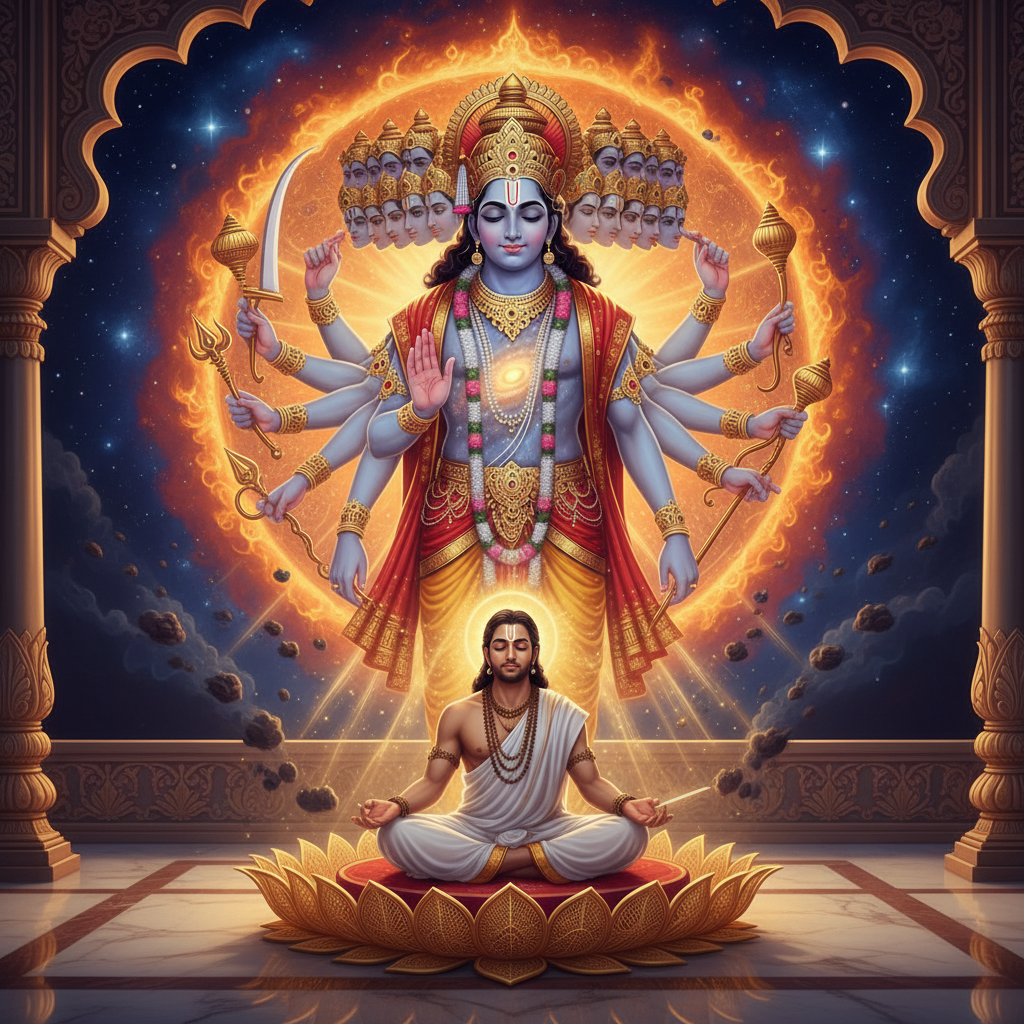
Shantakaram Bhujagashayanam is the most famous dhyana shloka (meditation verse) of Lord Vishnu. A dhyana shloka is recited at the start of worship to bring the form of the deity vividly to mind, so that the heart is settled before offering prayers.
In just one verse it paints a complete picture of Lord Vishnu (Narayana) - serene, reclining on the great serpent Shesha, with a lotus rising from his navel, lord of the gods, the support of the universe. It is chanted before Vishnu puja, Satyanarayan katha, and is a beloved part of daily worship in countless homes. Its calm imagery makes it one of the most soothing verses to begin the day.
The Verse with Transliteration & Meaning
The shloka:
शान्ताकारं भुजगशयनं पद्मनाभं सुरेशं विश्वाधारं गगनसदृशं मेघवर्णं शुभाङ्गम्। लक्ष्मीकान्तं कमलनयनं योगिभिर्ध्यानगम्यं वन्दे विष्णुं भवभयहरं सर्वलोकैकनाथम्॥
Shantakaram bhujaga-shayanam padmanabham suresham, Vishvadharam gagana-sadrisham megha-varnam shubhangam, Lakshmi-kantam kamala-nayanam yogibhir dhyana-gamyam, Vande vishnum bhava-bhaya-haram sarva-lokaika-natham.
Meaning, line by line:
- Shantakaram bhujaga-shayanam padmanabham suresham - Of peaceful form, reclining on the serpent (Shesha), from whose navel springs the lotus, the lord of the gods;
- Vishvadharam gagana-sadrisham megha-varnam shubhangam - the support of the universe, all-pervading like the sky, dark like a rain-cloud, of auspicious and beautiful limbs;
- Lakshmi-kantam kamala-nayanam yogibhir dhyana-gamyam - the beloved of Lakshmi, lotus-eyed, attained by yogis through meditation;
- Vande vishnum bhava-bhaya-haram sarva-lokaika-natham - I bow to Lord Vishnu, the remover of the fear of worldly existence, the one lord of all the worlds.
Significance of the Imagery
Every phrase of the shloka carries deep meaning:
- Shantakaram (peaceful form): Vishnu is the very picture of calm, reminding us that the divine ground of all things is serene even amid the world's turbulence.
- Bhujagashayanam (resting on Shesha): He reclines on the cosmic serpent on the ocean of milk, at ease even upon what others fear, showing his mastery over time and creation.
- Padmanabham (lotus-navelled): From his navel rises the lotus on which Brahma sits to create - the universe unfolds from him.
- Megha-varnam (cloud-hued): His dark colour, like a rain-bearing cloud, signifies infinity, depth and grace that nourishes all.
- Bhava-bhaya-haram (remover of worldly fear): To meditate on him is to be freed from the fear of birth, death and bondage.
Reciting it is itself a meditation, settling the mind into the peace it describes.
Benefits & How to Chant

Benefits:
- Settles and calms the mind before any puja, prayer or meditation.
- Invokes the peaceful, protective presence of Lord Vishnu in the home.
- Believed to relieve fear, anxiety and the worries of worldly life (bhava-bhaya).
- A simple, short verse that even children can learn, bringing the whole family into devotion.
How to chant: 1. Recite it at the start of Vishnu puja, Satyanarayan katha, or as the opening of your daily prayers. 2. Sit calmly, picture Lord Vishnu as the verse describes - serene, blue-hued, resting peacefully - and let that image fill the mind. 3. Chant it 1 or 3 times slowly; pair it with Om Namo Bhagavate Vasudevaya or the Vishnu Sahasranama if you wish. 4. It is especially fitting on Thursdays (Guruvar), Ekadashi and during Chaturmas.
No special materials are needed; a quiet mind and a moment of devotion are enough.
Frequently Asked Questions
What is the Shantakaram shloka?+
It is the most famous dhyana (meditation) shloka of Lord Vishnu, beginning 'Shantakaram Bhujagashayanam Padmanabham Suresham'. It is recited at the start of Vishnu worship to bring his peaceful form to mind.
What does Bhujagashayanam mean?+
Bhujagashayanam means 'one who reclines on the serpent'. It describes Lord Vishnu resting peacefully on the cosmic serpent Shesha (Adishesha) upon the ocean of milk.
When should the Shantakaram shloka be recited?+
It is recited at the beginning of Vishnu puja, Satyanarayan katha or daily prayers. Thursdays, Ekadashi and Chaturmas are especially suitable, but it can be chanted any day to calm the mind.
What does the Shantakaram shloka help with?+
It calms and settles the mind before worship and is believed to remove fear and anxiety of worldly life (bhava-bhaya). Reciting it invites the peaceful, protective presence of Lord Vishnu.
About the author
Acharya Vinaya Kapoor · M.A. Sanskrit, Mantra & Stotra Studies
Acharya Vinaya holds an M.A. in Sanskrit from Banaras Hindu University and writes the mantra and stotra commentary on Vandnaa. Her focus is on accurate pronunciation, traditional context, and helping modern readers connect with classical texts.
Meet the Vandnaa editorial team →