Shiv Chalisa – The Great Hymn of Mahadev
The Shiv Chalisa is a forty-verse hymn dedicated to Lord Shiva - the destroyer of ignorance, the liberator of souls, the first yogi and the most compassionate of all the gods. Unlike many devotional texts that require a priest or a specific ritual setting, the Shiv Chalisa can be recited by any devotee, at any hour, in any condition. Its simplicity is its genius, and its depth is boundless.
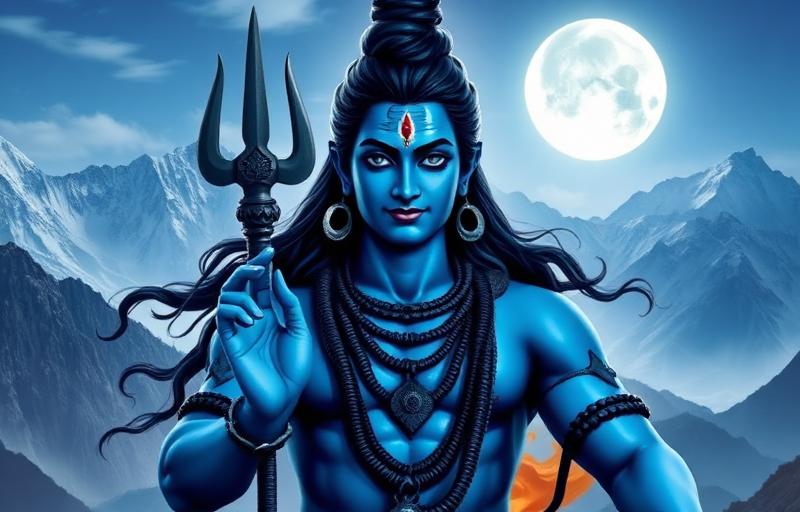
The Shiv Chalisa is part of the Shaivite devotional tradition that flourished in medieval India. It describes Lord Shiva's form in vivid detail - his ash-smeared body, his crescent moon, the Ganga flowing from his matted locks, his tiger skin, his trident, and his peaceful yet omnipotent presence. It also narrates his divine deeds: the destruction of Tarakasura, the defeat of Jalandhar, and his grace on the sage Bhagirath who brought the Ganga to earth.
Soumvar (Monday) is considered Shiva's sacred day, and the Sawan month (July–August) transforms every Monday into a festival. Reading the Shiv Chalisa on these days is believed to bring Mahadev's direct blessings - fulfilling wishes, removing suffering, and purifying the mind. During Mahashivratri, the great night of Shiva, even one sincere recitation is said to equal the merit of a full year of devotion.
Whether you are seeking peace of mind, relief from difficulties, success in relationships, or simply a deeper connection to the divine - the Shiv Chalisa is one of the most direct paths to Mahadev's grace.
🎧 Listen to the Shiv Chalisa in correct pronunciation - download the Vandnaa App.
Shiv Chalisa Complete Lyrics in Hindi (शिव चालीसा पूरे बोल)
॥ दोहा ॥ जय गिरिजा पति दीन दयाला। सदा करत सन्तन प्रतिपाला॥ भाल चन्द्रमा सोहत नीके। कानन कुण्डल नागफनी के॥
॥ चौपाई ॥ अंग गौर शिर गंग बहाये। मुण्डमाल तन भस्म लगाये॥ वस्त्र खाल बाघम्बर सोहे। छवि को देख नाग मुनि मोहे॥
मैना मातु की हवे दुलारी। बाम अंग सोहत छवि न्यारी॥ कर त्रिशूल सोहत छवि भारी। करत सदा शत्रुन क्षयकारी॥
नन्दि गणेश सोहत तहँ कैसे। सागर मध्य कमल हैं जैसे॥ कार्तिक श्याम और गणराऊ। या छवि को कहि जात न काऊ॥
देवन जबहिं जाय पुकारा। तब ही दुख प्रभु आप निवारा॥ किया उपद्रव तारक भारी। देवन सब मिलि तुमहिं जुहारी॥
तुरत षडानन आप पठायउ। लवनिमेष महँ मारि गिरायउ॥ आप जलंधर असुर संहारा। सुयश तुम्हार विदित संसारा॥
त्रिपुरासुर सन युद्ध मचाई। सबहिं कृपा करि लीन बचाई॥ किया तपहिं भागीरथ भारी। पुरब प्रतिज्ञा तासु पुरारी॥
दानिन महँ तुम सम कोउ नाहीं। सेवत जन सब पावहिं माहीं॥ जो कोउ शरण तुम्हारी आवे। जन्म जन्म के दुख बिसरावे॥
भूत प्रेत पिशाच निशाचर। अग्नि बेताल काल मारीचर॥ इन्हें देखि भगि जावहिं ओही। जब नाम सुनहिं तव मुख मोही॥
श्री महेश महिमा को गावे। जन्म जन्म दुख दूर हो जावे॥ जटाशंकर जपे जो कोई। पल में पापों से मुक्त होई॥
गिरिजा पति महादेव शंभो। जय जय जय अखिल जगत अम्बो॥ भक्त भवन तिमिर हरण शंकर। योगी ध्यानी ध्येय धनंजय॥
अष्टसिद्धि और नव निधि दाता। सब सुख करत सन्त प्रिय माता॥ उमाकान्त महेश दिगम्बर। जटाधारी त्रिशूल धर अम्बर॥
ब्रह्मा विष्णु मिलत नहिं तेरा। आदि अन्त नहिं पाया तोरा॥ ध्रुव नारद निरत नेम धारी। जासु जपत स्वर्ग सुख पाई॥
सुर नर मुनि सब करत बड़ाई। जासु कृपा से सुख सम्पदा पाई॥ तुम्हें जपत है मन शुचि होई। अन्त काल यमपाश न होई॥
बारह दिन में होई अनुष्ठाना। फल पाई जो करत प्रयत्ना॥ मन काम पूरन होई सोई। जपहिं जो शिव चालीसा जोई॥
अन्त काल शिव पुर पाई। जहाँ जन्म सुखी रहे शिवलाई॥ नारद जाको सुमिरन करते। सनकादिक सहित ध्यान धरते॥
जब मैं तुम्हरी शरण में आया। मोहि सब सुख सम्पत्ति दिखाया॥ जो तुम्हरी शरण में आवे। ताही नहिं कोई दुख सतावे॥
॥ दोहा ॥ शिव चालीसा पाठ करे, शिव शंकर हैं दानी। जो पढ़े नित भक्ति से, पूरे हों मनमानी॥
Shiv Chalisa English Translation (अंग्रेजी अनुवाद)
॥ Doha ॥ Victory to the Lord of Girija (Parvati), the compassionate one who protects the poor. You always protect and nurture your saints. The crescent moon looks beautiful on your forehead. You wear earrings of coiled serpents.
॥ Chaupai ॥ Your body is fair and luminous, with the Ganga flowing from your head. You wear a garland of skulls and your body is smeared with ash. You wear a garment of tiger skin, and your divine beauty enchants even the serpents and sages.
You are the beloved son of Mother Maina. On your left side shines the incomparable beauty (of Parvati). You hold the trident in your hand, a magnificent sight. You are the destroyer of enemies at all times.
Nandi and Ganesha accompany you - like lotuses in the middle of an ocean. Kartikeya is dark-complexioned, and then there is Ganaraj. No one can fully describe this divine vision.
Whenever the gods called out to you in distress, O Lord, you removed their suffering at that very moment. When the demon Tarakasura created great turmoil, all the gods came to bow before you.
You immediately sent Kartikeya (Shadanana), who destroyed him in the blink of an eye. You yourself destroyed the demon Jalandhar - your glory is known throughout the world.
You fought with Tripurasura and protected everyone through your grace. Bhagirath performed severe austerities, and you fulfilled his ancient vow.
There is no one equal to you among the givers. Those who serve you attain everything. Whoever comes to your refuge forgets the sorrows of birth after birth.
Ghosts, spirits, demons and night-wanderers, fire-beings, vetals and time-demons - all of them flee when they hear your name spoken at the mouth.
Whoever sings the glory of the great Mahesh - their sorrow of birth after birth ends. Whoever chants Jatashankara (Shiva of the matted locks) becomes free of sins in an instant.
O Girijaapati Mahadev Shambho - victory, victory, victory to you, refuge of the entire world. O Shankar, destroyer of the darkness of your devotees' homes - the goal meditated upon by yogis and contemplatives.
You are the giver of the eight siddhis and nine nidhis. You fulfil the happiness of all and are dear to the saints like a mother. O Uma's beloved, the great Mahesh, the sky-clad one - you wear matted locks and hold the trident in the sky.
Brahma and Vishnu could not find your limits. No beginning or end of you has ever been found. Dhruva, Narada and those who steadfastly keep their vows - by chanting you, they attained the happiness of heaven.
Gods, humans and sages all sing your praise. By your grace they attained happiness and prosperity. The mind becomes pure by chanting you. At the time of death, the noose of Yama cannot bind you.
In twelve days one completes the anushthana (ritual observance). Those who make the effort receive the fruit. All the desires of the mind are fulfilled by whoever chants this Shiv Chalisa.
At the end of life, one attains Shiva's abode, where one lives happily in Shiva's service. Narada remembers you, as do Sanaka and other sages who meditate upon you.
When I came to your refuge, you showed me all happiness and wealth. Whoever comes to your refuge - no sorrow touches them.
॥ Doha ॥ Whoever recites the Shiv Chalisa, Lord Shiva is ever-generous. Those who read it daily with devotion have all their heart's wishes fulfilled.
Deep Meaning of Key Verses (मुख्य चौपाइयों का गहरा अर्थ)
'जय गिरिजा पति दीन दयाला' - The Opening Doha Shiva is addressed as 'Girijaapati' - the husband of Girija (Parvati, born of the mountain). This name carries a profound teaching: Shiva, who appears so fearsome with his ash-smeared body and skull garland, is at heart the tenderly devoted husband of Parvati. The word 'Dayala' (compassionate) establishes the keynote - Shiva's fierceness is only for evil; for devotees, he is the softest of all gods.
'अंग गौर शिर गंग बहाये' - The Body of Shiva Shiva's fair body ('ang gaur') holds the Ganga in his locks. This verse encodes a cosmological truth: the Ganga, which descended from heaven, was caught in Shiva's matted hair first, then released gently to earth. Had Shiva not absorbed the force of the celestial river, its impact would have destroyed the planet. The devotee is reminded that Shiva stands between cosmic catastrophe and human life.
'भूत प्रेत पिशाच निशाचर' - Protection from Negative Forces This verse states that ghosts, spirits, demons and night-wanderers all flee when Shiva's name is heard. Spiritually, these 'bhoot pret' represent negative mental states - fear, obsession, anger, grief - that haunt the unprepared mind. The recitation of Shiva's name clears these states just as sunlight scatters darkness.
'अष्टसिद्धि और नव निधि दाता' - Giver of All Perfections Shiva is here described as the giver of the eight siddhis (supernatural perfections including clairvoyance, invisibility, flight, and more) and the nine nidhis (nine treasuries of the cosmos). This verse is significant: it places Shiva not merely as a personal deity but as the source of all powers that exist in the universe - they flow through him to the devotee who sincerely calls.
'बारह दिन में होई अनुष्ठाना' - The Twelve-Day Promise The Chalisa promises that whoever performs the twelve-day anushthana (reading the Chalisa with discipline for twelve consecutive days) will receive the fruit of their practice. This built-in prescription makes the Shiv Chalisa a complete sadhana in itself, not merely a prayer.
10 Powerful Benefits of Shiv Chalisa (शिव चालीसा के 10 फायदे)
1. Deep mental peace - the steady rhythm and sound of the Chalisa calms the nervous system, reducing cortisol and stilling restless thoughts within minutes of recitation 2. Removal of obstacles - Shiva is the destroyer; obstacles in career, health and relationships begin to dissolve with consistent daily practice 3. Relief from Shani (Saturn) afflictions - Shiva is the master of Saturn, and devotion to him softens even the harshest Saturn transits in one's horoscope 4. Protection from negative energies - the Bhoot-Pret verse acts as a direct shield; many devotees report that their homes feel lighter after a period of daily recitation 5. Healing of chronic conditions - Shiva is Vaidyanatha, the lord of physicians; the Chalisa is read in healing intentions across the Shaivite tradition 6. Success in marriage and relationships - Shiva and Parvati are the ideal couple in Hindu tradition; their energy supports harmony, communication and love between partners 7. Freedom from fear and anxiety - both nighttime fear and daytime anxiety soften as the mind becomes habituated to Shiva's protective presence 8. Spiritual awakening - regular reciters report that meditation becomes easier, the mind settles more quickly, and a natural witness-consciousness begins to develop 9. Fulfilment of sincere wishes - the Chalisa itself promises that the twelve-day anushthana fulfils heart's desires; countless devotees testify to this across India 10. A peaceful death and Shiva's realm - the closing verses promise that the devoted reciter reaches Shivaloka at death, ending the cycle of difficult rebirths
🎧 Listen to all aartis, mantras and bhajans in one place - download the Vandnaa App.
Complete Shiv Chalisa Puja Vidhi (पूजा विधि)
Step-by-step Shiv Chalisa recitation method:
Preparation: 1. Bathe before recitation, especially on Mondays and during Sawan 2. Wear clean, preferably white or saffron clothing 3. Sit on a woollen asana facing east or north 4. Place a Shivalinga or image of Lord Shiva before you
Offerings: 5. Offer water (Jal abhishek) - even plain water poured with devotion is accepted 6. Offer Bel leaves (Bilva patra) - three-leafed bilva is most sacred to Shiva 7. Light a diya (ghee lamp) and dhoop (incense) 8. Apply a small tilak of vibhuti (sacred ash) on your forehead
Recitation: 9. Begin with 'Om Namah Shivaya' chanted 5 times to settle the mind 10. Read the opening doha, then all 40 chaupais in order, then the closing doha 11. Do not rush - clear, attentive pronunciation multiplies the effect 12. Keep your attention on Lord Shiva's form in your mind as you read
Special days in 2026:
- Sawan Somwar 2026: July 13, July 20, July 27, August 3, August 10, August 17
- Mahashivratri: February 18, 2027 (next one after this Sawan)
- Pradosh Vrat (13th tithi): recite between 1.5 hours before and after sunset for extra power
- Monday fast: begin the Chalisa after sunset when the vrat is broken
The 12-day anushthana: Read the Shiv Chalisa at the same time each day for 12 consecutive days without missing a day. Begin and end with 'Om Namah Shivaya' 108 times. This is one of the most effective spiritual practices in the Shaivite tradition.
Shiv Chalisa vs Shiv Mantra – When to Use Which
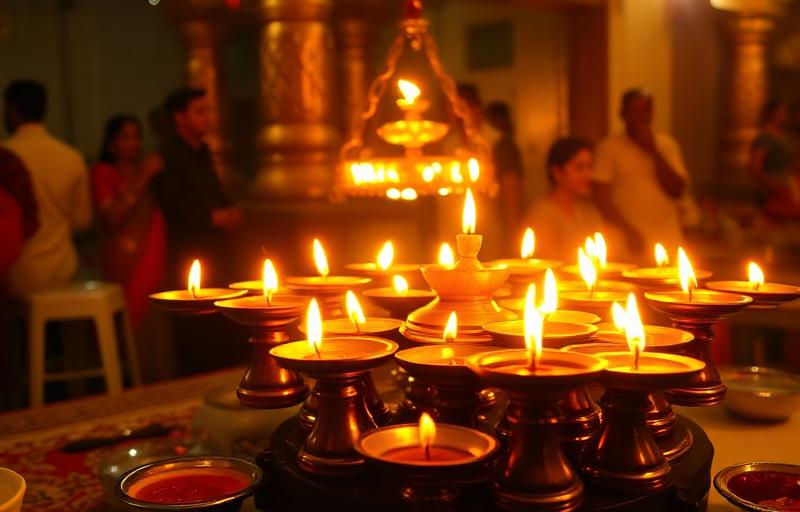
Many devotees ask whether to recite the Shiv Chalisa or Om Namah Shivaya - or how to combine them. Here is a practical guide:
Use the Shiv Chalisa when:
- You have 15–20 minutes for a complete, structured devotional practice
- You want to narrate Shiva's story and qualities (the Chalisa does this through praise)
- You are performing the 12-day anushthana or a Monday vrat
- You want a comprehensive protection practice that addresses multiple life areas at once
- You are going through a particularly difficult period and need sustained spiritual support
Use Om Namah Shivaya when:
- You have only a few minutes - even 5 minutes of sincere japa is powerful
- You are driving, walking, or doing routine tasks (it can be chanted silently)
- You are in emotional pain and need immediate shelter in Shiva's presence
- You want to build a mantra japa practice using a mala (108 repetitions)
- The mind is too scattered to follow the Chalisa's verses
The ideal combined practice: Begin with 11 repetitions of 'Om Namah Shivaya' to centre the mind. Then recite the Shiv Chalisa once with full attention. Close with the Shiv Aarti (Jay Shiv Omkara) to complete the sequence. This takes approximately 25 minutes and covers devotional praise, mantra japa and aarti - a complete Shiva puja without needing a priest.
During Sawan, the ideal practice is: morning abhishek with water + one Chalisa recitation + evening aarti. Even if you can only do one of these, the intention and sincerity matter more than the completeness.
Conclusion – Begin Your Shiv Chalisa Practice Today
The Shiv Chalisa is not a text that requires mastery before it can bless you. It is a living prayer - and it begins working the moment you begin reading it with sincerity. Even if your pronunciation is imperfect, even if you stumble over the Awadhi verses, Mahadev hears the intention behind the words. He is, after all, the 'Deen Dayaala' - the compassionate one who takes care of the helpless.
The Sawan 2026 commitment plan: Sawan begins on July 9, 2026, and ends on August 7, 2026. It contains five Mondays. This Sawan, commit to reading the Shiv Chalisa every single Monday - and ideally every day of the month. Read it once in the morning. Light a lamp. Offer a bilva leaf. Pour a little water. That is everything. You do not need an elaborate setup. You need only showing up.
Many devotees who make this commitment during Sawan report that by the end of the month, the Chalisa has moved from being a text they read to a presence they feel. The words become familiar, the rhythm becomes natural, and a quiet confidence begins to emerge - that Mahadev is watching, and that you are not alone.
Start today. Start with one recitation. Trust the ancient promise of the final doha: those who read this Chalisa with daily devotion have all their heart's wishes fulfilled.
Quick Answers
When should I read Shiv Chalisa for maximum benefit?+
Monday (Somvar) is Lord Shiva's sacred day, and recitation on this day carries special blessing. The Sawan month (July–August 2026: July 9 – August 7) amplifies everything - every Monday in Sawan is considered a major festival in Shiva's honour. Early morning before sunrise or during the Pradosh period (1.5 hours around sunset on the 13th tithi) are the most powerful times for daily recitation. During Mahashivratri, staying awake through the four prahar (watches of the night) and reading the Chalisa in each is a complete practice in itself.
Can I read Shiv Chalisa and Hanuman Chalisa together?+
Yes - and this combination is considered especially powerful. Hanuman ji is widely regarded as an avatar of Lord Shiva (the Rudravatar), so worshipping both connects two complementary energies: Shiva's cosmic stillness and Hanuman's dynamic, fearless devotion. Many devotees read the Shiv Chalisa first (as an offering to Mahadev), then the Hanuman Chalisa (for protection and courage), then close with the Shiv Aarti. This complete sequence takes about 30–35 minutes and creates a very powerful protective and devotional field.
How many verses are in the Shiv Chalisa?+
The Shiv Chalisa contains 40 chaupais (four-line verses), framed by opening and closing dohas (two-line couplets). The word 'Chalisa' itself comes from 'chalis', meaning forty, which refers to these forty chaupais. This structure is shared by the Hanuman Chalisa and Ganesh Chalisa - it is a standard form of Hindu devotional hymn. Each of the 40 verses describes a different aspect of Shiva's form, deeds or grace, making the Chalisa a comprehensive portrait of Mahadev.
Is Shiv Chalisa good for married couples?+
Shiva and Parvati are the ideal couple in all of Hindu tradition - their relationship embodies devotion, equality, creative partnership and deep love. Reading the Shiv Chalisa together strengthens the bond between partners, brings harmony to a troubled marriage, and is specifically recommended for those who face obstacles in getting married or in conceiving children. Unmarried women who fast on Mondays and read the Shiv Chalisa are believed to receive a devoted and righteous husband as their life partner.
What is the difference between the Shiv Chalisa and the Shiv Aarti?+
The Shiv Chalisa is a detailed devotional hymn of 40 verses that narrates Shiva's divine form, deeds and blessings - it takes 10–15 minutes to recite and is a complete practice in itself. The Shiv Aarti (Om Jai Shiv Omkara) is a shorter song typically sung at the end of a puja to conclude the worship - it takes 3–5 minutes. Both are important, but they serve different purposes. The Chalisa is for sustained devotional engagement and specific intentions; the Aarti is for closing a puja with grace and gratitude. Ideally, the Aarti follows the Chalisa at the end of your practice.
Can I read the Shiv Chalisa during periods (menstruation)?+
This is a widely debated question and traditional views differ. Many traditional texts suggest avoiding touch of the Shivalinga during menstruation, but there is no scriptural prohibition on mentally chanting or verbally reciting prayers. Lord Shiva is known as the most accessible of all gods - he accepts sincere devotion from all people regardless of physical state. Many modern spiritual teachers, including those in the Shaivite tradition, confirm that verbal recitation of the Chalisa during this period is completely acceptable. The intention and sincerity of the devotee always matter more than external purity restrictions.
About the author
Acharya Vinaya Kapoor · M.A. Sanskrit, Mantra & Stotra Studies
Acharya Vinaya holds an M.A. in Sanskrit from Banaras Hindu University and writes the mantra and stotra commentary on Vandnaa. Her focus is on accurate pronunciation, traditional context, and helping modern readers connect with classical texts.
Meet the Vandnaa editorial team →