How Ravana Composed Shiv Tandava Under Mount Kailash
The dramatic origin story:
Ravana, the demon-king of Lanka, was an exceptionally devoted Shiva bhakta. He was a Brahmin scholar, master of all Vedas, expert in music (he played the Rudra Veena), and accomplished poet. His Shiva devotion was unmatched among all asuras.
Once, while flying over Mount Kailash (the abode of Shiva) on his Pushpaka Vimana (flying chariot), Ravana's path was blocked by the mountain. Annoyed at the obstruction, Ravana decided to lift Mount Kailash and move it aside.
He slid his 20 arms under the mountain and began lifting it. Goddess Parvati, who was on the mountain, felt the trembling and clung to Shiva in fear. Shiva, seeing his consort frightened, was angered. He pressed his big toe down on the mountain.
Ravana's hands were instantly pinned under the mountain's weight - even his immense strength could not lift it. He realized his sacrilegious act. His pinned hands began to crush; he was in unbearable pain. He could neither escape nor die.
In this agony, Ravana did what any devotee should - he sang to Shiva. With his hands trapped, his entire body crushed, but his voice still free, he composed and sang the Shiv Tandava Stotram - 17 verses of pure poetic devotion describing Shiva's cosmic dance.
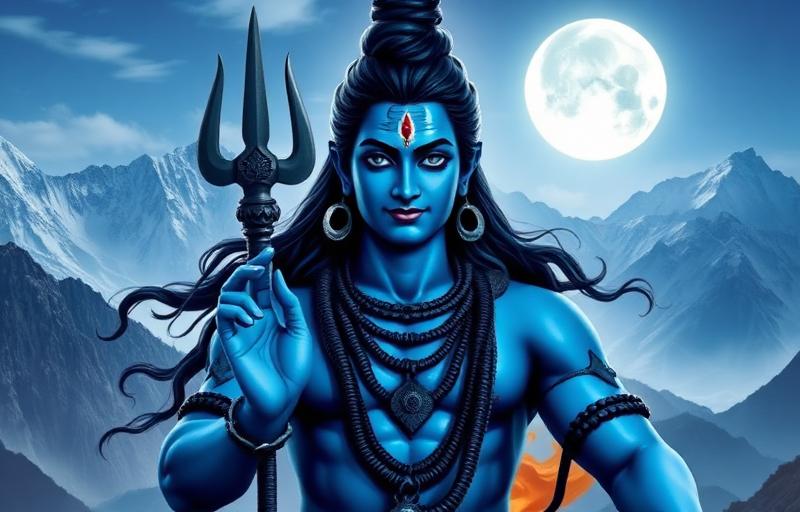
The verses describe Shiva's matted hair, his snake garland, his crescent moon, his blue throat, his cosmic dance, his trishul, his Ganga, his Damaru. Each verse builds in intensity, describing Shiva's form and power with mounting devotion.
Shiva, listening from above, was deeply moved. After the final verse, Shiva released his toe and freed Ravana. He blessed Ravana with the Chandrahas sword - the most powerful weapon Ravana would ever wield. He also blessed Ravana with continued protection until the appointed time of Rama's avatar.
The stotram became immortal. Ravana, despite being the antagonist in Ramayana, gave Hindus one of their most powerful prayers. Even today, devotees of all backgrounds chant Shiv Tandava to invoke Shiva's grace.
Why this story matters:
1. Even villains can be devotees. Ravana's stotram is recited by saints. Devotion transcends moral categories.
2. Crisis purifies devotion. Ravana composed this not in a comfortable temple but in physical agony. Some of the greatest prayers come from suffering.
3. Shiva accepts all sincere worship. Even after Ravana tried to insult him by moving his home, Shiva blessed him for one beautiful prayer.
4. Words have cosmic power. The 17 verses Ravana composed in agony still bring miracles today, 5000+ years later. Pure devotional composition is eternal.
Famous Opening Verses - Lyrics + Meaning
The full Shiv Tandava Stotram has 17 verses (some traditions include 19). Here are the most famous opening verses with meaning:
Verse 1:
जटाटवीगलज्जलप्रवाहपावितस्थले गलेऽवलम्ब्य लम्बितां भुजङ्गतुङ्गमालिकाम्। डमड्डमड्डमड्डमन्निनादवड्डमर्वयं चकार चण्डताण्डवं तनोतु नः शिवः शिवम्॥
Transliteration: Jata-tavi-galaj-jala-pravaha-pavita-sthale, Galel-avalambya-lambitam-bhujanga-tunga-malikam. Damad-damad-damad-daman-ninada-vad-damarvayam, Chakara-chanda-tandavam-tanotu-nah-shivah-shivam.
Meaning: From the matted hair flows the Ganga, purifying the place. Around his neck hangs the great serpent like a tall garland. To the rhythm of 'Damat-Damat' from his Damaru, Shiva performs the fierce Tandava dance. May this Shiva bestow auspicious wellbeing on us.
Verse 2:
जटाकटाहसम्भ्रमभ्रमन्निलिम्पनिर्झरी विलोलवीचिवल्लरीविराजमानमूर्धनि। धगद्धगद्धगज्ज्वलल्ललाटपट्टपावके किशोरचन्द्रशेखरे रतिः प्रतिक्षणं मम॥
Transliteration: Jata-katahasambhrama-bhraman-nilimpa-nirjhari, Vilola-vichi-vallari-virajamana-murdhani. Dhagad-dhagad-dhagaj-jvalal-lalata-patta-pavake, Kishora-chandra-shekhare-ratih-pratikshanam-mama.
Meaning: From his matted hair pool flows the celestial Ganga, swaying like vines on his head. From his forehead burns the fierce fire (dhagad-dhagad). The young moon adorns his crest. May I have devotion for him every moment.
Verse 3:
धराधरेन्द्रनन्दिनीविलासबन्धुबन्धुर स्फुरद्दिगन्तसन्ततिप्रमोदमानमानसे। कृपाकटाक्षधोरणीनिरुद्धदुर्धरापदि क्वचिद्दिगम्बरे मनो विनोदमेतु वस्तुनि॥
Meaning: May my mind find delight in that Sky-clad (Digambar) Shiva who is the friend of Parvati (daughter of the mountain king), whose mind dazzles with joy at the great dance, whose merciful glance removes all difficulties.
Famous verse - the Chant:
The phrase that everyone remembers from Shiv Tandava is the rhythmic 'Damad damad damad daman' (the sound of Shiva's Damaru drum). This onomatopoeic genius is why the stotram is so memorable.
The closing verse (Phala Shruti - fruit of recitation):
इति श्रीरावणकृतं शिवताण्डवस्तोत्रं सम्पूर्णम्।
'This concludes the Shiv Tandava Stotram composed by Sri Ravana.'
The phala shruti (fruits of recitation) states:
- Whoever recites this with devotion gains wealth, beauty, and intelligence.
- All enemies and obstacles are destroyed.
- One attains Shiva's grace and ultimately moksha.
- Specifically beneficial during Shiva worship, Maha Shivaratri, Mondays, Pradosh, and at midnight.
How to chant - daily practice:
1. Morning practice: Take bath, sit facing east or north-east. 2. Light a diya and incense before Shiva idol/Linga. 3. Offer flowers (bilva patra - bel leaves especially). 4. Read or recite the full 17 verses (takes 7-10 minutes). 5. Repeat 3 or 11 times for deeper benefit. 6. End with Om Namah Shivaya 21 times. 7. Sit silently for 5 minutes meditating on Shiva.
Best occasions to chant:
- Mondays (Somvar) - Shiva's day.
- Pradosh (13th day of lunar fortnight, evening).
- Maha Shivaratri.
- Shravan month (entire 30 days).
- During emotional crisis - the stotram's power calms turbulence.
- During physical pain - Ravana composed it in pain; reciting it helps endure pain.
Frequently Asked Questions
Do I need to memorize all 17 verses to benefit?+
No - reading from a book or screen works equally well. Many devotees keep a printed copy in their puja room and recite while reading. If you want to memorize, start with verses 1-3 (the most famous), add 2 verses weekly, and within 2-3 months you'll know all 17. Memorization helps when traveling or in emergencies when you can't access text. But devotion matters more than memorization. Even reciting just verse 1 with deep feeling is more powerful than mechanical chanting of all 17.
Is it okay to chant Shiv Tandava at home with family around?+
Absolutely - it's a household stotram. The Tandava describes Shiva's cosmic dance which is powerful but not fearsome. Children especially love its rhythmic 'damad-damad' verses. Many families chant together during Maha Shivaratri night. Some practical tips: keep volume moderate so neighbors aren't disturbed, recite in a quiet corner if you want focus, light a diya for ambient sacredness. The stotram brings auspicious energy to the home - regular chanting (even weekly) sanctifies the entire dwelling.
What's the connection between Tandava and emotional/anger management?+
Tandava is Shiva's cosmic dance of destruction-and-renewal. Psychologically, it represents the powerful inner emotions (anger, rage, passion) that must be expressed, not suppressed. Chanting Shiv Tandava is believed to channel these emotions safely - you experience the cosmic intensity in the verses, your nervous system 'rides' the energy, and emotions get released through devotional expression rather than destructive acting-out. Many practitioners report decreased anger and increased emotional resilience after 40 days of daily Shiv Tandava chanting.
Should I chant in original Sanskrit or English translation?+
Original Sanskrit is far more powerful - the mantra works through sound vibration, and Sanskrit phonemes carry specific cosmic frequencies that translations cannot reproduce. However, English meaning helps you understand and feel what you're chanting. Best practice: chant the Sanskrit verses for sound power, read English meanings once to know what you're saying, then chant Sanskrit thereafter while holding the meaning in mind. After 41 days of chanting with meaning-awareness, the Sanskrit sound and English meaning fuse - you 'feel' both simultaneously.
About the author
Acharya Vinaya Kapoor · M.A. Sanskrit, Mantra & Stotra Studies
Acharya Vinaya holds an M.A. in Sanskrit from Banaras Hindu University and writes the mantra and stotra commentary on Vandnaa. Her focus is on accurate pronunciation, traditional context, and helping modern readers connect with classical texts.
Meet the Vandnaa editorial team →