What Is Soundarya Lahari
Soundarya Lahari, meaning 'Wave of Beauty', is one of the most revered devotional hymns to the Divine Mother in the Shakta tradition. Traditionally attributed to Adi Shankaracharya, the great philosopher-saint who traveled across India establishing centres of worship, this hymn is composed of one hundred Sanskrit verses that flow like waves, each one describing the beauty, power and grace of the Goddess.
The text is traditionally divided into two parts. The first forty-one verses are called Ananda Lahari, the 'Wave of Bliss', and describe the Goddess as pure consciousness seated in the Sri Chakra, the sacred geometric symbol of the cosmos. The remaining fifty-nine verses, the Soundarya Lahari proper, describe her physical form from head to foot, celebrating her as the source of all beauty in creation.
The Story Behind the Hymn
According to tradition, Adi Shankaracharya received this hymn during his visit to Mount Kailash, the abode of Shiva. It is said that Shiva himself revealed these verses to him, but as Shankaracharya was descending the mountain, Nandi, the divine attendant of Shiva, stopped him and managed to retain a portion of the palm leaves on which the verses were written, keeping the deepest secrets of Sri Vidya within Kailash itself.
Devotees believe that Shankaracharya, drawing upon his own realization and the grace of the Goddess, composed the remaining verses himself so the hymn could be completed and shared with the world. This is why the text is often described as both a revelation and a composition born of deep devotion, a bridge between the formless Goddess and the devotee's longing to describe her glory in words.
Meaning and Devotional Significance
Soundarya Lahari is considered a masterpiece where philosophy and devotion meet. The first part speaks of the Goddess as Shakti united with Shiva, the very source of creation, describing subtle centres of energy within the body and the Sri Chakra as a map of the universe within the devotee's own self. The second part turns to poetry of the heart, describing the Goddess's eyes, hair, smile and form with tender devotion, the way a child might describe the beauty of a beloved mother.
For devotees, the hymn is not simply about outer beauty. Every verse is understood to carry a deeper meaning connecting the devotee's mind to the Goddess as the source of grace, wisdom and auspiciousness.
How Devotees Recite Soundarya Lahari

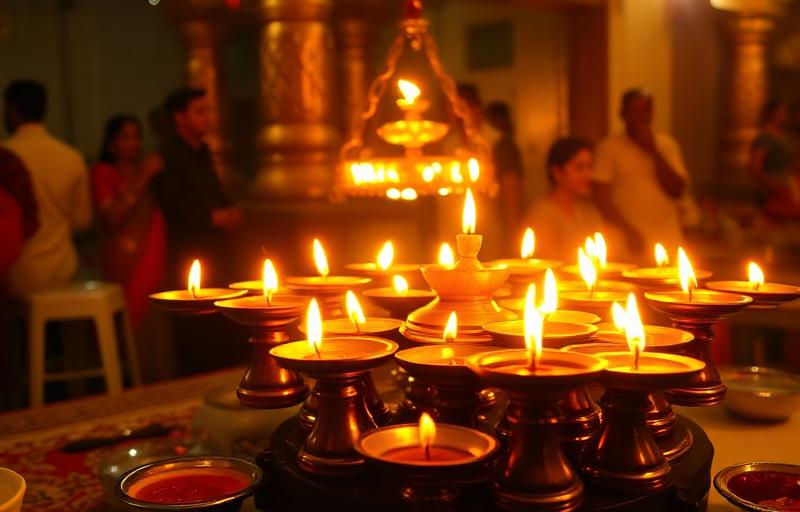
Traditionally, Soundarya Lahari is recited after a bath, in a clean and quiet place, ideally before an image or yantra of the Divine Mother. Many devotees light a diya, offer flowers and a little water, and recite the verses slowly with attention to their sound and meaning rather than rushing through them.
Some devotees recite the full hundred verses daily, while others choose a few favourite verses, especially the opening invocation:
- Shivah shaktya yukto yadi bhavati shaktah prabhavitum - 'Only united with Shakti does Shiva have the power to create'
- This opening verse is often recited alone as a daily prayer, reminding devotees that the feminine divine is inseparable from the masculine, and creation itself rests upon this union
Benefits As Per Tradition
As per tradition, reciting Soundarya Lahari with faith is believed to bring peace of mind, clarity of thought and a deepening of one's devotion to the Divine Mother. Some verses are associated with specific blessings such as eloquence in speech, harmony in relationships or protection from difficulties, though devotees are always reminded that the hymn's true gift is spiritual closeness to the Goddess rather than any material outcome.
- Devotees believe regular recitation calms the mind and steadies emotions
- It is said to deepen one's connection with the feminine aspect of the divine
- Many scholars and students of Sanskrit also recite it for clarity of intellect and speech
A Daily Takeaway
Soundarya Lahari teaches that beauty, when understood rightly, is a doorway to the divine rather than a distraction from it. Even reciting a single verse each morning with sincerity can become a quiet, grounding practice, a reminder that grace and power exist together in the Divine Mother.
Ultimately, this hymn is an act of faith and love, not a transaction. Devotees turn to it not to demand anything from the Goddess but simply to describe her glory, trusting that in that very act of description lies the blessing itself.
Frequently Asked Questions
Who composed Soundarya Lahari?+
Soundarya Lahari is traditionally attributed to Adi Shankaracharya, though tradition holds that its opening verses were revealed to him at Mount Kailash.
How many verses does Soundarya Lahari have?+
It has one hundred verses, divided into the Ananda Lahari (first 41 verses) and the Soundarya Lahari proper (remaining 59 verses).
Can beginners recite Soundarya Lahari?+
Yes, devotees often begin with a few favourite verses or the opening invocation before gradually learning the full hymn, reciting with sincerity matters more than perfection.
About the author
Acharya Vinaya Kapoor · M.A. Sanskrit, Mantra & Stotra Studies
Acharya Vinaya holds an M.A. in Sanskrit from Banaras Hindu University and writes the mantra and stotra commentary on Vandnaa. Her focus is on accurate pronunciation, traditional context, and helping modern readers connect with classical texts.
Meet the Vandnaa editorial team →