What is Sri Suktam? (Origin & Authority)
Sri Suktam (श्री सूक्तम्) is a Vedic hymn dedicated to Goddess Lakshmi (also called 'Sri'), consisting of 16 mantras (with 15 main verses + 1 phalashruti/benefit-declaration). It is found in the Khila (appendix) section of Rig Veda's 5th Mandala, attributed to Rishi Ananda Kardama Chiklita Indira Sutaha. The hymn is dated to approximately 1500 BCE, making it one of the oldest wealth-attraction prayers in human civilization - older than the Christian or Islamic scriptures by 2000+ years. Sri Suktam is recited in: Lakshmi Homa (fire ceremony for wealth), Diwali Mahalakshmi puja, Sri Vidya tantric sadhana, Vedic schools (gurukulas) as daily morning prayer, Kerala Lakshmi temples (where it's recited 1008 times per session), and South Indian wedding ceremonies (for the bride's prosperity). The authority of Sri Suktam comes from being SHRUTI (heard, revealed knowledge) - the highest category of Vedic literature, considered authorless and eternal. This is significantly higher in authority than Puranic Lakshmi prayers (which are smriti - composed by sages). When someone says 'I want the most powerful Lakshmi mantra', the answer is Sri Suktam.
Sri Suktam - First 8 Mantras with Translation
Mantra 1: 'Hiranyavarnam Harinim Suvarna Rajatasrajam, Chandram Hiranmayim Lakshmim Jatavedo Ma Avaha' (हिरण्यवर्णां हरिणीं सुवर्ण रजतस्रजाम्, चंद्रां हिरण्मयीं लक्ष्मीं जातवेदो म आवह) - 'O Agni Jatavedas, invoke for me that Lakshmi who is gold-complexioned, deer-like, garlanded with gold and silver, moon-faced, and made of pure gold'. The address is to Agni (fire) - invoking Lakshmi through the medium of sacred fire. Mantra 2: 'Tam Ma Avaha Jatavedo Lakshmimanapagaminim, Yasyam Hiranyam Vindeyam Gam Ashvam Purushanaham' - 'Bring to me, O fire, that Lakshmi who never goes away, by whose grace I shall obtain gold, cows, horses, and noble people'. The phrase 'Anapagaminim' (never-departing) is the key - most Lakshmi mantras attract her, this one asks her to STAY permanently. Mantra 3: 'Ashwapurvam Rathamadhyam Hastinada Prabodhinim, Shriyam Devim Upahvaye Shrir Ma Devi Jushatam' - 'I invoke Goddess Sri preceded by horses, established in the middle of chariots, awakened by trumpeting elephants. May Goddess Sri be pleased with me'. The imagery is of royal abundance - Lakshmi rides among the symbols of kingdom. Mantra 4: 'Kam Sosmitam Hiranya Prakaramardrachalam Jyotsanani Tapurvam Suriyam, Tam Padmininim Sharanam Aham Prapadye Alakshmir Me Nashyatam Tvam Vrune' - 'I take refuge in Sri who is smiling, surrounded by golden enclosure, wet (with abhishekam), shining like fire, satisfied. O Lotus-Goddess, may misfortune (Alakshmi) be destroyed by your grace'. Note: this mantra specifically asks for Alakshmi (misfortune/the opposite of Lakshmi) to be destroyed. Mantra 5: 'Adityavarne Tapaso Dhijato Vanaspatistava Vrukshothabilvah, Tasya Phalani Tapasa Nudantu Mayantarayashcha Bahya Alakshmih' - 'O Sun-complexioned Lakshmi, born from tapas, the Bilva tree is your sacred plant. By its tapas, may my inner obstacles and outer poverty be destroyed'. The Bilva tree (Aegle marmelos) is specifically associated with Sri Suktam - keeping a Bilva tree at home amplifies the mantra's effect. Mantras 6-8 continue invoking specific qualities: 'Upaitu Mam Daivasakhah' (let divine friendship come to me), 'Kshut Pipasa Mala Jyestha' (destroy my hunger, thirst, and impurity), 'Gandha Dvaram Duradharsham' (you whose entrance is fragrant and unassailable). Each mantra is structured to invoke a specific aspect - wealth, friendship, freedom from want, fragrant grace.
Sri Suktam - Final 8 Mantras with Translation
Mantra 9: 'Manasah Kamamakutim Vachah Satyamashimahi, Pashunam Rupamannasya Mayi Shrih Shrayatam Yashah' - 'I receive in my mind, body, speech all that I desire. May Sri establish wealth in form of cattle, food, glory in me.' Mantra 10: 'Kardamenaprajabhuta Mayi Sambhava Kardamah, Shriyam Vasaya Me Kule Mataram Padmamalini' - 'O Kardama (one of Lakshmi's sons/companions), establish Sri in my family permanently. O lotus-garlanded Mother.' Mantra 11: 'Apa Srijantu Snidhani Chiklitavasamesya, Pratikshanam Devyo Vasati Me Mata Shri Vasatu Me Grihe' - 'Let the divine waters flow with prosperity. Chiklita (another companion of Lakshmi), reside within. May Mother Sri reside in my home.' Mantra 12: 'Ardrām Yah Karinim Yashtim Pingala Padmamalinim, Chandram Hiranmayim Lakshmim Jatavedo Ma Avaha' - repeats elements of mantra 1, emphasizing 'Yashti' (the staff of authority Lakshmi carries). Mantra 13: 'Ardram Pushkarinim Pushtim Pingalam Padma Malinim, Chandram Hiranmayim Lakshmim Jatavedo Ma Avaha' - emphasizing fullness, lotus pond, golden hue. Mantra 14: 'Tam Ma Avaha Jatavedo Lakshmimanapagaminim, Yasyam Hiranyam Prabhutam Gavo Dasyo Ashvan Vindeyam Purushanaham' - same as mantra 2 but expanded with 'servants, cows, abundant gold, horses, men'. Mantra 15: 'Yah Shuchih Prayato Bhutva Juhuyat Ajya Manvaham, Suktam Pancha Dasharcham Cha Shrikamah Satatam Japet' - 'One who is pure, controlled, and offers ghee daily, chanting these 15 mantras of Sri Suktam regularly, becomes wealthy.' This is the PHALASHRUTI - the declared result. Mantra 16 (phalashruti): 'Padmananamasamasanam Padmoru Padmaakshim Padmasambhavam, Tvam Mam Bhajasva Padmakshi Yena Saukhyam Labhamyaham' - 'O lotus-faced, lotus-seated, lotus-thighed, lotus-eyed Mother born of lotus - give yourself to me so I attain all happiness.' The closing surrender ends the recital on a note of complete devotional surrender - not just asking, but offering oneself.
7 Verified Benefits of Sri Suktam Recitation
1. Permanent wealth (not temporary windfall) - Mantra 2's 'Anapagaminim' (never-departing) makes Sri Suktam unique. Unlike lottery prayers, Sri Suktam attracts wealth that STAYS - earned through career growth, business stability, healthy investments. People practicing 6+ months report not just income increase but sustainability. 2. Removes Alakshmi (misfortune) - Mantras 4 and 8 specifically invoke destruction of Alakshmi (Lakshmi's opposite - the goddess of poverty and bad luck). This is why Sri Suktam is recommended for families with multi-generational poverty patterns. 3. Career and social respect - Mantra 9 asks for 'Yashah' (fame/glory). Devotees report better networking, mentorship from senior people, and unsolicited respect at workplace. 4. Children and progeny - Mantra 10's invocation of Lakshmi to 'establish in family' indirectly addresses fertility issues. Couples in IVF treatments often add Sri Suktam to their daily routine. 5. Skin glow and beauty - Lakshmi is the goddess of physical beauty. Mantra 1's 'Hiranyavarnam' (gold-complexioned) and Mantra 12's 'Ardram' (moist/lustrous) bring radiance. Women practicing daily report visibly improved skin within 21 days. 6. Home harmony and abundance - Mantra 11's 'Vasatu Me Grihe' (reside in my home) makes Sri Suktam the supreme home-blessing prayer. Recite at house warming, new business start, marriage entry. 7. Spiritual contentment - The final surrender (Mantra 16) brings deeper satisfaction. Wealth without contentment is empty; Sri Suktam gives both. Long-term practitioners report 'I have enough' as their default mental state.
How to Chant Sri Suktam - Complete Vidhi
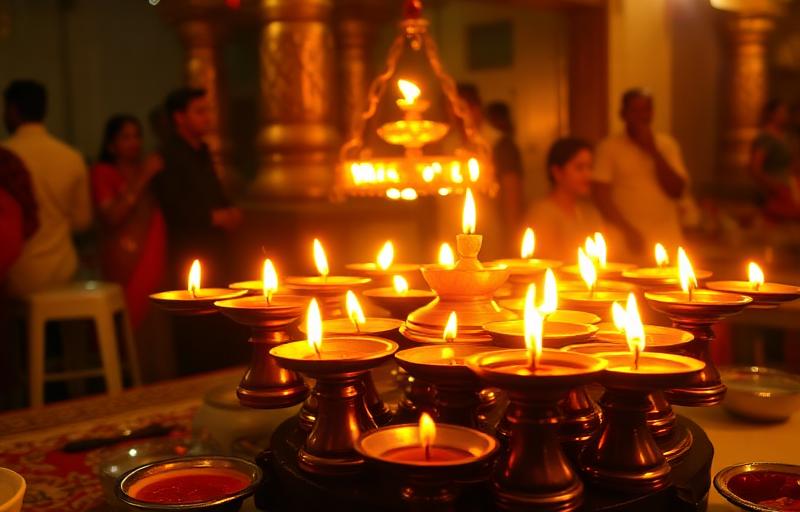
Best days: Friday (Lakshmi's day) and during Diwali, Akshaya Tritiya, Varalakshmi Vratam. Best time: 6-8 AM (Brahma Muhurta to sunrise) or 7-9 PM (Pradosh). Materials: 1. Silver/copper kalash with water. 2. Red and yellow flowers (rose, marigold, lotus if available). 3. Banana leaf or silver plate. 4. Bilva leaves (mandatory - Sri Suktam's sacred tree). 5. Akshat (rice with turmeric), kumkum, sandalwood. 6. Coconut, dates, makhana, almonds. 7. Ghee diya (twin wicks ideal). 8. Camphor for aarti. Preparation: 9. Cold bath (warm OK in winter). 10. Wear yellow, gold, red, or pink. Avoid black. 11. Sit on yellow silk or wool aasan facing east or north. 12. Apply red tilak (kumkum + chandan). Puja sequence: 13. Achaman (sip water 3x). 14. Ganesh invocation: 'Om Gam Ganapataye Namah' 11x. 15. Sankalpa: name, gotra, today's tithi, intention (e.g., 'I, [name], chant Sri Suktam on this Friday for wealth and family prosperity'). 16. Invoke Lakshmi: place a coconut on the kalash, decorate with mango leaves. This is Lakshmi's seat. The recitation: 17. Chant all 16 mantras of Sri Suktam slowly and clearly. One full recitation takes 6-8 minutes. 18. Offer one Bilva leaf or flower at each mantra (place at Lakshmi's feet). 19. Most powerful frequency: 11 times daily (88-minute total session). For Diwali, do 108 times or even 1008 times in a group puja. After completion: 20. Sri Suktam Homa (optional): if you have a small homa kund, offer ghee with each mantra. Mantra 15's 'Juhuyat Ajya Manvaham' literally instructs ghee offering. 21. Aarti with camphor. 22. Distribute prasad. 23. Place the 'Lakshmi water' from the kalash in different rooms of the house - this is the most powerful blessed water for home prosperity.
What People Ask Most
Is Sri Suktam more powerful than Lakshmi Ashtottara?+
Sri Suktam is more authoritative (being Vedic shruti) but both are equally powerful in result. They work at different levels: Sri Suktam works on cosmic-vibrational level (the universe rearranges around you); Lakshmi Ashtottara works on personal-devotional level (your relationship with the goddess deepens). Ideal practice: Sri Suktam in morning (for cosmic alignment), Lakshmi Ashtottara in evening (for personal blessing). Together they form complete Lakshmi sadhana.
Can anyone chant Sri Suktam or is it only for Brahmins?+
Modern view: anyone can chant. Traditional view: only Vedic-initiated males (with upanayanam). The modern accessibility view has been formally endorsed by Sringeri Sharada Peetham, Kanchi Kamakoti, and other major Vedic institutions. Women, non-Brahmins, foreigners - all can chant Sri Suktam with proper bhava. The only requirement is cleanliness (bath before chanting) and bhava (devotion). The mantra's energy is universal.
Should Sri Suktam be chanted with proper Vedic accent?+
Ideally yes - Vedic mantras have udatta (high), anudatta (low), and svarita (combined) accents. Wrong accent reduces the cosmic effect by 30-40%. However, modern recordings by qualified Vedic scholars (M.S. Subbulakshmi's famous Sri Suktam recording, for example) are widely available. Listen 10-15 times to internalize the accent. For beginners, listening + mental chanting is acceptable until you learn proper accent.
What's the difference between Sri Suktam and Mahalakshmi Ashtakam?+
Sri Suktam: 16 Vedic mantras (1500 BCE), focused on invoking Lakshmi cosmically. 6-8 minutes. Authoritative shruti. Mahalakshmi Ashtakam: 8 Puranic verses by Indra (much later), focused on praising Lakshmi's qualities. 3-4 minutes. Smriti category. Both work; Sri Suktam is foundational, Ashtakam is supplementary. For new practitioners, Mahalakshmi Ashtakam is easier to start (shorter, sweeter verses). For serious wealth sadhana, Sri Suktam is unmatched.
Can I chant Sri Suktam during menstruation?+
Manasik (mental) jap is allowed. Physical homa, water offering, and idol contact should be skipped. Listen to recorded Sri Suktam through earphones and mentally repeat. After the 4-day cleansing bath, resume full practice. Lakshmi is herself a Devi (feminine) and understands feminine cycles - there is no spiritual harm. The restriction is about ritual purity for puja ceremonies, not about the mantra's reach to the goddess.
About the author
Acharya Vinaya Kapoor · M.A. Sanskrit, Mantra & Stotra Studies
Acharya Vinaya holds an M.A. in Sanskrit from Banaras Hindu University and writes the mantra and stotra commentary on Vandnaa. Her focus is on accurate pronunciation, traditional context, and helping modern readers connect with classical texts.
Meet the Vandnaa editorial team →Explore on Vandnaa
Related Articles
Lakshmi Ashtottara - Complete 108 Names of Goddess Lakshmi for Wealth & Prosperity
12 min read
Akshaya Tritiya 2026: Date, Puja Vidhi, Mantras & Why It's the Luckiest Day of the Year
10 min read
Krishna Ashtottara Shatanamavali - Complete 108 Names of Krishna with Meaning & Benefits
12 min read
Mool Mantra - Most Powerful Beej Mantras for Every Deity (Complete Guide)
11 min read