The Temple at Srikurmam
Srikurmam stands in Srikakulam district, in the far north east of Andhra Pradesh near the Odisha border, a few kilometres from the coast.
Its distinction is simple and complete: it is the only significant temple in India dedicated to Kurma, the tortoise, the second avatar of Vishnu.
What is there:
- The deity Kurmanatha or Srikurmanatha, in the tortoise form
- A west facing sanctum, which is highly unusual
- Two dhwajastambhams, flagstaffs, one on the east and one on the west, which is unique
- A mandapa with 108 pillars, said to be no two alike
- A large body of inscriptions from many dynasties
- The Swetha Pushkarini tank
The rarity, stated properly. Of the Dashavatara, the ten avatars, the coverage is wildly uneven.
- Rama and Krishna have thousands of temples each
- Narasimha has hundreds, concentrated in Andhra and Telangana
- Varaha has a reasonable number, including Srimushnam and Simhachalam in part
- Vamana has a few
- Parashurama, Matsya, Kurma, Buddha and Kalki have very few, and in the case of Kurma essentially this one
Why the second avatar is so thinly represented. The reason is worth stating, because it explains a great deal about how Indian devotion actually distributes itself.
- Devotion attaches to avatars who have stories with people in them
- Rama and Krishna have full biographies, families, friends, enemies, childhoods and deaths
- Narasimha has a devotee, Prahlada, and a rescue
- Kurma has one episode, in which he holds up a mountain
- There is nobody to identify with, no conversation, no relationship
An avatar who appears for one cosmological task and leaves does not accumulate devotees. He accumulates a place in the list.
Srikurmam is where that one episode has a building.
The Churning of the Ocean
The Kurma avatar belongs to one episode, and it is one of the most consequential in the Puranas.
The Samudra Manthan, the churning of the ocean of milk:
- The devas had been weakened, in most tellings by Durvasa's curse, and had lost their strength and their sovereignty
- Vishnu advised them to churn the ocean of milk to obtain amrita, the nectar of immortality
- The task was too large for the devas alone, so they made a temporary alliance with the asuras, promising a share
- Mount Mandara was used as the churning rod
- Vasuki, the serpent, was used as the rope
- The devas took one end and the asuras the other, and the churning began
- The mountain began to sink into the ocean floor
- Vishnu took the form of Kurma, a tortoise, went beneath the ocean and supported the mountain on his back
What came out of the churning. The list is one of the great inventories in Indian literature.
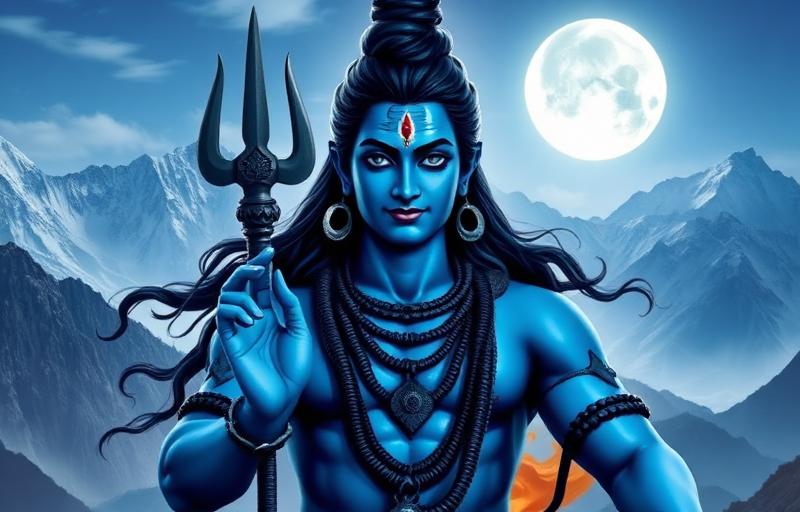
- Halahala, the poison, which came first and threatened everything, and which Shiva drank, holding it in his throat and becoming Nilakantha
- Kamadhenu, the wish fulfilling cow
- Uchchaihshravas, the horse
- Airavata, the elephant
- Kaustubha, the jewel
- Kalpavriksha, the tree
- Apsaras
- Lakshmi, who emerged and chose Vishnu
- Varuni, Chandra and others in various lists
- Dhanvantari, the physician of the gods, holding the pot of amrita
The ending. The asuras seized the amrita, and Vishnu took the form of Mohini, an enchantress, to recover it and distribute it to the devas, which is the origin of the Mohini avatar and of the story of Rahu and Ketu, who drank and were beheaded.
What the story is about. The Samudra Manthan is read in several registers at once, and all of them are traditional.
- A cosmogonic account of how the world's goods came into being
- A statement about cooperation between enemies for a task neither can do alone, which is unusual in the Puranas
- A moral about poison before nectar, in that the first result of any great effort is the thing that nearly destroys you
- In yogic readings, a description of internal practice, with the churning as the discipline and the poison as what surfaces first
Kurma's role in it. He does not lead, speak or fight. He goes underneath and takes the weight so that the work can continue.
That is the entire content of the avatar, and it is not a small thing to be the deity of.
The West Facing Sanctum and Two Flagstaffs
Two architectural features at Srikurmam break the rules, and both have stories attached.
The west facing deity:
- Indian temples overwhelmingly face east, toward the rising sun
- A minority face north, and a very few face south, generally for specific reasons
- West facing temples are rare, and a major temple facing west is rarer still
- Srikurmam faces west
The story. Tradition holds that the deity was originally east facing, and that the change happened during a contest of devotion.
In the account, a devotee named Svetha, a king, was performing worship, and the deity turned to face him, or turned away from those who had come with hostile intent, and remained in the new orientation.
The two dhwajastambhams:
- A dhwajastambham, the flagstaff, stands before the sanctum on the axis of the deity
- A temple has one
- Srikurmam has two, on the east and on the west
- The traditional explanation is that when the deity turned, the original flagstaff was left behind on the old axis and a new one was raised on the new one, and neither was removed
What can be said historically. The temple's fabric records substantial rebuilding, and the orientation question is genuinely unusual and has attracted attention from scholars without producing a settled explanation.
A reasonable reading is that the sanctum was reoriented at some point in the temple's long history, for reasons that may have been ritual, sectarian or structural, and that the tradition has preserved the memory of a turning in the form of a story.
The Shaiva to Vaishnava question. Srikurmam has a further complication, which is one of the more interesting things about it.
- Several features of the temple suggest an earlier Shaiva phase
- The traditional account holds that Ramanujacharya visited in the eleventh or twelfth century and established Vaishnava worship here
- Similar accounts attach to a number of temples along this coast and in Odisha
How to hold this. Conversions of this kind, in either direction, happened repeatedly in Indian religious history, and the record is usually a mixture of inscription, architectural evidence and tradition that does not fully agree.
What is clear is that this is a very old site, that it has served more than one tradition, and that its present form is the product of a long history rather than a single act of foundation.
The 108 pillars. The mandapa's pillars are said to be no two alike, and the number 108 is the standard sacred count that appears everywhere from japa malas to Shakti Peetha lists to Divya Desam counts.
Whether every pillar is genuinely unique is the sort of claim best tested by walking round and looking, which is a good way to spend twenty minutes and to notice the carving.
The Inscriptions
Srikurmam carries one of the richer bodies of inscription of any temple on this coast, and for anyone interested in how temples actually functioned, the inscriptions are more informative than the architecture.
What is recorded:
- Grants of land and villages to the temple
- Endowments for specific lamps, offerings and services, with the exact quantities specified
- Records of repairs and additions, with the donor named
- Gifts from rulers of the Eastern Ganga, Gajapati and other dynasties, and from officials, merchants and private individuals
- Records in Telugu, Sanskrit and Odia, reflecting the temple's position on a linguistic frontier
Why endowment inscriptions matter. They are the closest thing India has to a continuous administrative record from the medieval period, and they tell you things no chronicle does.
- The price of oil, rice and land at a given date
- The wages and entitlements of temple servants, dancers, musicians and cooks
- Which crops were grown and what the yields were assumed to be
- The legal forms used for gifts, and the penalties attached to interfering with them
- The relative wealth of donors, and the presence of merchants and women among them
Women as donors. This is worth pointing out because it runs against a common assumption.
Temple inscriptions across south India record substantial numbers of gifts from women in their own names, including queens, wives of officials, temple dancers and ordinary householders. They held property, made endowments and had those endowments recorded on stone in the same terms as men's.
That is not a complete picture of women's position in medieval India and should not be read as one, but it is a real part of the record and it is written on the walls.
The linguistic frontier. Srikakulam sits where Telugu country meets Odia country, and the temple's inscriptions and patronage reflect that.
- The Eastern Gangas, who built Konark and Puri, ruled here
- The Gajapatis of Odisha held it later
- Telugu rulers and Vijayanagara held it at other times
- The temple served all of them and kept its records in the languages of each
Reading them. The inscriptions are on the temple's walls and pillars and many are published in the South Indian Inscriptions volumes and in the Epigraphia Indica series, which are available online.
You will not read them standing there without training, but knowing they are there changes how the walls look. Those are not decorations. They are contracts.
The Tortoise in Indian Thought
The tortoise appears in Indian thought well beyond the Kurma avatar, and the recurrences are worth knowing.
As a cosmological support:
- The Kurma avatar holds up Mount Mandara during the churning
- In some Puranic cosmologies a tortoise supports the earth, sometimes with elephants standing on it
- The image of the world resting on a tortoise appears in several unrelated traditions worldwide, and in India it is one strand among others rather than the standard account
As a model for yoga. This is the more important use.
- The Bhagavad Gita, in the second chapter, uses the tortoise directly: as a tortoise draws in its limbs from every side, so the one of steady wisdom withdraws the senses from their objects
- Pratyahara, the withdrawal of the senses, is the fifth limb of Patanjali's ashtanga yoga, and the tortoise is its standard image
- Kurmasana, the tortoise posture, is a seated forward fold in the asana tradition
- The point is not hiding. It is the capacity to withdraw at will, which is different from being unable to engage
As a temple form. The Kurma chakra or tortoise diagram is used in some Agamic traditions to lay out the ground plan of a temple or a town, with the parts of the tortoise mapped onto the parts of the site.
As a symbol of patience. The tortoise's slowness, longevity and hard shell make it an emblem of endurance, and it appears in that sense in proverbs and in folk art across the country.
What the avatar means, taken together. Kurma is the deity of bearing weight from underneath.
- He is not visible during the churning. He is at the bottom of the ocean
- Nobody in the story thanks him
- The nectar goes to others
- Without him the mountain sinks and there is no churning at all
That is a specific and unusual thing for a deity to represent, and it maps onto a recognisable human position, which is doing the load bearing work that makes something possible while other people conduct it.
If a temple to Kurma seems like an odd thing to have only one of, this is perhaps also the reason. It is the avatar of the person nobody is looking at.
Visiting Srikurmam
Getting there
- Srikurmam, Srikakulam district, Andhra Pradesh, a few kilometres from the coast
- About 15 km from Srikakulam town
- Srikakulam Road railway station is the nearest, and the town is on the Chennai to Kolkata main line
- Visakhapatnam is the nearest airport, about 120 km
- Autos and buses run from Srikakulam
Timings
- The temple opens early and runs through the day with a midday break. Check locally
When to go
- October to February for the most comfortable weather
- Dolotsavam and the temple's own festivals, including Kurma Jayanti in Vaisakha
- Vaikunta Ekadashi, in December or January
- Weekday mornings, when it is very quiet
What to look at
- The west facing sanctum and both dhwajastambhams
- The 108 pillars and their carving
- The inscriptions, on walls and pillars throughout
- The Swetha Pushkarini tank
- The saligrama collection, if it is shown
Practicalities
- Traditional dress is appropriate
- The temple is not on the standard tourist circuit and facilities are limited. Carry water
- Srikakulam town is the place for food and accommodation
Combining the visit
- Arasavalli, about 15 km, with the Suryanarayana temple, which pairs naturally with Srikurmam and is on most local itineraries with it
- Salihundam, about 20 km, a Buddhist site on a hill above the Vamsadhara river, with stupas and a fine view, and very few visitors
- Kalingapatnam, at the river mouth, with its old port history
- Srikakulam town and the Sri Mukhalingam temples, about 50 km, which are among the finest early Kalinga temples anywhere and are barely visited
- Visakhapatnam, Simhachalam and Araku to the south
- Odisha, with Puri, Konark and Bhubaneswar, is a few hours north
On Mukhalingam. If you are in Srikakulam district, make time for Sri Mukhalingam. Its three temples are Eastern Ganga work of the eighth to twelfth centuries, the carving is superb, and they receive a fraction of the attention of Konark and Bhubaneswar while belonging to the same tradition.
That, Srikurmam, Arasavalli and Salihundam together make Srikakulam one of the better single district itineraries in India for anyone who prefers sites without crowds.
A closing thought. There is exactly one temple in the country to the avatar who went underneath and held up the mountain so that everyone else could get what they came for. That seems about right.
Common Questions From Devotees
Where is Srikurmam?+
In Srikakulam district in the far north east of Andhra Pradesh, a few kilometres from the coast and about 15 km from Srikakulam town. Srikakulam Road station is on the Chennai to Kolkata main line, and Visakhapatnam is the nearest airport about 120 km away.
Why are there so few Kurma temples?+
Devotion attaches to avatars with stories that have people in them. Rama and Krishna have full biographies, Narasimha has Prahlada and a rescue, but Kurma has one episode in which he holds up a mountain, with nobody to identify with and no relationship. An avatar who appears for one cosmological task and leaves accumulates a place in the list rather than devotees.
What is the Samudra Manthan?+
The churning of the ocean of milk for amrita, in which the weakened devas allied with the asuras, used Mount Mandara as the rod and Vasuki as the rope. When the mountain began to sink, Vishnu took the form of Kurma and supported it on his back. The churning produced the halahala poison Shiva drank, Kamadhenu, Airavata, Lakshmi, and finally Dhanvantari with the amrita.
Why does the temple face west?+
Indian temples overwhelmingly face east, and a major west facing temple is rare. Tradition holds the deity was originally east facing and turned during a contest of devotion involving a king named Svetha. Historically the sanctum was probably reoriented at some point for ritual, sectarian or structural reasons, and the tradition preserves that turning as a story.
Why does it have two flagstaffs?+
A dhwajastambham stands before the sanctum on the deity's axis and a temple has one. Srikurmam has two, east and west. The traditional explanation is that when the deity turned, the original flagstaff was left on the old axis and a new one was raised on the new axis, and neither was removed.
How does the Gita use the tortoise?+
In the second chapter it says that as a tortoise draws in its limbs from every side, so the one of steady wisdom withdraws the senses from their objects. This is the standard image for pratyahara, the withdrawal of the senses, which is the fifth limb of Patanjali's ashtanga yoga. The point is the capacity to withdraw at will, not hiding.
About the author
Pandit Ravindra Sharma · Vedic Rituals & Bhakti, 22+ years
Pandit Ravindra is the Vandnaa editorial team's resident specialist on aarti, chalisa, and daily devotion. He has performed home and temple pujas across Varanasi and Delhi for over two decades and contributes the bhakti-focused articles on this site.
Meet the Vandnaa editorial team →