What Is the Surya Beej Mantra Hraam
Hraam is chanted in Hindu tradition as one of the seed sounds of Surya Dev, the sun god revered since Vedic times as the visible source of light, warmth and life on earth. It rarely stands alone, appearing most often within the fuller formula Om Hraam Hreem Hraum Sah Suryaya Namah, where three related beejas together carry Surya's energy before his name is spoken.
This layered structure is unique among beej mantras and reflects Surya's many aspects in tradition, as healer, illuminator and sustainer of daily life.
Scriptural Origin and Tradition
Surya worship is among the oldest in Hindu tradition, rooted in Rigvedic hymns to Surya and Savitr, and continued through texts such as the Aditya Hridaya Stotra, which Rama is said to have recited before his decisive battle for renewed strength and clarity. The beej formula built around Hraam developed within later tantric tradition as a concentrated way to invoke this ancient reverence.
This chant is associated with Surya Namaskar practice, Chhath Puja, and Ratha Saptami, all occasions when devotees turn their attention directly to the rising sun.
The Meaning Held Within the Sound
Within the formula Hraam Hreem Hraum, each beej is understood to represent a facet of Surya's energy, illumination, healing warmth and sustaining power, while Sah is considered his own personal seed sound before his name Suryaya is spoken. Together they form a chant tradition treats as invoking the sun in his complete radiant form.
This layered approach reflects a broader idea in mantra shastra, that some deities are honoured through a single beej while others, embodying multiple qualities at once, are approached through a small constellation of sounds.
How and When Devotees Chant This Mantra
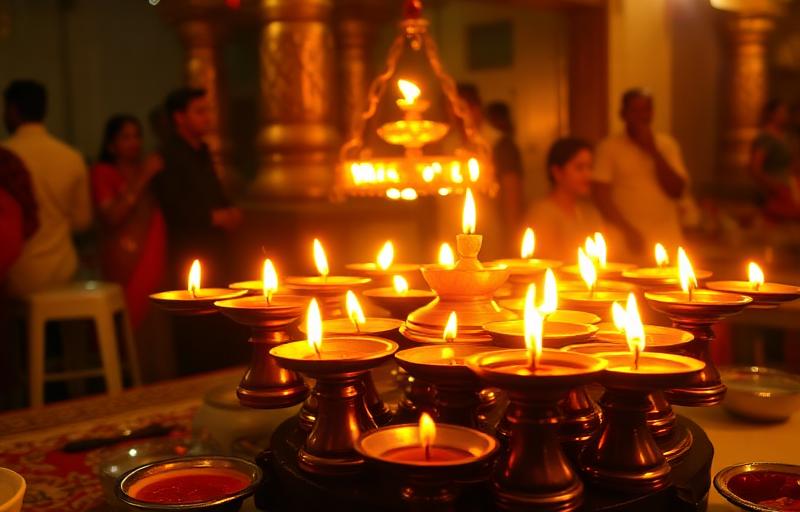
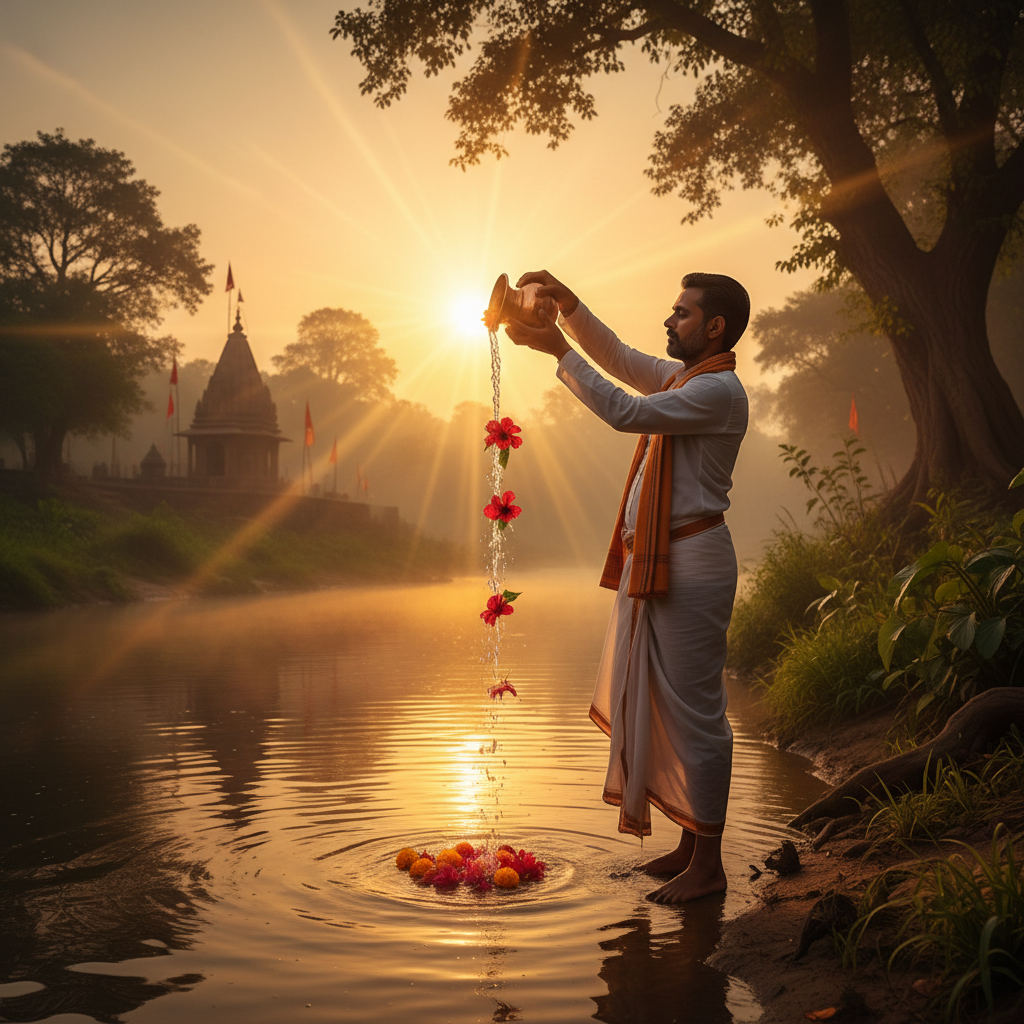
Om Hraam Hreem Hraum Sah Suryaya Namah is traditionally chanted at sunrise, facing east, ideally while offering water to the sun in a practice called Surya Arghya. Sunday, considered Surya's own day, is especially favoured for this chant.
- Copper vessels are traditionally used for offering water during Arghya
- A count of 108 is common, chanted while the sun is still low on the horizon
- Many devotees pair this chant with Surya Namaskar postures
- Chhath Puja devotees chant it standing in water at both sunset and sunrise
Benefits as Per Tradition
As per tradition, chanting this mantra with devotion at sunrise is believed to bring vitality, clarity of mind and steady energy through the day, echoing Surya's role as the source of light that sustains all life. Devotees believe it also nurtures discipline, since regular practice requires rising with or before the sun.
It is closely associated with general wellbeing and confidence, families continuing the practice of Surya Arghya across generations as a simple daily act of gratitude toward the sun.
A Simple Daily Practice
This mantra fits naturally into an ordinary morning. Even offering a small palm of water to the rising sun while chanting quietly is, in tradition, considered a complete and heartfelt act of worship.
As with all mantra practice, chanting for Surya is an act of faith and love, not a transaction, a simple daily pause to greet the light that makes every other activity of the day possible.
Common Questions From Devotees
What does the Surya beej mantra Hraam mean?+
Hraam is one of three related seed sounds, along with Hreem and Hraum, that together invoke Surya Dev's energy of illumination and healing warmth in the mantra Om Hraam Hreem Hraum Sah Suryaya Namah.
When is this mantra traditionally chanted?+
It is traditionally chanted at sunrise, facing east, often while offering water to the sun. Sundays, Chhath Puja and Ratha Saptami are considered especially auspicious occasions.
Is this mantra connected to astrology or kundli remedies?+
This mantra is rooted in traditional Surya worship, health, vitality and daily gratitude toward the sun, in the spirit of practices like Surya Namaskar and Chhath Puja, rather than in astrological prediction.
About the author
Acharya Vinaya Kapoor · M.A. Sanskrit, Mantra & Stotra Studies
Acharya Vinaya holds an M.A. in Sanskrit from Banaras Hindu University and writes the mantra and stotra commentary on Vandnaa. Her focus is on accurate pronunciation, traditional context, and helping modern readers connect with classical texts.
Meet the Vandnaa editorial team →