Surya Dev and the Tradition of His Aarti
Surya, the Sun God, has been worshipped directly since Vedic times as the visible, daily source of light, warmth and life. Unlike deities approached only through an idol, Surya is met each morning in the sky itself, which is why his aarti is often sung facing the rising or setting sun rather than only before a picture or murti.
The aarti is sung at temples and river ghats, especially during Chhath Puja, when devotees stand in water at dawn and dusk to honour him, and forms part of daily sandhya (twilight) worship in many households.
Singing it is considered a way of consciously receiving the sun's energy with gratitude, rather than letting the sunrise pass unnoticed.
Surya Dev Aarti - Representative Verses (Hindi)
Here are representative verses of the Surya Dev Aarti in the traditional aarti style, offered as a devotional excerpt:
जय जय सूर्य भगवान, जय जय दिनकर स्वामी। जगत तिमिर के नाशक, तुमको शत शत प्रणामी॥ जय जय सूर्य भगवान...
सप्त अश्व रथ सोहे, अरुण सारथी साथा। तेज पुंज छवि तेरी, संग रहे जग नाथा॥ जय जय सूर्य भगवान...
नित्य उदय जो होवे, तम हर उजियारा। जीवन शक्ति तुम्हीं से, पावे जग सारा॥ जय जय सूर्य भगवान...
आरोग्य बल दाता, तेज बुद्धि प्रदाता। भक्तन के दुख हरता, सुख संपत्ति दाता॥ जय जय सूर्य भगवान...
Meaning and Devotional Significance
The phrase 'jagat timir ke naashak' (destroyer of the world's darkness) is understood on two levels: the literal dawn that ends the night, and the inner darkness of confusion or despair that steady faith is believed to dissolve. The seven horses and charioteer Aruna, mentioned again here, reinforce Surya's constant, disciplined movement across the sky, an image devotees connect with steady effort in their own lives.
The closing line, 'arogya bal data, tej buddhi pradata' (giver of health and strength, giver of radiance and intellect), summarises why Surya is invoked daily: not for sudden fortune, but for the ordinary, essential gifts of health and clarity.
Benefits of Singing Surya Dev Aarti
As per tradition, devotees who sing the Surya Dev Aarti regularly believe it supports:
- Better health, energy and immunity through the day
- A disciplined, grounded start to the morning
- Confidence and mental clarity for the day's tasks
- Gratitude and awareness that steadies restless thoughts
- Relief from lethargy and low motivation
- A sense of connection to nature's daily rhythm
These benefits are held as matters of faith to accompany, not replace, healthy routines and medical guidance.
When and How to Sing This Aarti
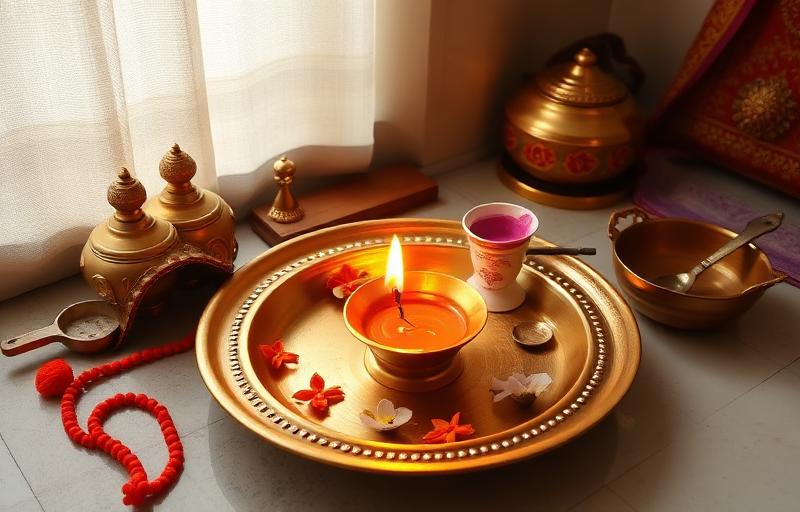
The best time is sunrise or sunset, especially on Sunday, and during Chhath Puja and Ratha Saptami, when it is sung communally at river ghats and temples. At home, light a diya facing the direction of the sun, offer a simple gesture of folded hands, and sing the aarti with attention.
This practice takes only a few minutes but is treated as a complete act of devotion in itself. As with all worship, it is offered as an act of faith and gratitude, not a transaction for guaranteed results.
Quick Answers
When is the best time to sing Surya Dev Aarti?+
Sunrise or sunset is ideal, especially on Sundays and during Chhath Puja and Ratha Saptami, though it can be sung any day as part of a daily devotional routine.
Why is Surya worshipped facing the sky rather than only an idol?+
Surya is considered directly visible each day, so devotees traditionally face the actual sunrise or sunset to offer worship, alongside or instead of a picture or murti.
Is Surya Dev Aarti connected to Chhath Puja?+
Yes, it is sung prominently during Chhath Puja, when devotees stand in water at dawn and dusk to honour the sun, making the aarti a central part of that festival's daily rituals.
About the author
Acharya Vinaya Kapoor · M.A. Sanskrit, Mantra & Stotra Studies
Acharya Vinaya holds an M.A. in Sanskrit from Banaras Hindu University and writes the mantra and stotra commentary on Vandnaa. Her focus is on accurate pronunciation, traditional context, and helping modern readers connect with classical texts.
Meet the Vandnaa editorial team →