The Swan as a Divine Vahana
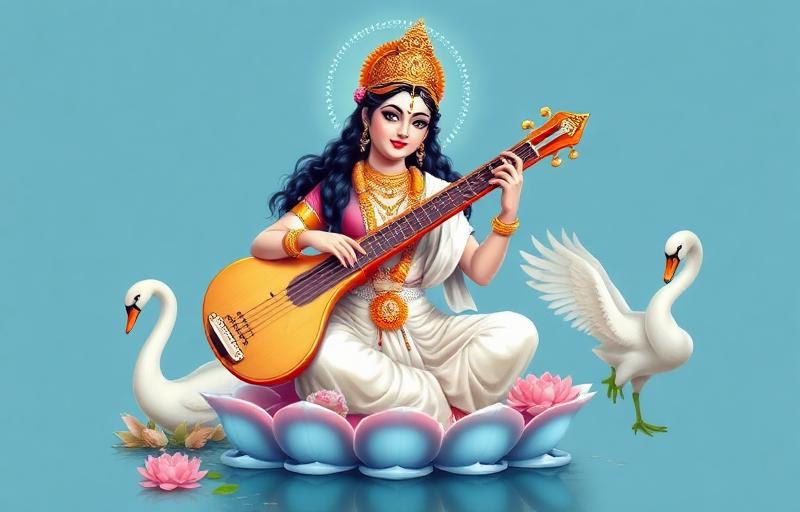
In Hindu tradition the Hamsa (swan) is the sacred vahana of Maa Saraswati, the goddess of knowledge, and of Lord Brahma, the creator. A vahana is far more than a mount - it is a living symbol of the qualities the deity embodies. The pure white swan, gliding calmly on water yet untouched by it, carries Saraswati and Brahma because it mirrors their nature of detached, discerning wisdom.
Neersheer Viveka - Separating Milk from Water
The most beloved belief about the swan is that it can drink the milk from a mixture of milk and water, leaving the water behind. This power is called neersheer viveka - the discrimination that separates the essential from the worthless. It teaches a profound lesson: a wise person, like the swan, learns to take what is true and good from the world and quietly leave aside what is false or harmful. *Discrimination (viveka) is the heart of real knowledge.*
Purity and Detachment
The swan's spotless white feathers stand for purity of mind and intention, the very ground on which knowledge can grow. Just as the swan swims through water without its feathers getting soaked, the awakened seeker lives in the world without being stained by greed, anger or attachment. This is why Saraswati, who is always shown in pure white, chooses the swan - learning that does not first purify the heart is incomplete.
Hamsa and the Soul - the So'ham Breath
At a deeper level, Hamsa is a name for the individual soul (jivatma) and for the breath itself. With every inhalation the sound 'ham' arises and with every exhalation 'sa', forming the natural mantra Hamsa. Reversed and merged it becomes So'ham - 'I am That' - the realisation that the soul and the supreme are one. The swan that flies high yet returns to water symbolises the soul moving between the divine and the earthly.
Why Saraswati and Brahma Chose the Swan
Brahma is the creator and Saraswati the knowledge by which creation is ordered. They chose the swan because creation needs discernment - the wisdom to separate truth from illusion and order from chaos. A Paramahamsa, the title given to the highest sages, literally means 'supreme swan', one who has perfected this discrimination. The swan thus tells every devotee that the path to the divine is walked through a calm, pure and discriminating mind.
A Mantra of the Swan and Wisdom
Devotees who wish to invoke the swan's clarity can chant Saraswati's seed mantra:
Om Aim Saraswatyai Namah
Along with this, silently watching the breath as So'ham - 'ham' on the inhale, 'sa' on the exhale - is a simple practice that steadies the mind and awakens the inner Hamsa. Practised together, the mantra and the breath cultivate the discrimination and purity the swan represents.
Common Questions From Devotees
Whose vahana is the swan (Hamsa) in Hinduism?+
The swan (Hamsa) is the vahana of Maa Saraswati, the goddess of knowledge, and of Lord Brahma, the creator. It symbolises the pure, discriminating wisdom they embody.
What does the swan symbolise?+
The swan symbolises discrimination (neersheer viveka), purity of mind and the soul. It is believed to separate milk from water, representing the wisdom to keep the true and discard the false.
What is neersheer viveka?+
Neersheer viveka is the swan's fabled ability to drink only the milk from a mix of milk and water. It represents the discrimination that separates what is essential and true from what is worthless.
How is the swan connected to the so'ham mantra?+
Hamsa is a name for the soul and the breath - 'ham' on the inhale and 'sa' on the exhale. Merged and reversed it becomes 'So'ham', meaning 'I am That', the unity of soul and the supreme.
Why is a sage called Paramahamsa?+
Paramahamsa means 'supreme swan'. The title is given to the highest sages who have perfected discrimination and purity, living in the world like a swan in water yet untouched by it.
Which mantra invokes the swan's wisdom?+
Chant 'Om Aim Saraswatyai Namah' for clarity and wisdom, and silently watch the breath as 'So'ham'. Together they cultivate the discrimination and purity the swan represents.
About the author
Acharya Vinaya Kapoor · M.A. Sanskrit, Mantra & Stotra Studies
Acharya Vinaya holds an M.A. in Sanskrit from Banaras Hindu University and writes the mantra and stotra commentary on Vandnaa. Her focus is on accurate pronunciation, traditional context, and helping modern readers connect with classical texts.
Meet the Vandnaa editorial team →Explore on Vandnaa
Related Articles

Garuda - Vahana of Vishnu, Significance & Symbolism
9 min read
The Owl (Ullu) - Lakshmi's Vahana Significance
8 min read
Saraswati Aarti Lyrics in Hindi & English (सरस्वती आरती)
7 min read
Saraswati Chalisa - Lyrics, Meaning, Benefits & Jap Vidhi
8 min read

Gayatri Mantra Meaning, Benefits & How to Chant (गायत्री मंत्र)
12 min read
The Mouse (Mushak) - Ganesha's Vahana Significance
8 min read