An Ancient Devotional Community
The Tamil Hindu community of Sri Lanka, concentrated especially in the Jaffna peninsula, the eastern coast and pockets of the central hill country, carries a devotional heritage that stretches back many centuries. Their faith is expressed through a rich network of kovils, the Tamil word for temple, ranging from small village shrines to grand structures with towering, colourfully painted gopurams.
This community's temple traditions are closely related to those of Tamil Nadu across the strait, sharing scriptural roots, ritual practice and a devotional language that has bound Tamil Hindus across the region for generations.
The Shaiva Siddhanta Tradition
Much of Sri Lanka's Tamil Hindu worship follows the Shaiva Siddhanta tradition, a philosophical and devotional school centred on Shiva that has deep roots in Tamil literature and temple practice. Agamic rituals, precise and unbroken since ancient times, are conducted daily by hereditary priests in many of the island's older kovils, connecting today's worship to practices many generations old.
Devotional Tamil hymns, the Thevaram and Tiruvasagam among them, remain part of temple life, sung during rituals and festivals in a tradition of devotional poetry that Tamil Shaiva saints developed over many centuries.
Festivals That Keep Tradition Alive
Temple festivals form the heartbeat of Tamil Hindu devotional life in Sri Lanka, none more famous than the annual festival at Nallur Kandaswamy Temple in Jaffna, dedicated to Murugan, which draws enormous crowds over many days of ritual, music and procession. Thai Pongal, marking the harvest, is celebrated warmly across Tamil Hindu households, along with Deepavali and temple-specific chariot festivals throughout the year.
These celebrations are far more than public spectacle, they are moments when families, temples and the wider community renew their shared devotional identity together.
A Shared Devotional Bond with Tamil Nadu
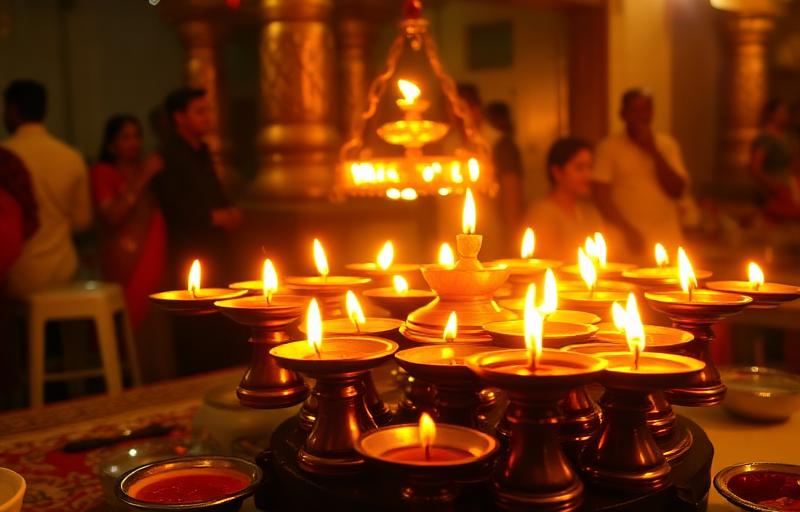
The devotional bond between Sri Lanka's Tamil Hindu community and Tamil Nadu runs deep, expressed through shared temple architecture, common festival calendars and pilgrims who travel between the two regions to seek darshan at each other's revered shrines. Many families maintain devotional ties to specific temples on both sides of the strait, visiting across generations.
This living connection has helped preserve distinctive elements of Tamil Shaiva and Vaishnava worship in Sri Lanka even as local traditions developed their own regional character over time.
A Living Heritage Worth Honouring
The temple heritage of Sri Lanka's Tamil Hindu community stands as a testament to devotion carried faithfully across generations, expressed daily in kovils large and small across the island. For devotees anywhere, learning about this heritage is a way of appreciating the wider, richly diverse tapestry of Hindu devotional tradition beyond India's borders.
Honouring this community's temple culture, whether through a pilgrimage visit or simply through learning its stories, is an act of faith and love, not a transaction, a recognition of shared devotion that transcends geography.
Quick Answers
What is a kovil?+
Kovil is the Tamil word for temple, used across Sri Lanka's Tamil Hindu community to describe everything from small village shrines to grand temple complexes.
What is Shaiva Siddhanta?+
It is a philosophical and devotional school of Shiva worship with deep roots in Tamil literature and temple practice, widely followed among Sri Lanka's Tamil Hindus.
What festival is most associated with Sri Lanka's Tamil Hindu community?+
The annual festival at Nallur Kandaswamy Temple in Jaffna, dedicated to Murugan, is among the most famous, along with Thai Pongal and Deepavali celebrations.
About the author
Pandit Mahesh Trivedi · Festival Traditions & Panchang
Pandit Mahesh leads the festival-date and Panchang content on Vandnaa. He cross-references multiple regional panchangs (Drik, Vaishnava, Bengali, Marathi) for every festival date published on the site.
Meet the Vandnaa editorial team →