What Is Theru
Theru, the Tamil word for street or lane, gives its name to a cherished tradition in Tamil Nadu's village temple life, the annual festival during which a deity leaves the sanctum and processes through the streets of the settlement. Rather than devotees always travelling to the temple, the deity comes to them, moving through every lane so that even those unable to reach the temple receive darshan.
This movement through the village is treated as far more than a formality, it is understood as the deity actively extending blessing and protection across the whole of the community's living space.
Its Roots in Devotional Life
The theru tradition grows from the same devotional instinct that has always sent temple deities out into the world during festivals, whether as a grand chariot procession in a major temple town or a simpler palanquin carried through a village's lanes. In Tamil Nadu's villages, this instinct found its most intimate expression, the goddess or guardian deity brought close enough to bless every threshold personally.
Over generations, communities have shaped the timing, route and rituals of their own theru around the particular deity and legend they honour, making each village's festival a distinct, living inheritance rather than a copied custom.
Elements of a Theru Festival
While details vary from village to village, a few elements recur across most theru celebrations.
- The deity is carried in a decorated palanquin or chariot through the settlement's main lanes
- Nadaswaram and thavil musicians lead the procession with traditional temple music
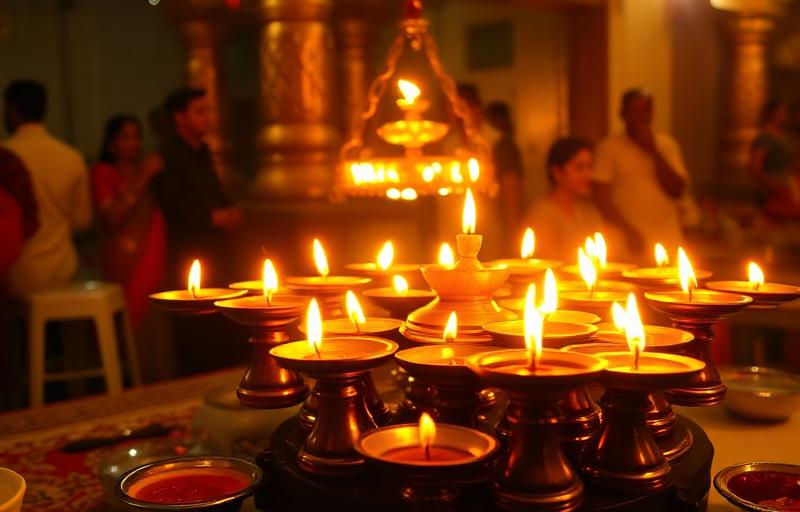
- Households along the route decorate their thresholds with kolam and lamps
- Offerings are made directly from doorways as the procession passes
- Therukoothu, an open-air folk theatre often narrating epic episodes, may be performed as part of the festivities
Regional Examples
Village Amman festivals across Tamil Nadu commonly build toward a theru as their central event, the goddess processing through the settlement before returning to her sanctum. Draupadi Amman festivals in particular are closely associated with elaborate therukoothu performances retelling Mahabharata episodes over several nights, drawing the whole community into a shared act of storytelling and devotion.
Larger temple towns extend the same idea into grander chariot festivals, but the underlying purpose remains identical to the humblest village theru, bringing the deity's presence directly into the daily life of every devotee.
Its Significance in Hindu Tradition
The theru tradition reflects a deep Hindu understanding that the divine is not meant to remain enclosed, that a deity's grace is most complete when it reaches every home rather than waiting for devotees to come forward. For the days of the festival, the entire village becomes an extension of the temple itself, every lane briefly transformed into sacred ground.
This temporary sanctification of everyday space renews a community's shared identity as much as its individual faith, binding neighbours together in the common work of welcoming their deity home to every doorway.
The Takeaway
The theru tradition reminds devotees that divine presence is meant to be shared generously, reaching every home rather than staying confined to the sanctum. Witnessing or joining a theru is an invitation to feel that the deity's blessing has, quite literally, arrived at one's own doorstep.
Reader Questions Answered
What does theru mean?+
Theru is the Tamil word for street or lane, and refers to the tradition of a temple deity processing through a village's streets during its annual festival.
What is therukoothu and how does it relate to theru festivals?+
Therukoothu is an open-air Tamil folk theatre tradition, often narrating epic episodes, commonly performed as part of village theru festivals, especially those honouring Draupadi Amman.
Why does the deity leave the temple during a theru festival?+
The procession ensures every household, including those unable to reach the temple, receives the deity's darshan and blessing directly at their own doorstep.
About the author
Pandit Mahesh Trivedi · Festival Traditions & Panchang
Pandit Mahesh leads the festival-date and Panchang content on Vandnaa. He cross-references multiple regional panchangs (Drik, Vaishnava, Bengali, Marathi) for every festival date published on the site.
Meet the Vandnaa editorial team →