The Temple Inside the Fort
The Trinetra Ganesh temple stands inside Ranthambore Fort, in Sawai Madhopur district of Rajasthan, on a hill within what is now the Ranthambore tiger reserve.
What is there:
- A shrine within the walls of a fort that has stood since roughly the tenth century
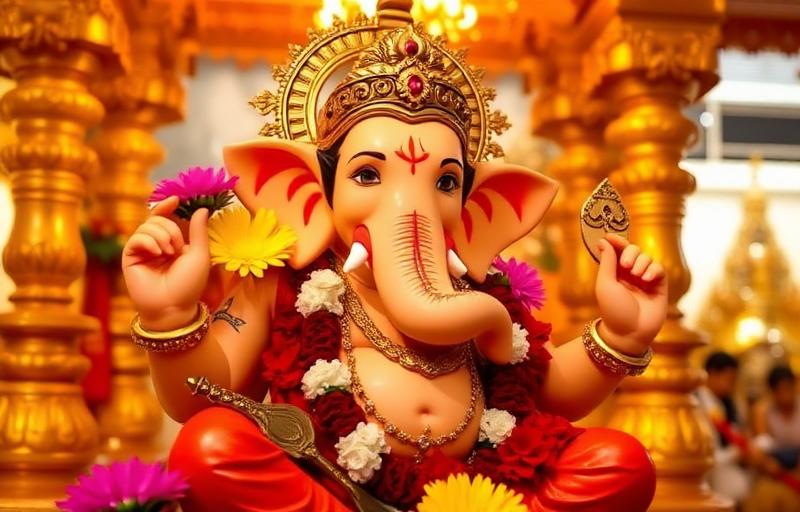
- The image of Trinetra Ganesh, a three eyed Ganesha, in relief
- A postal address that receives thousands of letters, which is the temple's most unusual feature
- Older structures across the fort, including temples, tanks, gateways and ruined palaces
- Views over the forest and lakes of the reserve from the ramparts
Ranthambore fort is one of the Hill Forts of Rajasthan inscribed as a UNESCO World Heritage Site, and it has a long military history, most famously the resistance of Hammir Dev Chauhan at the end of the thirteenth century.
What is remarkable about the temple is that it is not a monument inside a ruin. It is one of the busiest small shrines in Rajasthan, receiving daily post from across India, situated inside a national park, reached by a climb that most visitors make on foot.
Very few temples anywhere combine a working postal correspondence with a wildlife entry procedure.
The Katha of Hammir and the Siege
The temple's origin story is tied to the fort's most famous episode, and it is told at the shrine with the details fixed.
As it is told:
- Hammir Dev Chauhan, ruler of Ranthambore, was besieged in the fort at the end of the thirteenth century
- The siege ran long, and the fort's stores of grain and other supplies were running out
- Hammir, a devotee of Ganesha, prayed for relief
- Ganesha appeared to him in a dream and told him his troubles would end
- The next morning a three eyed image of Ganesha was found to have emerged on a wall of the fort
- The stores were found replenished, and the siege was lifted
What history records separately. Ranthambore under Hammir was besieged by the forces of Alauddin Khalji around the turn of the fourteenth century, and the fort ultimately fell. Hammir's defence became a subject of later Rajput literature and is remembered in Rajasthan as a byword for holding a position to the end.
How the two accounts sit together. The katha does not claim Hammir never fell. It attaches to an earlier moment of relief within a long defence, and the tradition has never treated the fort's eventual fall as a refutation.
This is worth noticing about miracle narratives generally. They rarely claim that everything went well. They claim that at a specific moment, help arrived, and that is a much more modest and much more durable claim.
Three Eyes and the Whole Family
The image itself has two features that devotees consider significant, and both are unusual.
The third eye
- Ganesha is ordinarily shown with two eyes. Here he carries a third eye on the forehead
- The third eye belongs in the tradition to Shiva, and it stands for the sight that goes past appearances
- A Ganesha with the third eye is understood as carrying the father's attribute, and the form is named Trinetra
- Devotees read it as the deity seeing what a petitioner does not say aloud
The whole family
- The image is not of Ganesha alone. It shows him with Riddhi and Siddhi, his consorts
- Their sons Shubh and Labh are present as well
- A complete family group in a sanctum image is uncommon in Ganesha shrines
Why the family form matters here. Shubh means auspiciousness and Labh means gain, and Riddhi and Siddhi are prosperity and attainment. Read together, the sanctum shows the removal of obstacles surrounded by exactly the things a household asks for.
This explains the character of the shrine better than any other detail. People do not come to Trinetra Ganesh for renunciation. They come with weddings, businesses, exams, new houses and children's futures, and the image in front of them is itself a family.
The faces of the image are also read as showing an unusual serenity, and devotees say that the sight of a whole family in the sanctum is what makes the temple feel approachable rather than grand.
The First Invitation

The practice that makes this temple known across India is simple and it follows from ordinary Hindu custom.
The custom behind it:
- Ganesha is invoked first in any undertaking, which is why every puja begins with him and every wedding starts with Ganesh puja
- In many families the first wedding invitation printed is set aside for the deity rather than given to a guest
- At Trinetra Ganesh this has taken a literal form. The first card is posted to the temple
How it works in practice:
- Cards arrive addressed to Shri Ganesh ji, Ranthambore Fort, Sawai Madhopur, Rajasthan
- They come in large numbers daily, and in the wedding season the volume is very high
- Temple staff open and read the invitations before the deity
- Letters arrive not only for weddings but for house warmings, new businesses, examinations, births and requests of every ordinary kind
- Many are written as plain letters rather than printed cards, and some carry long personal accounts
What the practice actually is. It is an invitation, not a petition. The family is not asking Ganesha for something. They are telling him an event is happening in the house and asking him to attend, in the same words they would use for a relative.
That distinction is worth holding on to, because it says something about how devotion works in Indian households. The deity is treated as a member of the family who must be informed of family news, and who would be hurt to hear of a wedding from someone else.
If you want to do this, address the card as above and post it in good time. Nothing else is required, and there is no fee.
Ganesh Chaturthi at the Fort
The temple's great occasion is Ganesh Chaturthi, the fourth day of the bright fortnight of Bhadrapada, which falls in August or September. The date shifts each year, so check the panchang.
What happens:
- A mela is held at the fort over the festival days
- Devotees arrive in very large numbers from Sawai Madhopur, Jaipur, Kota, Bundi and much further
- Many walk the climb up to the fort barefoot as part of a vow
- Special access arrangements are made for the days of the fair, since the temple lies inside a tiger reserve
- Offerings of modak, laddu and durva grass are made, as at any Ganesha shrine
The rest of the calendar:
- Sankashti Chaturthi and Vinayaka Chaturthi each month, the regular Ganesha observances
- Wednesdays, the weekday associated with Ganesha in many households
- The wedding season, when the postal volume peaks
A note on the fair. Ranthambore is a working tiger reserve with a resident tiger population, and a mela of this size inside a protected forest requires management that visitors should cooperate with rather than argue about. Restrictions on timing, on where vehicles may go and on when the route closes exist for reasons that are not administrative fussiness.
If you are attending on Chaturthi, go early, follow the marked route, and do not linger in the park after the temple closes.
Visiting Trinetra Ganesh
Getting there
- Ranthambore Fort, Sawai Madhopur district, Rajasthan, inside the Ranthambore tiger reserve
- Sawai Madhopur town is about 12 to 13 km away and has a major railway station on the Delhi to Mumbai line
- Jaipur is roughly 160 km by road, about three hours
- Vehicles go as far as the fort approach, after which there is a climb of steps to the temple
The climb
- Expect a steady ascent of steps through the fort gateways, which takes most people twenty to forty minutes
- Carry water and go early or late in the day. There is little shade
- Shoes with grip. The steps are old and uneven
- Monkeys are present along the route. Do not carry visible food or prasad in your hands
Timings and season
- The temple keeps daily hours, but access is governed by the reserve's own timings, which vary by season and can change. Check locally before setting out
- October to March is the comfortable season
- Ganesh Chaturthi for the mela
- Avoid the middle of the day in summer entirely
Safety in the reserve
- This is a tiger reserve with a resident tiger population. Stay on the marked route to the fort, do not wander off it, and do not enter the forest on foot
- Follow forest department instructions and route closure timings without argument
- Do not stay on the hill after closing
- Monkey bites and scratches need washing with soap under running water and same day medical attention for rabies treatment
Sending an invitation
- Address it to Shri Ganesh ji, Ranthambore Fort, Sawai Madhopur, Rajasthan, and post it in good time before the event
Combining the visit
- A safari in Ranthambore National Park, booked separately and well in advance
- Sawai Madhopur for accommodation of every grade
- Bundi and Kota are within reach for a longer trip
One closing observation. A great deal of Indian devotion is domestic rather than institutional, and this temple is the clearest proof of it available. A shrine on a fort in a forest stays busy because families across the country still think a wedding should not be arranged without telling Ganesha, and are willing to buy a stamp to do it.
Reader Questions Answered
Where is the Trinetra Ganesh temple?+
Inside Ranthambore Fort in Sawai Madhopur district, Rajasthan, within the Ranthambore tiger reserve. Sawai Madhopur town is about 12 to 13 km away with a major railway station, and Jaipur is roughly 160 km by road.
Why does Ganesha here have three eyes?+
The third eye belongs in the tradition to Shiva and stands for sight that goes past appearances. A Ganesha carrying his father's attribute is called Trinetra, and devotees read it as the deity seeing what a petitioner does not say aloud.
How do you send a wedding invitation to the temple?+
Address the card to Shri Ganesh ji, Ranthambore Fort, Sawai Madhopur, Rajasthan, and post it well before the event. Temple staff open and read the invitations before the deity. There is no fee and nothing else is required.
What is the katha of Hammir and the siege?+
Local tradition holds that Hammir Dev Chauhan, besieged in the fort with supplies running out, prayed to Ganesha and was told in a dream that his troubles would end. The next morning a three eyed image appeared on the fort wall, the stores were found replenished and the siege was lifted.
Who else is shown in the image?+
The image shows Ganesha with his consorts Riddhi and Siddhi and their sons Shubh and Labh, a complete family group, which is uncommon in Ganesha shrines. Riddhi and Siddhi stand for prosperity and attainment, Shubh for auspiciousness and Labh for gain.
Is it safe to visit inside a tiger reserve?+
It is a regular pilgrimage with managed access, but the route lies inside a reserve with a resident tiger population. Stay on the marked route, do not enter the forest on foot, follow forest department timings and closures, and do not stay on the hill after closing.
About the author
Pandit Ravindra Sharma · Vedic Rituals & Bhakti, 22+ years
Pandit Ravindra is the Vandnaa editorial team's resident specialist on aarti, chalisa, and daily devotion. He has performed home and temple pujas across Varanasi and Delhi for over two decades and contributes the bhakti-focused articles on this site.
Meet the Vandnaa editorial team →