
Tulsi: A Daily Presence in the Home
The Tulsi plant holds a place of daily worship in most Hindu homes, regarded as Vrinda, a form deeply connected to Lord Vishnu and treated with the same care and respect given to a family elder. It is usually kept in a Tulsi Chaura, a small raised platform, in the courtyard or a sunny balcony.
Unlike many pujas that need elaborate samagri, Tulsi worship is built on daily consistency, simple offerings and a handful of niyam that keep the practice reverent.
What Tulsi Puja Needs
- Fresh water, sometimes with a few drops of milk or a pinch of turmeric
- A diya, lit in the evening
- Kumkum or chandan for a simple tilak near the plant's base
- A few flowers, if available
Tulsi puja deliberately needs very little. Its samagri is simple by design, so that it can be repeated every single day without becoming a burden.
Step-by-Step Daily Vidhi
1. Morning: After bathing, approach the Tulsi plant with clean hands and offer fresh water at the base. 2. Tilak: Apply a small tilak of kumkum or chandan near the base, and offer a flower if one is available. 3. Parikrama: Walk around the plant a few times, commonly 3, 7 or 11 times, while quietly chanting her name or a simple prayer. 4. Evening diya: As dusk falls, light a diya near the Tulsi plant, a practice considered especially important and auspicious. 5. Namaskar: Bow to the plant with folded hands before leaving, treating the moment as a brief, sincere prayer rather than a lengthy ritual.
This simple rhythm, repeated daily, is what tradition values most in Tulsi worship.
Best Time and Niyam to Follow
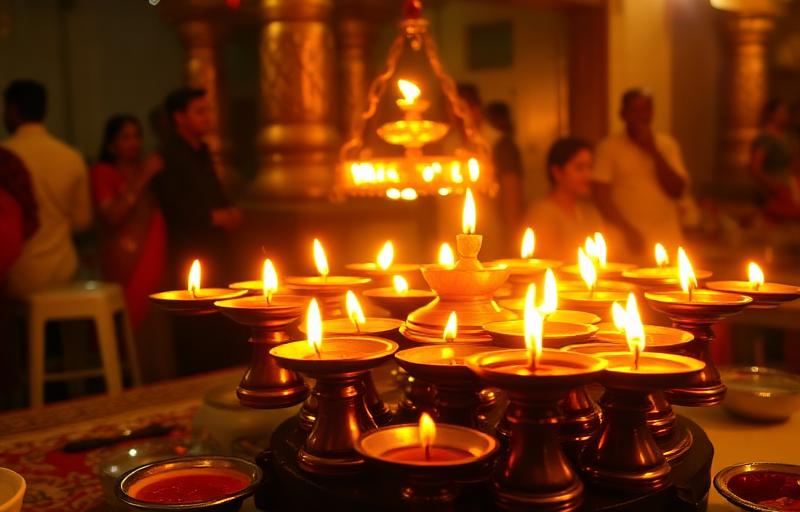
Morning water and an evening diya are the two anchors of daily Tulsi worship. Kartik month is considered especially significant for her, culminating in Tulsi Vivah.
A few niyam are widely observed: leaves are not plucked on Sundays, Ekadashi, or after sunset, and the plant is not watered immediately after a meal. Many families also pause touching the plant during a solar or lunar eclipse, resuming normal worship once it ends.
Common Mistakes to Avoid
- Plucking leaves carelessly on days when tradition asks for restraint, such as Ekadashi or Sunday
- Forgetting the evening diya, considered one of the most important parts of Tulsi worship
- Watering the plant with unclean hands or right after a meal
- Arguing or raising one's voice near the Tulsi plant, which households traditionally try to keep as a place of peace
Consistency matters more than elaborate ritual; a simple daily habit, kept up over years, is what tradition honours most.
The Takeaway
Tulsi worship asks for very little in terms of materials and a great deal in terms of daily devotion. A little water in the morning, a diya in the evening, and a respectful pause each day is enough to keep this centuries-old household practice alive.
Quick Answers
Why should Tulsi leaves not be plucked on Sundays or Ekadashi?+
Tradition holds that Tulsi observes a kind of fast or rest on these days, so leaves are not plucked then out of respect. Leaves needed for worship are usually gathered a day in advance.
What is the significance of lighting a diya near Tulsi in the evening?+
An evening diya near the Tulsi plant is considered one of the most important daily offerings in many households, believed to invite peace and positivity into the home.
Is Tulsi worship connected to Lord Vishnu?+
Yes, Tulsi is closely associated with Lord Vishnu in tradition, and this bond is central to why she is worshipped daily and honoured in the Tulsi Vivah ceremony during Kartik month.
About the author
Pandit Mahesh Trivedi · Festival Traditions & Panchang
Pandit Mahesh leads the festival-date and Panchang content on Vandnaa. He cross-references multiple regional panchangs (Drik, Vaishnava, Bengali, Marathi) for every festival date published on the site.
Meet the Vandnaa editorial team →