Why Every Hindu Home Must Have a Tulsi Plant
There is a quiet truth our grandmothers knew: a house without Tulsi is a house without Lakshmi.
In the Padma Purana it is written - 'जहाँ तुलसी का पौधा होता है, वहाँ यमदूत प्रवेश नहीं करते।' Where Tulsi grows, even Yamadoot (messengers of death) cannot enter.
Tulsi is not a plant. She is Vrinda Devi, an avatar of Mahalakshmi herself, married to Lord Shaligram (Vishnu) on Tulsi Vivah day. Worshipping her is equal to worshipping Lakshmi-Narayan together.
But here is what most people don't know: placing Tulsi in the wrong direction or breaking certain rules can convert blessings into dosh. A drying Tulsi is considered an extremely bad omen - it warns of upcoming family trouble.
In this guide we cover the right direction, vastu rules, watering days to avoid, the 9 sacred benefits, and how to keep Tulsi alive and thriving for years.
🙏 Set a daily Tulsi puja reminder in the Vandnaa App - just 2 minutes of jal arpan + diya at sunset brings Lakshmi's grace to your home.
The Right Direction & Place for Tulsi (Vastu Rules)
✅ Correct directions:
- North-East (Ishaan kona) - BEST. This is the direction of Vishnu and the source of positive energy. Tulsi placed here brings wealth, peace and good health.
- East - second best. Morning sunlight is the food of Tulsi.
- North - also auspicious. Brings prosperity.
❌ NEVER place Tulsi in:
- South direction - direction of Yama. Causes negative energy.
- South-East (Agni kona) - fire element clashes with Tulsi.
- Bedroom or bathroom - strictly forbidden.
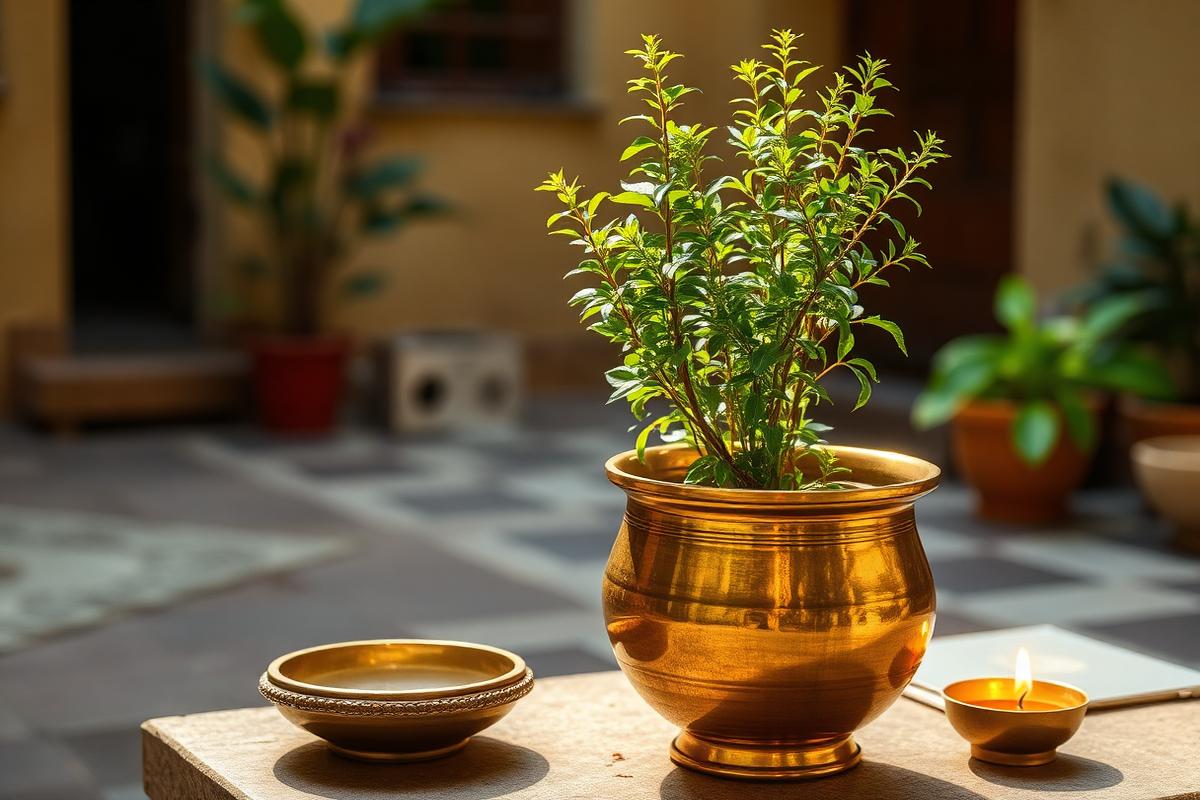
- On the ground directly - always keep on a raised platform (chabutra).
- Below a staircase - energy gets blocked.
Other vastu rules:
- Always keep an odd number of Tulsi plants (1, 3, 5).
- The pot should be clean and red/saffron coloured - never black.
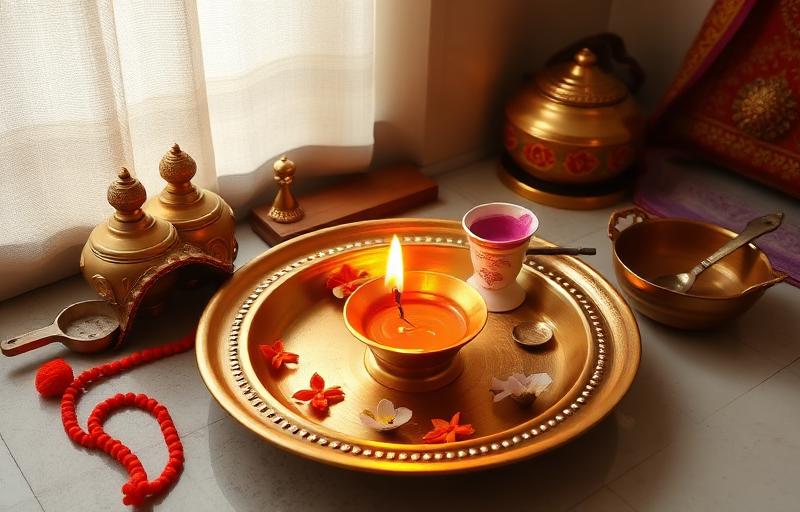
- Place a small diya near Tulsi every evening at sunset - this is when Lakshmi visits the plant.
- Keep a shaligram or Krishna idol nearby if possible.
- Never let dirty water, shoes or dustbin be near Tulsi.
Watering Rules + 9 Sacred Benefits of Tulsi at Home
🚫 Days you must NOT water Tulsi or pluck its leaves:
- Sunday - Tulsi maa rests this day
- Ekadashi (both)
- Solar/Lunar eclipse
- After sunset - never
- Tulsi Vivah day (water yes, pluck no)
Plucking leaves on these days is considered as serious as plucking Lakshmi's hair. If absolutely needed for puja, request gently and pluck before sunrise.
9 Sacred Benefits of Keeping Tulsi at Home:
1. Lakshmi-Narayan grace - wealth and harmony increase 2. Air purification - releases oxygen 20 hours/day, kills airborne bacteria 3. Mental peace - Tulsi's aroma reduces stress hormones (proven by science too) 4. Protection from negative energy & evil eye (nazar dosh) 5. Removes Vastu dosh in the home automatically 6. Improves immunity - chewing 2 leaves daily prevents cold, cough, fever 7. Helps in moksha - a Tulsi leaf in the mouth at death liberates the soul 8. Removes pitru dosh when offered to ancestors 9. Brings child blessing - couples wanting children should worship Tulsi daily
Daily 2-minute Tulsi puja: Morning - offer water + circumambulate 3 times. Evening - light a diya, fold hands and chant: 'महाप्रसाद जननी सर्व सौभाग्यवर्धिनी। आधि व्याधि हरा नित्यं तुलसी त्वं नमोऽस्तुते॥'
3 Types of Tulsi at Home - Which One is Right for You?
Not all Tulsi plants are the same. There are three main varieties kept in Hindu homes, each with a different spiritual role:
1. Rama Tulsi (Green Tulsi - Ocimum sanctum):
- Broad, bright-green leaves with a lighter fragrance
- Sacred to Lord Vishnu and Rama
- Best for general household worship, offering to Vishnu and making tirtham (sacred water)
- Most common in North and West India
2. Krishna Tulsi / Shyama Tulsi (Dark Purple Tulsi):
- Dark purplish leaves, stronger pungent fragrance
- Most sacred of all - directly associated with Lord Krishna
- Preferred for creating tulsi mala (beads), for Ekadashi worship, and for offering to Shaligram
- Considered more potent for medicinal and spiritual use
- Most common in Vrindavan and Vaishnav homes
3. Vana Tulsi (Wild Tulsi - Ocimum gratissimum):
- Grows in forests and open grounds, not traditionally kept at home
- Used in specific ritual preparations, ayurvedic medicines
- Not recommended for household puja
Which should you keep? If you are a Vishnu/Ram devotee - Rama Tulsi. If you are a Krishna devotee or want to make a tulsi mala - Krishna/Shyama Tulsi. For maximum spiritual benefit - keep both (in two separate pots) in the north-east corner.
Growing tip for flats: Both varieties need at least 6 hours of direct sunlight. A south or west-facing balcony will not work. The north-east balcony or near an east window is ideal. Use terracotta or red clay pots - Tulsi doesn't thrive in plastic pots.
Tulsi Maa: Complete Mantra, Stotra and Puja Guide
Tulsi Maa responds to three levels of devotion - a simple greeting, a dedicated mantra, and a full stotra:
Level 1 - Daily 30-second greeting (for everyone): Every morning, fold your hands in front of Tulsi and say: 'महाप्रसाद जननी सर्वसौभाग्यवर्धिनी। आधि व्याधि हरा नित्यं तुलसी त्वं नमोऽस्तुते॥' Meaning: O Tulsi - giver of great prasad, increaser of all fortune, daily remover of physical and mental disease - I bow to you.
Level 2 - Tulsi Beej Mantra (for those who want to establish a relationship): 'ॐ श्री तुलस्यै नमः॥' Chant 108 times, preferably in brahma muhurat. Do this for 11 consecutive days to build a spiritual bond.
Level 3 - Tulsi Kavach (for protection): 'तुलसी पातु मां नित्यं सर्वापद्भ्यो यशस्विनी। कीर्तिदा मुक्तिदा भक्तिप्रदा श्रीतुलसी नमोस्तुते॥' Recite while circumambulating Tulsi 3 times clockwise each morning.
Pradakshina (circumambulation) rules:
- Always clockwise (not anti-clockwise)
- Odd number of rounds: 1, 3, 5, 7 (never even)
- Do not step over roots or water that has been offered
- Ladies can do pradakshina even during periods - Tulsi Maa makes no restrictions
What to offer:
- Jal (water) - preferably Gangajal or clean water with a pinch of rock salt
- Tulsi ki mala (string a few dried tulsi leaves) - most sacred offering
- Saffron + kumkum tilak on the pot (not the plant)
- A small diya (sesame or ghee) at sunset every day
What NOT to offer: Milk, coconut, and raw rice are for Shiva and Devi - not Tulsi. She accepts only jal, flowers, and diya.
Tulsi Vivah 2026 - Date, Rituals and Why This Wedding is the Most Sacred
Tulsi Vivah 2026 falls on November 5, 2026 (Kartik Shukla Dwadashi). It is the symbolic marriage ceremony between Tulsi Maa (Vrinda Devi) and Lord Shaligram (Vishnu).
Why Tulsi Vivah happens: In the Puranas, Tulsi was a devoted woman named Vrinda, whose purity was her greatest power. After a series of divine events, she merged into a sacred plant - and Vishnu himself declared: 'I will marry Vrinda in plant form every year on Kartik Dwadashi. Whoever witnesses this wedding will receive the merit of marrying off their daughter.'
Ritual significance: Tulsi Vivah marks the end of Chaturmas (the 4-month rest period of Vishnu) and the beginning of the Hindu wedding season. No weddings are held during Chaturmas - they resume only after Tulsi Vivah.
How to perform Tulsi Vivah at home: 1. Decorate the Tulsi plant beautifully - dress her like a bride with a red dupatta, glass bangles, sindoor 2. Place a Shaligram or small Vishnu idol (or photo) next to her as the groom 3. Tie a sacred thread (kalava) between the two 4. Invite family and neighbours - reading Tulsi Vivah katha is merit-giving for all present 5. Light lamps around the pot - 5 or 11 diyas 6. Distribute prasad: mishri (sugar crystals) and panchamrit
Special benefit: Unmarried girls who participate in Tulsi Vivah are believed to receive the boon of a good husband soon. Couples participating receive the merit equivalent to performing Kanyadan (giving a daughter in marriage).
🙏 Set a Tulsi Vivah 2026 reminder in the Vandnaa App - it will notify you 7 days before with a full preparation guide.
Tulsi: What Modern Science Confirms About This 'Holy Basil'
Our ancestors called Tulsi Vishnu Priya (beloved of Vishnu) and Sarva Roga Nivarini (remover of all diseases). Modern pharmacological research has now validated many of these ancient claims:
1. Adaptogen (stress reducer): A 2012 study published in the Journal of Ayurveda and Integrative Medicine showed Tulsi significantly reduces cortisol (stress hormone) levels - matching the scriptural claim that her mere presence in the home brings mental peace.
2. Antimicrobial shield: Tulsi leaves release volatile compounds (eugenol, linalool, caryophyllene) that kill airborne bacteria and fungi. Research by CSIR-CIMAP confirmed that Tulsi can reduce harmful airborne microbes in a room by up to 40%. This validates why placing Tulsi near the entrance of a home was traditional - she literally purified the air.
3. Immunomodulator: Chewing 2–3 raw Tulsi leaves every morning (before eating) increases natural killer cell activity - the body's first line of defence. Clinical trials show significant improvement in repeated cold, cough, and upper respiratory infections.
4. Cardioprotective: Tulsi's ursolic acid content helps reduce LDL cholesterol and blood pressure. A 6-week trial showed measurable reduction in blood glucose in type-2 diabetic patients.
5. Oxygen production: Tulsi is unique in releasing oxygen for 20 hours a day (unlike most plants that stop at night). This is why she is kept in the open courtyard - she aerates the entire home.
How to consume:
- 2–3 raw leaves on empty stomach, morning
- Tulsi kadha (3 leaves + ginger + black pepper boiled in water) during cold and flu
- Never chew on Sundays or Ekadashi - traditional rule, also practical (plants rest and chemical composition shifts slightly)
🙏 Vandnaa App includes guided Tulsi puja audio and the Tulsi Stotra with pronunciation guide - set your daily morning reminder today.
What People Ask Most
What does it mean if my Tulsi plant keeps dying?+
Shastra says a drying Tulsi is a warning sign - either the home has vastu dosh, negative energy, or upcoming family trouble. Practically, it could also mean wrong direction, overwatering or lack of sunlight. Move her to north-east, water only in morning, and start daily evening diya. If she still dries, immerse the dried plant in a flowing river - never throw in dustbin.
Can we keep Tulsi inside the house or only outside?+
Both are allowed if direction is correct. Outside in the courtyard (aangan) facing north-east is traditional and best. If you live in a flat, place her in the north-east balcony or near a north-east window where she gets morning sunlight. Never inside the bedroom, bathroom or kitchen.
Is it true that women should not water Tulsi during periods?+
This is a traditional custom followed in many households as a matter of personal hygiene rest, not because the woman is impure. Tulsi maa is herself a woman - she does not reject anyone. During those days, simply ask another family member to do jal arpan and diya. After 4 days, resume normally with full devotion.
About the author
Dr. Suresh Iyer · Vastu Shastra & Jyotish, 18+ years
Dr. Suresh has practiced traditional Vastu and basic Vedic Jyotish for over 18 years across South India. He contributes the Vastu, direction, and home-puja layout guides on Vandnaa.
Meet the Vandnaa editorial team →