What Upanayan Means and Marks
Upanayan comes from Sanskrit roots meaning to lead near or to bring close, and it traditionally described the moment a child was formally led toward a guru to begin structured spiritual and Vedic education. Commonly known today as the janeu ceremony, after the sacred thread (yajnopavita) central to the ritual, Upanayan is counted among the sixteen classical samskaras and has historically been regarded as marking a person's second birth, giving rise to the term dwija, meaning twice-born, applied to those who have undergone it.
The idea behind this second birth is worth sitting with rather than skimming past: the first birth is physical, given by one's parents, while the second is understood as an intellectual and spiritual birth, given by the guru who initiates the child into disciplined learning and into the Gayatri Mantra, considered one of the most powerful and central verses in the Vedic tradition. From this point forward, the child was traditionally expected to observe brahmacharya, a period of disciplined studenthood, celibacy and focus on learning, before eventually returning to household life.
It is worth being direct about something important upfront: historically, access to Upanayan was tied closely to varna (traditional social class) and was primarily performed for boys in specific communities, most closely associated with the Brahmin community though also practised among some other groups, a structure that reflected the social organisation of a much older era. This history is a meaningful part of understanding the ceremony honestly, and it connects directly to how the practice has evolved, sometimes significantly, in the centuries since, a topic this guide addresses later on with the nuance it deserves.
At its core, though, the ceremony's founding idea, that formal learning and spiritual discipline deserve their own marked beginning, is one many families across different backgrounds continue to find meaningful today, even where the specific ritual form has adapted.
Historical Significance: Entry Into the Gurukul System
In classical Vedic society, Upanayan was the formal doorway into the gurukul system, the residential education model where a student left home to live and study under a guru, often for many years, learning scripture, philosophy, and practical skills through direct, close mentorship rather than a fixed classroom curriculum. The ceremony itself was the recognised threshold between an unstructured childhood and this new phase of disciplined studenthood, called brahmacharya ashrama, the first of the four traditional life stages (ashramas).
Traditional texts specify different ages for Upanayan depending on varna, commonly cited as around age eight for Brahmins, eleven for Kshatriyas and twelve for Vaishyas, reflecting the social structuring of that era, though these specifics were never applied with perfect uniformity across every region and period, and considerable variation existed even within classical times. What mattered consistently across these variations was the underlying transition being marked, formal entry into serious learning, rather than the exact age itself.
The Gayatri Mantra initiation at the heart of the ceremony deserves particular note. This mantra, addressed to Savitr, the solar deity associated with illumination and understanding, is treated in the tradition as a request for clarity of intellect, and its transmission from guru to student at Upanayan was considered the formal beginning of the student's inner spiritual education, distinct from and prior to their study of specific texts.
- Upanayan opened the gurukul phase of structured, residential Vedic education
- Traditional texts specify varying ages by varna, though practice was never perfectly uniform
- The Gayatri Mantra initiation was the ceremony's spiritual centrepiece
- Brahmacharya, the studenthood phase, was the first of four traditional life stages that followed Upanayan
This historical education system, while it looked very different from a modern school, shared one clear intention with education systems in every era: marking the beginning of a young person's serious intellectual and moral formation with appropriate ceremony and expectation.
The Sacred Thread: What the Janeu Represents
The yajnopavita, popularly called janeu, is a cotton thread consisting of three strands twisted together, worn diagonally across the body from the left shoulder to the right hip. Each of its three strands carries layered symbolic meaning across different interpretive traditions, most commonly read as representing three fundamental debts (rinas) a person owes across their lifetime: a debt to the divine (deva rina), a debt to the sages and teachers (rishi rina), and a debt to one's ancestors (pitru rina). Other traditions read the three strands as representing the three gunas (qualities of nature: sattva, rajas and tamas) or as an invocation of the goddess Gayatri, Savitri and Saraswati together.
The thread is treated with considerable practical and ritual care once worn. It is traditionally changed on specific occasions, including annually during the festival of Raksha Bandhan or the specific observance of Upakarma in some traditions, and after events considered ritually impure, such as a death in the family. Wearers traditionally adjust how the thread is worn, looped around the ear, for instance, during certain bodily functions, out of respect for its sanctity, a small but historically significant daily practice for those who observe it strictly.
- Three strands are most commonly read as three lifelong debts: to the divine, to teachers, and to ancestors
- The thread is worn diagonally from the left shoulder to the right hip
- It is traditionally replaced on specific occasions such as Raksha Bandhan or after ritual impurity
- Wearing and caring for the thread is understood as a continuous, daily reminder of the commitments made at Upanayan, not a one-time ritual object
For those who wear it, the janeu functions less as jewellery or decoration and more as a quiet, physical reminder, worn against the skin every day, of the specific promises and responsibilities the wearer formally took on during their Upanayan ceremony.
The Traditional Vidhi in Brief Overview
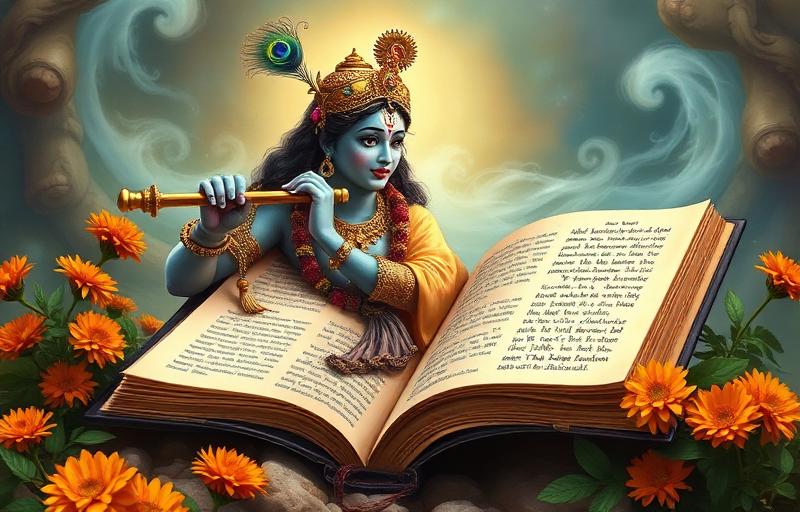
A full traditional Upanayan ceremony is more elaborate than most other samskaras and typically spans several key stages, guided closely by a priest and, ideally, involving the family's chosen guru or a learned Brahmin acting in that role.
- Preparatory rites: including a purification bath and, in many traditions, a mundan (head-shaving) performed the same day or shortly before, symbolising a fresh start
- Sankalp and invocation: the family and child state their intention, followed by invocations to Ganesh and other deities for an auspicious ceremony
- Investiture of the sacred thread: the priest or officiating guru ceremonially places the yajnopavita on the child for the first time, along with a waist thread (kamarbandh) and sometimes a deer skin or cloth in traditional versions
- Gayatri Mantra initiation: considered the spiritual heart of the ceremony, where the mantra is transmitted from guru to student, often whispered directly into the ear, marking the beginning of the child's formal spiritual education
- Bhiksha (symbolic alms-seeking): in a ritual rich with humility, the child, dressed simply, symbolically seeks alms from family members present, traditionally beginning with the mother, representing the humility expected of a student entering serious learning
- Blessings and closing prayers: elders and the presiding priest bless the child, followed by a closing aarti and, typically, a family celebration
The bhiksha ritual in particular carries a striking, often moving symbolism: a child from even a prosperous family formally asking their own mother for alms, a deliberate, humbling reminder that a student's identity, however privileged their background, begins in humility rather than status.
Who Observes Upanayan Today, and How Practice Varies
It would not be honest to describe Upanayan today as a single, uniform practice, because it genuinely is not, and this variation deserves respectful acknowledgment rather than being smoothed over.
The ceremony remains most consistently observed today within Brahmin families and certain other communities that have historically maintained the tradition closely, often still tied to specific life events such as a wedding, where performing Upanayan beforehand, sometimes even on the same day for practical reasons, has become common in parts of India. In many other Hindu communities, the ceremony has become less frequent over recent generations, observed occasionally or symbolically rather than as an expected milestone, while some families have set the tradition aside entirely without it affecting their broader religious practice or identity in any way.
At the same time, the ceremony has also become a site of thoughtful reform in some circles. A number of families and progressive religious organisations today choose to perform Upanayan for daughters as well as sons, or adapt the ceremony's language and structure to reflect more contemporary values around gender and access to learning, viewing the ceremony's core idea, that formal education and spiritual discipline deserve to be marked and honoured, as something that need not be limited by the social structures of an earlier era.
- Most consistently observed today in Brahmin and select other communities, often linked practically to wedding timing
- Frequency has declined broadly across many other communities over recent generations
- Some modern and reform-minded families now perform the ceremony for daughters as well as sons
- There is no single "correct" modern practice; regional, community and family tradition should be your primary guide
Whatever form a family chooses, or chooses not to observe, this variation reflects a living tradition continuing to be interpreted by the people who carry it forward, rather than a fixed, unchanging rulebook, and neither observing it fully nor setting it aside reflects on the sincerity of a family's broader faith.
What the Ceremony Can Mean Today, Beyond Its Origins
Set apart from its historical ties to varna and its traditionally narrow eligibility, the core idea inside Upanayan, that beginning a serious, disciplined pursuit of learning is worth formally recognising, resonates broadly regardless of which specific community observes it. A ceremony built around committing to lifelong learning, humility before knowledge, and gratitude toward one's teachers, family and tradition is not, at its heart, an idea limited to any single group.
Many families who do observe Upanayan today describe its value less in terms of caste identity and more in terms of character formation: a formal, memorable moment where a child is asked to take their own education and spiritual growth seriously, witnessed and blessed by the people who love them. The Gayatri Mantra itself, a prayer for clarity of intellect rather than for any specific worldly outcome, reflects this framing well, an appeal for wisdom that belongs to no single tradition's monopoly on the value of a clear, disciplined mind.
- The ceremony's core value, honouring the start of serious learning, transcends its historical eligibility structure
- Many contemporary families emphasise character and discipline over lineage in how they frame it to their children
- The Gayatri Mantra's appeal for intellectual clarity holds broad, non-exclusive resonance
- Understanding both the history and the evolving present of a tradition, honestly and without judgment, is itself a form of the discernment the ceremony was always meant to cultivate
📿 Vandnaa's app includes the Gayatri Mantra with its meaning and correct pronunciation, along with a simple explainer on the samskaras, for anyone, observing this specific tradition or not, who wants to understand and connect with this layer of Hindu spiritual thought.
Like many of the sixteen samskaras, Upanayan's outer form has adapted considerably across centuries and communities, but the inner aspiration it was built to mark, a mind opening deliberately toward wisdom, remains worth understanding on its own terms.
Frequently Asked Questions
What is the difference between Upanayan and the janeu ceremony?+
They refer to the same samskara. Upanayan is the formal Sanskrit name for the ceremony as a whole, while janeu refers specifically to the sacred thread (yajnopavita) worn as part of it, and the ceremony is often called by this more common name.
What do the three strands of the sacred thread represent?+
The three strands are most commonly interpreted as representing three lifelong debts a person owes: to the divine, to their teachers and sages, and to their ancestors. Other traditions read them as representing the three gunas or an invocation of specific goddesses.
At what age was Upanayan traditionally performed?+
Classical texts cite varying ages depending on varna, commonly around age eight for Brahmins, eleven for Kshatriyas and twelve for Vaishyas, though practice was never perfectly uniform, and today many families choose timing based on convenience, often linking it to an upcoming wedding.
Do only certain communities perform Upanayan today?+
The ceremony is most consistently observed today in Brahmin families and select other communities that have maintained the tradition. Many other communities observe it less frequently or have set it aside, while some modern families now extend the ceremony to daughters as well. Practice varies significantly and is best guided by your own family and regional custom.
What is the significance of the Gayatri Mantra in this ceremony?+
The Gayatri Mantra, transmitted from guru to student during Upanayan, is a prayer for clarity of intellect and wisdom, addressed to the solar deity Savitr. Its initiation is considered the spiritual centrepiece of the ceremony, marking the formal beginning of the child's inner spiritual education.
About the author
Acharya Vinaya Kapoor · M.A. Sanskrit, Mantra & Stotra Studies
Acharya Vinaya holds an M.A. in Sanskrit from Banaras Hindu University and writes the mantra and stotra commentary on Vandnaa. Her focus is on accurate pronunciation, traditional context, and helping modern readers connect with classical texts.
Meet the Vandnaa editorial team →