
Valmiki: From Ratnakar to the Adi Kavi
Sage Valmiki is revered in Hindu tradition as the Adi Kavi, the first poet, whose Ramayana became the foundation for countless later retellings of Rama's story. Tradition holds that before his life as a sage, he was known as Ratnakar, and it was a meeting with the sage Narada that turned him toward deep tapasya and transformation.
Valmiki's ashram, most widely identified by tradition with Bithoor on the banks of the Ganga near Kanpur in Uttar Pradesh, holds a special place in the Ramayana's own story, since it was here, tradition says, that the epic itself came to be written.
The Katha: Sita's Refuge and Luv-Kush's Birth
According to tradition, it was to Valmiki's ashram that Sita came when circumstances led her away from Ayodhya during her pregnancy, and it was here that she gave birth to and raised her twin sons, Luv and Kush, under the sage's care and protection.
Valmiki is remembered as having taught the boys the Ramayana itself, which they later recited before Rama's own court in Ayodhya, moving the assembly to recognise them as Rama's sons. Tradition also holds that the epic's very first verse came to Valmiki spontaneously, in grief, after he witnessed a hunter kill one of a pair of krauncha birds, and that this sorrow flowed naturally into the meter that shaped the entire Ramayana.
Why Valmiki's Ashram Matters to Devotees
Valmiki's ashram is treasured as a place of transformation, compassion and creation, honouring the sage through whom the Ramayana reached humanity.
- Devotees see Valmiki's own journey from Ratnakar to sage as proof that sincere tapasya can transform any life
- The ashram is revered as a place of shelter for Sita during a difficult period, a reminder of dharma's protection of the vulnerable
- Pilgrims honour Valmiki as Adi Kavi, whose compassion for a grieving bird gave rise to devotional poetry itself
- The site is closely tied to Luv-Kush, celebrated as young exemplars of learning and devotion
Darshan Guide: Bithoor's Sacred Sites
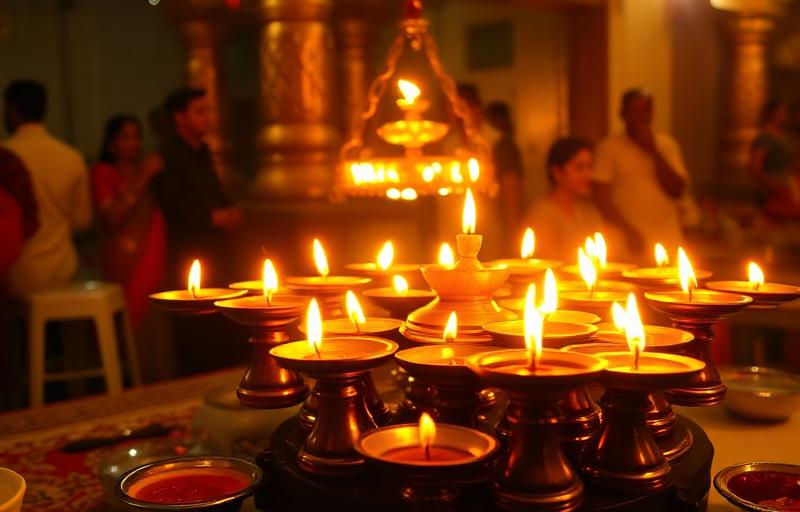
Bithoor today is home to Valmiki Ashram, Brahmavart Ghat on the Ganga, and a Luv-Kush temple, each open through daylight hours for darshan in the customary manner of most riverside shrines. The ghats here remain simple and contemplative rather than crowded, suiting the site's association with quiet ashram life.
Pilgrims often combine a Bithoor visit with the wider Kanpur area, and numbers rise somewhat during Ram Navami and the month of Kartik.
How to Reach Bithoor (Valmiki Ashram)
Bithoor lies close to Kanpur in Uttar Pradesh, which has its own airport and is a major railway junction well connected across North India. Local transport from Kanpur city covers the short distance to Bithoor easily.
A Prayer to Offer and the Takeaway
Devotees at Valmiki Ashram often offer reverence to the sage while chanting Om Shri Valmikaye Namah or the opening verses of the Ramayana itself.
Valmiki's ashram reminds devotees that even the deepest sorrow, met with sincerity, can be transformed into something that uplifts generations. Worship at such sites is an act of faith and love, not a transaction.
Quick Answers
Why is Valmiki called the Adi Kavi?+
Valmiki is called Adi Kavi, the first poet, because tradition holds that the Ramayana he composed was the first work written in shloka (verse) form, becoming the foundation of Sanskrit poetic tradition.
Where is Valmiki's ashram traditionally located?+
Tradition most widely identifies Valmiki's ashram with Bithoor, on the banks of the Ganga near Kanpur in Uttar Pradesh.
What happened to Sita at Valmiki's ashram?+
Sita found refuge at Valmiki's ashram, where she gave birth to and raised her twin sons, Luv and Kush, under the sage's protection and guidance.
About the author
Pandit Ravindra Sharma · Vedic Rituals & Bhakti, 22+ years
Pandit Ravindra is the Vandnaa editorial team's resident specialist on aarti, chalisa, and daily devotion. He has performed home and temple pujas across Varanasi and Delhi for over two decades and contributes the bhakti-focused articles on this site.
Meet the Vandnaa editorial team →