The Day Saraswati Was Born From Brahma's Throat
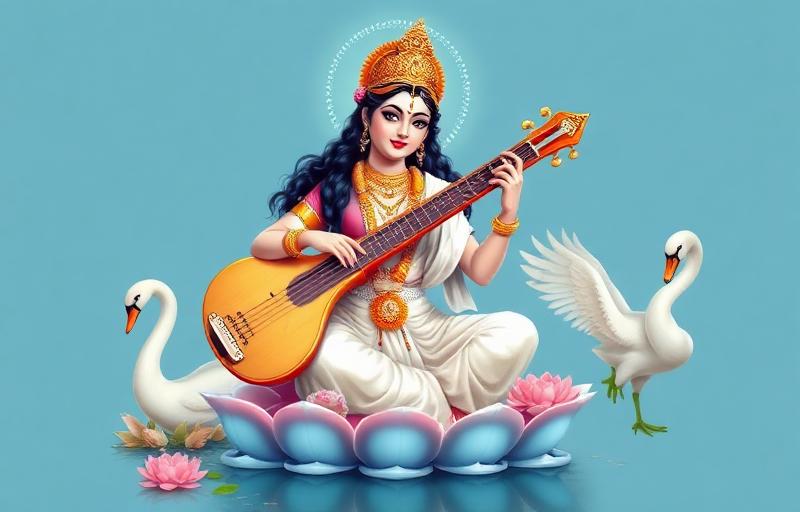
When Brahma created the universe, He looked at it and felt something was missing. The world had matter, life, and form - but no knowledge to understand any of it. He concentrated. From His throat (the seat of speech) emerged a stunning goddess in white, holding a veena (musical instrument) in two hands, a book in the third, a mala in the fourth.
'I am Saraswati,' she said. 'Without me, knowledge sleeps. With me, the universe wakes.'
That day was Vasant Panchami - the 5th day of the bright fortnight of Magh month. Vasant Panchami 2027 falls on Monday, 1 February 2027. It marks the start of spring (Vasant Ritu), and is celebrated as Saraswati's birthday.
Vasant Panchami is THE festival for students, artists, musicians, writers, dancers, scholars, and anyone whose work depends on knowledge or creativity. Children learning to read are traditionally given their first letters today (the Vidya Aarambham ceremony in Kerala/Bengal). Pen, paper, and books are placed before Saraswati's idol overnight - and she 'blesses' them.
The color yellow dominates because yellow represents both the spring blossoms (mustard fields, marigolds) and the knowledge-light Saraswati gives. Wearing yellow on Vasant Panchami is auspicious; eating yellow food (kesari kheer, basanti pulao, ladoos) is traditional.
🙏 The Vandnaa App's Vasant Panchami module includes the Saraswati Vandana audio, the 108 names of Saraswati, and a 'first letter' mantra ceremony you can do for any new learner in your family.
Vasant Panchami 2027 - Muhurat & Step-by-Step Puja Vidhi
📅 Date: Monday, 1 February 2027 🕒 Panchami Tithi Begins: 8:14 AM, 31 January 2027 🕒 Panchami Tithi Ends: 5:42 AM, 1 February 2027
Best Puja Muhurat: 7:09 AM – 12:35 PM, 1 February 2027 (5 hours, 26 min) Madhyahna Saraswati Puja: 11:55 AM – 12:39 PM (most powerful) Avoid: Rahu Kaal (8:30 AM – 9:55 AM) on Monday - wait until 9:55 AM if doing morning puja, OR start before 8:30 AM at sunrise.
Items needed:
- Saraswati idol or photo (printed photo also works)
- Yellow cloth, yellow flowers (marigold, mustard flowers - basant ke phool), yellow bangles
- White/yellow saree for the idol
- Pen, notebook, your most important books to be 'blessed'
- Veena, harmonium, or any musical instrument (if available)
- Boondi, kesari kheer, basanti pulao, malpua (yellow bhog)
- Roli, kumkum, akshat, white chandan, panchamrit, Ganga jal
- Ghee diya, dhoop
Step 1 - Snan & Sankalp (6:30 AM): Bathe before sunrise. Wear yellow or white clothes. Place Saraswati idol on a yellow cloth on a wooden chowki facing east. Decorate with yellow marigolds and mustard sprigs.
Sankalp: 'I, [name], on this Magha Shukla Panchami, do Saraswati puja for the awakening of knowledge, removal of mental dullness, success in studies/career/art, and the blossoming of my hidden talents. Om Saraswatyai Namah.'
Step 2 - Saraswati Avahan (Inviting): Light the diya. Place Ganga jal on the idol. Apply white chandan tilak (Saraswati prefers white chandan over kumkum). Offer yellow flowers. Chant the Saraswati Vandana:
'Yaa Kundendu Tushaara Haara Dhavalaa, Yaa Shubhra Vastra Aavruta; Yaa Veenaa Vara Danda Mandita Karaa, Yaa Shveta Padmaasanaa; Yaa Brahma Achyuta Shankara Prabhritibhihi, Devaihi Sadaa Vandita; Saa Maam Paatu Saraswatee Bhagavatee, Nih-shesha Jaadyaa-Pahaa.'
→ The goddess fair as jasmine, the moon, and snow; clad in white; holding the veena; seated on the white lotus; eternally praised by Brahma, Vishnu, Shiva, and devas - may that Goddess Saraswati protect me and remove my dullness completely.
Step 3 - Place Books, Pen, Instruments before Saraswati: This is essential. ALL the tools of your knowledge work - books, notebooks, pen, laptop, musical instruments, art supplies, dance ghungroo - are placed at her feet OR beside her idol. They will be blessed for the entire year. The Vandnaa App allows you to do a 'symbolic placement' - show your phone screen to her image and your phone gets blessed too.
Step 4 - 7 Mantras Recitation: Chant the 7 Saraswati mantras (next section).
Step 5 - Yellow Bhog Offering: Offer kesari kheer, basanti pulao, boondi, kesar peda, malpua. Eat together as family after offering.
Step 6 - Vidya Aarambham (for new learners): If a child in your family is starting school or learning to read/write/sing this year, this is THE day. Hold the child's hand and write 'Om' or 'Saraswati' on a clean slate or paper using turmeric paste or kumkum. The first letters in their life are sacred. They will retain knowledge powerfully thereafter.
Step 7 - Aarti & Closing: Sing the Saraswati Aarti. Distribute prasad. Books and pens stay with Saraswati overnight (place them around the idol). Next morning, take them back - they are now blessed.
7 Saraswati Mantras for Knowledge, Memory & Success
1. Saraswati Beej Mantra (most basic, chant 108x) ॐ ऐं सरस्वत्यै नमः Om Aim Saraswatyai Namah → The seed mantra of Saraswati. The syllable 'Aim' (pronounced 'eye-m') is her bija - chanting it stimulates the throat chakra (Vishuddha) and sharpens speech, memory, and clarity.
2. Saraswati Gayatri Mantra ॐ वाग्देव्यै विद्महे, कामराज्यै धीमहि। तन्नो देवी प्रचोदयात्॥ Om Vaag-Devyai Vidmahe, Kaama-Rajyai Dhimahi, Tanno Devee Prachodayat. → Awakens the inner Saraswati consciousness. Best chanted at Brahma muhurat for 21 days before any major exam.
3. Vidyarambha Mantra (for any new learning) सरस्वति महाभागे, विद्ये कमललोचने। विद्यारूपे विशालाक्षि, विद्यां देहि नमोऽस्तु ते॥ Saraswati Mahabhage, Vidye Kamala-lochane, Vidya-rupe Vishalakshi, Vidyam Dehi Namostute. → O great Saraswati, lotus-eyed knowledge personified, give me knowledge - I bow to you. Best for the start of a new course, semester, project, or skill-learning.
4. Memory Power Mantra (specifically for retention) ॐ ह्रीं ऐं ह्रीं श्रीं सरस्वत्यै नमः Om Hreem Aim Hreem Shreem Saraswatyai Namah → The combined seed mantra for memory + intelligence + speech. Chant 11 times before any study session. Especially helpful for medical, engineering, law students dealing with vast syllabi.
5. Speech Improvement Mantra (for stutterers, public speakers) ॐ ह्रीं ऐं ह्रीं सरस्वत्यै स्वाहा Om Hreem Aim Hreem Saraswatyai Swaha → Specifically removes vocal blocks and hesitation. Chant before any speech, presentation, interview, or public performance.
6. Sharad Tilakam Saraswati Stotram (most powerful - 21 verses) 'Sharade sharadam-bhojam vadane sharadojvalam, samuda dhratu vipada vighnam vighnesh-am-bharatim varadam...' → A complete 21-verse stotram. Recitation removes all knowledge obstacles and is recommended for university students. Full Sanskrit text + audio in Vandnaa App. Takes 8 minutes to recite. Best done weekly on Mondays.
7. Saraswati Closing Vandana श्वेताम्बरधराम् देवीं शुभ्रपद्मासनाश्रिताम्। वीणापुस्तकहस्ताभ्यां विद्यादात्रीं नमाम्यहम्॥ Shvetambara-dharaam Deveem, Shubhra-padmaasana-aashritaam, Veenaa-pustaka-hastaabhyaam, Vidyaa-daatreem Namaamy-aham. → I bow to the Goddess clad in white, seated on the pure lotus, holding veena and book in her hands, the giver of all knowledge. Chant after completing any study session - it 'seals' what you have learned.
🎧 All 7 mantras with proper Sanskrit pronunciation, the full Sharad Tilakam Stotram audio, and a 'before-exam' guided 21-day program available on the Vandnaa App.
Why Yellow, Yellow Foods & 5 Vasant Rituals Beyond Puja
Why yellow dominates Vasant Panchami:
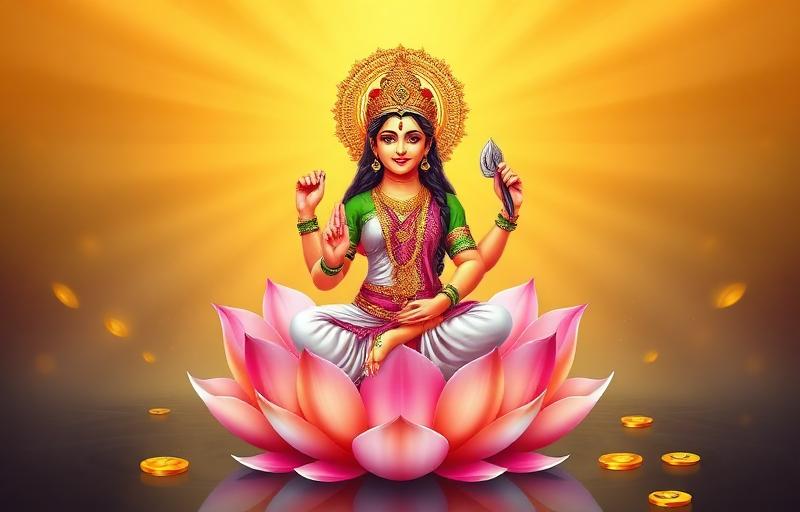
- Symbolises mustard fields in full bloom - mustard is the dominant winter crop in north India, fields turn into a yellow ocean by late Jan/early Feb
- Saraswati's preferred color - the goddess associated with knowledge, sun, and consciousness
- Promotes mental clarity - yellow is scientifically known to stimulate the prefrontal cortex (decision-making, learning)
- Removes lethargy of winter - the body has been in low-light mode for 4 months; yellow re-activates serotonin and motivation
5 Yellow Foods to Eat on Vasant Panchami: 1. Kesari Kheer - saffron-flavoured rice pudding 2. Basanti Pulao - rice cooked with turmeric, raisins, cashews 3. Boondi (sweet) - yellow chickpea-flour pearls 4. Malpua - yellow saffron-cardamom pancake 5. Rajbhog (yellow variety) - saffron sweet, especially Bengali specialty
5 Vasant Panchami Rituals Beyond Saraswati Puja:
1. Vidya Aarambham (First Letters): If a child is starting school this year, today is the day they 'write' their first letter (usually Om or their name) under a teacher's guidance. Done at Saraswati's feet, the child's learning journey is blessed for life.
2. Akshara Abhyasa (Bengali version): Bengalis perform a similar ritual where a child's index finger is dipped in honey and used to trace letters on a slate. Each letter is then written by the teacher. Tradition says this is why Bengali children become exceptional readers.
3. Holi Stambh Ropan (start of Holi): In some North Indian villages, the Holi pole (Holika Dahan structure) is symbolically erected on Vasant Panchami - exactly 40 days before Holi (which falls on Phalguna Purnima). Vasant Panchami marks the 'announcement' of spring; Holi marks the 'celebration' of spring's full arrival.
4. Kite-Flying: In Punjab and Gujarat, kite-flying continues from Makar Sankranti through Vasant Panchami. Some communities consider Vasant Panchami the LAST day to fly kites until next winter.
5. Marriage Bookings: Vasant Panchami is one of the most auspicious days for marriage announcements and lagna ceremonies. Parents often choose this day to formally announce their child's marriage. The energy of fresh growth (vasant) and divine knowledge (Saraswati) blesses the new union.
Saraswati's Many Forms: Goddess of Knowledge, Music, Art, and Spring
Saraswati is among the most complex and beloved deities in the Hindu pantheon - she is simultaneously the goddess of knowledge, music, poetry, art, speech, and spring. Understanding her different forms reveals the ancient Hindu understanding that all these domains are not separate but aspects of a single creative intelligence.
Sharada (शारदा) - the autumn goddess: Sharada means "of the autumn season" - but also "bestower of gifts." The Kashmiri Sharada Peeth was one of India's great seats of learning, dedicated to this form. Sharada is associated with the pure, clear air of autumn (Sharad Ritutu) - when the monsoon has cleared and the sky is at its clearest and highest. She represents knowledge that comes after turbulence settles.
Veenavadini (वीणावादिनी) - the music maker: Perhaps the most iconic form - Saraswati playing the veena (a stringed instrument similar to a lute). The veena represents the spinal column with its seven chakras, and the music produced represents the harmonic relationship between cosmic levels of consciousness. Playing music is thus a direct spiritual practice, not merely entertainment.
Vagdevi (वाग्देवी) - goddess of speech: "Vak" means speech - the power of articulation, language, and the word. The Hindu tradition holds that the universe was created through sound (Nada Brahman), and Saraswati as Vagdevi is the creative principle behind all speech and language. This is why all knowledge - which is transmitted through language - falls under her domain.
Bharati (भारती) - goddess of learning: Bharati means "speaker" and also "daughter of Bharat." This form is specifically associated with Vedic learning, recitation, and the oral tradition. The traditional Vedic system of education, in which students memorized vast quantities of text through precise recitation techniques, was under Bharati's blessing.
Saraswati as the river: Before becoming primarily a goddess of learning, Saraswati was a mighty river in ancient India - mentioned extensively in the Rigveda. The river is now believed to flow underground (or to have dried up due to tectonic shifts around 2000 BCE). This lost but sacred river - the Vedic homeland's most important waterway - became the goddess of knowledge in a beautiful mythological transformation: the river that nourished the earliest civilization became the goddess who nourishes the mind.
Saraswati and Lakshmi - the complementary pair: Hinduism holds that Saraswati (knowledge) and Lakshmi (wealth) are rarely found together in the same person - a folk saying runs "where Saraswati stays, Lakshmi leaves, and vice versa." This reflects the observed tension between pure intellectual pursuit and material acquisition. The higher synthesis is Brahmavidya - the knowledge that leads to complete liberation, which Vishnu (who holds both Lakshmi and Saraswati) represents.
The Vandnaa app provides Saraswati mantras in each of her forms, with explanations of the specific attributes invoked by each name - helping devotees connect with the specific quality of divine intelligence they need.
Vidyarambha and Kala Initiation on Vasant Panchami: Starting the Learning Journey
Vasant Panchami is the most auspicious day to begin any form of learning - from a child's first letters to an adult's resumption of music lessons to a professional's beginning of a new specialization. The tradition of Vidyarambha (beginning of learning) on this day is ancient and rich with specific rituals.
Vidyarambha for children: The formal first-writing ceremony for young children (typically 3-5 years old) is performed on Vasant Panchami. The child, dressed in yellow, is seated before a plate of rice or sand. A parent or the family priest guides the child's right index finger to write "Sri" (ॐ) or the first letter of their native language. This first mark is made while the family recites the Saraswati mantra. The ceremony is considered an invitation to the goddess to take up residence in the child's mind.
Beginning music or dance: Vasant Panchami is the traditional day to begin training in classical Indian music (Hindustani or Carnatic) or dance (Bharatanatyam, Kathak, Odissi). The student sits before the guru and receives the first lesson - a note, a hand gesture, a shloka. The formal beginning on this day is held to ensure the goddess's blessing on the artistic journey.
For adults resuming learning: The tradition applies equally to adults. Beginning Sanskrit study, resuming an instrument after years away, starting formal spiritual study, beginning a new academic certification - all are especially potent when initiated on Vasant Panchami.
The "Kalambha" ritual: In some traditions, on Vasant Panchami evening, students formally offer their books, instruments, and learning tools to Saraswati for a day's blessing. The books and instruments are placed at the base of the Saraswati image, where they remain overnight, receiving her blessing. The next morning (Shashthi), they are retrieved and the learning resumes - now blessed and renewed.
Saraswati Puja in schools and colleges: In many Indian states, particularly West Bengal and Odisha, Saraswati Puja is the most important college festival. Students organize elaborate pandals (temporary shrines), bring their books and artistic instruments, and perform puja together. The day is considered a holiday from regular study - paradoxically, the goddess of knowledge asks her devotees to stop studying and worship. The teaching: knowledge is a gift, not a possession.
What to offer Saraswati:
- White flowers (she prefers white - purity of knowledge)
- Saraswati-specific flowers: white chrysanthemum, jasmine, tuberose
- Honey (associated with the sweetness of knowledge)
- Yellow items (the color of Vasant Panchami - the blooming mustard fields)
- Books, pens, and instruments
The Vasant Panchami evening Saraswati Aarti: Conclude the day's celebrations with the Saraswati Aarti, which should be sung or recited with the family, honoring all the learning that has been received and praying for its deepening.
The Vandnaa app provides Vidyarambha ceremony guidance, Saraswati mantras for beginning new learning journeys, and the complete Saraswati puja vidhi for home or school observation.
The Yellow Color and Spring Significance of Vasant Panchami
Vasant Panchami is inseparable from the color yellow and the arrival of spring. Understanding why deepens the sensory experience of the festival and connects it to the broader Hindu understanding of seasonal spirituality.
Why yellow dominates: Vasant Panchami falls when the mustard fields of North India are in full bloom - seas of brilliant yellow stretching to the horizon. This natural spectacle was the original inspiration for the festival's color. Yellow in Hindu color symbolism represents knowledge, learning, and auspiciousness. It is the color of Saraswati's sari in many traditional depictions, of the turmeric used in puja, and of the flowering mustard that signals winter's end.
Wearing yellow on Vasant Panchami: The tradition of wearing yellow clothing on this day is not merely festive - it is a conscious alignment with the season's energy. Yellow corresponds to the solar plexus chakra (Manipura), which governs intellect, will, and the fire of learning. By dressing in yellow, devotees physically invoke the energy of knowledge and spring.
The flowers of Vasant: Spring in India brings specific flowers whose appearance on Vasant Panchami is itself considered auspicious: marigolds (genda phool), jasmine (chameli), mustard flowers (sarson ke phool), and sometimes roses. The marigold is particularly sacred to Saraswati and to many other deities.
Saraswati's mount - the white swan: Saraswati rides a white swan (hansa), which represents the capacity to discriminate between the real and the unreal - the swan is said to be able to separate milk from water when both are mixed, keeping the milk and leaving the water. This quality of discernment (viveka) is the essence of wisdom. The white swan also represents purity - knowledge untainted by desire or agenda.
The spring wind and creative energy: Vasant Ritu (spring) is celebrated in Hindu tradition as the time when the earth's creative energy surges. The Atharvaveda contains hymns specifically addressing Vasant's power to stimulate growth, beauty, and fertility. The Gandharvas (celestial musicians) are particularly associated with spring - the tradition holds that the best music emerges in spring because the air itself carries creative impulse.
Yellow foods for Vasant Panchami: Yellow rice (saffron or turmeric-colored), yellow dal, and yellow sweets are traditional. Boondi ladoo (golden fried spheres in sugar syrup), kesari (saffron rice pudding), and halwa made with yellow color are served. The act of eating yellow food on Vasant Panchami is itself a ritual of receiving the season's energy.
The Vandnaa app provides a Vasant Panchami puja guide with yellow decoration ideas, the complete Saraswati stotra, and the list of auspicious learning activities to begin on this day.
What People Ask Most
Can adults pray to Saraswati for career success or only students?+
Saraswati is for ANYONE whose work involves knowledge, creativity, communication, or skill - not just students. Career-stalled professionals, writers struggling with creative blocks, musicians preparing for performances, public speakers facing big presentations, even entrepreneurs launching new ventures pray to Saraswati on Vasant Panchami. Her domain includes 64 arts (chausath kalas) - covering everything from cooking to coding. The mantras work for adult careers as powerfully as for student exams.
Why do we put books to Saraswati overnight - is it superstition?+
It is a deeply meaningful symbolic act, not superstition. The ritual achieves three things: (1) Energy imprinting - placing your tools of knowledge in a sacred space charges them with positive intention. Quantum physics is now exploring how observation and intention affect physical objects. (2) Personal commitment - by 'giving' your books to Saraswati for one night, you are publicly committing to honor and use them well. (3) Family ritual - children watch parents respect knowledge tools, transmitting the value across generations. Whether you call this 'energy' or 'psychology', the effect on student performance after Vasant Panchami is well-documented anecdotally.
What should I wear to Saraswati Puja?+
Yellow or white. Yellow is most traditional and represents Saraswati's veena and her connection to spring/sun. White represents her purity and her seat (the white lotus). Combinations like white kurta with yellow stole, or yellow saree with white border are very auspicious. Avoid black, dark blue, dark red, dark green - these dampen the energy. Children wearing yellow uniforms to school on this day is encouraged. NRIs and overseas Hindus may wear modern yellow or white outfits - saree/kurta is traditional but not mandatory. The intention is what reaches Saraswati.
Is there any special practice for working professionals on Vasant Panchami?+
Yes - three modern practices have emerged. (1) Office puja - many companies now hold a small Saraswati puja in the office on Vasant Panchami; employees place their laptops/work tools at the puja place. (2) Skill-learning resolution - choose ONE new skill you want to master in the year ahead (a language, instrument, software, art form) and formally take a Saraswati sankalp to learn it. (3) Mentorship initiation - Vasant Panchami is auspicious for accepting a guru/mentor or becoming one. If you have been considering joining a course or starting to teach, today is the day to formalize the commitment.
How early should I start preparing children for Vidya Aarambham?+
Vidya Aarambham is traditionally done when a child is 3-5 years old (when they are first ready to recognize letters). For children younger than 3, do a 'symbolic' Vidya Aarambham - place their hand on Saraswati's idol while you trace 'Om' on a slate yourself. For ages 3-5, prepare 1 week in advance: tell them about Saraswati, show them the goddess's picture, let them touch a slate and chalk so it doesn't feel new on the day. The day itself: bathe child, dress in yellow, perform the ritual at noon (Madhyahna muhurat). The teacher (or eldest family member with a clean lifestyle) holds the child's hand and writes the first letters. After this, the child is considered 'spiritually ready' for formal education.
About the author
Acharya Vinaya Kapoor · M.A. Sanskrit, Mantra & Stotra Studies
Acharya Vinaya holds an M.A. in Sanskrit from Banaras Hindu University and writes the mantra and stotra commentary on Vandnaa. Her focus is on accurate pronunciation, traditional context, and helping modern readers connect with classical texts.
Meet the Vandnaa editorial team →Explore on Vandnaa
Related Articles
Saraswati Mantra for Students – Mantras Before Exams
7 min read
Saraswati Aarti Lyrics in Hindi & English (सरस्वती आरती)
7 min read
Gayatri Mantra Meaning, Benefits & How to Chant (गायत्री मंत्र)
12 min read

Brahma Muhurat: What It Is, 11 Scientific Benefits & How to Wake Up at 4 AM Without Failure
9 min read