Why the Main Door Is the Most Important Vastu Element
In Vastu Shastra, the main door is called 'Mukhya Dwar' - literally 'principal gate'. It is considered the MOST IMPORTANT element in the entire Vastu of a home - even more than kitchen direction, bedroom placement, or pooja room. Here is why:
The main door is the 'mouth of the house'. Just as the human mouth is where food (energy) enters the body, the main door is where prana (cosmic life energy) enters the home. Whatever direction your main door faces determines the QUALITY of energy that enters and circulates throughout your home for the entire time you live there.
Wrong-direction main door symptoms (very common):
- Family members frequently sick or anxious despite no obvious reason
- Money 'flows out' faster than it comes in
- Frequent quarrels in the home, even over trivial matters
- Guests rarely visit; invitees come once and don't return
- Stagnant career growth (despite hard work)
- Children disobedient or struggling academically
- 'Heavy' or 'oppressive' feeling when you enter
- Unable to sleep peacefully in the home
If 4 or more of these symptoms apply to your home, the main door direction is likely the root cause. The good news: even if your main door faces a forbidden direction (south or south-west), Vastu provides documented remedies that work.
Best directions for main door (in priority order):
- NORTH - Best for wealth, financial growth, business success
- EAST - Best for spiritual progress, family harmony, children's success
- NORTH-EAST - Best overall (combines north + east benefits)
- WEST - Acceptable, with mild caveats (good for retirees, less ideal for ambitious working adults)
- ❌ SOUTH - Avoid (causes financial blocks, illness in family)
- ❌ SOUTH-WEST - Avoid (worst direction; causes severe health and wealth issues)
- ❌ NORTH-WEST - Mostly avoid (causes family conflict, wandering tendencies)
This blog covers all the rules and includes specific, time-tested remedies for those whose main door faces a non-ideal direction.
🚪 The Vandnaa App's Vastu module includes a Main Door diagnostic tool - answer 8 questions about your entrance and receive specific recommendations.
9 Critical Vastu Rules for the Main Door
Rule 1: The Main Door Should Face NORTH or EAST. North-facing = Kuber direction (god of wealth) = wealth flow. East-facing = Surya direction = prosperity, knowledge, family harmony. North-East corner door = both benefits combined. AVOID: South, South-West.
Rule 2: The Door Must Open INWARD (into the house). Doors that open outward 'push energy out' of the home. ALL Vastu-compliant doors open inward. If yours opens outward, the only fix is reversing the hinges. Don't underestimate this - it has dramatic effects.
Rule 3: The Door Should Be the LARGEST in the House. No other internal door (bedroom, bathroom, kitchen, etc.) should be larger than the main door. If they are, the main door's energy authority is reduced. Standard main door dimensions: 7-8 feet tall, 3-4 feet wide. Internal doors should be smaller.
Rule 4: Two Doors Must Not Be Directly Opposite Each Other. If the main door directly faces another door (back door, large window, or even the kitchen door), the energy 'shoots through' the home and exits without circulating. This is called 'Vastu-Vedha' and is a major problem. Remedy: place a wind chime, a heavy plant, or a divine image between them to slow the energy.
Rule 5: No Toilet, Trash, or Storage Above the Main Door. Avoid placing toilets, trash storage, water tanks, or kitchen above the main door (in apartments). The 'low' energy of these spaces drains the prosperity flow. If unavoidable, place a small Lord Ganesh idol above the door frame.
Rule 6: The Doormat Should Be Clean and Inviting. A dirty, torn, or worn-out doormat 'rejects' positive energy. Replace with clean colored mats - ideally with auspicious symbols (Om, Swastika, Lakshmi Pad - Lakshmi's footprints).
Rule 7: No Direct Staircase Facing the Main Door. A staircase directly visible upon entering the home 'rolls' wealth out. The energy of stairs going UP carries energy upward and away. Remedy: place a heavy plant or screen between the door and stairs.
Rule 8: The Door Frame Must Be Sturdy. A cracked, broken, or weak frame is a structural Vastu fault. Repair immediately. Ideally use teak wood (sagwan) for the frame - it represents stability and strength.
Rule 9: Decorate the Door Auspiciously. Hang a Toran (auspicious door garland) of marigold flowers and mango leaves at the top of the door frame - refresh weekly. Place Swastika and Om symbols (red kumkum or sandalwood paste) on both sides. Ganesh and Lakshmi plaques on either side of the door are highly recommended.
Bonus - On Festivals:
- Hang a fresh Toran at every major festival (Diwali, Akshay Tritiya, etc.)
- Make a Rangoli at the doorstep - auspicious symbols welcome positive energy
- Sprinkle gangajal water at the threshold once weekly (especially Friday)
Remedies for Wrong-Direction Main Doors (South, South-West)
If your main door faces a forbidden direction (South or South-West), do not panic. Vastu provides graduated remedies that genuinely work. Effectiveness ranges from 60-90% depending on which combination you implement.
For SOUTH-facing main doors:
1. Hang a Vastu Yantra Above the Door Place a Maha-Vastu Yantra (a copper plate with specific Vastu mantras inscribed) above the door from inside. This redirects negative south-energy into protective energy. Available at temple stores or online - ensure it is energized (consecrated) by a priest before installation. Cost: ₹500-2,000.
2. Install a Yellow or Saffron Door The color yellow (or saffron) attracts auspicious energy. If your main door is dark/black, paint it yellow, mustard, or warm orange. Even partial yellow accents (yellow border, yellow handle) help.
3. Lord Ganesh + Lord Hanuman Combined Plaque Lord Ganesh (remover of obstacles) on the right side of door, Lord Hanuman (Vastu protector) on the left side. Both should face inward (toward the home, not outward). Together they neutralize south-direction negativity.
4. Daily Diya at Sunset Light a small ghee diya outside the door (at the threshold) at sunset every day. The diya 'pacifies' Yamraj (south is Yama's direction) and prevents him from sending negative energy through the door. This is especially important during Pitru Paksha, Amavasya, and eclipse days.
5. Plant Heavy Plants Outside South-direction energy can be 'absorbed' by heavy plants. Plant tulsi (basil) or money plant in pots flanking the south door. Healthy growing plants directly indicate reduced negative impact.
---
For SOUTH-WEST facing main doors (worst direction):
1. Major Renovation Recommended If practical, consider a major renovation to relocate the main door. Even a 30-degree shift (from southwest to south or west) helps significantly. This is a one-time large expense but prevents decades of suffering.
2. Heavy Stone Idol of Lord Hanuman Place a heavy (15+ kg) Lord Hanuman idol facing the southwest direction inside the home. Hanuman is the cosmic guardian of the southwest. His weight 'anchors' the negative energy.
3. Two Brass Lions or Elephants at the Threshold Two large brass figures of lions OR elephants flanking the main door (one on each side, facing outward) act as 'guardians' that block harmful energy. This was a traditional practice in royal homes (the same reason temples have lion-elephant statues at entrance).
4. Maha Mrityunjaya Mantra Recitation Do a 41-day intensive of Maha Mrityunjaya mantra (108x daily) at sunrise facing east (NOT southwest). This neutralizes the death-energy of southwest gradually.
5. Sell or Move If Severe In extreme cases - where you have lived in a southwest-door home and experienced multiple major losses (death of family member, financial collapse, business closure) - selling and moving may be the wisest decision. No remedy can fully fix a severely afflicted southwest door long-term.
---
General Remedy for All Wrong-Direction Doors:
The 7-Day 'Door Purification' Ritual: Starting on a Friday (Lakshmi's day), for 7 consecutive days:
- Day 1 (Fri): Wash door thoroughly with cow's milk + Ganga jal + tulsi leaves
- Day 2 (Sat): Apply turmeric paste on door and frame
- Day 3 (Sun): Sprinkle red rice (akshat) and red flowers at threshold
- Day 4 (Mon): Light 11 small ghee diyas around the doorframe at sunset
- Day 5 (Tue): Apply chandan paste on the door's center
- Day 6 (Wed): Hang a fresh marigold-mango leaf toran
- Day 7 (Thu): Recite Vastu Shanti mantras 108 times before the door, then bow
After this 7-day ritual, the door is 'reset' to receive maximum positive energy regardless of physical direction. Repeat annually on a Friday for best maintenance.
Sacred Symbols at the Main Door: Swastika, Om, Toran & Nazar Battu
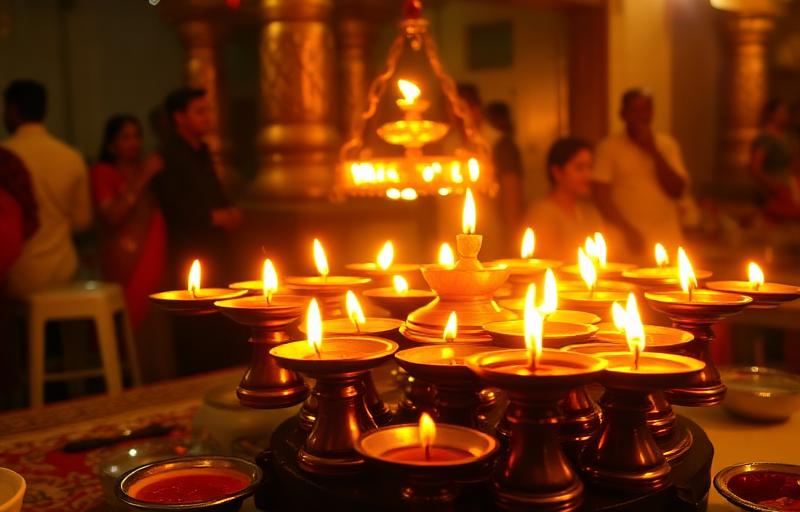
The main door (dwar) is the energetic interface between your home and the world. Traditional Hindu homes decorate the entrance with specific protective symbols. Here is what each does.
Swastika:
The Swastika is one of the oldest known symbols on Earth - found in Indus Valley artifacts over 5,000 years old. In Hindu Vastu:
- A red Swastika drawn at the main door with kumkum (on auspicious occasions) or as a permanent metal fixture
- The four arms represent the four directions, the four Vedas, the four purushartas (dharma, artha, kama, moksha), and the four ashrams of life
- The clockwise rotation represents the movement of prana (life force) - inviting positive energy
- Vastu placement: draw with the opening of each arm facing Northeast (top right) for maximum benefit
Om (ॐ) Symbol:
A metal Om symbol or painted Om at the main door is considered the most powerful single symbol in Hindu tradition.
- Om is the primordial sound from which all creation emerges
- Its vibration at the entrance means every person who enters does so through the sound of the cosmos
- Best placement: at eye level, centered on the door or door frame
- Material: copper or gold-colored brass is most auspicious
Toran (Door Garland):
A toran is a garland of mango leaves, marigold flowers, or metal beads hung across the doorframe. It is both decorative and functionally Vastu-positive.
- Mango leaves: 5, 7, 9, or 11 leaves on a cotton thread. Changed at every festival and major occasion.
- Marigold flower toran: especially auspicious on Diwali, Dussehra, and Navratri
- Metal bead toran: copper, silver, or brass - permanent, doesn't need replacement
- Vastu function: the toran creates an energetic "filter" at the entrance, and its sound (when it moves in the wind) scatters negative vibrations
Nazar Battu (Evil Eye Protector):
A traditional South and West Indian practice of hanging a lemon-chili or a black mask at the main door to ward off the evil eye (Nazar).
- Lemon (acidic) and chili (pungent) are believed to absorb negative energies directed at the home
- Replace when they shrivel and dry (typically weekly)
- The logic: Nazar (the evil eye) is projected by jealousy and envy from outsiders. The strong sensory quality of these items acts as an absorber.
- Modern alternative: a black horseshoe (kala ghoda) hung at the door with both ends pointing up
Threshold Rangoli:
Traditional rangoli at the threshold of the main door:
- Made fresh every morning (in South India, this is called Kolam - rice flour patterns)
- Geometric patterns that attract Lakshmi
- The act of making rangoli is itself a sadhana - it starts the day with creative devotion
Vandnaa App's Vastu Section includes a visual guide to sacred door symbols, their correct placement, and when to refresh each element.
Main Door Colors, Direction Remedies & What to Never Place at the Entrance
The color of your main door, what you place near it, and what you avoid are all covered in Vastu Shastra. Here is the practical guide.
Main Door Colors by Direction:
| Direction | Ideal Color | Why | |-----------|-------------|-----| | North-facing | Green or Blue | North is Mercury's (Budha) and Water's direction - green and blue harmonize | | South-facing | Red or Orange | South is Mars's (Mangal) direction - fire colors align | | East-facing | Wood color (brown/yellow) | East is Sun's direction - warm, golden colors align | | West-facing | White or light grey | West is Saturn's direction - neutral, grounding colors | | Northeast-facing | White or cream | Northeast is the sacred water corner - pure colors | | Northwest-facing | White or light blue | Northwest is Air's direction - light, clean colors | | Southwest-facing | Yellow or earthy brown | Southwest is Earth's direction - stabilizing colors | | Southeast-facing | Orange or copper | Southeast is Fire's direction - activating colors |
What to Always Have at the Main Entrance:
1. Good lighting - a main door in shadow invites stagnant energy 2. A clean, clear path to the door - no clutter, no broken objects, no dead plants 3. A doorbell or knocker - the sound announces arrival and activates the entrance's energy 4. A welcome mat - clean and fresh; replace when worn (a worn-out mat is inauspicious) 5. A name plate - the home should identify itself; a missing or broken nameplate is Vastu-inauspicious
What Should NEVER Be at the Main Door:
1. A mirror facing the entrance: A mirror that directly faces the main door reflects energy outward - everything that enters (including Lakshmi) bounces back out. Remove or angle it.
2. Shoes and footwear in plain view: Traditional Vastu requires shoes to be stored inside (in a shoe rack) and not visible from outside. Shoes carry external energy into the sacred home space.
3. Broken or stuck doors: A door that doesn't open fully represents a life that doesn't open fully - opportunities being blocked. Fix immediately.
4. Trash bins near the entrance: Garbage near the main door is one of the worst Vastu conditions for prosperity.
5. Dried or wilted plants: Dead plants at the entrance represent stagnant energy. Remove or replace with fresh plants.
6. Cactus or thorny plants: While cactus is sometimes recommended for protecting corners (not entrance), a cactus at the main door is considered inhospitable in traditional Vastu.
Quick Vastu Remedies for Non-Ideal Entrances:
- Entrance facing South: place a red Hanuman picture on the door's inner side
- Entrance in Southwest: light a lamp near the door every evening; place a copper vessel of water inside
- Entrance blocked by pillars or walls: use mirrors on the sides (not facing the door) to create a sense of openness
Vandnaa App's Vastu Quick Fix guide gives you a step-by-step remedy sequence for the 10 most common Vastu problems in Indian apartments.
Threshold Puja: Sacred Practices for the Doorstep
In Hindu tradition, the threshold (dehri or dehlij) is considered one of the most sacred parts of the home. It is the boundary between the outer world and the inner sanctuary.
The Significance of the Threshold:
The threshold is liminal space - it is neither fully inside nor outside. In this liminality, it is considered most accessible to divine energy (both positive and negative). This is why:
- Deities are welcomed "across the threshold" during festivals (Lakshmi enters at Diwali)
- Ancestors (Pitru) visit across the threshold during Pitru Paksha
- The bride steps across the threshold at marriage - a critical moment of transition
- No argument or angry words should be spoken at the threshold - the energy imprints
The Daily Threshold Practice:
1. Before leaving home each morning: Touch the threshold with your right hand before stepping out. Say "Shubh" (auspicious) or simply "Om." This acknowledges the transition.
2. Before entering home each evening: Pause at the threshold. Take one breath. Consciously leave the day's stress outside. Step in with the intention of peace.
3. Clean the threshold daily: Sweep the threshold area specifically. In South India, women draw kolam (rice flour patterns) at the threshold every morning. This is daily Lakshmi invitation.
4. Lamp at the threshold on festival days: A diya at the threshold on Diwali, Navratri, Ekadashi, and Pradosh days is one of the most simple and effective Vastu-devotional practices.
The Gruh Pravesh (Housewarming) Threshold Ritual:
At a new home's Gruh Pravesh: 1. The wife enters first with a pot of water on her head (Lakshmi entering with abundance) 2. The husband enters with fire (Agni - protection) 3. The threshold is smeared with cow dung (purification) before the first entry 4. A coconut is broken at the threshold 5. Red kumkum footprints of Lakshmi are drawn from the threshold into the puja room - Lakshmi "enters" symbolically
The "Lakshman Rekha" Tradition:
Many traditional Indian homes draw a thin line of red powder (sindoor or kumkum) across the threshold - called the Lakshman Rekha. This line is a Vastu boundary:
- Negative energy from outside cannot cross a sincerely drawn sacred boundary
- It is also a reminder to the homeowner: "What crosses this line enters our sacred space"
Vandnaa App's Festival Puja section includes the specific threshold ritual for each major festival - from Diwali to Navratri to Gruh Pravesh.
Dwar (Main Door) Mantras and Daily Prayers for the Entrance

The main door is blessed through specific mantras that invoke divine protection over the home's entrance. These mantras are used during Gruh Pravesh, on festival days, and as part of the daily threshold practice.
The Universal Dwar Mantra:
ॐ द्वारपालाय नमः। (Om Dwarapalaya Namah - Salutation to the guardian of the door)
This is the mantra for Dwarapala - the divine doorkeepers who guard Vishnu's abode (Vaikuntha). By invoking them at your main door, you ask them to also guard your home's entrance.
Ganesh at the Door:
Ganesha is specifically the deity of thresholds and beginnings. This is why Ganesha idols are placed at the entrance of homes and temples - he is the first to receive puja because he guards the way.
ॐ श्री गणेशाय नमः। द्वार रक्षक नमः।
Touch the Ganesha idol at your main door with this mantra each morning.
The Morning Entry Prayer:
Before your family members leave home in the morning: "सुप्रभातम् भवतु। सर्वे मंगलम् भवतु। यात्रा शुभम् भवतु। पुनरागमन शुभम् भवतु।।"
(May this morning be auspicious. May all be auspicious. May the journey be auspicious. May the return be auspicious.)
The Evening Return Prayer:
When you enter the home in the evening: "ॐ वास्तोष्पते प्रतिजानीह्यस्मान् स्वावेशो अनमीवो भवा नः। यत्त्वेमहे प्रति तन्नो जुषस्व शं नो भव द्विपदे शं चतुष्पदे।।" (Rigveda 7.54.1 - Prayer to Vastospati, the guardian of the dwelling)
Meaning: "O guardian of this home, receive us back with your blessing. Let this home be free of disease. Accept our daily offerings. May there be wellness for the two-footed (humans) and four-footed (animals) in this home."
For the New Year, Diwali, and Gruh Pravesh:
ॐ नमो भगवते वास्तुपुरुषाय ससपरिवाराय। यो भूम्यां स्थापितो देवः स्वयंभूः साक्षात्परः। तस्मै वास्तुपुरुषाय नमः।।
This mantra invokes Vastupurusha - the cosmic person who embodies the space of the home. On Diwali night and New Year, this mantra performed with a ghee lamp at the main door invites Vastupurusha's blessing for the year.
Vandnaa App's Daily Prayer Library has audio recordings of all these mantras at the correct speed and pronunciation - perfect for the morning threshold practice.
Frequently Asked Questions
Does Vastu apply to apartments where I cannot change the main door direction?+
Yes - Vastu fully applies, BUT remedies are emphasized over physical reconstruction. Apartment dwellers cannot change the door direction physically, so the focus shifts to: (1) Do all 7-day purification rituals annually, (2) Maintain auspicious decoration (toran, plants, swastika), (3) Apply specific direction-remedies if your door is south/southwest, (4) Place key idols (Ganesh, Hanuman, Lakshmi) strategically. Many apartment dwellers achieve 70-80% Vastu effectiveness through diligent application of remedies - even with non-ideal door direction. The Vastu Shastra explicitly accommodates apartment living through these 'soft' remedies.
Are sliding doors or automatic doors against Vastu?+
Sliding doors are mostly NEUTRAL in Vastu - they neither help nor harm. Automatic doors (sliding glass) are common in modern homes and are acceptable. The Vastu rules apply to direction and decoration regardless of door TYPE. The only consideration: glass doors lack the energetic 'solidity' of wooden doors, so the symbolic protection is weaker. Compensate by placing protective deities (Ganesh, Hanuman) prominently inside and a heavier Yantra above the door. For traditional rooms (puja room, master bedroom), wooden doors are still strongly preferred over glass. For external main doors, glass-with-wooden-frame is acceptable in modern homes if the frame is solid and well-decorated.
Can I have multiple entrances to my home?+
Yes, but with rules. Most homes have 1-2 entrances; some have 3 (front, back, side). Vastu rules: (1) ONE door is designated 'main' - the others are auxiliary. The main is the one in the most auspicious direction. (2) Auxiliary doors should be smaller than the main door. (3) Auxiliary doors should NOT face directly opposite the main door (creates 'energy shoot-through' problem). (4) For homes with 3+ entrances, ensure one is firmly designated as the daily-use main; others are emergency/utility only. (5) Servants' or back doors should be in the south or southwest (these absorb negative energy that the main door successfully blocked). Regularly using multiple entrances confuses the home's energy. Pick one as main and use it consistently.
Why do many traditional Indian homes have a 'lakshman rekha' threshold?+
The threshold (Lakshman Rekha - named after the protective line Lakshman drew around Sita) is a Vastu-energetic barrier. Traditional Indian homes have a slightly raised wooden or stone threshold at the main door - symbolizing the boundary between the chaotic outside world (rajasic energy) and the pure home (sattvic energy). Crossing the threshold properly: pause for 1 second, mentally drop your outside concerns, then enter - this is the cosmic etiquette. The threshold is also where you remove shoes (carrying outside energy literally and symbolically). In Vastu: never sit, stand, or step ON the threshold for extended time - it's a 'liminal' space where energy is unstable. Always step OVER it cleanly. Modern apartments without thresholds can paint a small symbolic threshold on the floor in front of the door to recreate this.
How do I apply Vastu when buying a new home?+
Six checks before purchasing: (1) Direction first - main door direction is non-negotiable; refuse any home with south or southwest-facing door, even if everything else is perfect. (2) Plot orientation - the plot itself should be a regular square or rectangle, not L-shaped or triangular. (3) Sun exposure - north and east should receive maximum sunlight. (4) Water sources - borewell, water tank should be in north-east. (5) Past history - ask about previous occupants' fortunes; tragedies (deaths, financial collapses) suggest energetic problems. (6) Pre-purchase Vastu inspection - hire a certified Vastu consultant for ₹2,000-5,000 to do a comprehensive analysis. Spending this fee saves potentially years of suffering. Many real estate agents in India now offer 'Vastu-compliant' homes - these are usually pre-screened and worth premium pricing.
About the author
Dr. Suresh Iyer · Vastu Shastra & Jyotish, 18+ years
Dr. Suresh has practiced traditional Vastu and basic Vedic Jyotish for over 18 years across South India. He contributes the Vastu, direction, and home-puja layout guides on Vandnaa.
Meet the Vandnaa editorial team →Explore on Vandnaa
Related Articles

Vastu for Sleeping Direction: Which Side Should Your Head Face? (Complete 2026 Guide)
9 min read
Vastu for Kitchen: Right Direction, Stove Placement, Water Tap & 7 Rules That Bring Prosperity
9 min read

Puja Room Vastu – How to Set Up a Mandir at Home
10 min read
Tulsi Plant at Home: Right Direction, Vastu Rules & 9 Sacred Benefits Every Hindu Should Know
8 min read