The Ideal Direction: Why North-East (Ishan Kona) is Sacred
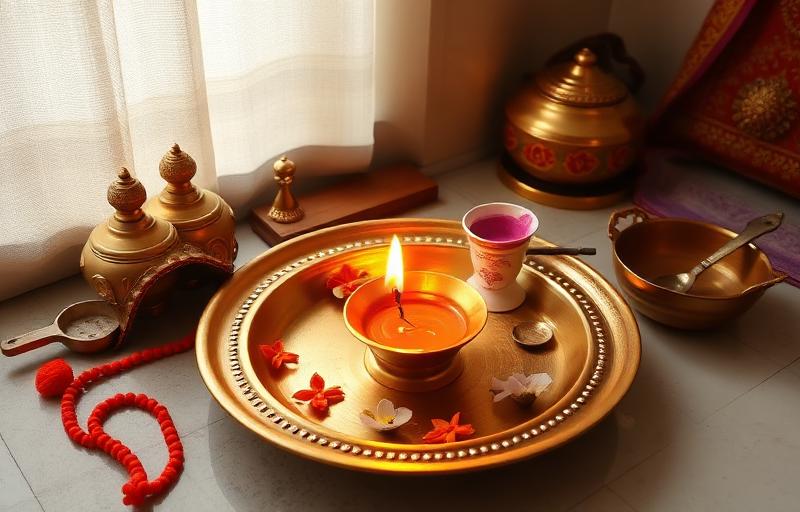
Vastu Shastra prescribes the north-east corner (Ishan kona) as the only ideal location for the pooja room or mandir in a Hindu home. The reason is precise: the morning sun rises in the east and reaches its purest angle of about 22.5° just north of east - exactly the Ishan direction. This early-morning sunlight contains the maximum violet-blue spectrum which Ayurveda and modern light-therapy both link with mental calm, immunity and devotional disposition. A pooja room here receives direct sunlight during the most powerful pooja hours (4:30 AM to 6:30 AM, Brahma muhurta), naturally amplifying the energy of mantras and prayers.
Ishan is also the direction of Lord Shiva, the patron deity of all Vastu directions. North-east is the meeting point of north (Kuber, wealth) and east (Indra, prosperity) - so wealth and prosperity converge here. Avoid south-east (Agni, fire - clashes with idol's cool energy), south-west (Pitru, ancestors - wrong place for living deities), north-west (Vayu, instability - prayers get scattered). South is the strict 'no' - south is Yama's direction (death) and the deity's back should never face south for any reason.
In apartments where the NE corner is occupied by a balcony, bathroom or kitchen, the next-best option is the east wall of the living room or the north wall of any clean room. NEVER place the mandir in the bedroom (sleeping back-to-deity is disrespectful), under a staircase (energy crushed), or directly opposite the main door (energy escapes out).
Idol Placement: Facing, Height, Number & Materials
Idols and photos must face EAST or WEST - never north (god's back faces south = Yama = inauspicious) and never south (god's back faces north = blocks Kuber/wealth flow). The devotee, while doing pooja, should face east or north - the deity faces the devotee.
Height: Idols should be at heart-chest level when the devotee sits - roughly 18 to 36 inches above the floor on a wooden chowki or marble shelf. Too low (floor) attracts negative energy from ground vibration; too high (above eye level) breaks the personal bhakti connection. Standing pooja is acceptable for elderly or in temples; in homes, sitting is preferred.
Number rule: For Ganesha, only one idol per house (multiple Ganesha at home create directional confusion). For Shiva, only one Shivling, and never two Shivlings facing each other. Multiple deity idols are fine but place complementary pairs together: Lakshmi-Narayan, Radha-Krishna, Shiva-Parvati, Ram-Sita. Never place Shiva and Vishnu idols facing each other; always side-by-side. Maximum 3 idols of the same deity is the highest auspicious limit.
Material: Brass, panchaloha (5-metal alloy), marble, sandalwood and silver are all auspicious. Plaster of Paris or fibre idols are acceptable only if they have been pran-pratishtha consecrated. Iron idols are forbidden (iron is Saturn's metal, not for deity worship). Photos behind glass should be cleaned daily with a soft cloth - dust on a deity is the strongest Vastu dosha.
What NOT to place: Photos of dead relatives in the pooja room (they belong on a separate south wall), broken idols (immediately immerse in flowing water), idols with chipped noses, hands or weapons (worship invites the deity's anger), and any idol you have outgrown emotionally - keep only those you actively pray to.
9 Inviolable Vastu Rules for the Pooja Room
1. No pooja room in or next to a bathroom. Even sharing one common wall is a major dosha. If unavoidable, install a marble or wooden partition and chant Hanuman Chalisa weekly to neutralise.
2. Door should face north or east and have two shutters (not a sliding door). The door must be slightly raised (1-2 cm step) - symbolically separating sacred from mundane.
3. Always cover the mandir at night with a curtain or wooden shutter. Deities 'rest' at night; an exposed mandir at night invites pitru or restless energies.
4. Never store anything below the mandir - no shoes, no luggage, no cleaning supplies, no broken items. The space directly below the deity should be empty or hold only puja items (oil, incense, books).
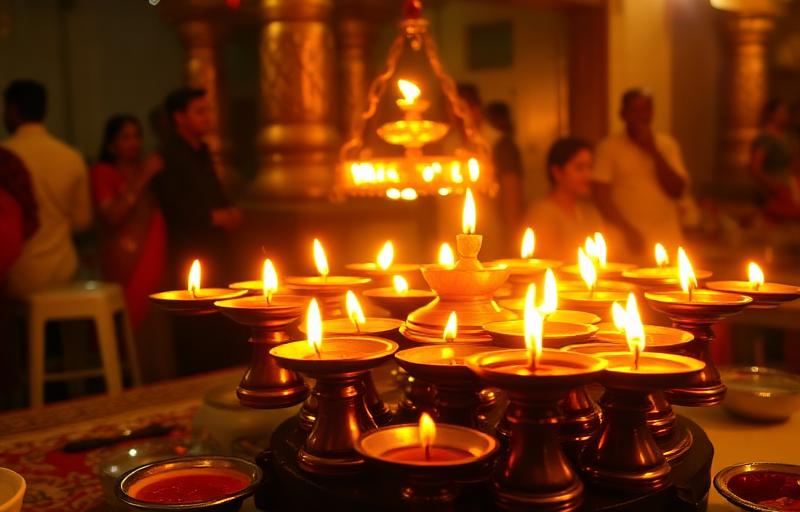
5. The lamp must be lit at least once daily - even a 1-minute ghee diya is sufficient. A pooja room without a single diya for 7 days is considered abandoned by the deity.
6. No bedroom items in the pooja space - no mirrors (reflect and disperse divine energy), no TV/laptop (electronic pollution), no laundry basket, no medicines.
7. Pooja room walls in white, light yellow or pale orange - avoid red (excessively aggressive), black (Yama), dark blue (Saturn) and grey (neutral but lifeless). Pale yellow is best for prosperity.
8. Threshold of pooja room must be kept spotless - no chappals removed inside; chappals always outside. Even socks should be removed before entering.
9. Mandir should never be in the centre of the house (Brahmasthan) - counter-intuitive but true. The centre is the navel of the house and must remain empty for free energy flow. Mandir always at a wall, in the NE quadrant of the house.
Apartment & Small-Home Solutions

Modern flats rarely have a clean NE corner - it is often occupied by a balcony, a bathroom, the kitchen, or the air-conditioner outdoor unit. Compromises are acceptable IF the alternative direction is chosen carefully:
If NE is occupied - order of preference: 1. East wall of any clean room (living room or guest bedroom). 2. North wall of any clean room. 3. North-west corner of the living room - acceptable but apply remedy: place a small brass kalash filled with water and a few rupee coins in front of the mandir to neutralise Vayu's instability. 4. Inside a wooden cabinet on the east wall of the kitchen - only if no other option exists. Apply remedy: never cook non-veg in that kitchen, and keep a partition curtain between cooking area and mandir.
Studio apartments / 1BHK:
- A small wooden wall-mounted mandir on the east wall is sufficient.
- Ensure it is above eye level (at least 5 ft from floor) so it does not get knocked.
- Use battery-operated LED diya at night if open flame is risky.
- Photograph-only mandir (no statues) is allowed when space is genuinely impossible.
Workplace / office cabin:
- A small picture of your ishta devta on the north or east wall facing your desk is acceptable.
- A 3-inch idol of Ganesha on the north-east corner of the desk for business luck.
- Never place deity photos behind you (where you cannot see them) - always in your line of sight.
Cleaning protocol - same for any home: Once a week, wipe the entire mandir with a damp cloth (no soap). Once a month, do a deep clean with milk-Ganga jal mixture and re-arrange. Once a year (on Akshay Tritiya), repaint the wall behind the mandir and replace puja cloth.
Common Questions From Devotees
My pooja room shares a wall with the bathroom - what do I do?+
Best option: relocate the mandir to another east or north wall. If relocation is impossible: (1) install a wooden partition or marble slab on the shared wall, (2) ensure the deity's back never touches that wall directly (move idol 6 inches forward), (3) recite Hanuman Chalisa or Sundarkand on Saturdays, (4) burn camphor in the mandir morning and evening. The dosha cannot be fully removed but can be reduced by 70-80% with these steps.
Can I keep dead relatives' photos in the pooja room?+
No - never together with living deities. Dead ancestors are pitru (different category from deva), and Vastu strictly separates the two. Place ancestor photos on a separate small shelf on the south wall of any room (south = Yama/Pitru direction). Garland them on Pitru Paksha and their death anniversary, but never offer them the same prasad as deities. Mixing the two confuses both spaces and is considered a major dosha leading to family disputes and stagnation.
Should I use electric diya or ghee diya in the mandir?+
Ghee diya is always superior - the flame is a living, breathing entity that disperses sattvic energy and burns away negativity. Electric diyas are a convenience-only substitute when fire is unsafe (small children, elderly, frequent travel). The rule: light a ghee diya at least once a day during morning aarti even if electric stays on the rest of the time. Camphor (kapur) at night is a powerful purifier - burns in 30 seconds and clears the whole space.
My in-laws and I disagree on pooja room rules - whose tradition wins?+
Vastu rules (direction, no bathroom-sharing, no clutter, height of idol, day-time lamp) are universal and non-negotiable - both families should agree on these. Family-specific customs (which deity is primary, which mantras, what specific prasad on which day) belong to the family the bride enters; the daughter-in-law learns the husband's family tradition. The bride's birth-family traditions can be honoured at her parents' home or on her personal sankalpa-vrats but the household mandir follows in-laws' customs. Honest dialogue prevents resentment - pooja done with quiet anger loses all merit.
About the author
Dr. Suresh Iyer · Vastu Shastra & Jyotish, 18+ years
Dr. Suresh has practiced traditional Vastu and basic Vedic Jyotish for over 18 years across South India. He contributes the Vastu, direction, and home-puja layout guides on Vandnaa.
Meet the Vandnaa editorial team →