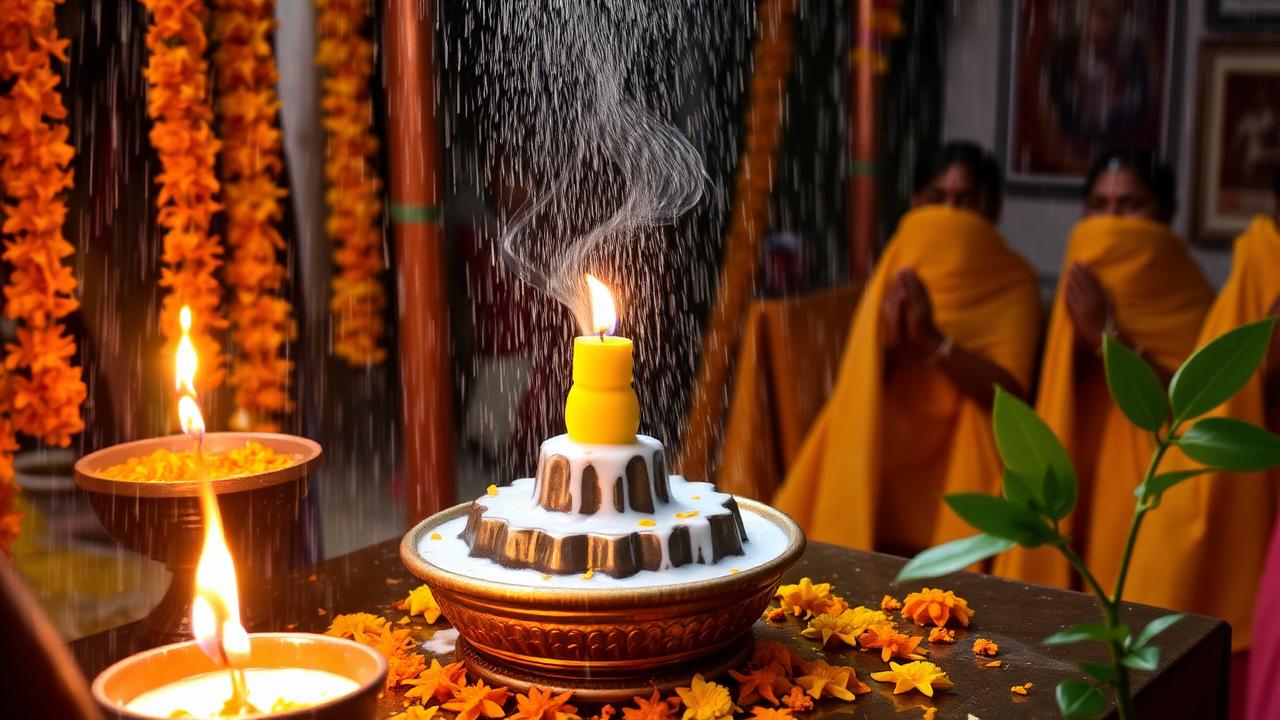
The Deity the District Is Named After
Vemulawada, in Telangana, holds the Sri Raja Rajeshwara Swamy temple, and the deity there is addressed by devotees across the state simply as Rajanna.
The familiarity of that name tells you the relationship. Rajanna is not a formal title. It is the way Telangana speaks about a deity it considers close, and the district itself is called Rajanna Sircilla after him.
What the temple is:
- One of the most visited Shaiva shrines in Telangana, drawing devotees from across the state and from neighbouring districts of Maharashtra and Karnataka
- A temple whose origins are attributed to the Chalukyas of Vemulawada, who ruled this region between roughly the seventh and eleventh centuries and whose inscriptions are found in the area
- The centre of a town whose entire life is organised around the shrine
Tradition connects the temple's founding to a ruler who was relieved of a grave affliction after worshipping the linga here, and the name Raja Rajeshwara carries that royal association.
What makes Vemulawada distinctive among Telangana's temples is not the architecture or the antiquity, considerable as both are. It is the offering.
Kode Mokku: The Bull Offering
The kode mokku is the vow that defines Vemulawada, and it is unlike anything at most other temples.
How it works:
- A devotee makes a vow, asking for something specific, and promises a kode, a bull, if it is granted
- When the request is fulfilled, the devotee brings a bull to the temple
- The bull is taken in pradakshina, circumambulating the shrine, with the devotee leading it
- The bull is then handed over to the temple
- The temple manages the animals received, and they pass on through the temple's arrangements
On busy days, particularly during festival periods, the temple receives bulls in significant numbers, and the sight of devotees leading decorated animals around the shrine is what visitors remember from Vemulawada.
Why a bull:
- Nandi is Shiva's vahana, and the bull is the animal most closely associated with him across Hindu tradition
- In an agricultural region, a bull is a substantial asset, which makes the vow costly in a way a coconut is not
- The offering is living, and it continues to be useful after being given, which distinguishes it from offerings that are consumed
That last point is what devotees emphasise. A vow at Vemulawada is not discharged with a token. You promise an animal that works, and when the time comes you walk it to the temple and give it away.
Dharmagundam and the Order of a Visit
A visit to Vemulawada follows a customary sequence, and the tank comes first.
- Dharmagundam, the temple pushkarini, is where devotees bathe before darshan. The tank is part of the shrine rather than an amenity beside it, and bathing there is treated as the beginning of the visit.
- After the bath, devotees proceed to the main shrine for darshan of Raja Rajeshwara Swamy
- Those completing a kode mokku lead the bull in pradakshina
- Shrines within the complex, including Anantha Padmanabha Swamy and others, are visited as part of the round
- Offerings are made and prasad received
The complex also holds a feature that Vemulawada is known for. Adjacent to the temple stands the dargah of Baba Fakruddin, and devotees of both traditions visit both, with Hindu devotees offering at the dargah and Muslim devotees present at the temple grounds.
This is a long standing arrangement at Vemulawada and is described locally as one of the town's defining characteristics. Similar patterns exist at a number of shrines across the Deccan, where shared devotional space has been maintained over centuries.
It is worth stating simply as fact, since it is the reality of the site. Devotees at Vemulawada, when asked, describe it without any sense that it requires explanation.
The Temple Calendar
Vemulawada is busy through the year, with clear peaks.
- Mahashivratri is the largest occasion, when the town fills and the temple stays open through the night
- Shravan, and Mondays through the month, bring very large numbers
- Kartika Masam, the Kartik month, is a major Shaiva period across Telangana and Andhra, with deeparadhana and temple visits through it
- Sankranti brings a seasonal peak as families travel
- Sundays and Mondays are the busiest days of the week through the year
The kode mokku offerings continue through all of these, and the numbers rise sharply during festival periods.
What should be said about the animals, since visitors ask. The temple receives a very large number of bulls, and how they are managed is handled through the temple's own arrangements, which have been the subject of periodic public discussion.
Devotees bringing an animal, and anyone considering the vow, should ensure the animal is healthy, is transported humanely and is handed over properly rather than left. That is the responsibility that comes with this particular form of offering, and it is one devotees in the region take seriously.
Alongside the kode mokku, ordinary offerings at the temple are the usual Shaiva ones: bel patra, milk, water for abhishekam, flowers and dhoop, along with archanas and abhishekams booked through the temple.
Vemulawada in Telangana's Shaiva Landscape
Telangana's Shaiva sites are spread across the plateau, and Vemulawada is among the most visited.
- Vemulawada Raja Rajeshwara Swamy, with the kode mokku
- Komuravelli Mallanna, the folk Shiva worshipped with turmeric and the patnam, in Siddipet district
- Ramappa temple, near Warangal, the Kakatiya era Shiva temple that is among the finest medieval temples in India
- Thousand Pillar Temple, Hanamkonda, another Kakatiya work
- Keesaragutta, near Hyderabad, associated in tradition with Rama's worship of Shiva
- Bhadrakali temple, Warangal, for the Devi alongside these
What the list shows is the range. Telangana holds Kakatiya temple architecture of the highest order, a folk Shiva worshipped by pastoral communities with turmeric, and a temple where vows are completed with bulls, all within a few hours of each other.
Those are not competing traditions. Families visit all of them, and the same household will do a patnam at Komuravelli, a kode mokku at Vemulawada and an ordinary darshan at Ramappa.
For a devotee building a Telangana circuit, a workable route is Hyderabad as a base, with Keesaragutta and Yadadri close by, then Komuravelli and Vemulawada in the Siddipet and Sircilla direction, and Warangal for Ramappa, the Thousand Pillar Temple and Bhadrakali.
Visiting Vemulawada
Vemulawada is straightforward to reach and is well set up for the numbers it receives.
- Location - Vemulawada, Rajanna Sircilla district, Telangana
- Access - about three and a half to four hours by road from Hyderabad, and closer from Karimnagar and Sircilla
- Best time - October to March. Mahashivratri and the Mondays of Shravan are the peak occasions and the most crowded.
- Order of the visit - bathe at Dharmagundam first, then darshan, as the customary sequence prescribes
- Stay - accommodation is available in the town, with more at Karimnagar
- Sevas - abhishekams and archanas are booked at the temple
- Dress - traditional attire is expected, as at most Telugu temples
If you are considering a kode mokku, arrange it properly. Speak to the temple about the procedure, ensure the animal is healthy and transported humanely, and complete the handover through the temple rather than leaving the animal.
What to combine: Komuravelli in the Siddipet direction, Karimnagar, and Warangal with Ramappa and the Thousand Pillar Temple, all within reach on the same trip.
One closing observation. Most temples in India ask for a coconut, a cloth or a lamp, and the offering is over in a minute. Vemulawada asks for something a farming family has to plan for, feed, transport and then give away. Whatever else it is, that is a serious way to keep a promise, and the town is worth seeing on a day when a few dozen people are doing exactly that.
Frequently Asked Questions
Who is Rajanna of Vemulawada?+
Rajanna is the affectionate name devotees across Telangana use for Sri Raja Rajeshwara Swamy, the Shiva worshipped at Vemulawada. The district itself is called Rajanna Sircilla after him.
What is kode mokku?+
It is the vow that defines Vemulawada. A devotee promises a kode, a bull, if a request is granted, and on fulfilment brings the bull to the temple, leads it in pradakshina around the shrine and hands it over to the temple.
Why is a bull offered to this deity?+
Nandi is Shiva's vahana and the bull is the animal most closely associated with him. In an agricultural region a bull is also a substantial asset, which makes the vow costly, and the offering is living and continues to be useful after being given.
What is Dharmagundam?+
Dharmagundam is the temple tank at Vemulawada, where devotees bathe before darshan. It is treated as part of the shrine rather than an amenity, and bathing there is the customary beginning of a visit.
When is the temple busiest?+
Mahashivratri is the largest occasion, with the Mondays of Shravan, the Kartika month and Sankranti also bringing large numbers. Sundays and Mondays are the busiest days of the week through the year.
How far is Vemulawada from Hyderabad?+
About three and a half to four hours by road, and closer from Karimnagar and Sircilla. Komuravelli, Karimnagar and Warangal with Ramappa can be combined on the same trip.
About the author
Pandit Ravindra Sharma · Vedic Rituals & Bhakti, 22+ years
Pandit Ravindra is the Vandnaa editorial team's resident specialist on aarti, chalisa, and daily devotion. He has performed home and temple pujas across Varanasi and Delhi for over two decades and contributes the bhakti-focused articles on this site.
Meet the Vandnaa editorial team →Explore on Vandnaa
Related Articles
Komuravelli Mallanna: The Turmeric Covered Shiva of the Telangana Plateau
8 min read
Yadadri Lakshmi Narasimha Swamy: The Cave Deity Telangana Turns To for Healing
8 min read
Bhadrakali Temple, Warangal: Katha, Significance and Darshan
7 min read
Sammakka Saralamma Jatara, Medaram: Katha and Significance
8 min read