How Vishnu Is Invoked Through Sound
Unlike Ganesha's Gam or Lakshmi's Shreem, Lord Vishnu is not tied in popular tradition to a single, universally agreed beej syllable. Different tantric lineages hold different views, some naming Dam (दं) as his seed sound, others weaving him into combined tantric formulas. What tradition agrees on far more strongly is that Vishnu, the preserver, is chiefly approached through his sacred names rather than through a single abstract sound.
This is why his most beloved mantras are the Ashtakshara, Om Namo Narayanaya (the eight-syllabled mantra), and the Dwadashakshari, Om Namo Bhagavate Vasudevaya (the twelve-syllabled mantra), both treasured across Vaishnava tradition as complete in themselves.
Scriptural Origin of These Mantras
The Ashtakshara mantra appears in the Vaishnava Agamas and is central to the Sri Vaishnava tradition founded on the teachings of saints such as Ramanuja, who held that this mantra alone, chanted with faith, was of deep significance for liberation. The Dwadashakshari mantra is drawn from the Vedic name Vasudeva and is widely used in temple worship and daily sandhya prayers.
Both mantras open with Om, the pranava spoken of in the Bhagavad Gita itself, where Krishna, as a form of Vishnu, describes the eternal syllable as a direct expression of the imperishable Brahman.
The Meaning Held Within These Sounds
In Narayanaya and Vasudevaya, tradition finds Vishnu's role as the one in whom all beings reside and who resides within all beings, since Vasudeva is understood to mean 'the one who dwells everywhere' and Narayana as 'the resting place of all souls'. Om, placed before both, represents the totality of creation, preservation and dissolution.
Even where a single-syllable beej such as Dam is used in certain tantric worship, it is understood to carry this same essence of steadiness, protection and quiet benevolence associated with Vishnu across Hindu tradition.
How and When Devotees Chant These Mantras

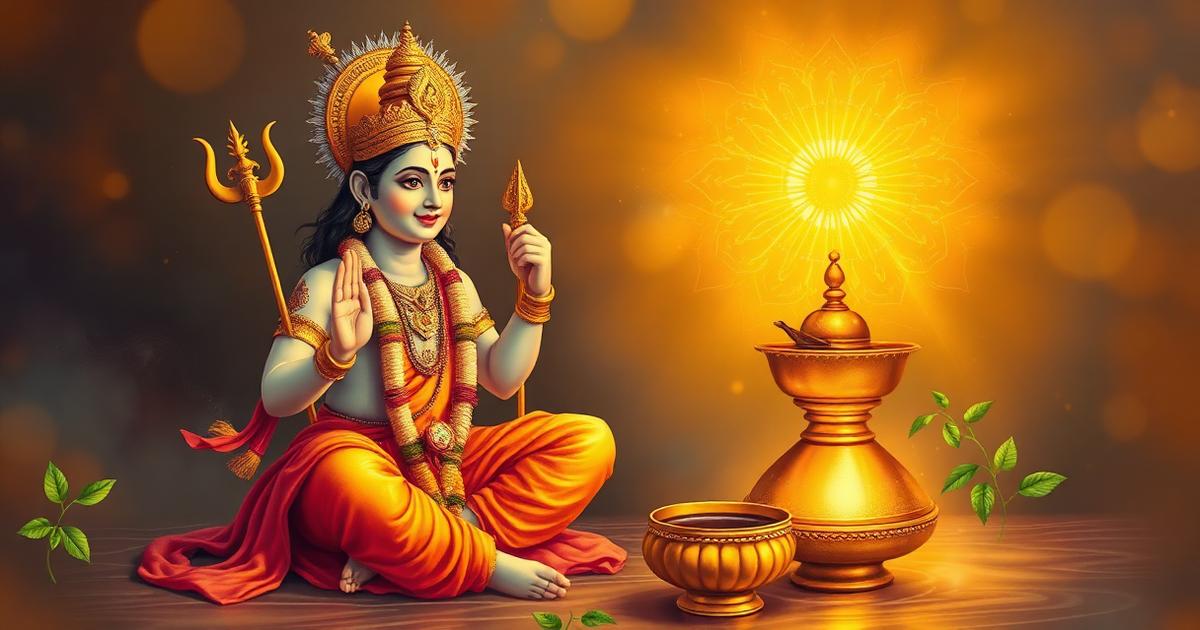
Om Namo Narayanaya and Om Namo Bhagavate Vasudevaya are traditionally chanted during the morning and evening sandhya, on Ekadashi, and throughout the month of Kartik, all considered especially dear to Vishnu. Devotees often chant while facing a tulsi plant or a murti of Vishnu, Lakshmi Narayan or one of his avatars.
- A tulsi mala is the traditional choice for this chant, tulsi being sacred to Vishnu
- 108 repetitions is common, often continued daily through Kartik month
- Ekadashi fasting is frequently paired with extended chanting of these mantras
- Many devotees recite the Vishnu Sahasranama alongside these shorter mantras
Benefits as Per Tradition
As per tradition, chanting Vishnu's mantras with devotion is believed to bring protection, steadiness through change, and a sense of being cared for even amid life's difficulties, consistent with his role as preserver. Devotees believe these chants nurture patience and faith that circumstances, however hard, are held within a larger, benevolent order.
They are also associated with a peaceful mind before sleep and upon waking, many households closing and opening their day with a quiet recitation of Om Namo Narayanaya.
A Simple Daily Practice
Whichever form is chosen, a tantric beej or the beloved nama mantras, tradition holds that what matters most is the sincerity behind the chant rather than which exact syllables are used. Even a short daily recitation before a tulsi plant is considered a heartfelt offering.
As with all mantra practice, chanting for Vishnu is an act of faith and love, not a transaction, a quiet trust that the one who preserves the universe also holds each devotee's smaller world.
What People Ask Most
Does Lord Vishnu have one fixed beej mantra?+
Unlike some deities, Vishnu is not tied to one universally agreed single-syllable beej in popular tradition. Some tantric lineages use Dam, but he is far more widely invoked through nama mantras such as Om Namo Narayanaya.
What is the difference between the Ashtakshara and Dwadashakshari mantras?+
The Ashtakshara mantra, Om Namo Narayanaya, has eight syllables and centres on the name Narayana. The Dwadashakshari mantra, Om Namo Bhagavate Vasudevaya, has twelve syllables and centres on the name Vasudeva. Both are treasured across Vaishnava tradition.
When are Vishnu's mantras best chanted?+
Morning and evening sandhya, Ekadashi and the month of Kartik are traditionally considered especially auspicious, though these mantras may be chanted with sincerity at any time.
About the author
Acharya Vinaya Kapoor · M.A. Sanskrit, Mantra & Stotra Studies
Acharya Vinaya holds an M.A. in Sanskrit from Banaras Hindu University and writes the mantra and stotra commentary on Vandnaa. Her focus is on accurate pronunciation, traditional context, and helping modern readers connect with classical texts.
Meet the Vandnaa editorial team →