Why Different Avatars Answer Different Problems
The Bhagavad Gita gives a simple promise: whenever dharma declines and adharma rises, the divine takes form to restore balance. This is the reasoning behind Vishnu's Dashavatara, the ten principal descents that Hindu tradition recognizes across the ages. But there is a second, quieter layer to this idea that many devotees use in daily practice: each avatar did not just fight a general evil, each one answered a very specific kind of crisis.
Matsya rescued the world from a flood that erased everything familiar. Narasimha tore through a boundary that seemed impossible to cross - a boon that made a tyrant feel untouchable. Krishna resolved a battlefield of doubt inside one man's mind. Because each story centers on a distinct kind of struggle, generations of devotees have quietly built a practical habit: when life presents a problem that resembles one of these ten stories, they turn their prayer toward the avatar whose story mirrors it.
This is not a rulebook and no scripture insists on it as a formal system. It is closer to how a family turns to a particular elder for a particular kind of advice - one relative is good with money, another with heartbreak, another with courage. Within Vaishnava devotion, the ten avatars work the same way: they are all the same Vishnu, but each carries a distinct emotional and narrative signature that makes certain forms feel more relevant to certain seasons of life.
The guide below is meant to be read this way: not as astrology, not as a promise of guaranteed outcomes, but as a devotional framework for choosing where to direct sincere attention when you are unsure which prayer fits your moment.
Matsya, Kurma, Varaha: When You Need to Survive, Steady, or Recover
The first three avatars share a common thread: they all deal with the ground beneath you shifting.
Matsya, the fish, is invoked when everything familiar seems to be washing away - a sudden job loss, a relocation, a diagnosis, any moment that feels like the flood in his story, where Manu had to abandon the known world entirely to survive. Devotees turn to Matsya not for comfort but for direction during total upheaval, praying for the clarity to see what needs saving and what can be let go.
Kurma, the tortoise, carried Mount Mandara on his back during the churning of the ocean, becoming the literal support beneath an impossible task. He is the avatar for seasons that demand patience rather than speed - a long recovery, a slow-building career, a relationship that needs steady effort rather than dramatic gestures. Where Matsya answers sudden crisis, Kurma answers prolonged endurance.
Varaha, the boar, dove into the cosmic ocean to lift the earth goddess Bhudevi from where she had sunk, restoring what seemed permanently lost. This is the avatar devotees quietly turn to when trying to reclaim something - a livelihood pulled under by debt, a reputation that took a hit, a piece of land or property tied up in dispute, even a sense of self-worth that has sunk out of reach.
A simple way to hold these three together: Matsya for the moment of the flood itself, Kurma for the long steady effort that follows, Varaha for the act of finally lifting what was lost back into the light. Many households recite a short invocation - "Om Matsyaya Namah," "Om Kurmaya Namah," "Om Varahaya Namah" - as a simple daily reminder rather than an elaborate ritual, especially during periods of instability.
Narasimha and Vamana: For Injustice and For Ego
Narasimha, half-lion and half-man, exists because of a loophole - Hiranyakashipu had secured a boon that made him unkillable by man or beast, by day or night, indoors or outdoors, on earth or in sky. Narasimha answered by being none of these things exactly, tearing the tyrant apart at twilight, on a threshold, on his own lap. Devotees invoke Narasimha specifically when facing an injustice that feels technically unbeatable - a bully protected by position or loophole, a legal battle stacked against you, harassment from someone who seems to always find a way around consequences. This is prayer for protection when the normal rules of fairness appear suspended, and it is traditionally considered one of the fiercest, most protective forms to call upon during genuine danger or persecution.
Vamana, by contrast, solved his problem without a single act of violence. As a humble dwarf, he approached the powerful King Bali and asked for only as much land as he could cover in three steps. Bali agreed, and Vamana's three steps covered the earth, sky, and finally Bali's own head, humbling the king's pride without a weapon being raised. Vamana is invoked when the obstacle is not another person but one's own ego - a stubborn refusal to compromise, an inflated sense of one's own importance, a negotiation that needs patience and strategy over confrontation. Businesspeople and students preparing for interviews sometimes quietly reflect on Vamana's story before a moment that calls for humility and calculated patience rather than force.
Together these two avatars show that Vishnu answers both the injustice done to you by others and the pride that sometimes needs gently, deliberately humbled within yourself.
Parashurama and Rama: Rooting Out Corruption, Holding to Duty
Parashurama, the axe-wielding sage, is remembered for a harsher kind of justice - repeatedly confronting a class of rulers who had become corrupt and abusive of power, restoring balance through decisive, uncompromising action. He is not the avatar most devotees pray to for gentle comfort. He is invoked in situations demanding real courage against entrenched wrongdoing - standing up to corruption at work, refusing to look away from abuse of authority, finding the resolve to confront a wrong that everyone else has learned to tolerate. Parashurama's energy is about refusing to negotiate with what is clearly unjust.
Rama, by contrast, represents duty carried with restraint rather than force. His fourteen years of exile, his unwavering commitment to his word even when it cost him comfort and kingdom, his conduct as son, husband, brother, and king, are the reason he is called Maryada Purushottam - the ideal of dignified conduct. Devotees turn to Rama not during moments of explosive crisis but during long tests of patience: honoring a difficult promise, navigating strained family relationships, staying composed while enduring an unfair situation without abandoning one's principles.
Where Parashurama answers the call to fight visible corruption head-on, Rama answers the quieter, longer discipline of staying true to one's duty when it would be easier to compromise. Many households recite the Rama Raksha Stotra or simply chant "Sri Ram Jai Ram Jai Jai Ram" during periods that call for this kind of patient steadiness, while Parashurama Jayanti prayers are often offered by those seeking the courage to confront injustice directly rather than avoid it.
Krishna and Buddha: For Confusion and For Craving
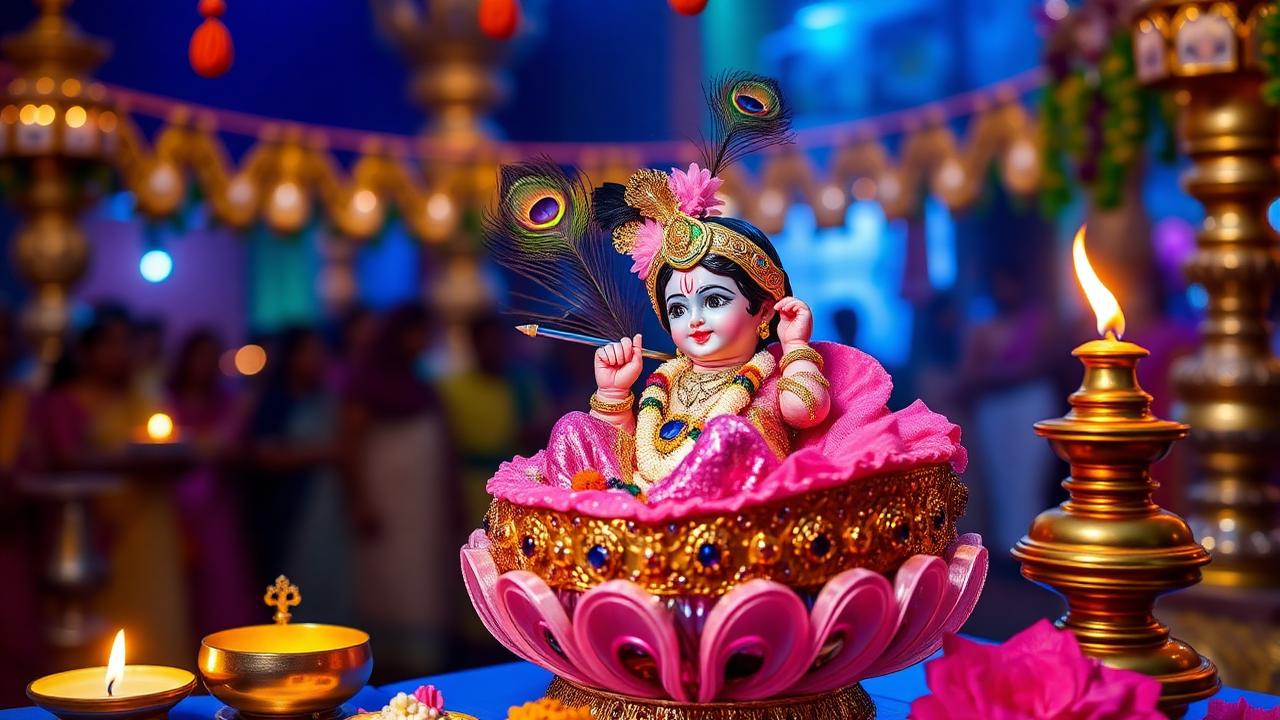
Krishna is invoked, more than perhaps any other avatar, at the exact moment of decision paralysis. The entire Bhagavad Gita exists because Arjuna froze on a battlefield, overwhelmed by conflicting duties and unable to see a right answer. Krishna did not simply tell him what to do - he walked him through a framework for thinking clearly under pressure. This makes Krishna the natural avatar to turn to when facing a genuinely difficult decision: a career change with no obvious right choice, a conflict between duty and desire, a moment where every option seems to hurt someone. Devotees often recite verses from the Gita itself, or simply the name "Hare Krishna," when seeking this kind of clarity rather than comfort.
Buddha, recognized within the Dashavatara in many Vaishnava traditions, represents something almost opposite: not decision-making but release. His path was one of stepping back from craving, attachment, and the endless wanting that causes suffering. Devotees turn toward this aspect of Vishnu not when they need to act, but when they need to let go - breaking a compulsive habit, releasing resentment that has been carried too long, easing the grip of desire for something that keeps causing pain.
Placed side by side, Krishna and Buddha cover two very different needs that often arrive in the same season of life: Krishna for the moment you must choose, Buddha for the moment you must release. Some traditions place Balarama rather than Buddha in this avatar slot, but the underlying devotional use of Krishna for guidance remains constant across all of them.
Kalki and How to Choose Which Avatar to Pray To
Kalki, the avatar yet to come, is described in the Puranas as arriving at the end of the current age astride a white horse, sword raised against the collapse of dharma. Because he has not yet appeared, Kalki occupies a unique place in devotional life: he is the avatar of hope during periods that feel hopeless, invoked less as a rescuer of a specific problem and more as a reminder that decline is never permanent, that renewal always follows collapse in the larger rhythm of time. Devotees experiencing prolonged hardship, or watching a situation deteriorate with no end in sight, often find comfort simply in Kalki's promise: that this too will turn.
So how should a devotee actually choose among these ten? The honest answer is that this is a tool for reflection, not a formula. Sit with the actual shape of your problem for a moment. Is it sudden and overwhelming, or slow and grinding? Is someone else's injustice the obstacle, or is it your own pride? Do you need to decide, or do you need to release? Match the emotional shape of the story to the emotional shape of your situation, and let that guide which name you repeat, which story you read, which mantra you sit with.
None of this replaces the deeper truth that all ten are one Vishnu, approached through whichever door feels closest tonight.
🕉️ The Vandnaa app's daily panchang and mantra library make it easy to find the right avatar stotra for exactly where you are today.
Common Questions From Devotees
Do I have to worship all 10 avatars to follow this practice?+
No. This is a devotional framework, not an obligation. Most devotees already lean toward one or two avatars through family or regional tradition, such as Krishna or Rama. Using this guide simply means occasionally directing a prayer toward the avatar whose story matches your current situation.
Can I pray to a different avatar on different days depending on what I'm going through?+
Yes, this is common practice. Many devotees keep a general daily routine centered on their family deity, then add a specific prayer to a particular avatar during a season that calls for it, such as Narasimha during a period of facing injustice or Krishna before an important decision.
What is a simple mantra to invoke a specific avatar?+
Each avatar has a simple salutation mantra, such as "Om Namo Narasimhaya" for protection or "Om Namo Bhagavate Vasudevaya" for Krishna's guidance. These short mantras are traditionally repeated quietly, without needing an elaborate ritual, especially when time is short.
Is Krishna considered different from the other nine avatars?+
Many Vaishnava traditions describe Krishna as a purna avatar, a complete manifestation, while some of the others are considered partial expressions. This distinction is explored in more depth in our guide to the Krishna-Vishnu relationship, but for daily devotional purposes both are approached with equal sincerity.
Why is Buddha included among Vishnu's avatars?+
Many Puranic lists include Buddha as the ninth avatar, representing compassion and detachment from craving. Some regional traditions substitute Balarama in this position instead. Both readings are accepted within different streams of Vaishnava devotion.
Is there a specific day considered best for avatar worship?+
Thursday is broadly associated with Vishnu worship, though individual avatars have their own days, such as Narasimha Jayanti or Rama Navami. Daily, brief remembrance is considered just as meaningful as waiting for a specific occasion.
About the author
Anjali Mehta · Editor, M.A. Religious Studies
Anjali is the managing editor for Vandnaa and oversees the festival and vrat coverage. She holds an M.A. in Religious Studies and reviews every published article for accuracy, accessibility, and tradition-fidelity.
Meet the Vandnaa editorial team →