What Vishnu Sahasranama Is + Why Bhishma Chose It
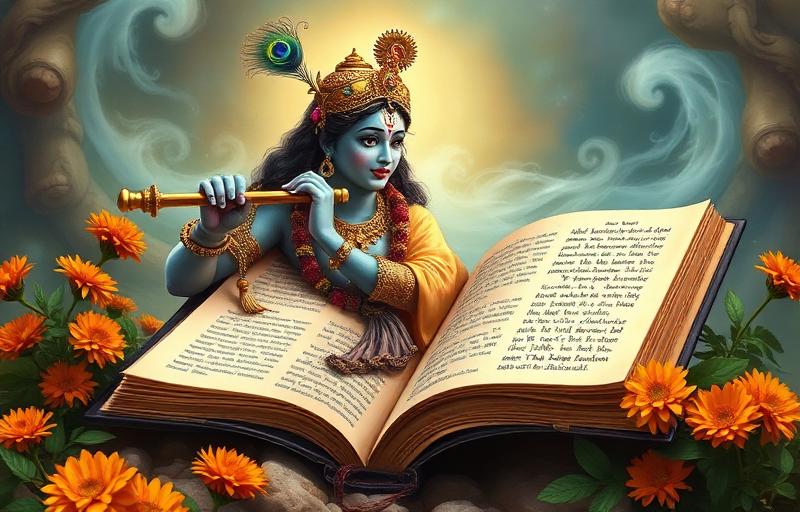
Vishnu Sahasranama literally means 'the thousand names of Vishnu'. It is a 142-shloka composition in Sanskrit, found in the Anushasana Parva of the Mahabharata (Chapter 149). Each shloka contains 6-8 names of Vishnu, totalling exactly 1,000 unique names covering every quality, attribute, manifestation, and relationship of the Supreme Lord.
The setting in Mahabharata. After the great war of Kurukshetra, Bhishma lay dying on his bed of arrows. He had the boon of choosing his own time of death and was waiting for Uttarayana (the auspicious northward sun movement). Yudhishthira, troubled by the carnage of war and his own role in it, came to Bhishma with the question: 'What is the supreme dharma? What is the easiest path for an ordinary person in Kali Yuga to attain liberation?'
Bhishma's answer was Vishnu Sahasranama. He recited all 1,000 names from memory, declaring this as the essence of all dharma - the easiest, surest, most complete spiritual practice available. Krishna himself was present during this recitation and confirmed its potency.
Why 1,000 names? Each name is a meditation seed. Each captures one aspect of the infinite. Together, the 1,000 form a complete portrait of the Supreme - covering Vishnu's transcendence, his creative power, his preservation function, his protective intervention, his playful avatars, his eternal qualities, his relationships with devotees. A single name like 'Achyuta' (he who never falls) carries the entire philosophical framework of Vishnu's unchanging perfection. Reciting 1,000 such names systematically rewires the mind to think in terms of the divine.
Some famous names in the sequence:
- Vishnu (the all-pervading)
- Vashatkara (he who is invoked through Vedic ritual)
- Bhuta-bhavya-bhavat-prabhu (lord of past, present, future)
- Bhutakrit (creator of beings)
- Bhutabhrit (sustainer of beings)
- Bhavah (existence itself)
- Bhuta-atma (the self of all beings)
- Hari (he who removes obstacles)
- Krishna (the all-attractive)
- Rama (the source of all delight)
- Govinda (protector of cows / earth)
- Madhava (consort of Lakshmi)
- Madhusudhana (slayer of demon Madhu)
- Trivikrama (he of three steps - Vamana avatar)
- Padmanabha (lotus-naveled)
Each of these has been the chosen name for entire devotional traditions. Different sects emphasise different names - Sri Vaishnavas emphasise 'Narayana', Madhva Vaishnavas emphasise 'Hari', Gaudiya Vaishnavas emphasise 'Krishna' - but all derive from the same single Sahasranama text.
Why this is THE Hindu spiritual gift to dying people. When a Hindu is dying, family members traditionally chant Vishnu Sahasranama at the bedside. The dying person's last conscious words are believed to determine their next birth. Hearing the 1,000 names of Vishnu in the final moments is believed to grant moksha (liberation) directly. This is why Bhishma's choice was so significant - he was offering Yudhishthira (and through him, all of us) the same gift he himself wanted at his own death.
How to Recite: Daily Vidhi + Pronunciation Guide
Pre-recitation preparation:
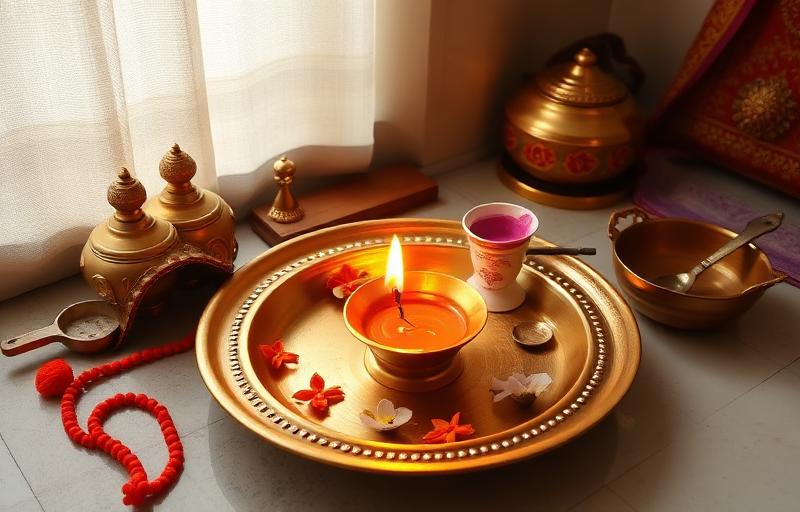
1. Bath: Always bathe before recitation. The body must be clean. 2. Clean clothes: Wear fresh cotton or silk; no leather. 3. Quiet space: Dedicated puja room or quiet corner. No phone, no TV. 4. Asan: Sit on a clean cotton or kusha-grass mat. Don't sit directly on floor. 5. Face East or North: Aligns with the deity (place a Vishnu/Krishna picture or murti in front, facing east). 6. Light a diya: Pure ghee preferred; sesame oil acceptable. 7. Light incense: Sandalwood (chandan) or tulsi-scented preferred. 8. Offer flowers: Tulsi leaves (ideal), jasmine, lotus. 9. Have water nearby: Plain water in a small kalash. Some traditions use this water as 'charged tirtha' after recitation.
The recitation:
1. Sankalp (intention): Briefly state your intention - 'I am reciting Vishnu Sahasranama today for the welfare of all beings and for my own spiritual progress.' For a 21-day sadhana, state the duration and any specific intention (recovery from illness, protection during difficulty, blessing for a major decision, etc.).
2. Invocation: Start with the introduction shlokas (which precede the 1,000 names). These set the spiritual context - who recited, who heard, why it was recited. Standard versions are available in any Vishnu Sahasranama book.
3. The 1,000 names: Recite all 142 shlokas of the main text. Pronunciation should be clear, neither too fast nor too slow. A good recitation takes 25-35 minutes; faster than 20 minutes loses clarity; slower than 45 minutes loses momentum.
4. Phala shloka (fruits): Recite the final shlokas that describe the benefits/fruits of recitation.
5. Concluding pranam: Bow at the end. Take 1-2 minutes of silent meditation absorbing the energy of the practice.
Pronunciation guidance:
- Get a printed version with Sanskrit + Devanagari + transliteration + meaning. Multiple publishers (Gita Press, Ramakrishna Mission, Chinmaya Mission) publish authoritative editions.
- Listen to authoritative recitations: M.S. Subbulakshmi's version is the gold standard - listened to by millions for decades. Her pronunciation is impeccable.
- The text has Sanskrit-specific sounds: 'sh', 'shh', long vowels, retroflex consonants. Don't worry about perfection initially - listen + repeat + improve over weeks.
- Use a YouTube version with on-screen text for the first 2 weeks. By week 3, you'll have memorised the most-repeated phrases and the flow.
Best time to recite:
- Best: Early morning (4-7 AM) - Brahma Muhurta.
- Second-best: Sandhya time (sunset, 6-8 PM).
- Acceptable: Any quiet time when you can focus undistracted for 30+ minutes.
- Worst: Late at night when sleepy, immediately after heavy meal, during loud household activity.
Days to recite:
- Ekadashi (11th lunar day, twice a month) is the most sacred day for Vishnu recitation.
- Shravana month (July-August) is the most sacred month for Vishnu sadhana.
- Saturday is traditionally associated with Vishnu in some traditions (versus Tuesday for Hanuman, Monday for Shiva).
- For 21-day continuous sadhana, start on Ekadashi or any auspicious day determined by your priest.
Group recitation: Even more powerful when done in a group. Many Hindu temples organise Vishnu Sahasranama parayan (continuous group recitation) on special days. Joining such groups accelerates your own learning and creates collective devotional energy.
The 21-Day Sadhana: Day-by-Day Structure
Why 21 days? Sanatana Dharma considers 21 a sacred number - 3 times 7 (the sacred number of days, weeks, planets in classical astrology). A 21-day commitment creates a deep habit, allows the practice to take root in the subconscious, and is short enough to be achievable without major life disruption.
Structure:
Day 1 (Sankalp Day): Take formal sankalp before a Vishnu murti or picture. State: 'I, [your name], on this day [date], begin a 21-day continuous recitation of Vishnu Sahasranama. May Lord Vishnu accept my offering. May my family and all beings be protected. May my [specific intention if any] be fulfilled.' Light a special lamp that will burn (refilled) every day for 21 days.
Days 1-7 (Building Phase):
- Recitation feels effortful. You may struggle with pronunciation.
- Mind wanders frequently.
- 30+ minutes feels long.
- This is normal. Don't quit. The first week breaks resistance.
- Track your daily completion in a notebook. Mark each day with a small tick.
- Don't skip any day - if you must travel, take the printed text and recite there.
Days 8-14 (Flow Phase):
- Pronunciation improves significantly.
- You start anticipating familiar names.
- The recitation has its own rhythm - your voice settles into the meter.
- 30 minutes flies by.
- Some practitioners report dreams of Vishnu, lotus imagery, or sense of presence during this week.
- Continue mark of days in notebook.
Days 15-21 (Integration Phase):
- The recitation becomes a meditative state.
- Specific names start meaning something to you - some sound deeply familiar like rediscovering a forgotten language.
- Subtle changes in your daily mood: more peaceful, less reactive, deeper sleep.
- People around you notice a change.
- Some intentions you set on Day 1 start manifesting - especially related to protection, health, family welfare.
Day 21 (Conclusion Day):
- Final recitation with extra reverence.
- Conclude with a small puja: offer fruits, sweets (panchamrit or kheer is traditional), flowers.
- Distribute prasad to family members.
- Take blessing of any elders.
- Many practitioners donate to a Vishnu/Krishna temple or feed brahmins/poor on Day 21 as completion offering.
- Light a special diya that should burn for at least 4 hours that evening.
Post-21-day:
- Some practitioners do 21-day cycles 4 times a year (one each season).
- Some make it a permanent daily practice (one recitation/day for life).
- Some do 108-day sadhana as an extended version.
- Some do single-day intensive: 11 or 21 or 108 recitations in one continuous session (this is a major sadhana taking 6-30 hours).
What to do if you miss a day:
- Ideally, don't miss. The 21-day cycle gets its power from continuous chain.
- If you miss one day due to genuine emergency: do two recitations the next day to compensate.
- If you miss multiple days: traditional rule says restart the count from Day 1.
- Modern flexibility: forgive yourself, restart, learn from why you missed (set a phone alarm, do it first thing in morning, etc.)
Specific intentions and special 21-day sadhana:
- For recovery from illness: Recite for a sick family member; their name should be in your sankalp.
- Before marriage: 21 days starting from engagement, completing 7 days before wedding.
- For a major life decision: 21 days while contemplating the decision; clarity often emerges by day 15-18.
- For protection during difficult time: 21 days during/around the difficulty.
- For prosperity: 21 days during the Shravana month or starting on Lakshmi Puja day.
Specific Benefits, Phala Shruti, and What to Avoid
Documented benefits from the Phala Shruti (fruits-mentioned section at end of text):
The text itself lists what regular recitation gives:
- Protection from all fears and dangers.
- Removal of sins (papa kshaya) accumulated over many lifetimes.
- Prosperity (artha) - wealth and abundance.
- Family welfare - protection and harmony for spouse, children, parents.
- Health - recovery from illness, longevity.
- Mental peace - reduction of anxiety, depression, anger.
- Liberation (moksha) at death - the ultimate goal.
Modern observations from practitioners (multiple ISKCON, Chinmaya Mission, Sringeri reports):
1. Anxiety reduction. Within 14 days, most practitioners report measurably lower baseline anxiety. The mind has a 'spiritual anchor' it didn't have before. 2. Better decision-making. The mind becomes clearer. Problems that seemed complex become simpler. 3. Resolution of long-standing issues. Family disputes, work problems, health issues that had been intractable often shift during a 21-day cycle. 4. Vivid dreams. Many practitioners report unusually vivid spiritual dreams during weeks 2-3. 5. Synchronicities. Coincidences related to your intention multiply. 6. Reduced reactivity. When provoked, you respond more peacefully. 7. Energetic feel of the puja space. The room where you recite daily becomes 'charged' - others entering it feel it.
Specific intention testimonials:
- Recovery from illness: Many reports of unexpected medical improvement during/after 21-day cycle.
- Job/career: Long-stuck career situations often shift within or after the cycle.
- Marriage: Compatibility issues resolve, conflicts reduce.
- Education: Students report better focus and exam performance.
- Spiritual: Deeper meditation, sense of grace, longing for more devotion.
What to AVOID during 21-day sadhana:
1. Non-vegetarian food. During the 21 days, become strict vegetarian even if you eat meat normally. Vishnu's energy is sattvic - the body should match. 2. Alcohol, drugs, intoxicants. Even casual drinking should pause for 21 days. 3. Anger and quarrels. Strict effort to avoid arguments, harsh words, gossip during this period. The discipline of restraint magnifies the practice. 4. Sexual activity. Some traditions advise celibacy during the 21 days; modern householders may continue normal married relations but should avoid 'frivolous' or excessive activity. 5. Visiting cemeteries or attending funerals if avoidable. Death-related places carry Yama energy which can conflict with Vishnu's life-energy. 6. Wearing dirty/unwashed clothes during recitation. Always fresh clean cotton for the practice time. 7. Letting non-practitioners speak negatively about the practice. Some family members may discourage or mock. Don't argue - just continue. Often by day 21, even sceptical family members start asking about it.
Health warnings:
- Don't strain your voice. If recitation is causing throat dryness or hoarseness, drink lukewarm water with honey, slow down, take 2-minute pauses.
- If you have pre-existing voice/throat issues, recite silently (mental japa) instead of aloud.
- If you have severe back pain that prevents 30 min of cross-legged sitting, use a low chair with cushion (acceptable for medical reasons).
- Pregnant women: the practice is highly recommended; just ensure comfortable seating.
- Menstruating women: traditional rule says skip recitation during menstruation; modern practice often continues silently (mental recitation). Personal choice.
- People undergoing major medical treatment: do the practice; many oncologists report that patients with such daily spiritual practice cope significantly better than those without.
The deepest benefit: practitioners who do 21-day Vishnu Sahasranama as a permanent annual practice (once a year, every year, for life) often describe it as their 'spiritual reset button'. Year after year, the practice deepens. After 10+ years, the recitation becomes second nature, the names start arising spontaneously in daily life, and the protection becomes palpable - a sense that 'someone is watching out for me'. This is the promise Bhishma made when he gave this gift to Yudhishthira: the 1,000 names of Vishnu are the surest path to spiritual security in an uncertain world.
Common Questions From Devotees
Can I recite Vishnu Sahasranama in English or Hindi instead of Sanskrit?+
The Sanskrit is the original and carries the maximum spiritual potency - each name has specific phonetic resonance that translation loses. However, reading the meanings in your preferred language (English/Hindi) IN PARALLEL with the Sanskrit is the best approach for understanding. Recite the Sanskrit aloud, then silently read the translation to grasp the meaning. Over weeks, the Sanskrit + meaning fuse in your mind. Pure translation-only recitation gives some benefit but not the full effect - the Sanskrit phonetics matter.
Is Vishnu Sahasranama only for Vaishnavas or can Shiva/Devi devotees also recite it?+
Anyone can recite. In fact, the famous Sri Adi Shankaracharya (the main Advaita teacher, considered a Shiva incarnation by many) wrote a famous commentary on Vishnu Sahasranama, demonstrating that it transcends sectarian boundaries. Smarta tradition (which honours all major deities) commonly recites all the major Sahasranamas (Vishnu, Shiva, Lalitha) as primary practice. Even a strict Shiva devotee can recite Vishnu Sahasranama for protection benefits without conflict.
How long does one full recitation actually take?+
Standard recitation: 25-35 minutes for the 142 main shlokas + introduction + phala shruti. Slow careful recitation: 40-45 minutes. Fast recitation (not recommended for sadhana): 18-20 minutes. The famous M.S. Subbulakshmi audio version runs 32 minutes - that's the gold standard pace. For 21-day daily practice, allocate 35-45 minutes including pre-recitation setup (asan, deepa, sankalp).
Can I do Vishnu Sahasranama for someone else (sick relative, child, etc.)?+
Absolutely yes. This is one of the most common reasons people start a 21-day cycle. In your sankalp (Day 1 intention), state the name of the person you're reciting for and your specific intention (their recovery, protection, blessing). The merit (punya) of the recitation transfers to them. This is a recognised feature of Hindu devotional practice - prayers for others carry full effect. Many families maintain ongoing Vishnu Sahasranama recitation when someone is undergoing major surgery, going through tough times, or as protection during exam season or marriage.
About the author
Acharya Vinaya Kapoor · M.A. Sanskrit, Mantra & Stotra Studies
Acharya Vinaya holds an M.A. in Sanskrit from Banaras Hindu University and writes the mantra and stotra commentary on Vandnaa. Her focus is on accurate pronunciation, traditional context, and helping modern readers connect with classical texts.
Meet the Vandnaa editorial team →