What the Tilak Actually Is
Walk into any Hindu home or temple and you will see it: a small mark of sandalwood paste, kumkum, turmeric or bhasma applied on the forehead, usually between or just above the eyebrows. This is the tilak.
It is one of the simplest and oldest gestures of Hindu devotion. Some people apply it every morning after their bath and prayers, others reserve it for temple visits, festivals or special occasions like weddings and pujas. The material changes by region and by which deity is being worshipped, but the gesture itself has stayed remarkably consistent across centuries.
The Traditional Reasoning Behind It
According to tradition, the spot where the tilak is applied is considered the seat of the ajna chakra, often called the third eye, the point associated with inner wisdom and concentration. Applying a tilak here before prayer or any important task is believed to help steady the mind and turn attention inward.
Scriptures and age-old custom describe the tilak as a mark of remembrance, a way of beginning the day by acknowledging God before anything else. Elders often say that touching this point with a cool paste like sandalwood also has a calming effect, which is why it became part of daily routine rather than just festival ritual.
What the Tilak Symbolises
Beyond the physical spot, the tilak carries deep symbolism. It marks the wearer as someone who has surrendered, even briefly, to something greater than the self. The shape and material often indicate devotion to a particular deity: a U-shaped tilak for Vaishnavas devoted to Vishnu, three horizontal lines of bhasma for Shaivas devoted to Shiva, a simple red dot of kumkum for Shakti worship.
In this way, the tilak is also a quiet, visible declaration of faith, worn without needing to say a word. It reminds both the wearer and everyone who sees it that the day has been consciously begun with devotion.
How It Is Practised Today
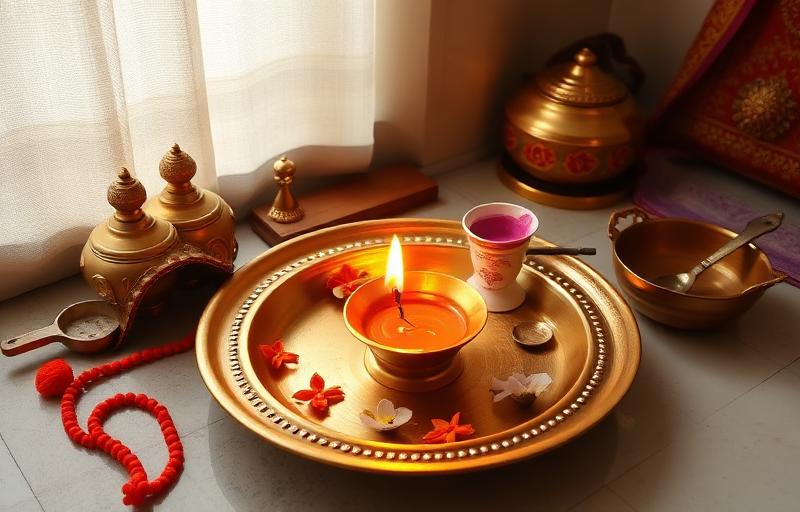
The tilak has not faded with modern life, it has simply adapted. Many people still apply it every morning as part of their puja routine, while others apply it only when visiting a temple or attending a family function. Priests apply tilak to devotees as a blessing after darshan or aarti, using kumkum, chandan or holy ash depending on the temple's tradition.
- Sandalwood paste (chandan) - cooling, often used for Vishnu and Krishna worship
- Kumkum (red) - common for Devi worship and married women
- Bhasma (sacred ash) - associated with Shiva worship
- Turmeric or chandan mixed with rice - used in some regional and festival customs
A Small Mark, A Daily Reminder
The tilak is such a small gesture, just a touch of paste or ash on the forehead, yet it carries centuries of devotion within it. It asks for nothing more than a moment of pause before the mirror, a quiet acknowledgment that the day belongs first to something sacred.
Whether applied at home before puja or received as a blessing at a temple, the tilak remains a gentle, personal reminder. Worship, after all, is an act of faith and love, not a transaction, and a mark this simple carries that truth every single day.
What People Ask Most
What does the tilak on the forehead mean?+
The tilak marks the spot associated with the ajna chakra or third eye, believed to be the seat of concentration and inner wisdom. It is applied as a sign of devotion and a reminder to begin tasks with a focused, prayerful mind.
What materials are used to apply tilak?+
Common materials include sandalwood paste (chandan), kumkum, turmeric and sacred ash (bhasma). The choice often depends on family tradition and which deity is being worshipped.
Is the tilak only worn by men?+
No, both men and women apply tilak. Women often combine it with the bindi, a related custom, while the tilak applied during puja or temple visits is worn across genders as a mark of devotion.
About the author
Pandit Ravindra Sharma · Vedic Rituals & Bhakti, 22+ years
Pandit Ravindra is the Vandnaa editorial team's resident specialist on aarti, chalisa, and daily devotion. He has performed home and temple pujas across Varanasi and Delhi for over two decades and contributes the bhakti-focused articles on this site.
Meet the Vandnaa editorial team →