The Practice: Om Comes First
From Om Namah Shivaya to Om Namo Narayanaya to the Gayatri Mantra, nearly every well-known Hindu mantra opens with the syllable Om, also written as Aum. It is often the very first sound taught to children learning their first shloka, long before the rest of the mantra is introduced.
Om is chanted alone too, as a standalone practice in meditation and at the start of yoga or puja sessions, showing that its use goes beyond simply being an opening word.
The Scriptural Reasoning: Sound of the Universe
The Upanishads, especially the Mandukya Upanishad, describe Om as the primordial sound from which all of creation is said to arise. Om is understood as being made of three sounds, A, U and M, representing the states of waking, dreaming and deep sleep, with a fourth silent state beyond them representing pure consciousness.
Because of this cosmic significance, placing Om before a mantra is a way of aligning the chanter with the universal vibration before turning attention to a specific deity or intention.
What Chanting Om Means Spiritually
Chanting Om is believed to still a restless mind and prepare it for focused prayer, much like a tuning note settles an instrument before the main melody begins. It represents Brahman, the formless divine that underlies every specific form of God.
Starting a mantra with Om is, in this sense, a way of first bowing to the universal and formless before turning to a particular form, such as Shiva, Vishnu or Devi, addressed in the rest of the mantra.
Om in Daily Worship Today
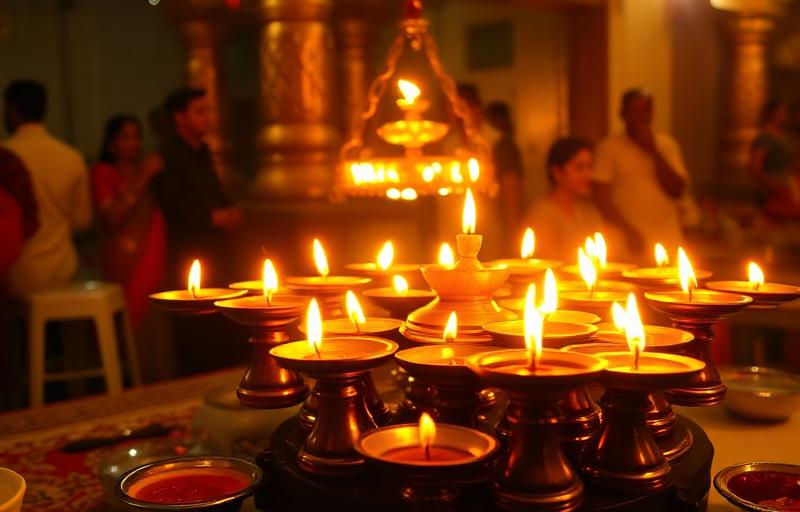
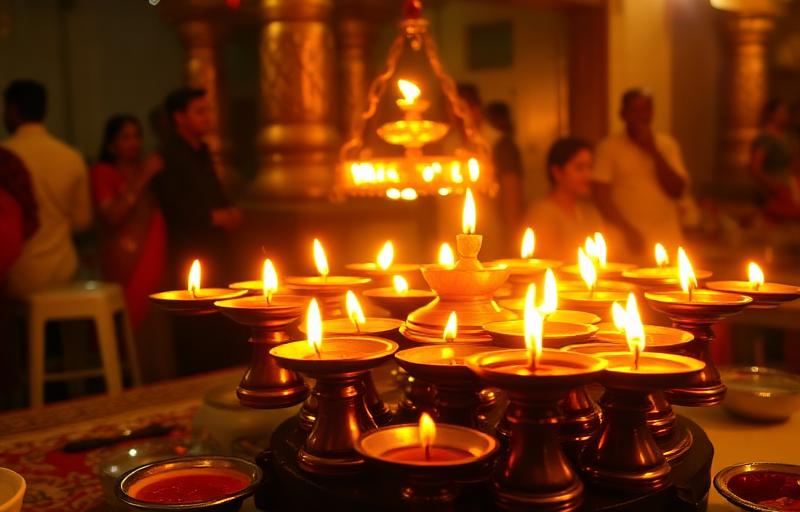
Om is chanted at the start of most puja, yoga and meditation sessions across India, and resounds through temple aartis and daily household prayers alike. It is also drawn or engraved as a symbol on doors, pendants and puja room walls as a mark of an auspicious beginning.
Many families teach Om as the very first sacred sound to children, well before longer mantras, treating it as the natural entry point into a life of prayer.
One Sound, One Large Truth
Beginning with Om is a way of remembering that behind every name and form of God lies one formless truth. It is a small syllable, but each time it is spoken, it quietly carries forward a very large and old idea of unity.
Reader Questions Answered
What does the syllable Om actually mean?+
Om is understood as the primordial sound of creation and a representation of Brahman, the formless divine, made of three sounds standing for waking, dreaming and deep sleep.
Is it necessary to chant Om before every prayer?+
It is a widespread and cherished tradition rather than a strict rule, and devotees are free to chant it as per their own family or regional custom.
Why is Om written and worn as a symbol, not just spoken?+
The Om symbol is treated with the same reverence as the sound itself, and wearing or displaying it is seen as inviting the same sense of auspicious beginning into daily life.
About the author
Acharya Vinaya Kapoor · M.A. Sanskrit, Mantra & Stotra Studies
Acharya Vinaya holds an M.A. in Sanskrit from Banaras Hindu University and writes the mantra and stotra commentary on Vandnaa. Her focus is on accurate pronunciation, traditional context, and helping modern readers connect with classical texts.
Meet the Vandnaa editorial team →