What a Shankh Is, and Why Some Are Rare
A shankh is the shell of a large sea snail, cleaned, hollowed at the tip and used both as a musical instrument and a sacred puja object. Most conch shells spiral to the left when viewed from the opening, known as vamavarti. Shells that spiral to the right instead, called dakshinavarti, are naturally rare, since it is simply an uncommon variation in how the mollusc grows, and Hindu tradition treats this rarity as auspicious, associating right-spiraling conches closely with Goddess Lakshmi and prosperity.
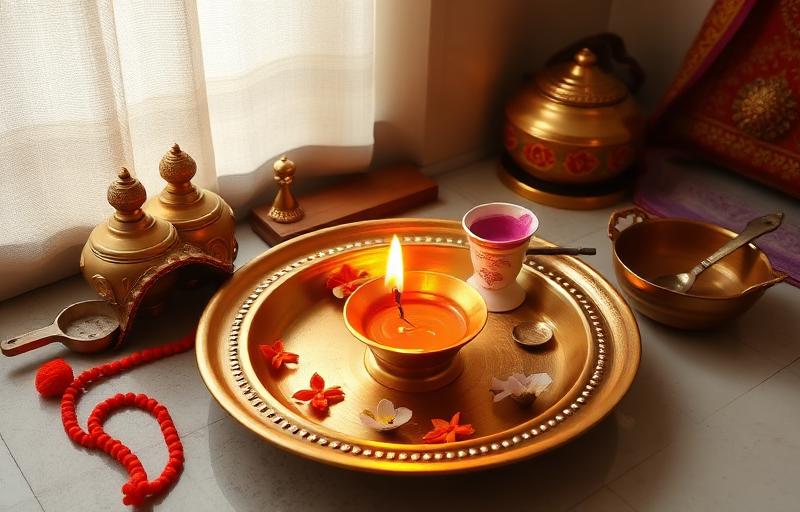
Before a shankh is used in worship, it is typically cleaned with water, sometimes with turmeric or sandalwood paste, and kept on the puja altar alongside a bell, diya and other ritual items. Many households treat their shankh with the same care given to any consecrated object, wrapping it in cloth when not in use and avoiding placing it directly on the floor.
In iconography, the shankh is one of the four objects held by Lord Vishnu, alongside the Sudarshan Chakra (discus), the gada (mace) and the padma (lotus). Each object carries meaning: the conch specifically represents the origin of existence and the power of primordial sound, which is why its role goes well beyond simply being a noisemaker at the start of a ritual.
- Right-spiraling shankhs are considered rarer and more auspicious than the common left-spiraling type
- The shankh is one of Vishnu's four defining hand-held symbols
- A puja shankh is treated as a sacred object, not just a musical prop
- Larger, deeper-toned shankhs are often preferred for temple use, while smaller ones are common in home altars
The Legend of Panchajanya
The most famous conch in Hindu tradition is Panchajanya, belonging to Lord Vishnu. According to the Puranas, a demon named Shankhasura once seized the Vedas and hid within the depths of the ocean, taking the form of a conch shell. Vishnu, in his avatar as Matsya, the divine fish, pursued and defeated the demon, recovering the Vedas and claiming the shell itself, which then became his eternal weapon and symbol, Panchajanya.
The conch reappears at a pivotal moment in the Bhagavad Gita. In the opening chapter, as the armies gather at Kurukshetra, several warriors blow their individual conches to signal readiness for battle: Krishna blows Panchajanya, Arjuna blows Devadatta, Bhima blows the mighty Paundra, and Yudhishthira, Nakula and Sahadeva each sound their own. The text describes the combined sound as tumultuous, striking fear into the hearts of the opposing army even before a single arrow was released.
This episode is central to why the shankh is associated not just with sound, but with resolve and the announcement of something significant beginning. Blowing a conch before a puja echoes that same idea on a smaller, domestic scale: it declares, audibly and unmistakably, that a sacred undertaking is now underway. Devotees drawing on this legend often understand the shankh not as decoration but as an instrument that has, since the Mahabharata itself, carried the weight of intention behind an action.
Each warrior's conch in that scene is also remembered by name in popular retellings, from Bhima's Paundra to Sahadeva's Manipushpaka, which is part of why the conch is treated less like generic temple equipment and more like an object with its own identity and history, worthy of care rather than casual handling.
The Sound That Echoes Om
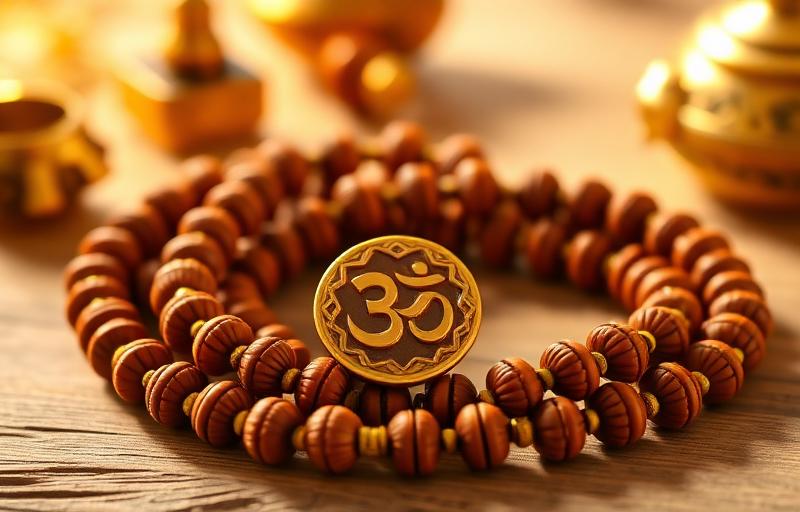
The drone produced by a blown conch is a long, steady, resonant tone that many devotees describe as the closest a physical instrument comes to the sustained hum of Om, the primal sound tradition holds to underlie all creation. This is not a casual comparison. The shankh's sound is called shankhnaad, and it is treated in many temple traditions as a physical, audible stand-in for the vibration of Om itself, bridging silent meditation on the syllable with an actual sound the whole room can hear together.
Because of this association, shankhnaad is believed to carry the same purifying, auspicious quality attributed to the chanting of Om. Its vibration is said to settle the mind, clear stagnant or negative energy from a space, and create an atmosphere suited to worship before a single mantra is even spoken. This is part of why the conch is blown at the very start of an aarti or puja, before bells, before chanting, before the lamp is offered: it prepares the space and the people in it.
Some traditions also point to the physical act of blowing a conch as a form of controlled, forceful exhalation, not unlike certain pranayama breathing practices. Producing a clear, sustained tone requires steady diaphragmatic control and full lung engagement, which is one reason the practice has long been associated with vitality and strong lungs, alongside its devotional purpose. The spiritual and the physical, in this case, reinforce rather than compete with each other.
🕉️ If chanting Om or listening to its resonance calms you, the Vandnaa app's mantra audio is a good place to build that into a daily habit.
Marking the Beginning (and End) of Puja
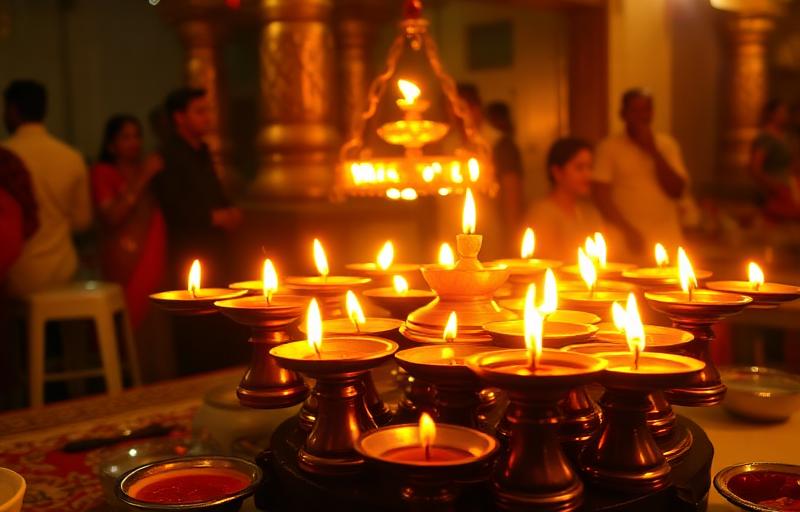
On a practical level, the shankh functions as an announcement. In a temple with many devotees, or a home where family members are scattered across rooms, the sound of a conch carries clearly and immediately, signaling that worship is about to begin in a way a spoken call cannot match. Convention in many households and temples is to blow the shankh three times before the puja starts, though this varies by region and family tradition, followed again at the moment the aarti is performed.
The blowing of the conch is also understood as an invitation. Just as one might ring a doorbell before entering a home, sounding the shankh is treated as a respectful way of announcing the devotee's presence and inviting the deity's attention before offerings begin. Ending the puja with the conch again brings a sense of closure, marking that the ritual has been properly completed rather than trailing off unclearly.
Beyond the immediate ritual, the sound is traditionally believed to travel outward and bless the surrounding area, not just the person blowing it. This is part of why temple conches are blown loudly enough to be heard well beyond the sanctum, and why the shankh sound during a large aarti often feels communal rather than personal, drawing everyone present into the same moment of beginning together.
In larger temples, the conch is sometimes blown by a designated priest at fixed times of day, functioning almost like a bell tower once did in marking the rhythm of communal life, letting an entire neighborhood know that darshan or aarti is about to begin without anyone needing to check a clock.
How and When It's Traditionally Blown
There is a broadly followed convention, though practices vary by region and family, that the shankh is not blown after sunset in ordinary daily worship. Evening and night are generally considered a time of rest, including for the deities being worshipped, and a loud sound is seen as disruptive to that stillness rather than respectful of it. Morning and early evening aarti are the most common times the conch is heard.
Exceptions exist, and they are notable rather than random. On Diwali night, during Lakshmi Puja, many households do blow the shankh, since the festival specifically welcomes Goddess Lakshmi into the home and the sound is considered part of that invitation. Certain Navratri nights and other major festival observances carry similar exceptions in various regional traditions.
Care of the shankh itself follows simple, practical guidelines in most households:
- It is rinsed with clean water before and sometimes after use
- It is not typically shared carelessly between unrelated households, since it is treated as a personal or family sacred object
- A cracked or damaged shankh is usually not used for puja and is respectfully retired rather than discarded like ordinary refuse
- It is stored on the altar itself or in a clean, elevated place, never on the floor
These customs are less about rigid rule-following and more about maintaining the sense that the shankh is a living part of one's devotional practice, not simply an instrument picked up and put down. Families that follow them consistently often say the small routine of rinsing and carefully placing the shankh back on the altar becomes its own quiet moment of mindfulness, separate from the puja itself.
Beyond Puja: The Shankh in Daily and Ceremonial Life
While its most familiar role is in daily and festival puja, the shankh appears across other significant Hindu ceremonies as well. It is often sounded at auspicious moments during weddings, at the naming ceremony of a newborn, and during other samskaras that mark transitions in a person's life, functioning each time as the same kind of announcement: something meaningful is beginning, and it deserves to be marked audibly.
Some households also keep a shankh specifically for pouring water, using it to offer arghya to the sun or to perform abhishek, since water offered or poured through a conch is considered to carry additional sanctity. This dual use, as both a wind instrument and a vessel, reflects how central the object is to Hindu ritual life beyond just the ceremonial blast most people picture.
Even outside active ritual, many Hindu homes keep at least one shankh on display near the puja altar simply for its presence, its association with Vishnu and Lakshmi believed to bring a quiet, steady sense of auspiciousness to the household. Gifting a shankh, particularly a dakshinavarti one, is also considered a meaningful gesture for housewarmings and weddings, precisely because of everything the object is understood to represent: origin, resolve, purity of sound and the announcement of good things beginning.
Musically, the shankh also has a modest place outside strictly ritual settings, appearing in some classical and folk performances as a wind instrument in its own right. This crossover between devotional object and musical instrument is not seen as a contradiction, since Hindu tradition has rarely drawn a hard line between sound made for worship and sound made for celebration, both are understood as ways of marking a moment as significant.
What People Ask Most
Why is the conch called Panchajanya?+
Panchajanya is the specific name of Lord Vishnu's own conch, recovered after he defeated the demon Shankhasura who had taken the form of a conch shell in the ocean. It later appears in the Bhagavad Gita as the conch Krishna blows at Kurukshetra.
Can anyone blow the shankh, or only priests?+
There is no restriction limiting it to priests. In most Hindu homes, any family member, often an elder or whoever is leading the puja that day, blows the conch as part of daily or festival worship.
Why is a right-turning (dakshinavarti) shankh considered special?+
Most conch shells spiral to the left, so a naturally right-spiraling one is simply rare. That rarity, combined with its association with Goddess Lakshmi, is why a dakshinavarti shankh is considered especially auspicious.
Is it true the conch shouldn't be blown at night?+
In many regional traditions, the shankh is generally not blown after sunset during ordinary daily worship, since evening is considered a time of rest. Notable exceptions include Diwali's Lakshmi Puja and certain festival nights.
What does the conch symbolize besides its sound?+
The shankh is one of Vishnu's four hand-held symbols and represents the origin of existence and primordial sound. It is also tied closely to Goddess Lakshmi and is treated as a symbol of purity, victory and auspicious beginnings.
How should a shankh be cared for at home?+
Rinse it with clean water before use, store it on the altar or a clean elevated spot rather than the floor, and avoid using a cracked or damaged shankh in puja. Treat it as a sacred object rather than a casual household item.
About the author
Pandit Mahesh Trivedi · Festival Traditions & Panchang
Pandit Mahesh leads the festival-date and Panchang content on Vandnaa. He cross-references multiple regional panchangs (Drik, Vaishnava, Bengali, Marathi) for every festival date published on the site.
Meet the Vandnaa editorial team →